
Red Deer Across Saxony-Anhalt Remained Genetically Connected, but Peripheral Populations Showed Early Isolation
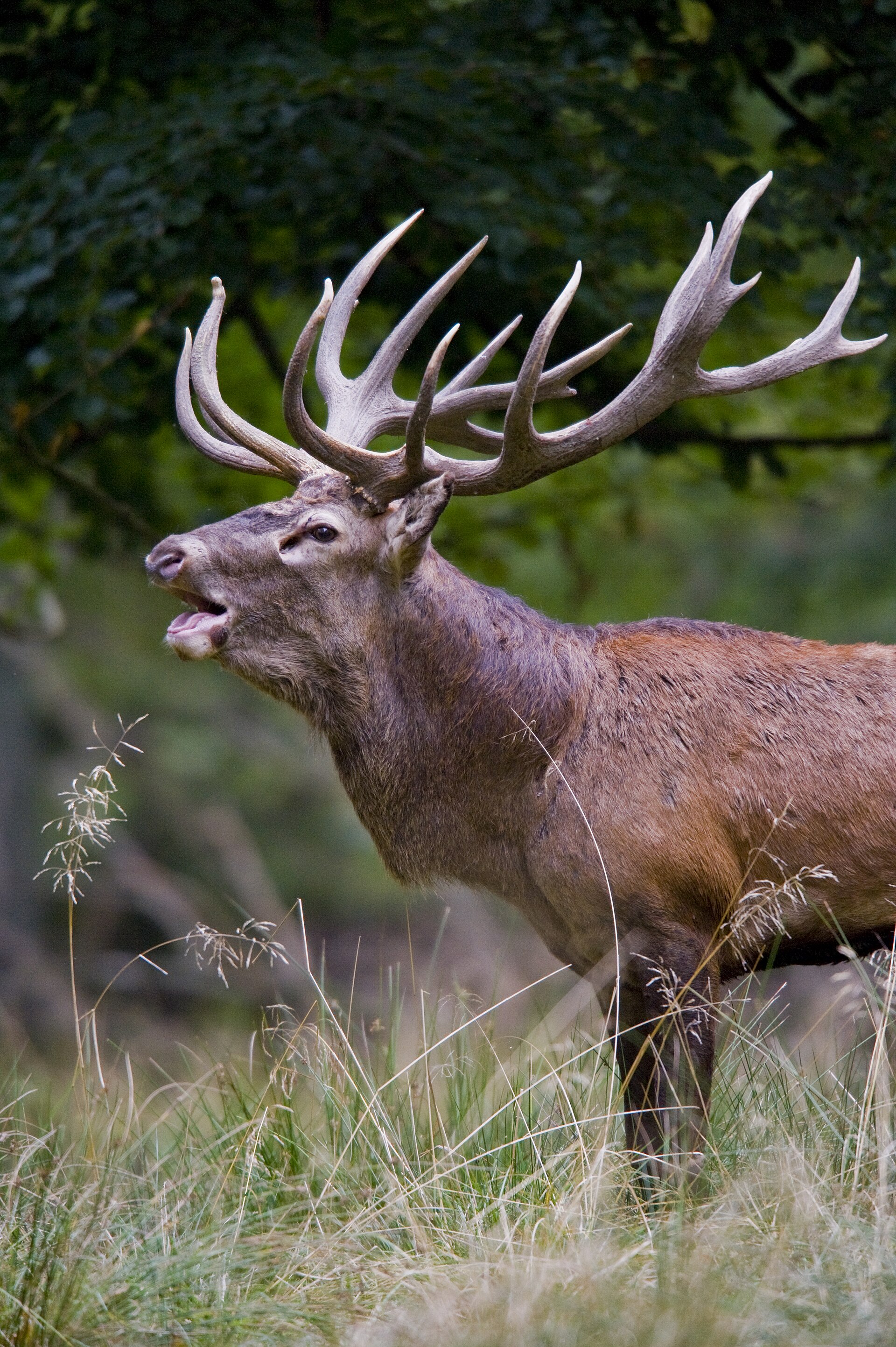
Red deer (Cervus elaphus) across much of Saxony-Anhalt in central Germany were still genetically diverse and well connected, even though several peripheral populations showed early signs of isolation. The study, published on 5 September 2026, analysed 698 deer from 14 management units using 16 microsatellite markers and compared the results with equivalent data from Hesse and North Rhine-Westphalia, giving a standardized dataset of 3,188 animals.
High genetic diversity across much of the region
Red deer in Saxony-Anhalt had higher expected heterozygosity and allelic richness than deer in the two western German states. Expected heterozygosity describes how likely two gene copies sampled from a population are to differ, while allelic richness describes how many genetic variants are present after accounting for differences in sample size. Several clustering methods also identified three large functional metapopulation complexes — regional groups of populations linked by enough gene flow to remain genetically connected.
Peripheral populations showed early isolation
That overall picture was not uniform. The Harz population complex had the highest estimated effective population size and the most favourable long-term genetic projections, while Ziegelrodaer Forst, Dübener Heide and Möckern-Hohenseeden South repeatedly showed lower connectivity and stronger genetic differentiation, together with comparatively low effective population sizes. Effective population size is not a simple head count; it describes roughly how many animals are contributing genes to future generations. These peripheral units therefore appear to be in an early stage of isolation rather than already having lost most of their genetic diversity.
Genetic diversity can lag behind recent fragmentation
The apparent contrast between high diversity and emerging isolation is biologically important. In a long-lived species such as red deer, microsatellite patterns integrate gene flow over several generations and can still carry the signal of connections that existed decades ago. The authors therefore argue that present-day genetic diversity may look reassuring even while newer fragmentation is beginning to reduce exchange. Saxony-Anhalt still retains broad regional connectivity, but its peripheral populations may provide an early warning of where that connectivity is starting to weaken.
Genetics & genomics
Related news
Velvet Antler Had the Most Distinct Metabolite Profile in Red and Sika Deer
A Chinese study detected 2,361 metabolites across three antler tissues from red and sika deer. Velvet antler separated…
Read story →
Tarim Red Deer Microbiomes Showed Greater Capacity to Break Down Reed Fibre
Under the same reed-containing diet, captive Tarim red deer had more fibre-associated gut microbes, higher cellulase and hemicellulase…
Read story →
Wolf Kills Provided Plenty of Food for Red Foxes
Red foxes visited all 26 wolf-killed red deer monitored in Stelvio National Park. The amount of meat left…
Read story →SPECIES IN THIS STORY
Species in this story
Independent research and conservation news archive
Did you find this information useful?
Wildlife Vagabond is independently built and maintained. Voluntary support helps cover source verification, hosting and continued work on research and conservation news.
Support Wildlife VagabondThe news archive will remain freely available.