
Retained Juvenile Wing Feathers Reveal Second-Year European Bee-eaters
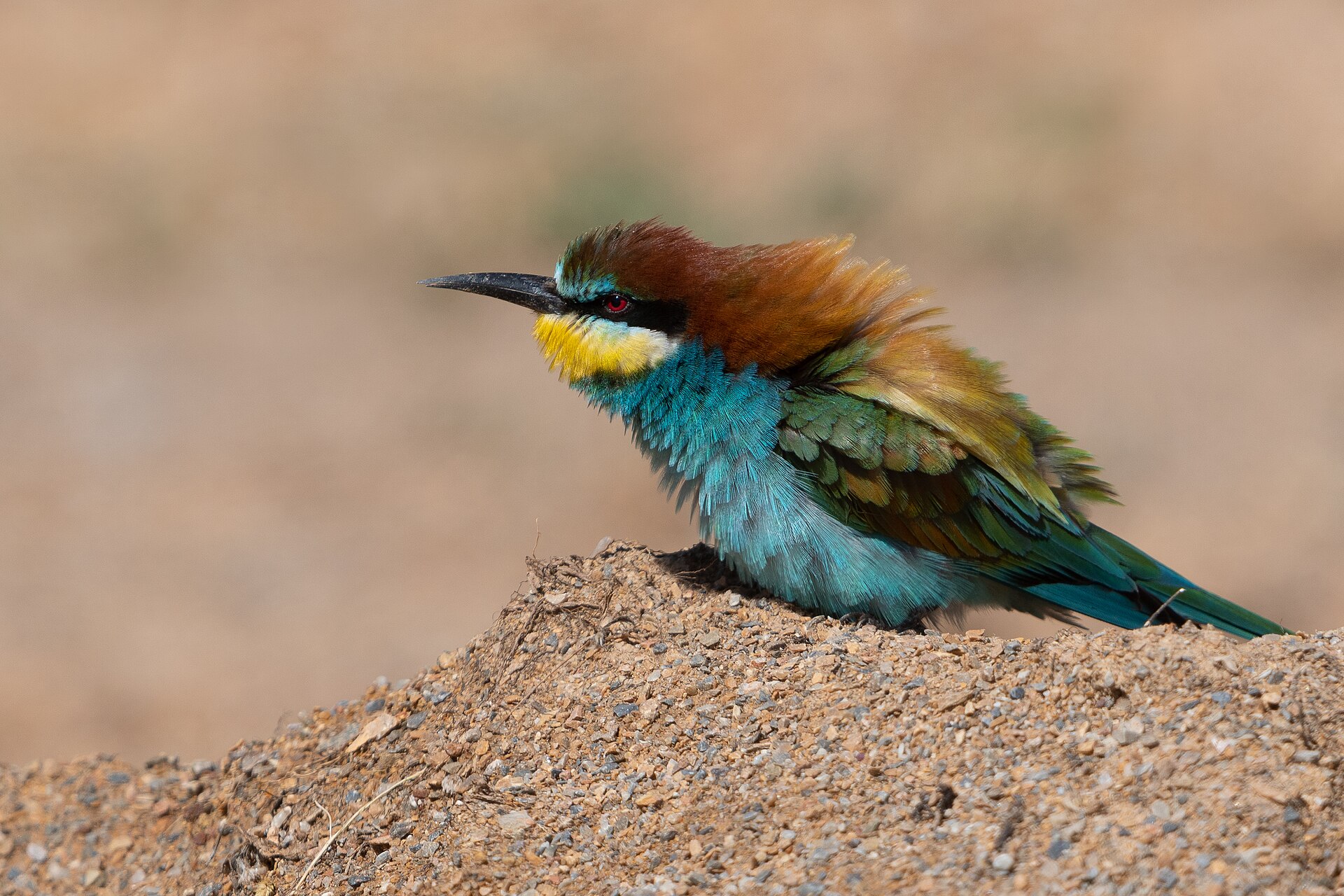
European Bee-eaters (Merops apiaster) can often be aged in spring because some juvenile wing feathers survive the first winter even after much of the rest of the wing has been renewed. The retained feathers are the primary coverts — small feathers that cover the bases of the outer flight feathers — and their contrast with newer feathers provides a strong clue that a bird is in its second calendar year.
The bee-eater results formed part of a broader study of moult, ageing and sexing in several small non-passerine landbirds. Across these species, delayed replacement of primary coverts was one of the most useful features for reading age from the wing.
Old juvenile coverts stand out among newer feathers
Young bee-eaters keep their juvenile primary coverts through the post-juvenile moult. By the following spring these older feathers are often worn and bleached, while surrounding flight feathers have been renewed. That difference in feather generation and wear makes second-calendar-year birds recognisable.
Adult bee-eaters follow a different moult sequence. They replace the primary coverts together with the corresponding primary feathers during the first adult post-breeding moult. Adults may also interrupt primary moult during migration, so ageing works best by looking at which feather generation is present rather than simply asking whether the wing appears completely moulted.
Plumage colour is much less reliable for sex
Male bee-eaters generally show more extensive warm rufous or chestnut tones in the wing coverts, while females tend to show more green. But the overlap is substantial. In a Czech breeding population, 9.3% of 208 adults initially sexed from plumage were assigned to the wrong sex when later checked genetically.
The overlap is even clearer in juveniles. Birds with green backs were more often female, but 20–27% were male; birds with yellow backs were more often male, but 28–39% were female. Colour therefore changes the probability that a bird is male or female rather than providing a certain answer.
Moult history gives the stronger clue
The practical lesson is that age and sex are not equally easy to read from a bee-eater’s plumage. Retained juvenile primary coverts preserve a record of moult history and can provide a reliable age marker, while colour alone should be used cautiously for sexing.
The study illustrates a broader principle in bird ageing: knowing which feathers were replaced, and when, can be more informative than simply judging how bright or worn the plumage looks.
Anatomy & morphology
Related news
Usutu Virus RNA Was Found Nearly Three Times as Often as West Nile Virus RNA in Southern France
Among 2,533 wild birds from 69 species in southern France, Usutu virus RNA was detected in 12.0% and…
Read story →
Microplastics Were Found in 77 of 559 Pellets From Eight Italian Bird Species
An Italian study found 78 microplastic items in 77 of 559 bird pellets. Occurrence was significantly higher at…
Read story →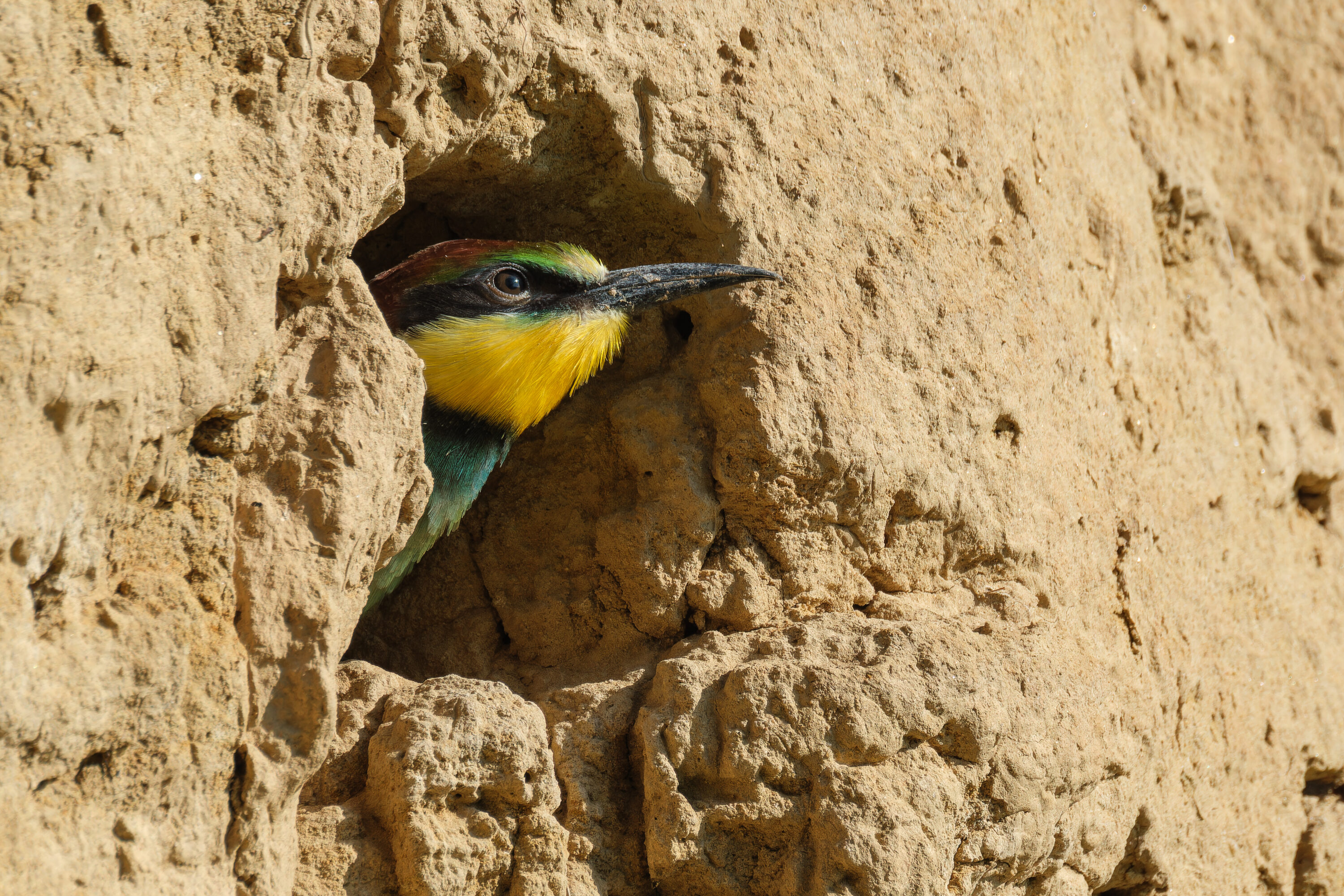
Brown-throated Martins Reused European Bee-eater Burrows and Mobbed a Snake at One Nest
A short communication from Morocco reports three cases of brown-throated martins roosting or nesting in disused European bee-eater…
Read story →SPECIES IN THIS STORY
Species in this story

Independent research and conservation news archive
Did you find this information useful?
Wildlife Vagabond is independently built and maintained. Voluntary support helps cover source verification, hosting and continued work on research and conservation news.
Support Wildlife VagabondThe news archive will remain freely available.