
Ringed Pied Avocet Set a UK Longevity Record at 36 Years
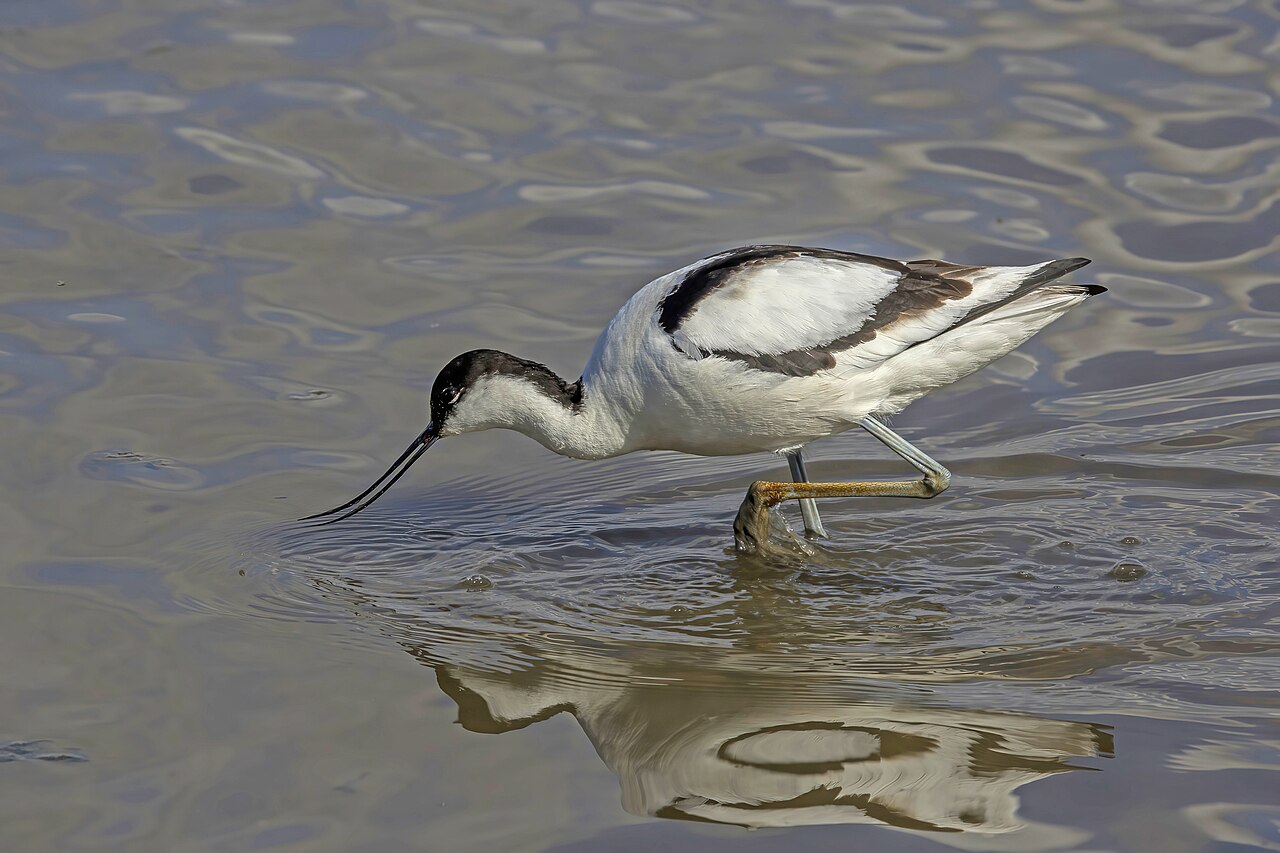
A Pied Avocet (Recurvirostra avosetta) identified at RSPB Middleton Lakes in Staffordshire has set a new UK longevity record at 36 years. Its unique combination of leg rings showed that it had been ringed as a nestling at RSPB Titchwell Marsh in Norfolk on 2 July 1990. RSPB announced the record on 6 July 2026, with the ringing history confirmed by the British Trust for Ornithology (BTO).
The ring made the bird’s age unusually precise
Because the avocet was ringed as a nestling rather than first captured as an already free-flying bird, the ringing record provides an unusually precise basis for its age. By the time of the 2026 announcement, more than 36 years had passed since it was ringed, and the bird was still alive.
The new record is exceptional even for a relatively long-lived wader. BTO BirdFacts gives a typical life expectancy of about six years for an avocet that reaches breeding age. Its previously published UK maximum from a ringed bird was 24 years, 8 months and 21 days, set in 2015. The Middleton Lakes bird therefore extended the documented British maximum by more than eleven years.
One lifetime spans much of the species’ British recovery
The record also provides a striking time marker in the history of avocets in Britain. The species had disappeared as a British breeding bird by the nineteenth century before returning to the Suffolk coast in 1947. Four pairs bred there that year, beginning a recovery that later became closely associated with managed wetland habitat at sites such as RSPB Minsmere.
RSPB describes the creation and maintenance of shallow lagoons and nesting islands as an important part of that recovery. Avocets have since expanded well beyond their former concentration on the east coast. BTO now lists about 1,950 breeding pairs in the UK, while RSPB’s 2026 announcement estimated about 8,700 wintering birds.
Middleton Lakes shows how new wetlands can add breeding habitat
RSPB Middleton Lakes occupies a former gravel-extraction landscape that has been restored as a mosaic of wet grassland, pools, shallow lagoons and islands. Ten pairs of avocets bred there in 2025 and fledged 16 young.
The record-aged bird therefore links two different kinds of conservation evidence. Its rings document the survival and movements of one exceptionally long-lived individual, while the reserve where it was identified represents the expansion of suitable habitat beyond the species’ historic strongholds.
Ringing data are particularly valuable for longevity records because individual birds can be recognised years or decades after marking. In this case, a bird marked as a nestling in 1990 remained identifiable 36 years later, turning a single resighting into a new national age record.
Population & status
Related news
Fungal Communities Differed Across Pied Avocet Breeding Substrates
Around ten Pied Avocet nest sites in China's Yellow River Delta, researchers detected 9,980 fungal DNA variants but…
Read story →
Female Pied Avocets Migrated Farther Than Males
The standardized migration-distance measure averaged 1,928 kilometres for GPS-tracked female pied avocets and 1,277 for males; females also…
Read story →
Pied avocet calls became a test for counting birds by sound
BioDCASE 2026 made pied avocet an optional target for estimating known aviary populations from hundreds of thousands of…
Read story →SPECIES IN THIS STORY
Species in this story

Independent research and conservation news archive
Did you find this information useful?
Wildlife Vagabond is independently built and maintained. Voluntary support helps cover source verification, hosting and continued work on research and conservation news.
Support Wildlife VagabondThe news archive will remain freely available.