
Roe Deer Browsing Concentrated on Bark-Beetle Disturbance Sites
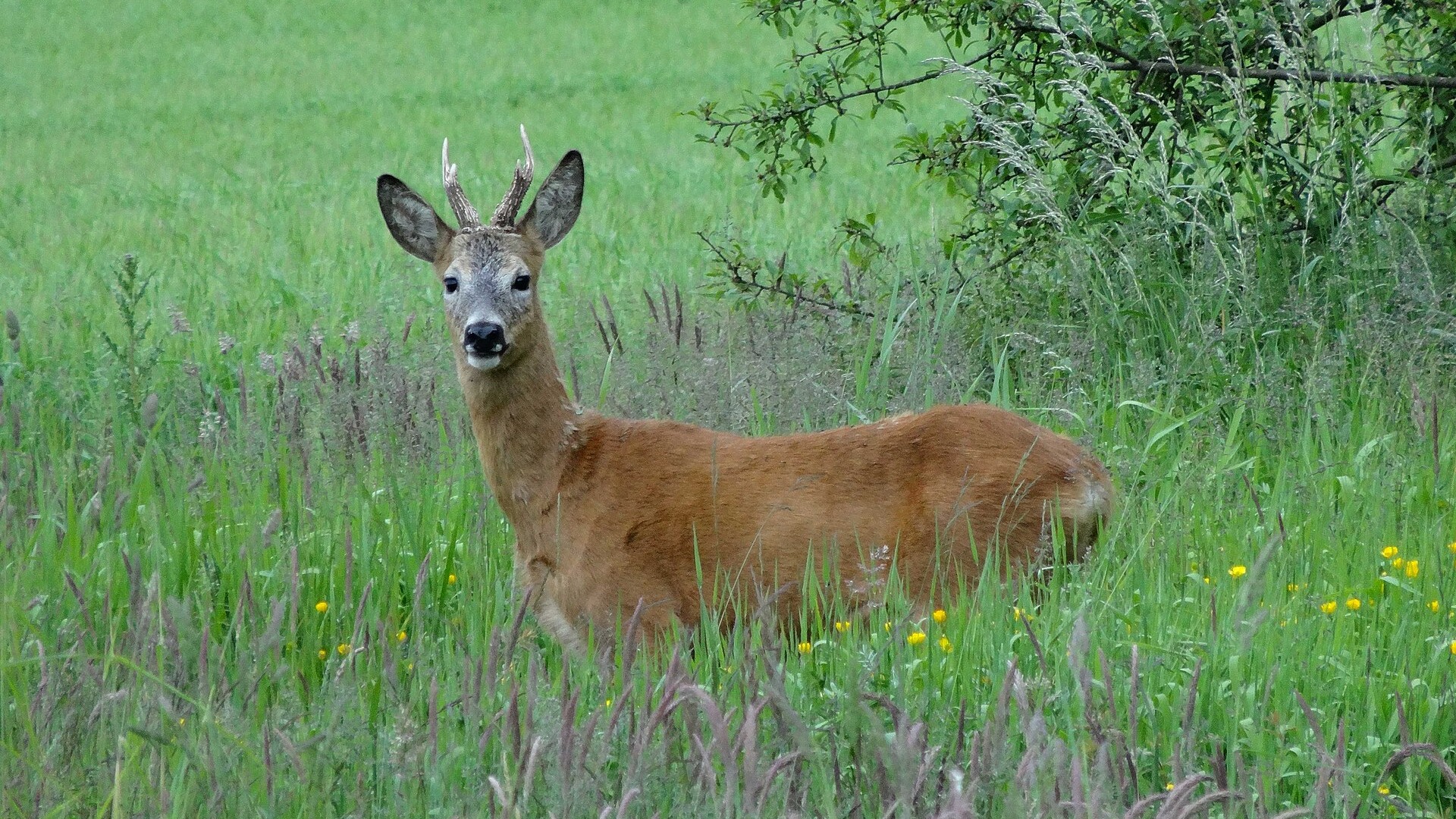
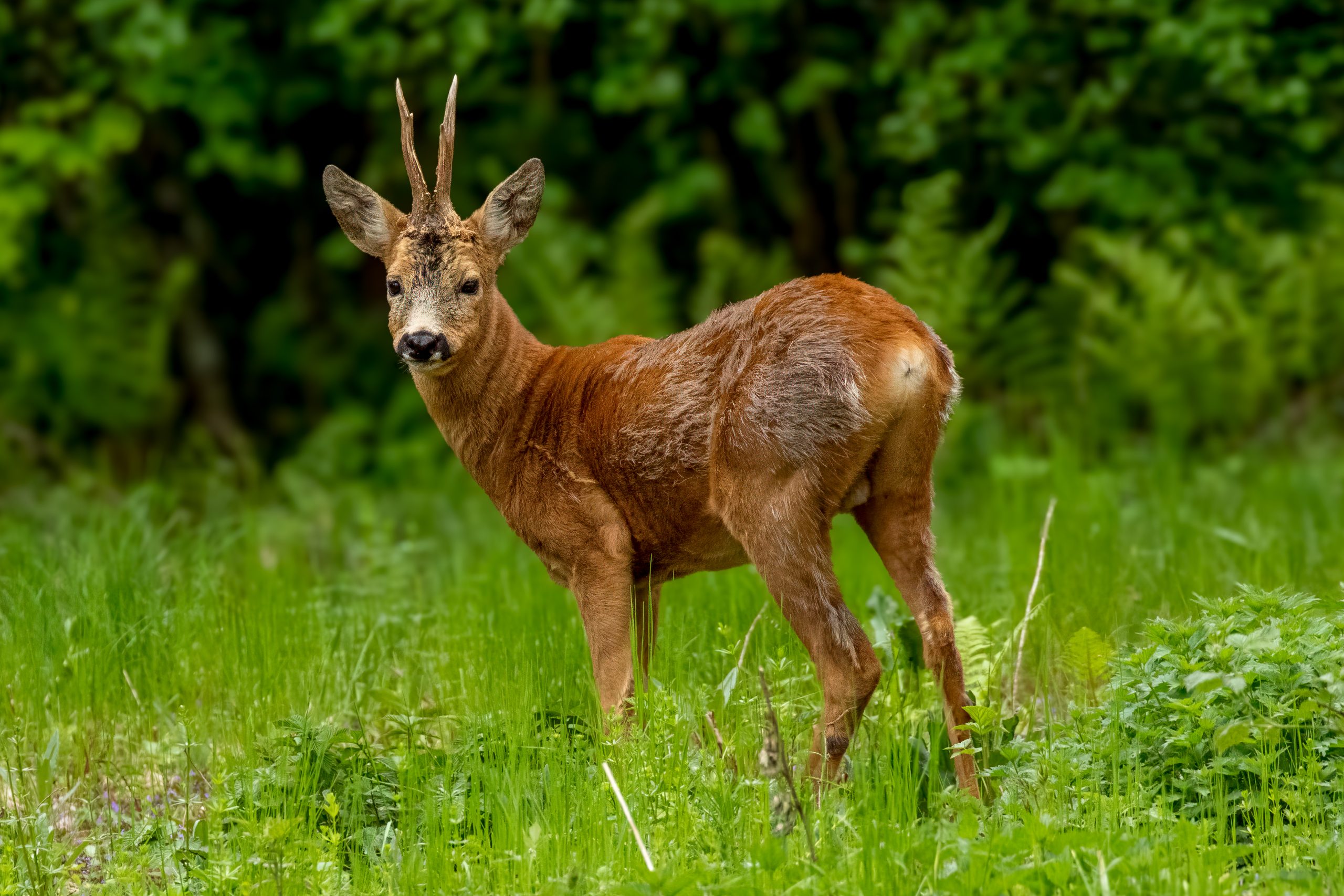
A large field survey in the southern Black Forest, Germany, found that roe deer (Capreolus capreolus) browsing was generally heavier on salvage-logged forest disturbance sites than in neighbouring intact forest. The strongest pressure on young trees occurred close to the temporary edge between the open disturbance and the remaining forest.
The researchers studied 137 disturbance sites in spring 2024 or 2025. Each site was paired with adjacent intact forest no more than 200 metres away. Five circular 10 m² plots were surveyed on the open disturbance and five in the neighbouring forest, giving 1,370 plots and more than 28,000 sampled woody plants.
Browsing was measured from shoots on individual plants
For each sampled plant, the researchers recorded how many of its highest shoots had been browsed by roe deer. Browsing intensity was the proportion of up to ten of these shoots that showed feeding damage. A value of 36%, for example, means that roughly a little over one-third of the assessed shoots had been browsed.
For young trees, the team also recorded whether the leading shoot — the main upward-growing shoot — had been eaten. Damage to this shoot can slow height growth and alter tree form, so repeated leading-shoot browsing can influence which tree species successfully establish during forest regeneration.
Young trees were browsed most strongly near the forest edge
Both overall browsing and leading-shoot browsing on young trees were highest on the open disturbance sites close to the forest edge and declined farther out into the open area. Inside intact forest, the pattern for young trees was reversed: browsing was lowest close to the same edge.
The edge effect was especially pronounced for leading-shoot damage. Shrub browsing also tended to be strongest around the forest edge, although unlike the trees it declined with distance on both sides of the boundary.
Sycamore maple had the highest overall browsing intensity on disturbance sites, at about 36%, while Norway spruce was browsed least. Leading-shoot damage was more frequent on the disturbance sites for all five tree species included in that comparison.
Alternative forage changed the pressure on young trees
Local vegetation composition also influenced which individual plants were browsed. Where many young trees or attractive alternative foods such as bramble were available, browsing on some individual woody plants was reduced. The authors interpret this partly as a dilution or distraction effect: if many attractive plants are available, feeding pressure is spread across more possible food items.
By contrast, a high proportion of less-preferred forage such as grasses was associated with heavier browsing on some woody species. In such patches, the relatively palatable tree and shrub shoots may stand out more strongly as food.
Hiding cover and indicators of human disturbance did not have a strong, consistent effect on browsing on the open disturbance sites. The study also did not measure roe deer density, so the browsing patterns show where feeding damage was concentrated rather than where deer numbers themselves were necessarily highest.
Open regeneration near forest edges was especially exposed
The authors conclude that large forest disturbances can redistribute browsing pressure onto young regeneration, especially near newly created forest edges. Although natural succession was not completely prevented in the study area, repeated damage to leading shoots can slow regeneration and influence future tree-species composition.
Where deer impacts are stronger than in this study, the authors suggest that fencing or protection of individual young trees may be particularly useful near forest edges and where attractive alternative forage is scarce.
Ecology
Related news

Inland Mute Swans Had Higher Winter Body Condition Despite Harsher Winters and Supplemental Feeding
A study of 853 mute swans from four Polish wintering regions found higher body condition inland than on…
Read story →
Gut Microbiomes Across Nine Kruger Mammals Clustered More Strongly by Dietary Group Than Species
A study of 89 quality-filtered faecal samples from nine wild mammals in Kruger National Park found that carnivores,…
Read story →
Dunnock Spring Passage Advanced by Up to 8.3 Days Over 61 Years at Hel
Standardised ringing data from northern Poland showed that the first, median and last phases of dunnock spring passage…
Read story →SPECIES IN THIS STORY
Species in this story
Independent research and conservation news archive
Did you find this information useful?
Wildlife Vagabond is independently built and maintained. Voluntary support helps cover source verification, hosting and continued work on research and conservation news.
Support Wildlife VagabondThe news archive will remain freely available.