
Socially Inherited Rank Reversed Sex Differences in Reproductive Inequality in Spotted Hyenas
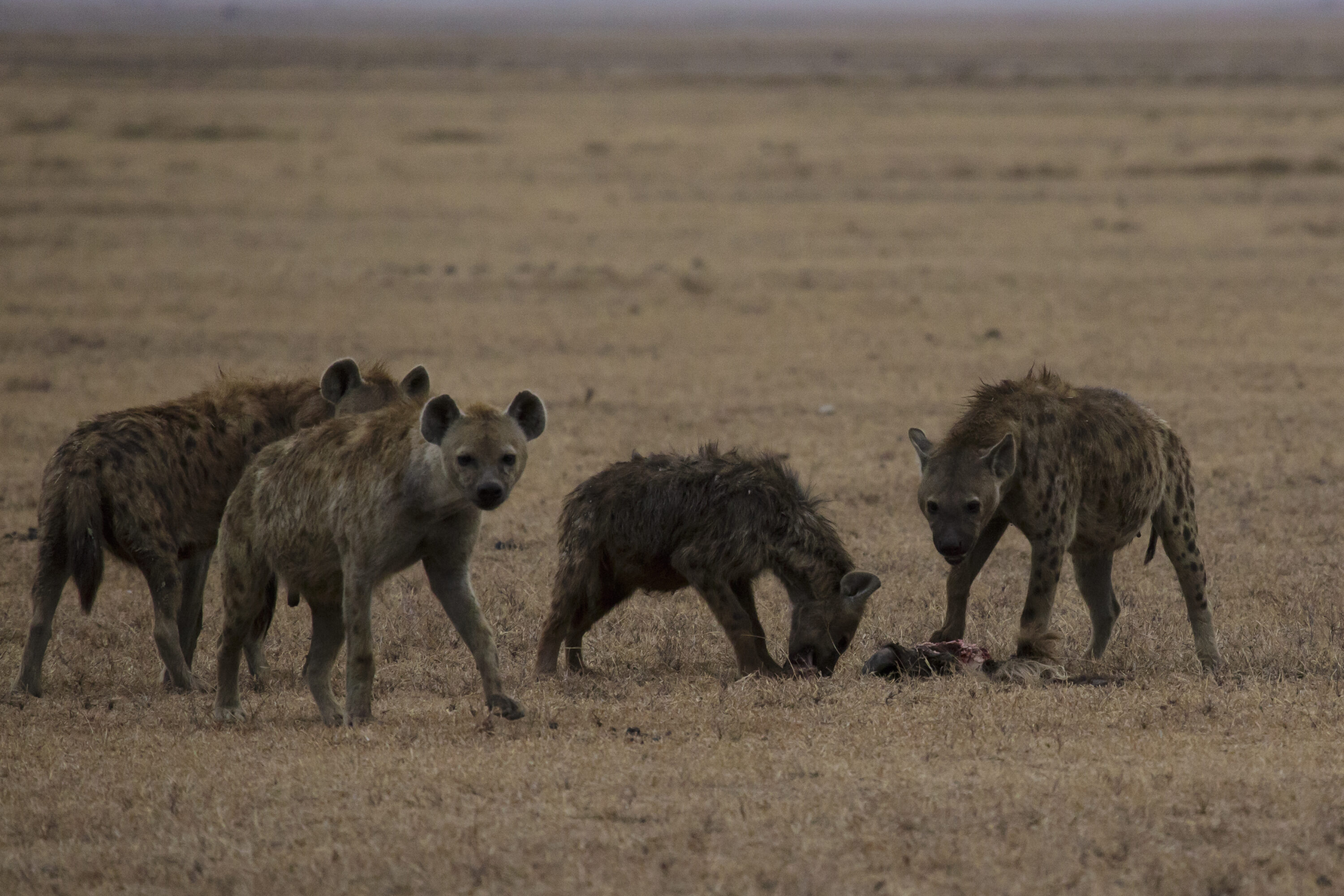
A 29-year study of spotted hyenas (Crocuta crocuta) in Tanzania’s Ngorongoro Crater shows how socially inherited rank can change reproductive success across generations. Here, reproductive inequality means how unevenly offspring and later descendants are distributed among individuals. In most mammals, this inequality is greater among males than among females. In spotted hyenas, the long-term picture can be the opposite.
Researchers from the Ngorongoro Hyena Project analysed pedigrees from eight clans, covering more than 2,700 individually identified hyenas across eight generations. Female spotted hyenas inherit their position in the clan’s dominance hierarchy largely from their mothers. This is social rather than genetic inheritance: rank and the privileges attached to it are transmitted through the clan’s social system, not as an allele passed from mother to daughter. High-ranking families also gain practical advantages, including priority access to food.
One year showed the familiar male-biased pattern
When the researchers looked only at offspring produced within a single year, the familiar mammalian pattern appeared: reproductive success was more uneven among males than among females. Some males fathered substantially more offspring than others.
Across generations, inherited rank reversed the pattern
The result changed when the researchers followed family lines into later generations. Differences among females grew much more strongly when success was measured through grandchildren and great-grandchildren. A high-ranking female could pass her social position to her daughters, who in turn passed the same advantages to their own offspring. The advantages of high rank therefore accumulated along maternal family lines.
Over several generations, this inherited social advantage was strong enough to reverse the usual sex difference. Reproductive inequality became greater among females than among males. In other words, a female’s place in the social hierarchy could influence not only how many offspring she produced herself, but how successful her descendants remained long after her own reproductive life.
The study helps explain one of the unusual features of spotted hyena society: females are larger, socially dominant over males and compete intensely with one another. The researchers argue that when females can pass the advantages of high rank to descendants, competition for rank can affect not only their own reproduction but the number of descendants produced by the family line over several generations.
The findings also show why short-term studies can miss important evolutionary patterns. Looking at one breeding season suggested a fairly conventional difference between the sexes; following the same family lines across eight generations revealed a very different result.
Behaviour
Related news

Food Leaves Its Mark on the Gut Bacteria of Kruger’s Wildlife
Gut bacteria in nine mammal species from Kruger National Park followed clear patterns linked to food and digestion.…
Read story →
Spotted Hyenas Repeatedly Moved Away From Lions in Five-Minute GPS Data
High-frequency GPS data from Namibia and Botswana showed a robust retreat bias in spotted hyenas around lions, while…
Read story →
Livestock conflict with large carnivores is widespread across Queen Elizabeth National Park
Researchers documented 139 confirmed livestock-depredation events involving lions, leopards and spotted hyenas across 11 communities in Queen Elizabeth…
Read story →SPECIES IN THIS STORY
Species in this story
Independent research and conservation news archive
Did you find this information useful?
Wildlife Vagabond is independently built and maintained. Voluntary support helps cover source verification, hosting and continued work on research and conservation news.
Support Wildlife VagabondThe news archive will remain freely available.