
A macaque antibody neutralised diverse H5 flu viruses by blocking membrane fusion
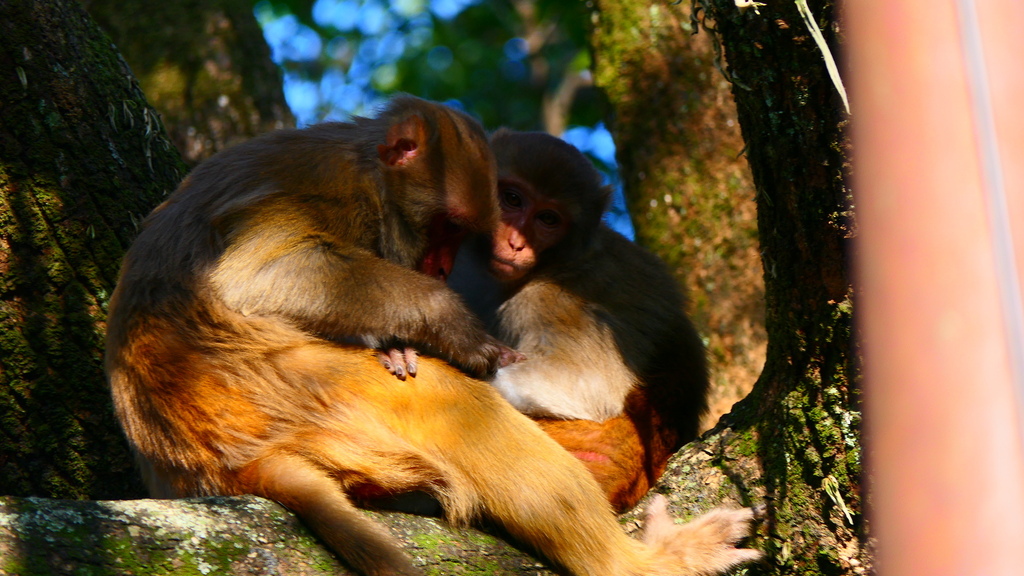
An antibody isolated from immunised rhesus macaques (Macaca mulatta) neutralised a broad range of H5 influenza viruses, including recent H5N1 strains linked to the dairy-cattle outbreak. The study, published in Cell Reports on 29 October 2026, also found that changing the antibody into a secretory form of IgA greatly increased its potency in laboratory tests.
The researchers immunised the macaques with an H5N6 vaccine and isolated 30 monoclonal antibodies that recognised H5 influenza viruses. Three—3CF5, 3BG3 and 3BE7—neutralised multiple H5Nx viruses and protected mice in a lethal-infection challenge. The lead antibody, 3CF5, neutralised viruses collected between 1997 and 2024, spanning different H5 virus strains.
3CF5 targets a conserved part of hemagglutinin
Influenza viruses use hemagglutinin, a protein on their surface, to enter cells. Using cryo-electron microscopy, the researchers located where 3CF5 binds: a conserved site, or epitope—a specific part of a protein recognised and bound by an antibody—on the head of hemagglutinin. The site is outside the region that binds to cell receptors. It spans a structural region called the vestigial esterase domain and an adjacent side surface.
The antibody mainly neutralised the viruses by inhibiting membrane fusion—the step in which the viral membrane joins with a cell membrane, allowing the virus to enter the cell. Its target was similar across the H5 viruses tested, helping explain why 3CF5 could neutralise viruses collected over several decades. The researchers also reported antibody-dependent cellular cytotoxicity, in which immune cells can kill cells bound by antibodies.
A secretory form was more potent in laboratory tests
The researchers also converted 3CF5 from IgG, a common form of antibody in the blood, to secretory IgA1, a form associated with mucosal surfaces. Against the tested H5N1 viruses, the secretory IgA1 version showed up to 128 times greater neutralising potency in laboratory tests. This result comes from experiments outside the body; it does not demonstrate that an IgA preparation would prevent or treat influenza in people.
Together, the conserved target and fusion-blocking mechanism make 3CF5 a candidate for further study as an antibody against diverse H5 strains. The stronger secretory IgA1 result also points to mucosal antibody delivery as a research direction.
Molecular biology & biochemistry
Related news
Female Rhesus Macaques That Watched Unfamiliar Female Faces Longer Were More Likely to Have Offspring the Following Year
At a semi-free-ranging population in Puerto Rico, females that spent longer looking at an unfamiliar female’s neutral face…
Read story →
Rhesus macaques slow down after errors, but do not perform better
In tasks answered with eye movements or a touchscreen, three rhesus macaques took longer to respond after making…
Read story →
Human Activity and Large Wildlife Overlapped Most in Chitwan’s Buffer Zone
Camera traps across Chitwan National Park and surrounding forests showed the greatest overlap of human activity with large…
Read story →SPECIES IN THIS STORY
Species in this story
Independent research and conservation news archive
Did you find this information useful?
Wildlife Vagabond is independently built and maintained. Voluntary support helps cover source verification, hosting and continued work on research and conservation news.
Support Wildlife VagabondThe news archive will remain freely available.