
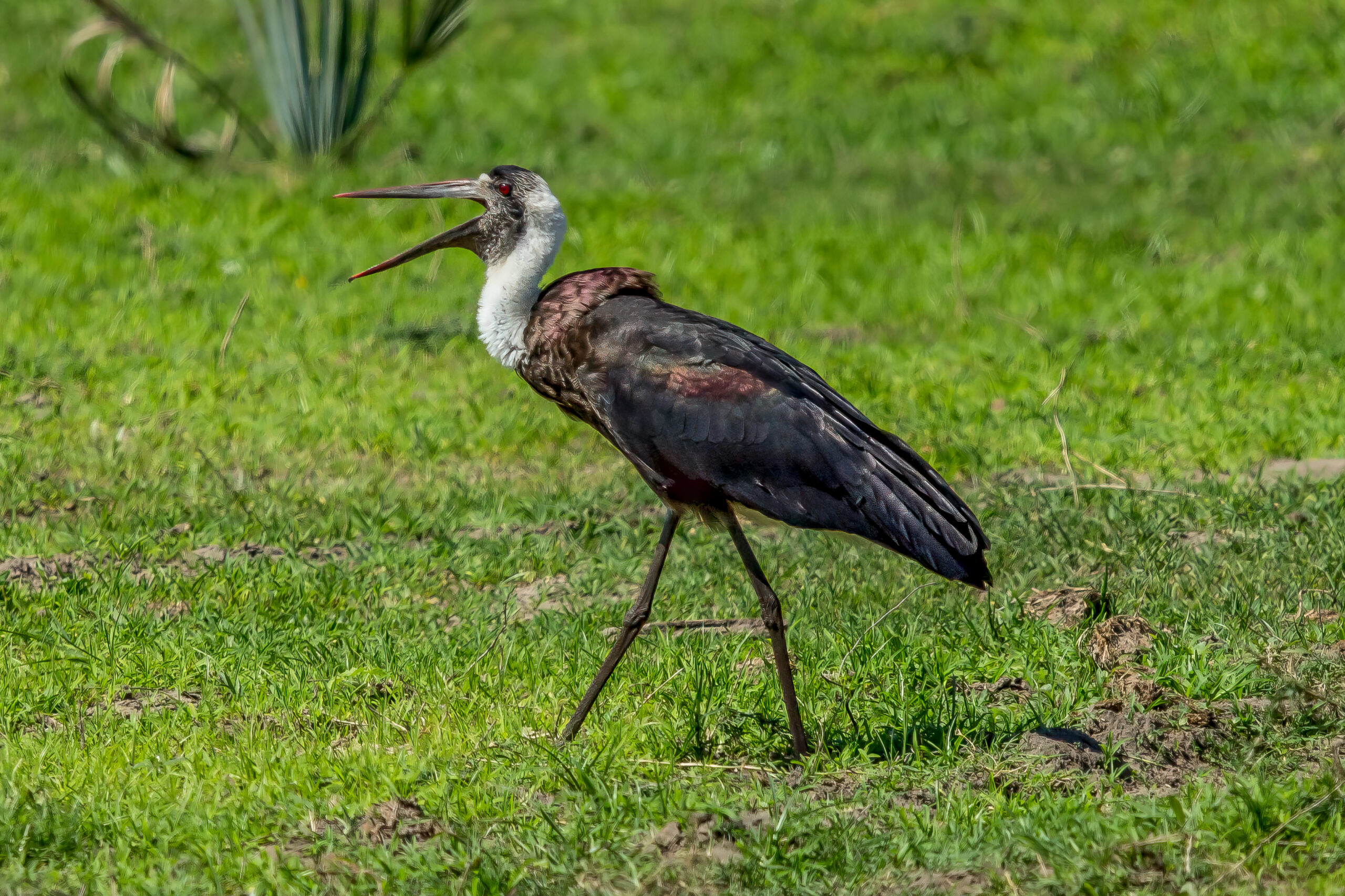
Nearby Woodland Was Linked to Higher Fledging Success in African Woolly-necked Storks
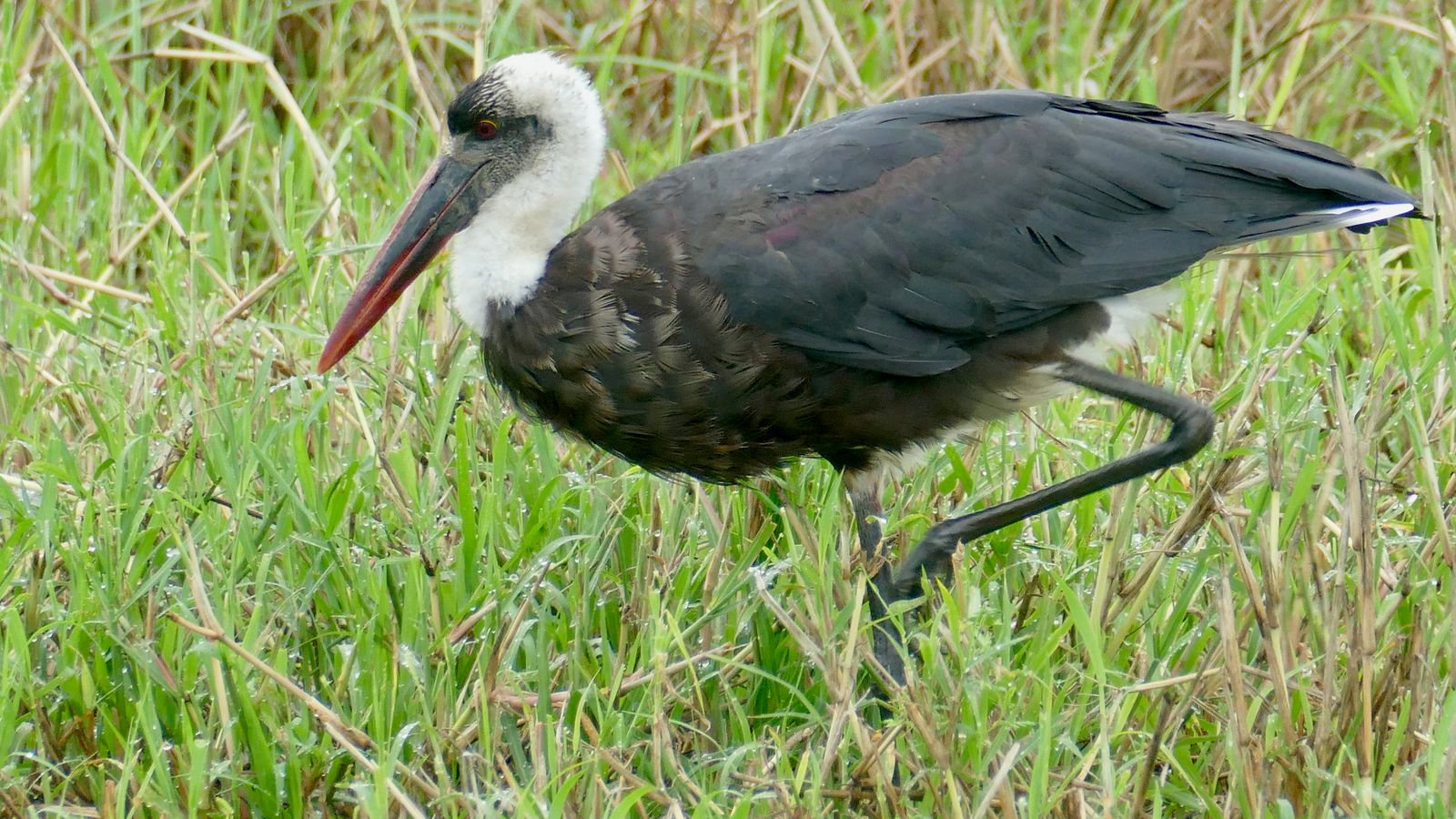
A three-year study of African woolly-necked storks (Ciconia microscelis) in KwaZulu-Natal, South Africa, found that the birds frequently nested in human-modified landscapes, while breeding success was associated with both surrounding habitat and conditions before nesting began. KwaZulu-Natal is the only known part of Africa where the species has colonised urban areas on this scale, and the study was the first detailed investigation of its breeding ecology in Africa. It was published on 16 April 2026 in the Journal of Ornithology.
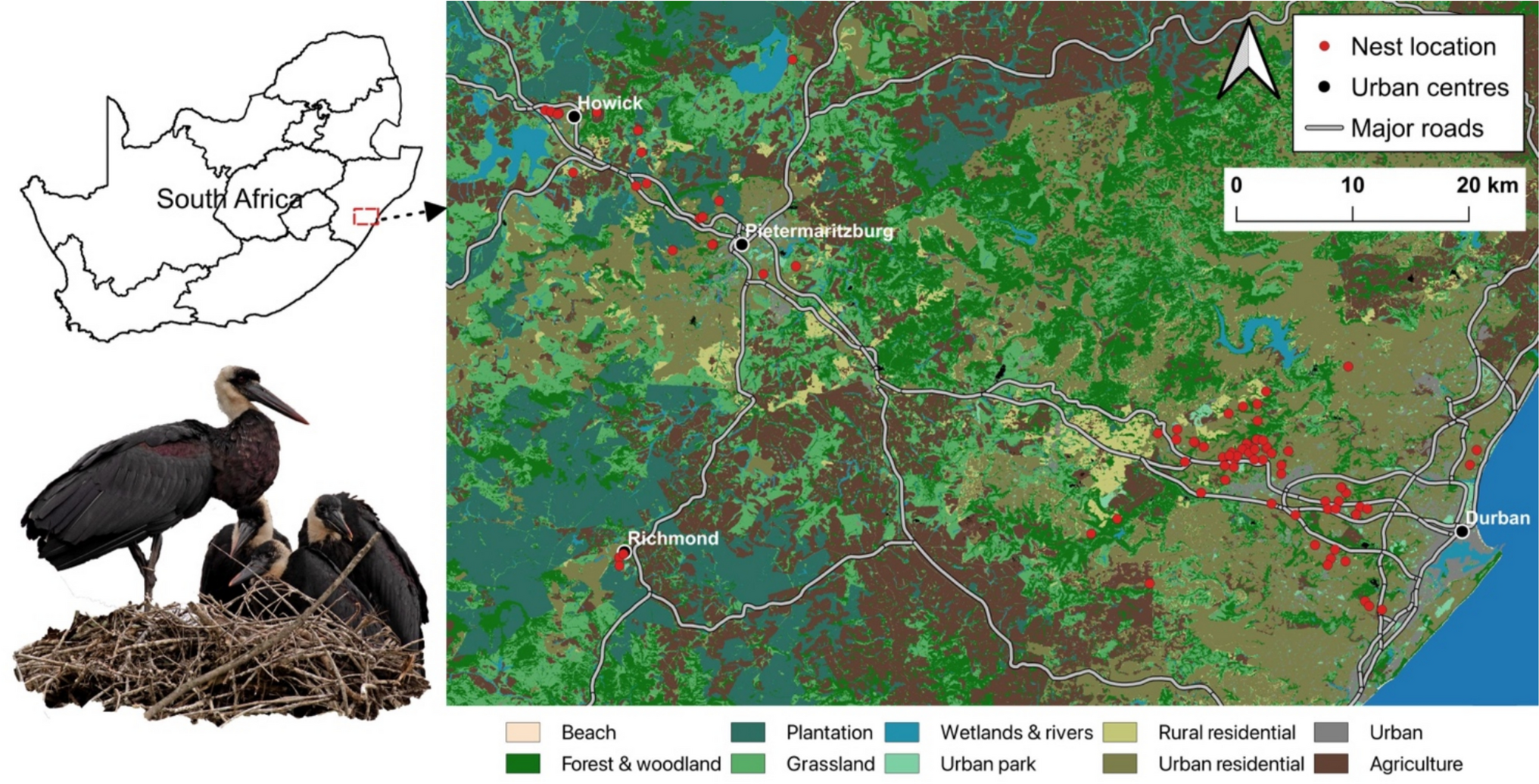
Researchers monitored 169 nesting attempts at 96 unique nest sites between 2022 and 2024 across several municipalities in KwaZulu-Natal, primarily between Durban and Howick. A total of 14.2% of the nesting attempts were renesting attempts after an earlier attempt in the same season had failed. The birds used at least 18 tree species, and 81% of identified nest trees were exotic species. Pine, camphor and rose gum together accounted for 65.5% of the identified nest trees.
Residential cover and previous success influenced nest use
The storks selected nest sites with a greater proportion of residential land cover than was available in the surrounding landscape. A nest that had been successful in the previous year was also far more likely to be reused, showing strong nest-site fidelity after a successful breeding attempt.
Egg laying peaked in September, when 59.7% of recorded laying occurred. Mean clutch size was 3.5 eggs, with four eggs the most common clutch size and an observed range of two to six. Across the monitored nests, 58.7% of eggs hatched. The study estimated a 61.8% probability that a nest would survive through the full nesting period.
Nearby woodland increased fledging success while rainfall reduced it
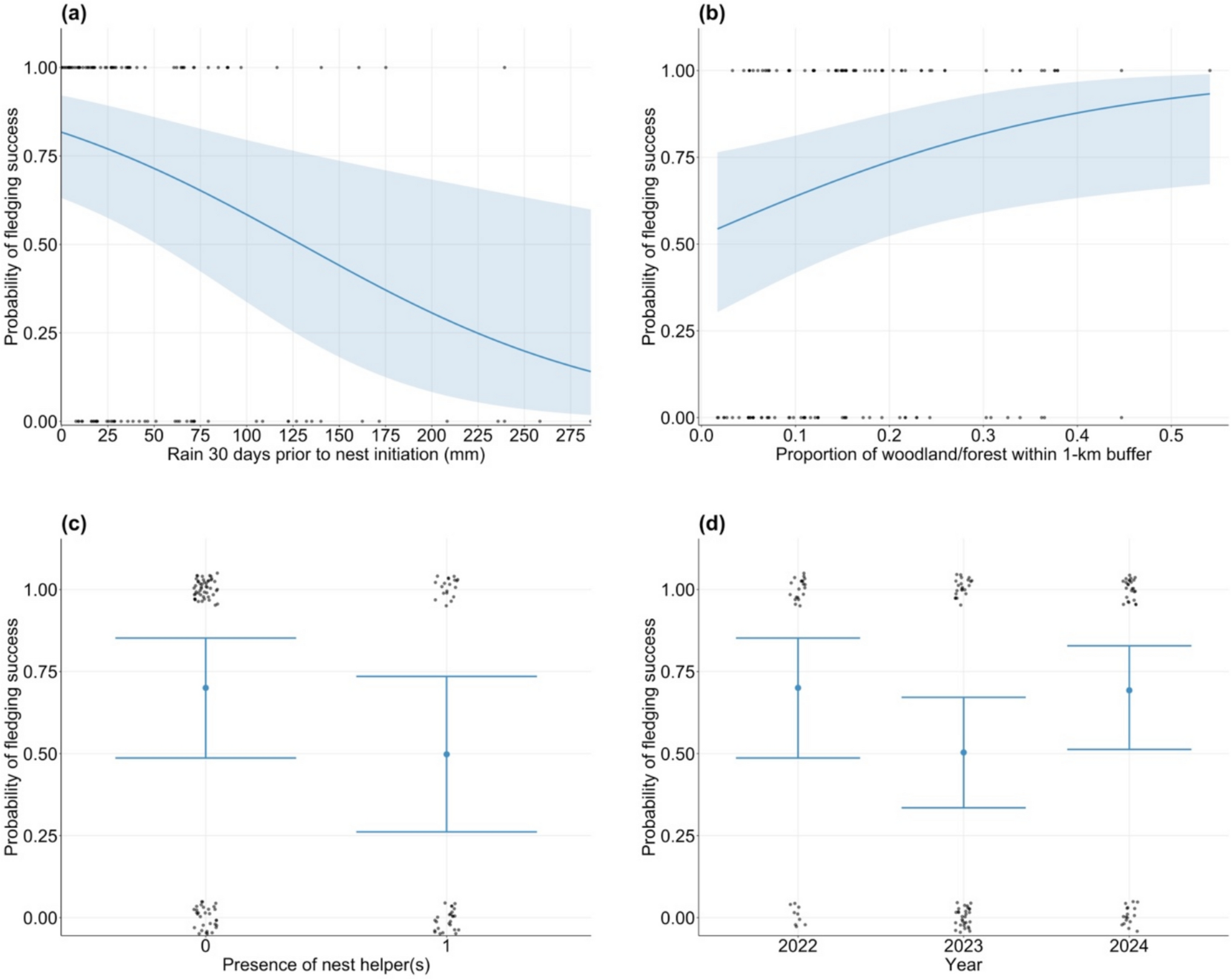
Including unsuccessful pairs, mean annual productivity was 1.03 fledged young per pair. Among successful pairs, the mean was 1.76 fledged young per pair. Fledging success was positively associated with the amount of woodland and forest within one kilometre of the nest. By contrast, greater cumulative rainfall during the 30 days before nest initiation was associated with lower fledging success and lower productivity.
Helpers were linked to lower productivity
Additional birds acted as helpers at 35.2% of nesting attempts. Their presence did not produce the positive effect the researchers had predicted. Productivity was significantly lower at nests with helpers, and fledging success also tended to be lower. The authors interpret this as a maladaptive effect of nest helpers in the study population. They note anecdotal observations suggesting that nest contents may sometimes be accidentally knocked out when three or more storks move around in the nest bowl, but it remains unclear whether this explains the pattern.
The authors interpret the concentration of laying around September in relation to seasonal food availability, with chicks developing during the warmer and wetter period when natural prey becomes more abundant. The positive association with nearby woodland also suggests that suitable foraging habitat around otherwise urban or suburban nest sites may contribute to breeding performance. The authors argue that the population’s overall moderate breeding success may help explain how African woolly-necked storks have expanded so rapidly through KwaZulu-Natal’s urban mosaic.
The researchers emphasise that the study could not make a strong comparison between nesting in human-modified and natural landscapes. Surveys were spatially biased toward accessible areas, nests can be difficult to detect in dense natural vegetation, and access to private land was uneven. The results therefore document breeding ecology in the KwaZulu-Natal mosaic landscape rather than representing all African woolly-necked stork populations across the species’ range.
Reproduction & development
Related news
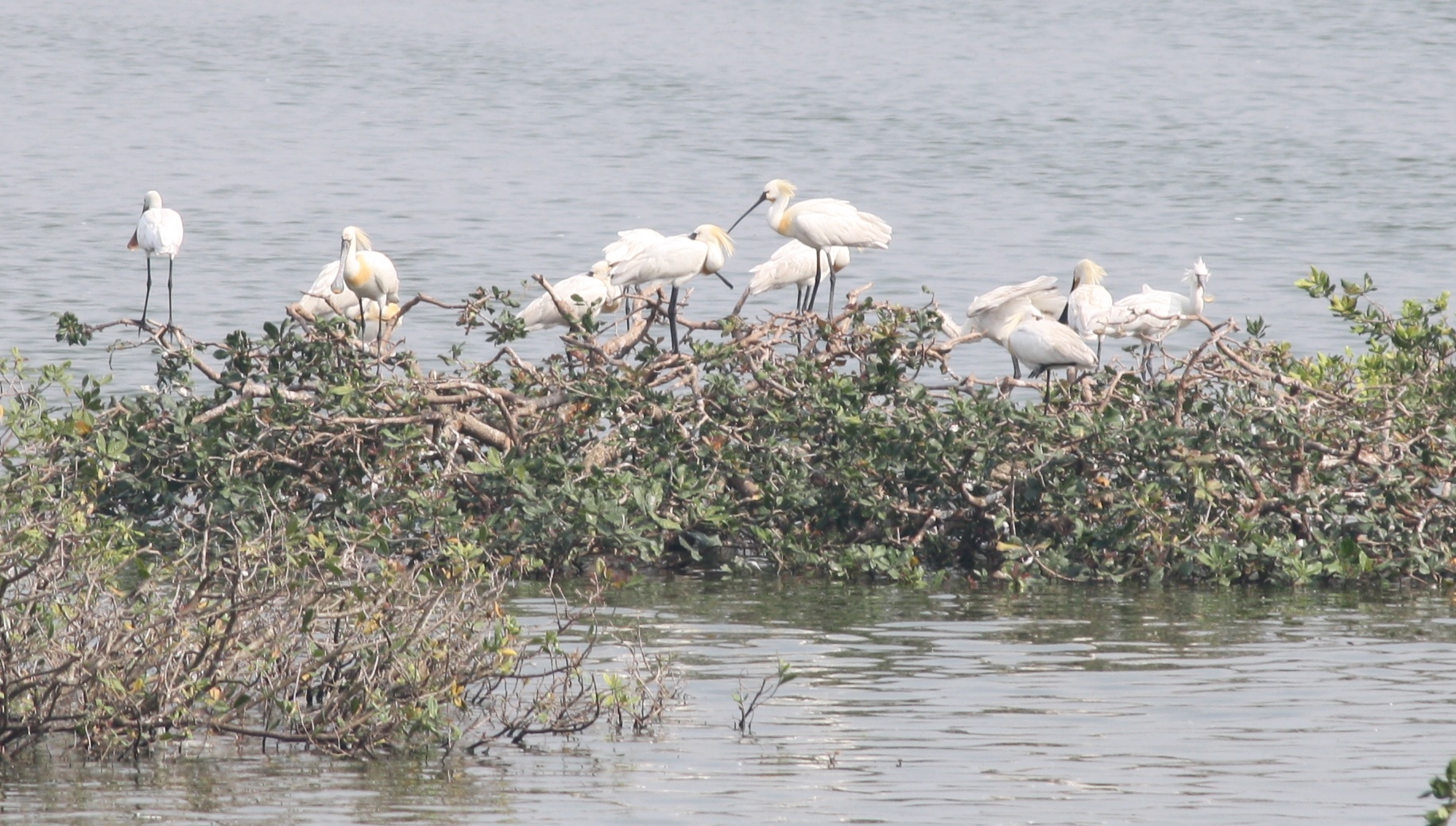
Therthangal Spoonbill Colony Returned to 12 Active Nests After Complete Breeding Failure
Six breeding seasons at Therthangal Bird Sanctuary in Tamil Nadu ranged from 12 active Eurasian Spoonbill nests in…
Read story →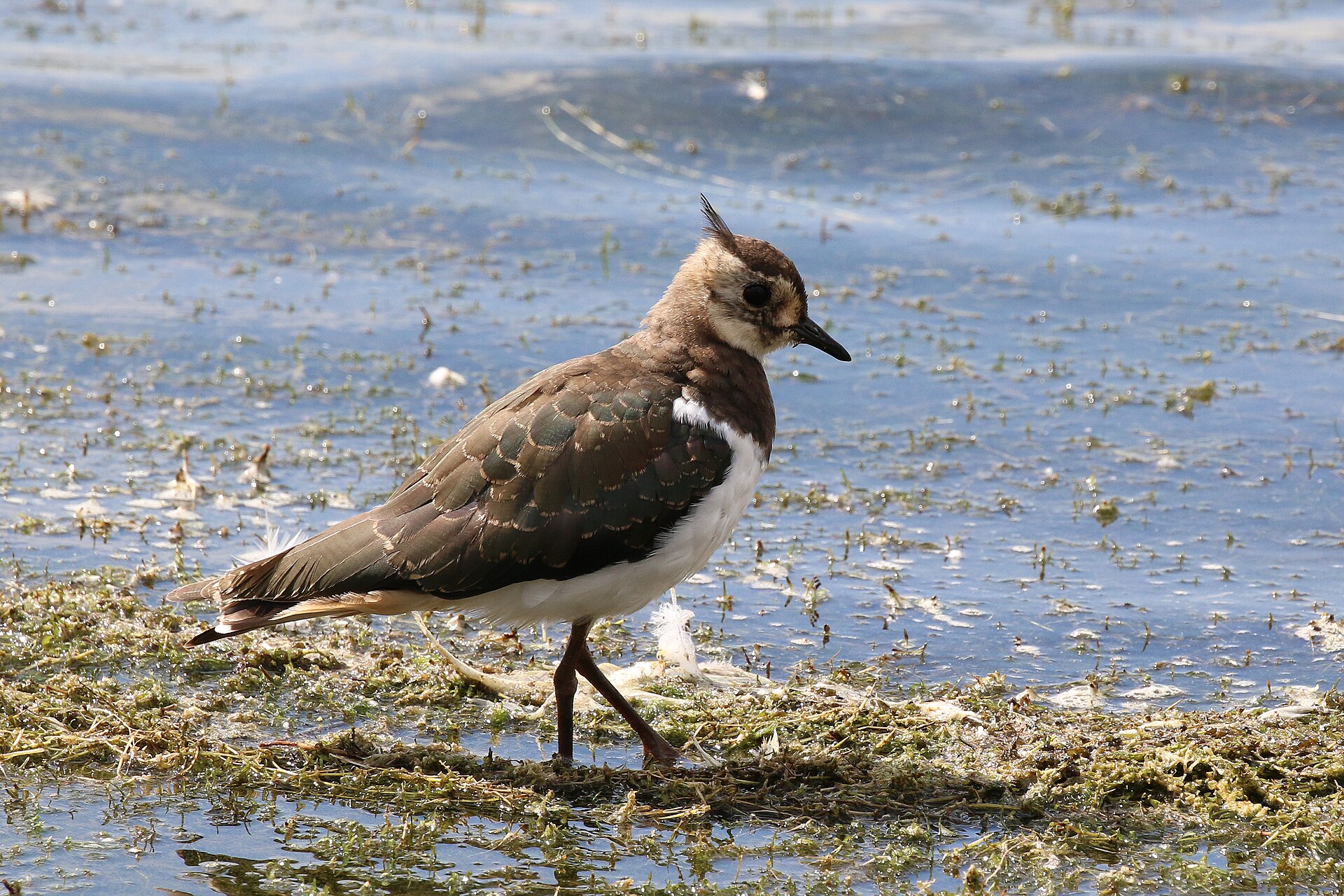
Lapwing and Oystercatcher Nesting Shifted in Opposite Directions With Latitude
Fifty years of UK nest records showed that northern lapwings nested later towards the north while Eurasian oystercatchers…
Read story →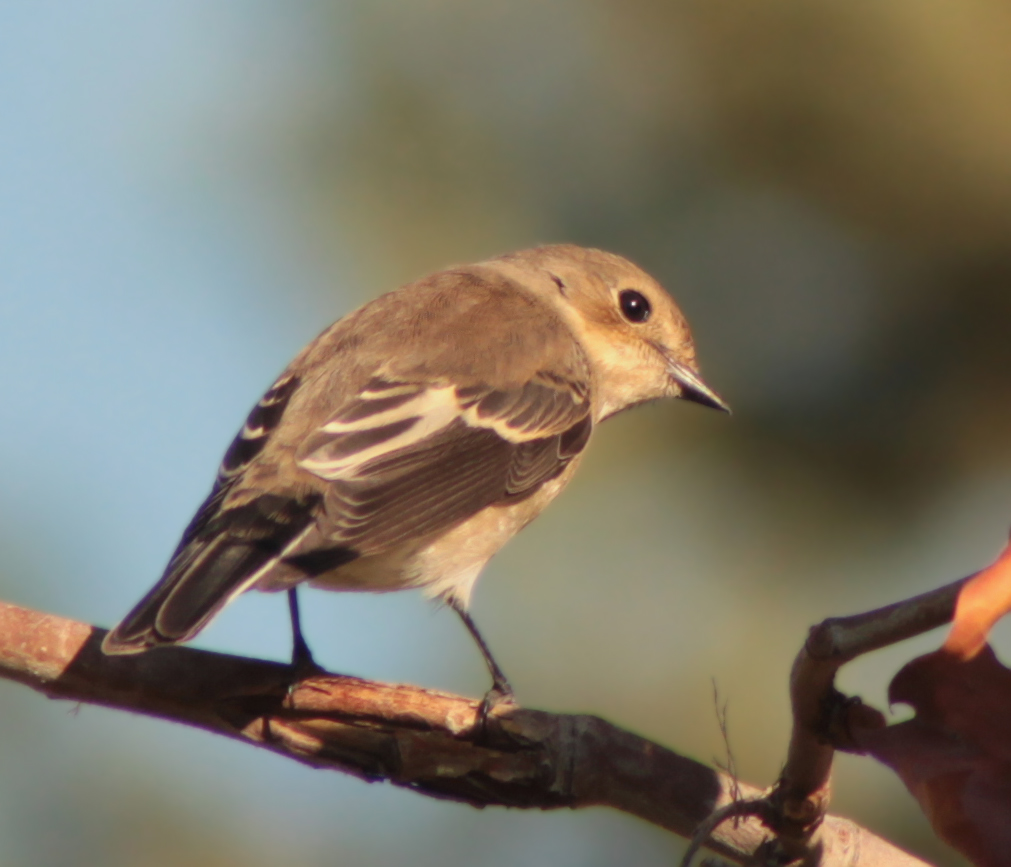
Late Spring Frost Was Linked to About 4% Smaller Pied Flycatcher Eggs
After a severe April frost damaged emerging oak foliage at Valsaín in central Spain, Pied Flycatchers laid eggs…
Read story →SPECIES IN THIS STORY
Species in this story
Independent research and conservation news archive
Did you find this information useful?
Wildlife Vagabond is independently built and maintained. Voluntary support helps cover source verification, hosting and continued work on research and conservation news.
Support Wildlife VagabondThe news archive will remain freely available.