
An immune response made wild mallards move less and use more sheltered habitat
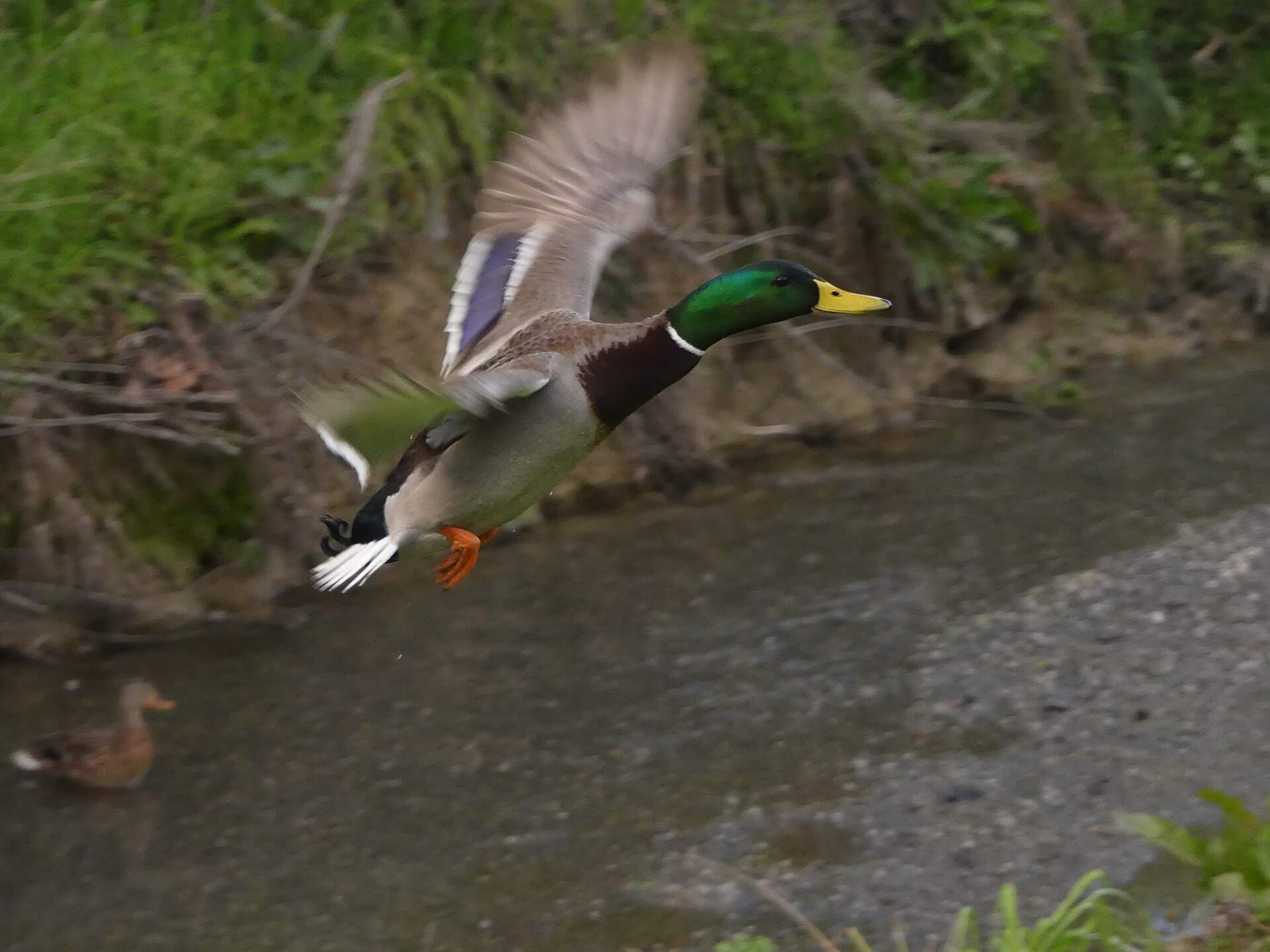
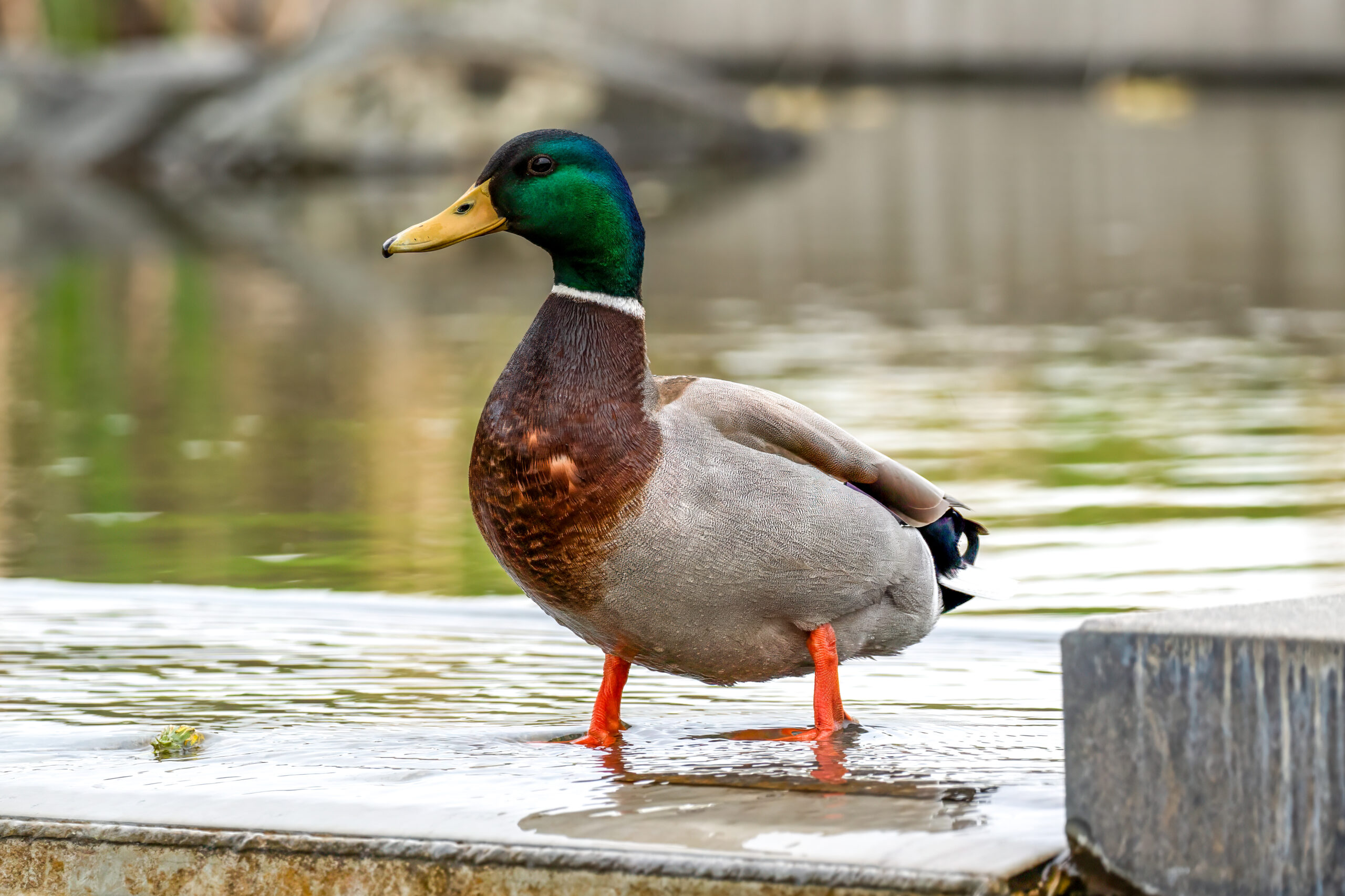
When an animal’s immune system responds to a challenge, its behaviour can change too. These changes, often called sickness behaviour, can include reduced activity and altered movement. A study of free-ranging mallards (Anas platyrhynchos) near Lake Constance in Germany tested whether an acute immune response changed the birds’ activity, movement and habitat use.
Between 28 January and 20 February 2019, researchers captured 20 wild mallards. Ten received lipopolysaccharide (LPS), a bacterial component used to stimulate an immune response, while ten control birds received empty biodegradable microspheres. The treatment triggered an acute immune response; it did not give the birds a natural infection. GPS and activity loggers tracked the birds for up to a week after release.
Less movement and more time in sheltered vegetation
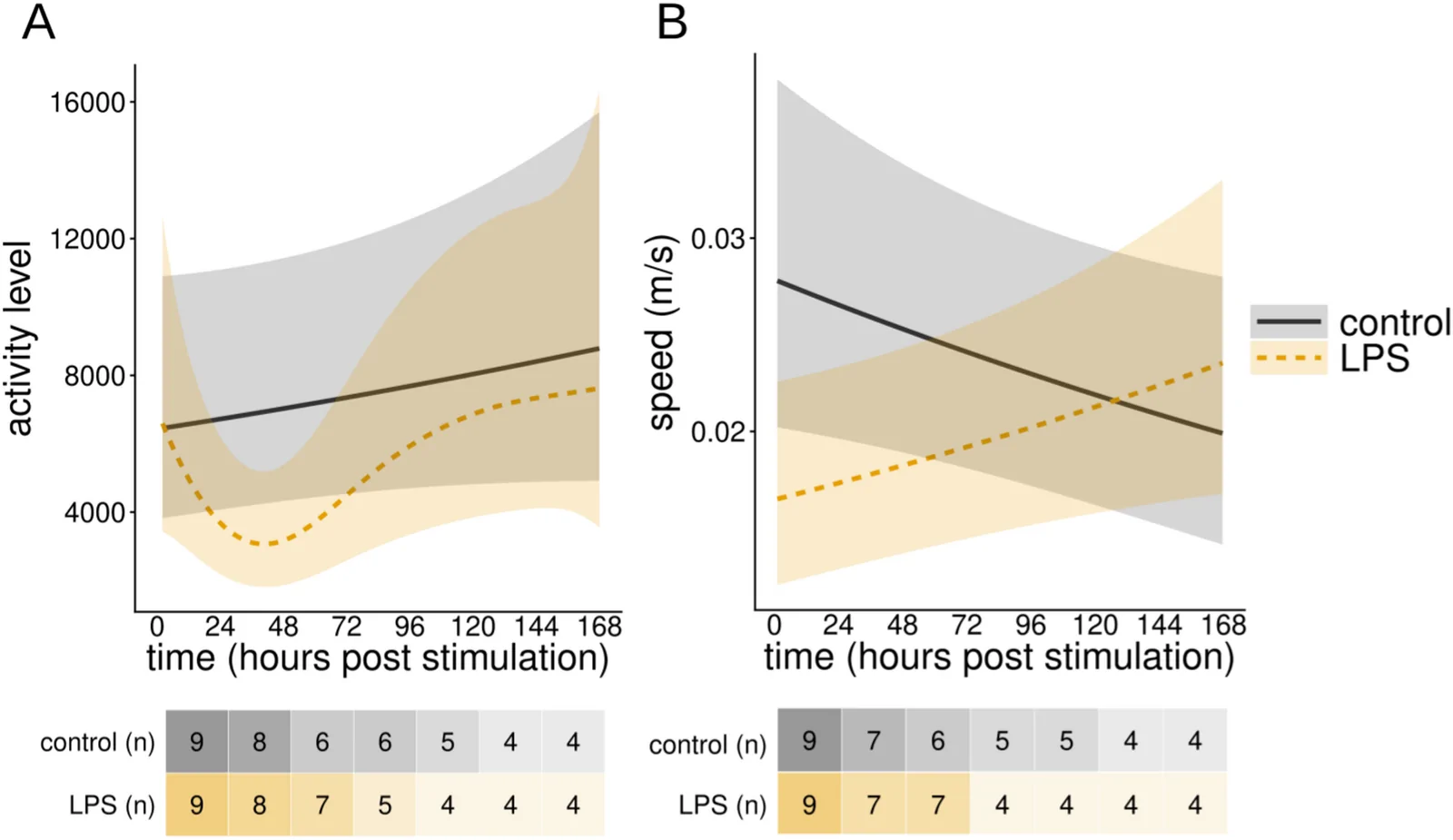
During the first days after treatment, LPS-treated mallards had about 33% lower activity and moved about 20% more slowly than control birds. They also travelled shorter distances. During the first two days, they spent more time in natural or semi-natural vegetation near or on the water, and less time on open water. Such vegetation—including reed beds, marsh and trees overhanging the water—can provide shelter. Together, these changes are consistent with sickness behaviour during an acute immune response.
The movement differences were strongest early in the week: activity was lower for roughly the first two to three days, and speed was lower for about the first two days. The habitat pattern appeared to reverse later. From day five to seven, the analyses pointed to more time on open water, and on days five and six to less time in waterside vegetation, among treated birds than controls. This later pattern is less certain because logger failures reduced the number of birds contributing data; by the final day, only four birds in each group remained.
Why changes in movement may matter
Changes in how far and how actively a wild bird moves, and in where it spends time, can affect its opportunities to interact with other animals. Because mallards can host infectious pathogens, such changes could also influence disease dynamics. The researchers proposed these as possible ecological consequences; they did not measure pathogen transmission. The experiment shows that an induced acute immune response can alter the fine-scale movement and habitat use of mallards living freely in the wild.
Ecology
Related news
Hunted birds showed hidden differences in survival
Records for 61,432 ringed birds from six hunted species, collected between 1953 and 2020, revealed hidden survival differences…
Read story →
Northern Pintails Got Less Energy from Wetland Seeds Than Other Ducks
Feeding trials comparing Mallards, Northern Pintails and Green-winged Teal found that usable energy from seeds of six moist-soil…
Read story →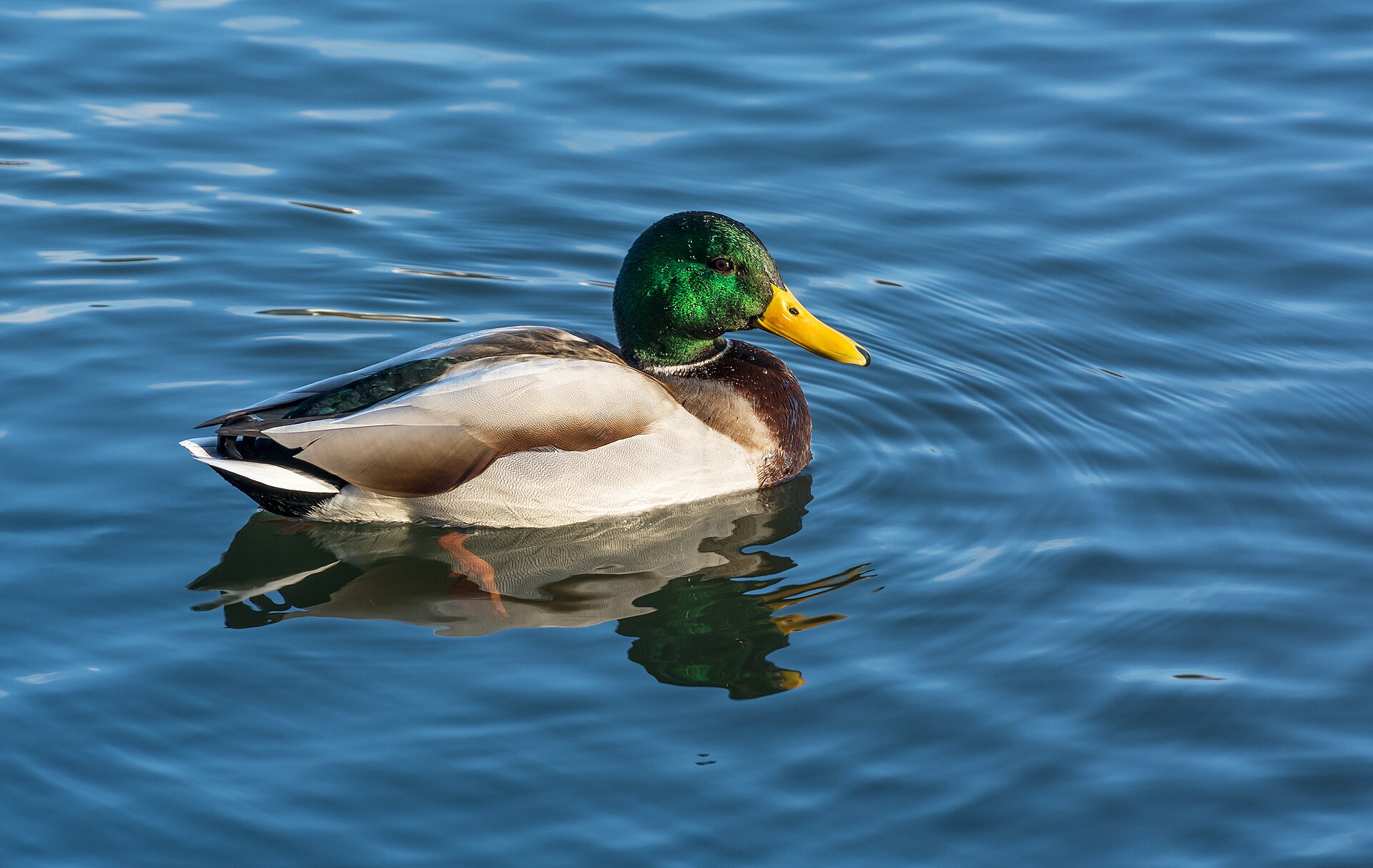
Non-hunting deaths drove the decline in adult female mallard survival
A 50-year analysis of banding and recovery records across the Prairie Pothole Region found that adult female mallard…
Read story →SPECIES IN THIS STORY
Species in this story
Independent research and conservation news archive
Did you find this information useful?
Wildlife Vagabond is independently built and maintained. Voluntary support helps cover source verification, hosting and continued work on research and conservation news.
Support Wildlife VagabondThe news archive will remain freely available.