
Bark Stripping Risk Rose Sharply at Higher Red Deer Density Indices in Western Norway
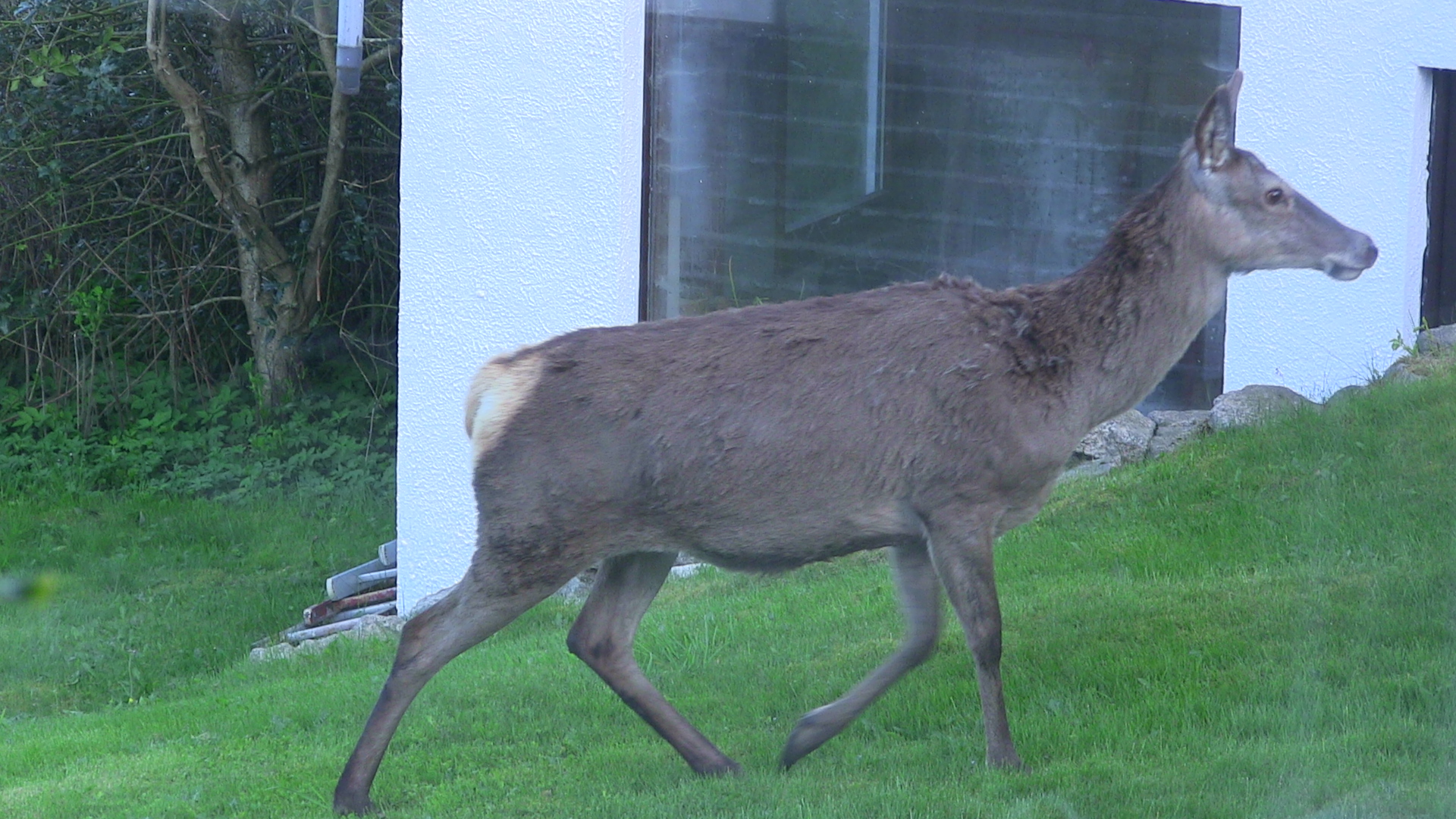
A large survey along Norway’s west coast found bark stripping by red deer (Cervus elaphus) in 74% of the examined Norway spruce (Picea abies) stands. Researchers inspected 14,990 trees in 450 stands spanning about 400 km; 16.8% of all sampled trees showed bark-stripping damage, while 11.1% of stands had damage on more than half of their trees.
Damage rose sharply as the density index approached two harvested deer per km²
The strongest factor associated with damage was a broad-scale red deer density index calculated from the number of deer harvested per square kilometre of counting area in each municipality. This is a hunting-based index rather than a direct count of deer. Bark-stripping probability changed little at lower values, but began increasing around 1.5 harvested deer per km² and rose sharply as the index approached about two harvested deer per km².
Several local conditions also affected the probability of damage. Bark stripping was more likely in spruce stands close to agricultural meadows, farther from roads and in more rugged terrain. Within stands, risk was higher on shorter trees, where there were fewer branches and where the gaps between branch whorls were larger; these patterns make the trunk easier to reach and the bark of younger trees more suitable as forage. Snow depth, site productivity and stand density also affected risk. The authors interpret the combined pattern as evidence that deer distribution, access to alternative forage and the accessibility and palatability of bark all contribute to where damage occurs.
The researchers identify population control as the management measure most likely to reduce bark stripping where deer densities are high. They also note a practical conflict: landowners may value high deer numbers for hunting income and recreation while simultaneously losing timber value through bark damage. Forestry planning that considers local deer habitat use and access to alternative forage may therefore complement population management.
Human–wildlife conflict
Related news
Velvet Antler Had the Most Distinct Metabolite Profile in Red and Sika Deer
A Chinese study detected 2,361 metabolites across three antler tissues from red and sika deer. Velvet antler separated…
Read story →
Tarim Red Deer Microbiomes Showed Greater Capacity to Break Down Reed Fibre
Under the same reed-containing diet, captive Tarim red deer had more fibre-associated gut microbes, higher cellulase and hemicellulase…
Read story →
Wolf Kills Provided Plenty of Food for Red Foxes
Red foxes visited all 26 wolf-killed red deer monitored in Stelvio National Park. The amount of meat left…
Read story →SPECIES IN THIS STORY
Species in this story
Independent research and conservation news archive
Did you find this information useful?
Wildlife Vagabond is independently built and maintained. Voluntary support helps cover source verification, hosting and continued work on research and conservation news.
Support Wildlife VagabondThe news archive will remain freely available.