
Cape Town’s Urban Landscape Has Left Peninsula Caracals Genetically Isolated
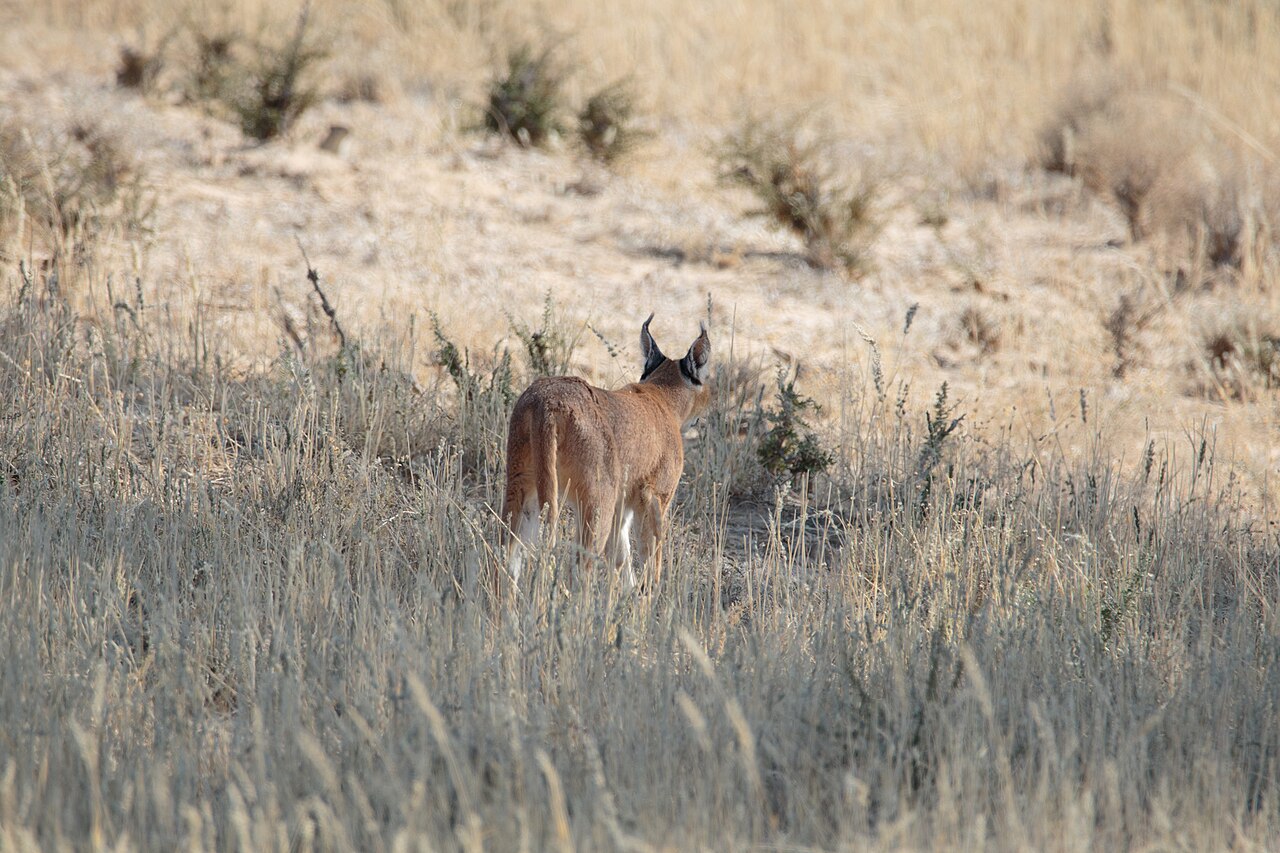
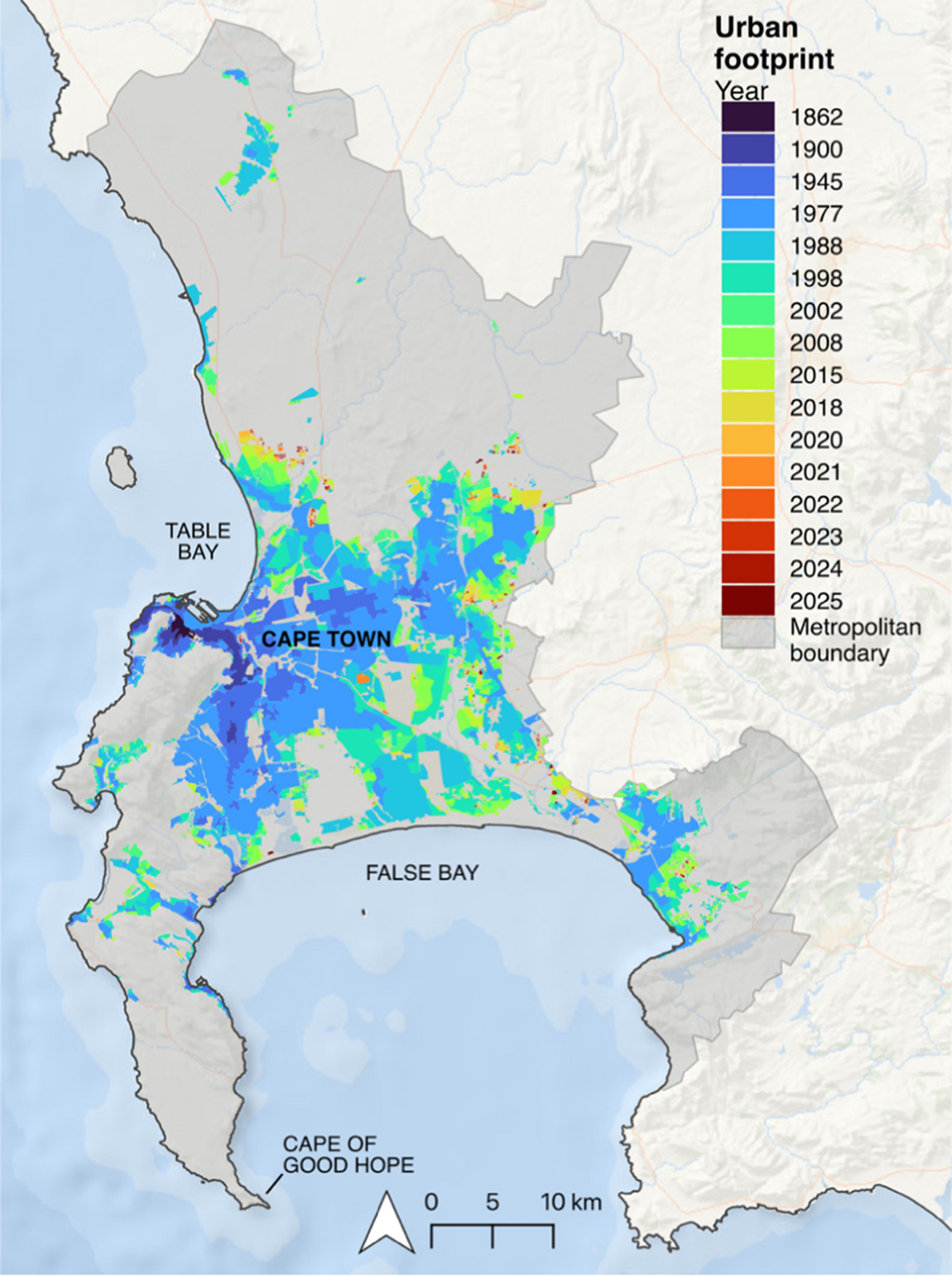
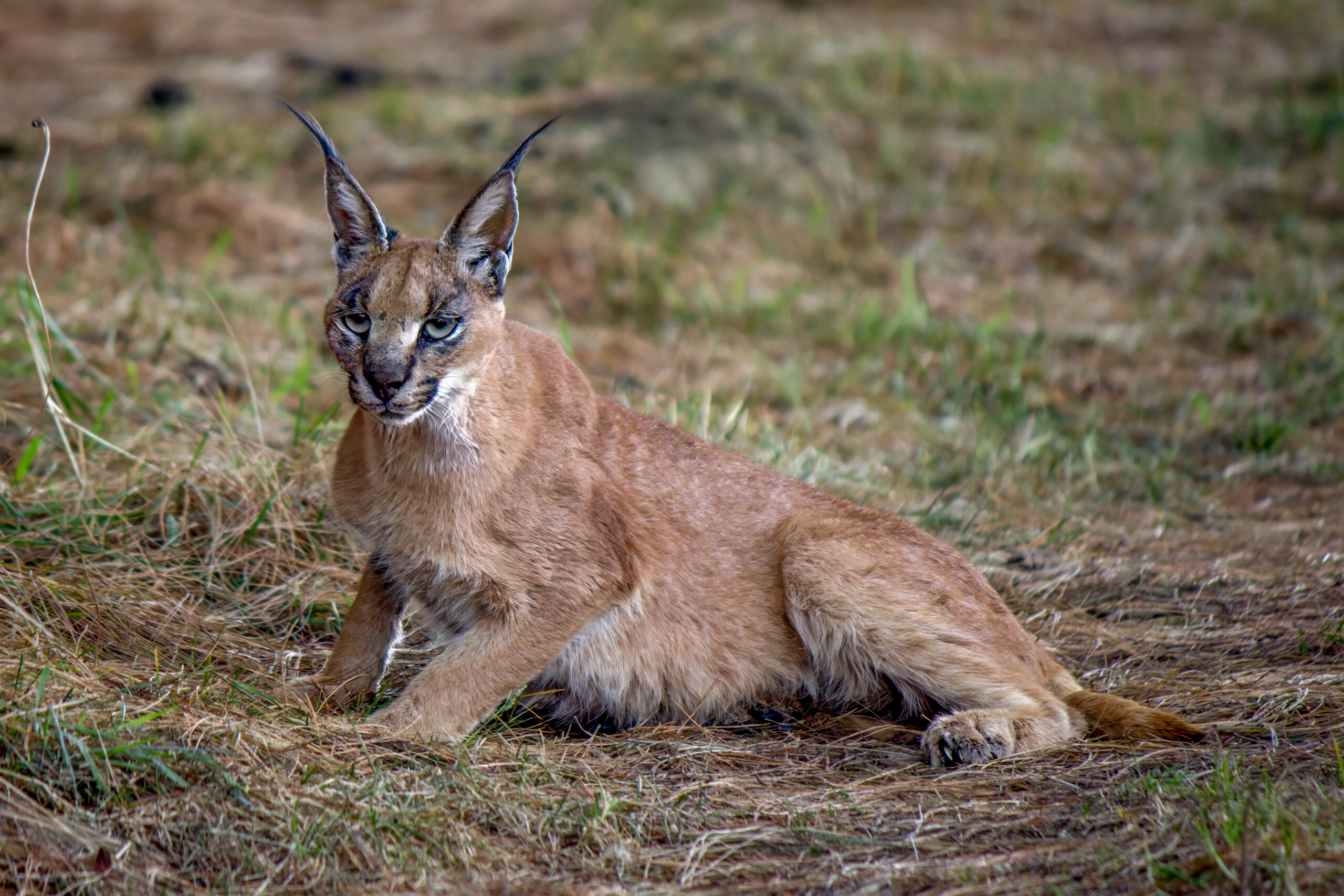
Urban development around Cape Town has produced clear genetic isolation in caracals (Caracal caracal) on the Cape Peninsula, despite the population being separated from caracals in the Greater Cape Town region by only about three kilometres at the narrowest point. The study was published on 9 April 2026 in Conservation Genetics.
Researchers analysed microsatellite markers and mitochondrial DNA from caracals sampled in four regions: the Cape Peninsula, Greater Cape Town, the Central Karoo and Namaqualand. The two types of genetic markers revealed different time scales. Mitochondrial DNA retained evidence of broader historical connectivity, with haplotypes — distinct mitochondrial DNA variants — shared among all four regions. Haplotype diversity was broadly similar across the four areas, while nucleotide diversity was highest in the Cape Peninsula and Namaqualand. Nucleotide diversity reflects how different the mitochondrial sequences are from one another, so the higher values mean that the maternal lineages present there were more divergent; this is not the same as high genome-wide genetic diversity. The microsatellite data, by contrast, showed strong contemporary population structure.
Peninsula caracals had the lowest genetic diversity and highest relatedness
The Cape Peninsula population had the lowest mean allelic richness, at 3.52 alleles per locus, compared with 5.77 in Namaqualand. Allelic richness describes how many genetic variants are represented across the markers in a population. It was clearly lower on the Peninsula than in all three comparison populations. Expected heterozygosity — another measure of genetic variation, reflecting how often two gene copies are expected to differ — was also lower on the Peninsula than in Greater Cape Town, the Central Karoo and Namaqualand. Observed heterozygosity, however, did not differ clearly among the four populations, so not every genetic-diversity measure showed the same pattern.
Caracals on the Cape Peninsula were also more closely related to one another. Mean relatedness was 0.123 on the Cape Peninsula, compared with 0.058 in Greater Cape Town, 0.062 in the Central Karoo and 0.061 in Namaqualand — roughly twice as high on the Peninsula as in each comparison population. The inbreeding coefficient itself was 0.06 on the Cape Peninsula and in Greater Cape Town and 0.10 in the Central Karoo and Namaqualand, but these differences were not clearly supported. The study therefore does not show that the Peninsula population already has higher current inbreeding by that measure.
The urban landscape separated populations only about three kilometres apart
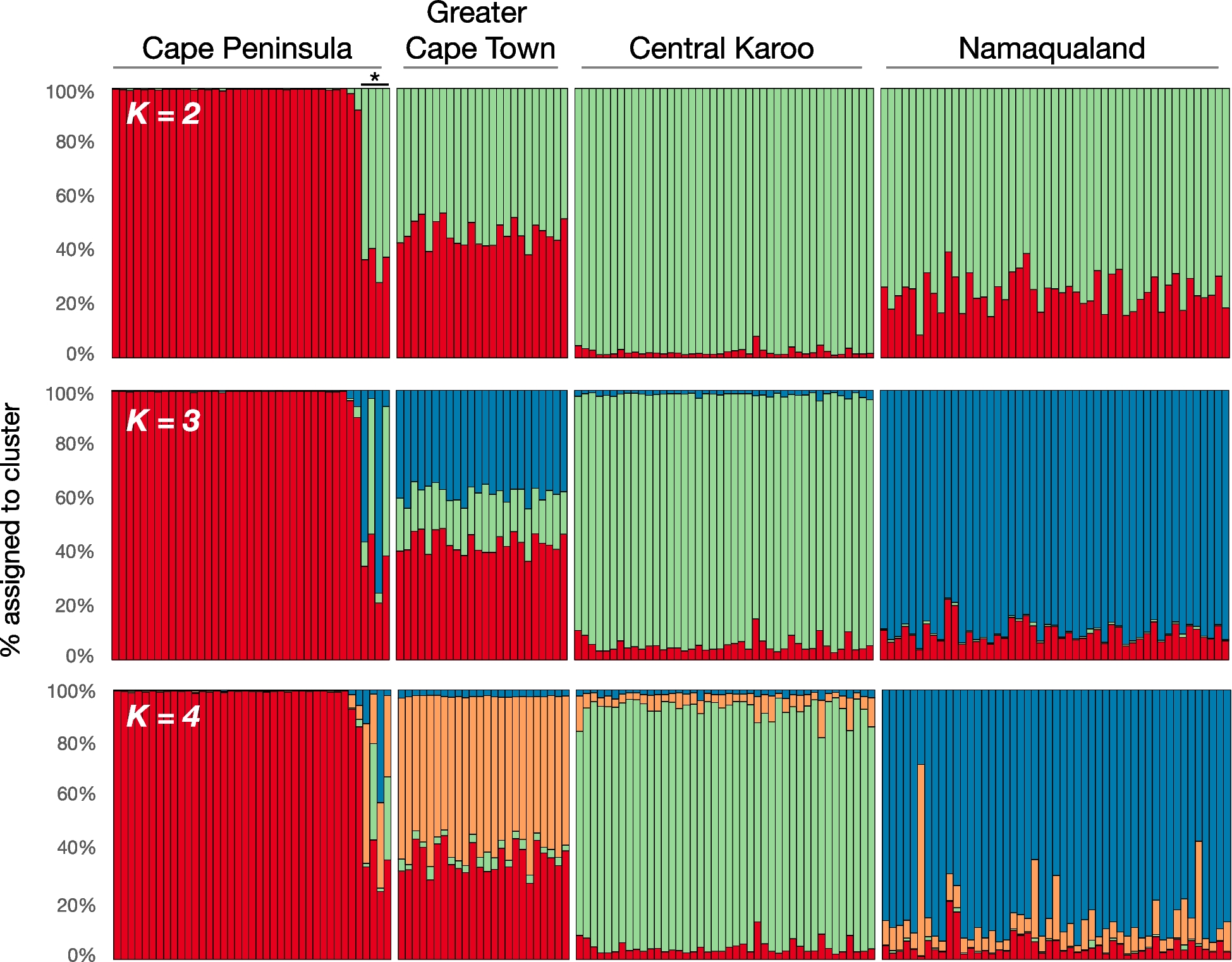
Population-clustering analyses separated the Cape Peninsula from the other regions. The strongest two-cluster model placed Peninsula caracals in one genetic group and the other three populations in another, while a second analytical approach resolved four geographically corresponding populations. This differentiation was present even though the closest parts of the Cape Peninsula and Greater Cape Town populations are separated by only about three kilometres of urban development.
Four migrants showed that gene flow had not stopped completely
The researchers nevertheless identified four likely first- or second-generation migrants from Greater Cape Town into the Cape Peninsula population, showing that some movement across the urban landscape still occurs. Geographic distance alone explained only around 12% of the genetic variation among populations.
The study also compared genetic relatedness with home-range overlap in 23 GPS-collared Peninsula caracals and found no clear relationship between how closely related individuals were and how much their ranges overlapped.
The authors conclude that Cape Town’s urban expansion has rapidly disrupted formerly broader gene flow, producing reduced genetic diversity, increased relatedness and pronounced population differentiation on the Cape Peninsula. They highlight maintaining or restoring landscape connectivity as important for preserving gene flow in the isolated population.
Genetics & genomics
Related news
India Released Its First Comprehensive National Conservation Framework for the Caracal, Fishing Cat and Clouded Leopard
The Wildlife Institute of India released a 220-page national action plan on 4 August 2026 for caracals, fishing…
Read story →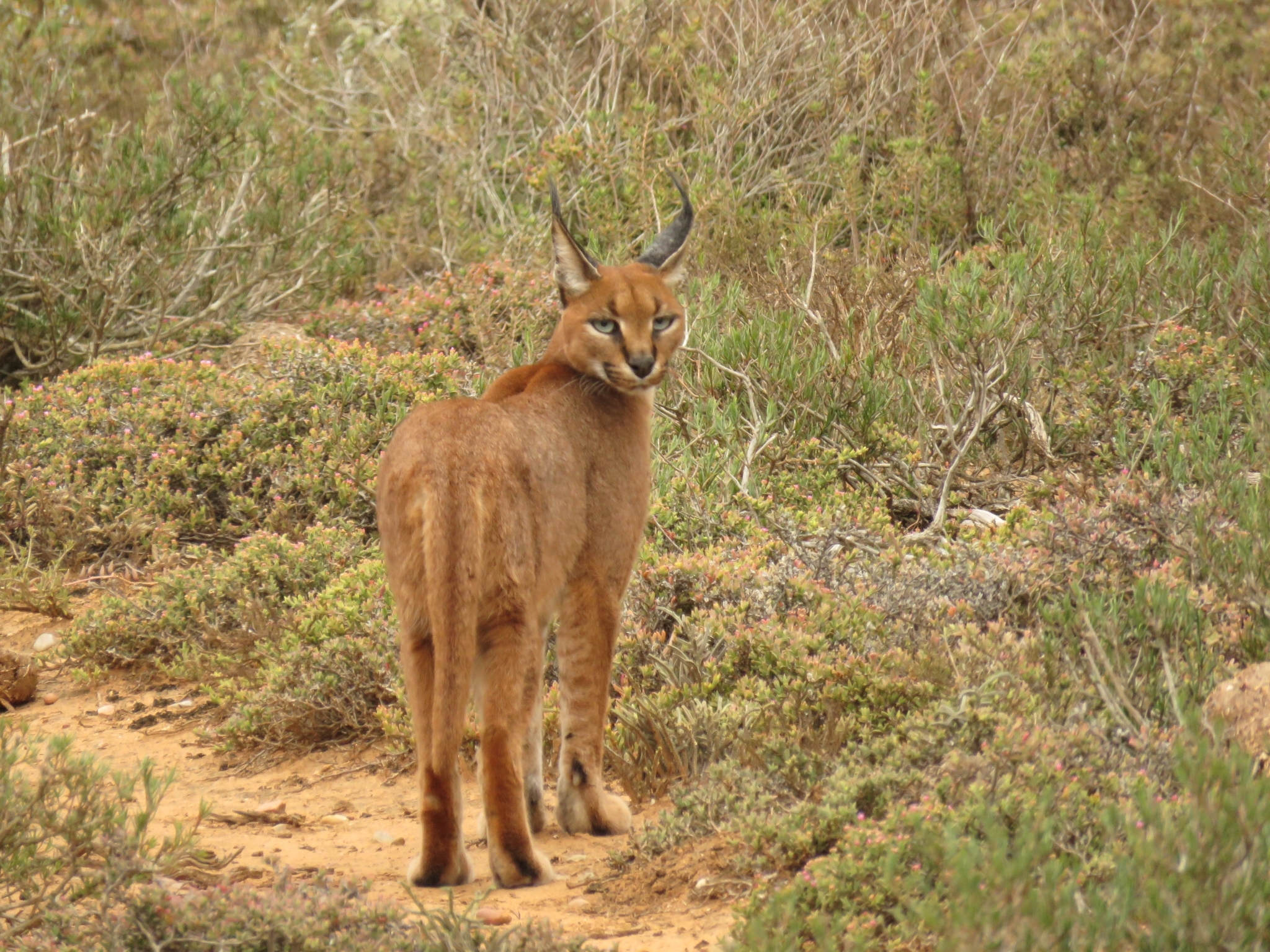
Anticoagulant Rat Poisons Were Detected in 78% of Sampled Cape Town Caracals
A ten-year Cape Town study found anticoagulant rodenticides in 78% of analysed caracal liver samples, with higher exposure…
Read story →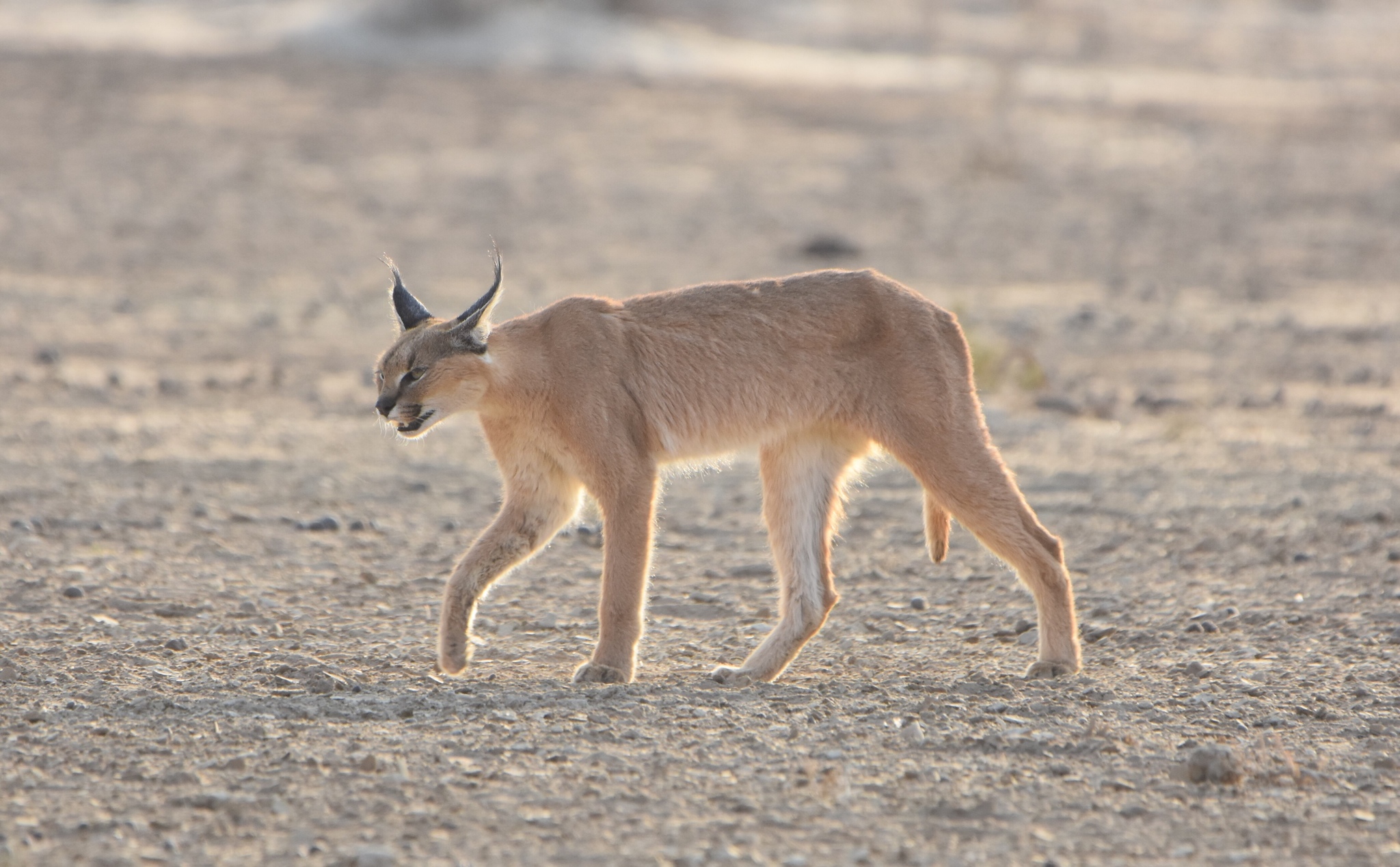
Camera Trap Confirmed Caracal Presence in Kuno National Park
A camera trap recorded a caracal in Kuno National Park in June 2026, providing a rare confirmed recent…
Read story →SPECIES IN THIS STORY
Species in this story
Independent research and conservation news archive
Did you find this information useful?
Wildlife Vagabond is independently built and maintained. Voluntary support helps cover source verification, hosting and continued work on research and conservation news.
Support Wildlife VagabondThe news archive will remain freely available.