
Microscopic Hooklet Numbers Varied Across a Common Wood-Pigeon Flight Feather
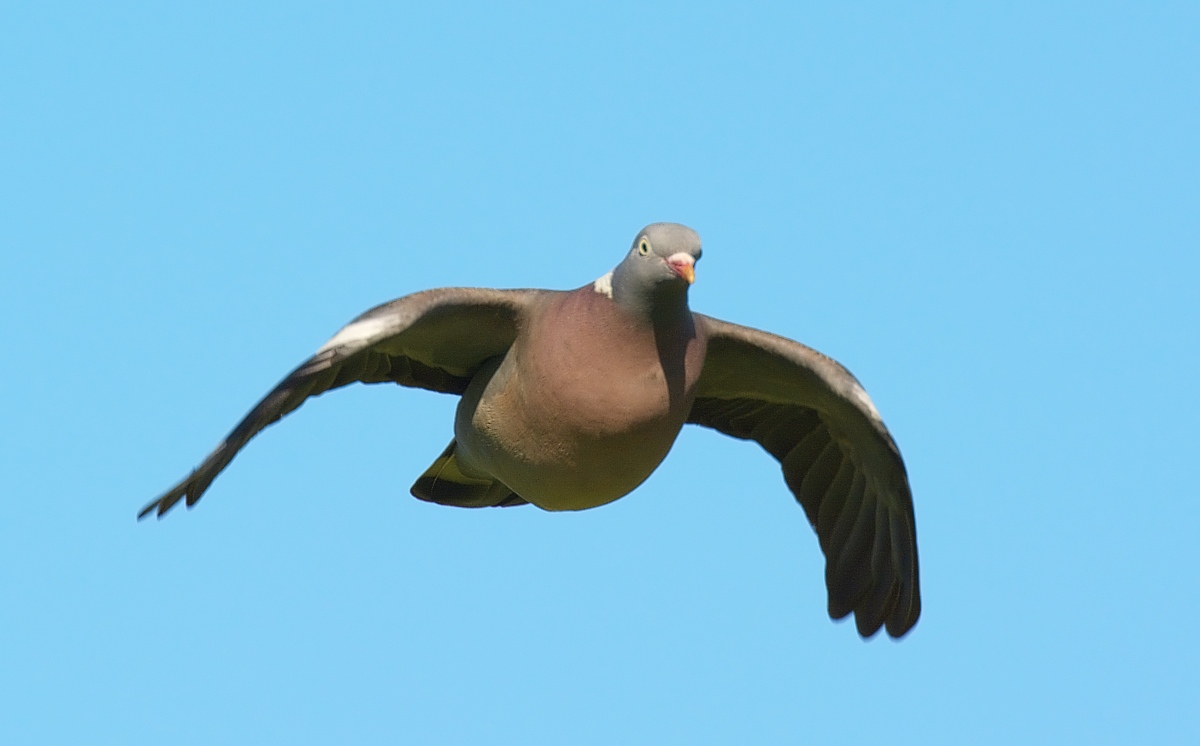
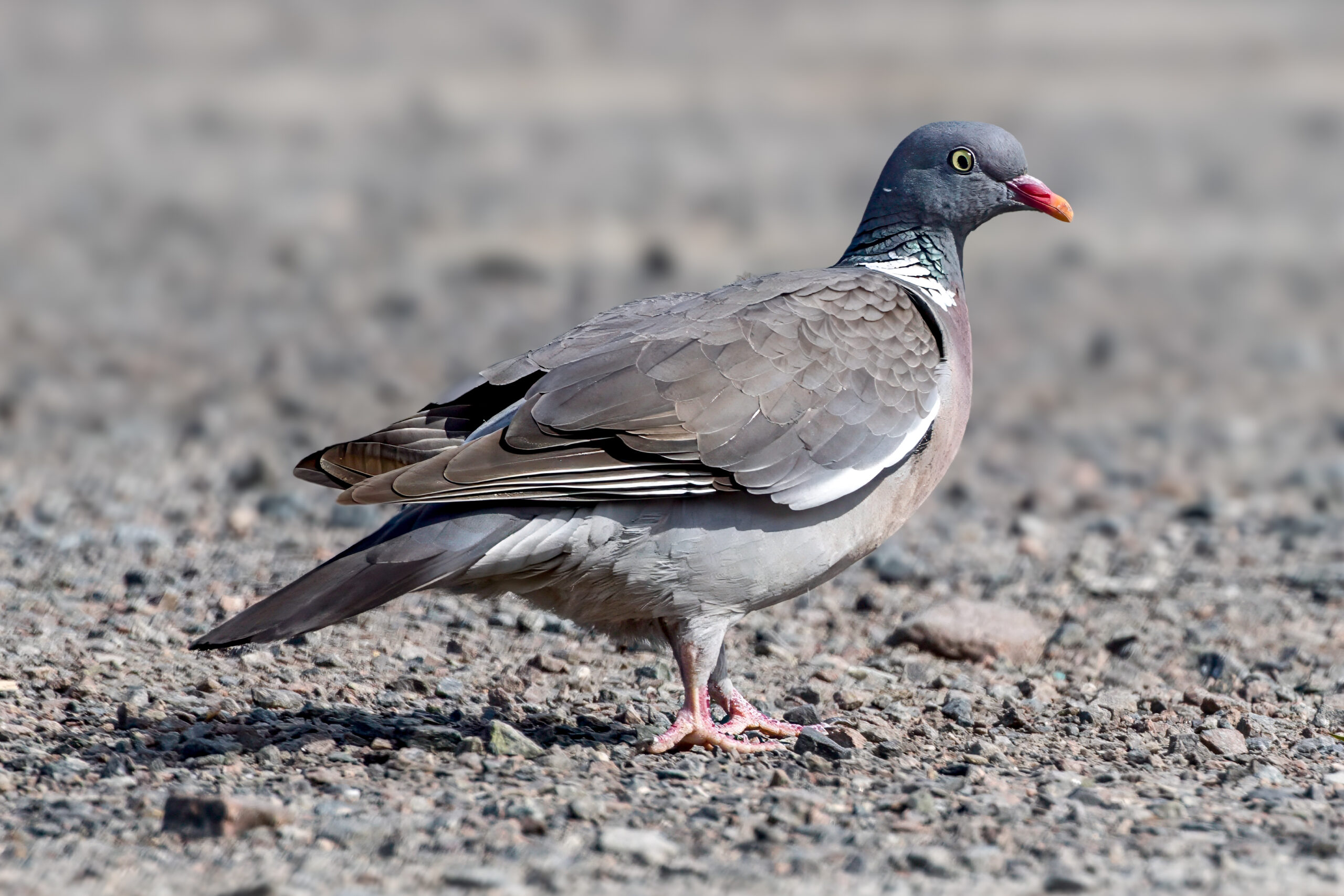
A detailed microscopy study in Germany of a common wood-pigeon (Columba palumbus) flight feather found that the tiny hooklets linking neighbouring feather structures are not distributed uniformly. Their numbers changed systematically across the feather, including a significant difference between the inner and outer vanes, and some barbules carried as many as ten hooklets.
Flight feathers are built around a central shaft, or rachis, with barbs extending to either side. Each barb bears smaller barbules. Hook-shaped structures on the anterior barbules catch against neighbouring barbules and help maintain the continuous feather vane. The study set out to quantify how these hooklets are distributed within a primary flight feather rather than assuming that their number is constant.
One Feather, 68 Barbs and 2,706 Microscope Images
The researchers examined the ninth primary feather from the adult plumage of one common wood-pigeon. The intact feather came from a private collection; the paper does not report where the bird itself originated. They sampled 68 barbs, 32 from the inner vane and 36 from the outer vane, and examined them with scanning electron microscopy, which uses an electron beam to produce very high-resolution images of surface structures.
In total, the team produced and analysed 2,706 microscope images. Hooklets were counted manually along defined sections of the barbs so that changes could be mapped both from the rachis toward the barb tips and between the two sides of the feather.
Hooklet Numbers Fell Near the Shaft and at Barb Tips
Barbules closest to the rachis carried fewer hooklets, and the first few barbules on every sampled barb lacked hooklets entirely. Hooklet numbers then increased away from the shaft. Toward the far ends of the barbs, the pattern reversed: counts declined again, approaching zero where the vane becomes open.
The more tightly interlocked middle part of the vane carried higher and comparatively stable numbers, although the distribution was not completely uniform. The results therefore supported the hypotheses that hooklet numbers decrease close to the rachis and toward the distal ends of barbs, but did not support the idea that the intermediate closed vane is uniform throughout.
The Outer Vane Had More Hooklets Than the Inner Vane
A fourth prediction was also supported. Across the whole dataset, barbules on the outer vane had a median of seven hooklets, compared with six on the inner vane, and the analysis supported a clear difference between the two sides of the feather.
The study also documented a wider range than older descriptions of pigeon feathers had suggested. Some barbules carried up to ten hooklets, which the authors report had not previously been described in pigeon feathers.
Possible Mechanical Meaning Remains a Hypothesis
The authors discuss the distribution in relation to the different physical conditions experienced across a primary feather. Areas near the feather base can remain partly covered by neighbouring flight feathers and primary coverts even when the wing is extended, whereas more exposed regions experience different airflow and mechanical demands. Fewer hooklets in covered regions might therefore preserve flexibility where strong interlocking is less necessary, while higher counts elsewhere could help maintain vane integrity.
These are biomechanical interpretations rather than effects directly measured in the study. The researchers did not test aerodynamic forces, attachment strength or feather flexibility experimentally. They present the anatomical map as a basis for future biomechanical measurements and modelling.
One Individual Limits How Far the Pattern Can Be Generalized
The authors identify phenotypic variation as a potential source of uncertainty because the quantitative study was based on one feather from one individual. Initial observations of two feathers from other pigeons showed no obvious deviation, and samples from an eighth primary also showed no notable difference, but the paper states that larger comparisons are needed to test variation among birds and among different flight feathers.
This limitation also matters for taxonomy. Microscopic feather traits have sometimes been proposed as tools for identifying bird groups, but the within-feather variation documented here means that hooklet number alone cannot be used confidently as a taxonomic marker from a feather fragment or isolated barb. The authors suggest that future work should combine hooklet number with features such as shape and length and record exactly where on the feather each structure was sampled.
The study’s main contribution is therefore a quantitative anatomical map: hooklet number changes across a single primary feather instead of remaining constant, and the range of variation is broader than previously described. Whether the same detailed pattern holds across individuals, ages and other flight feathers remains to be tested.
Anatomy & morphology
Related news
Type A Trichomonas Was More Than Twice as Prevalent in British Birds at Supplementary-fed Sites
Type A of the bird parasite Trichomonas gallinae was more than twice as prevalent in British birds at…
Read story →
Rotavirus A Antibodies Were Common in Feral Pigeon Samples but Rare in Wood-Pigeon Samples in Germany
A German study detected rotavirus A-reactive antibodies in 79.2% of free-ranging feral pigeons and 77.0% of domestic pigeons,…
Read story →
Common Wood-Pigeon Was Negatively Associated With Settlements in High Atlas Valleys
Across 179 survey points in two Central High Atlas valleys in Morocco, researchers recorded 1,073 pigeons and doves.…
Read story →SPECIES IN THIS STORY
Species in this story
Independent research and conservation news archive
Did you find this information useful?
Wildlife Vagabond is independently built and maintained. Voluntary support helps cover source verification, hosting and continued work on research and conservation news.
Support Wildlife VagabondThe news archive will remain freely available.