
Detection Dog Found an Adder Hibernaculum Without the Handler Knowing Its Location
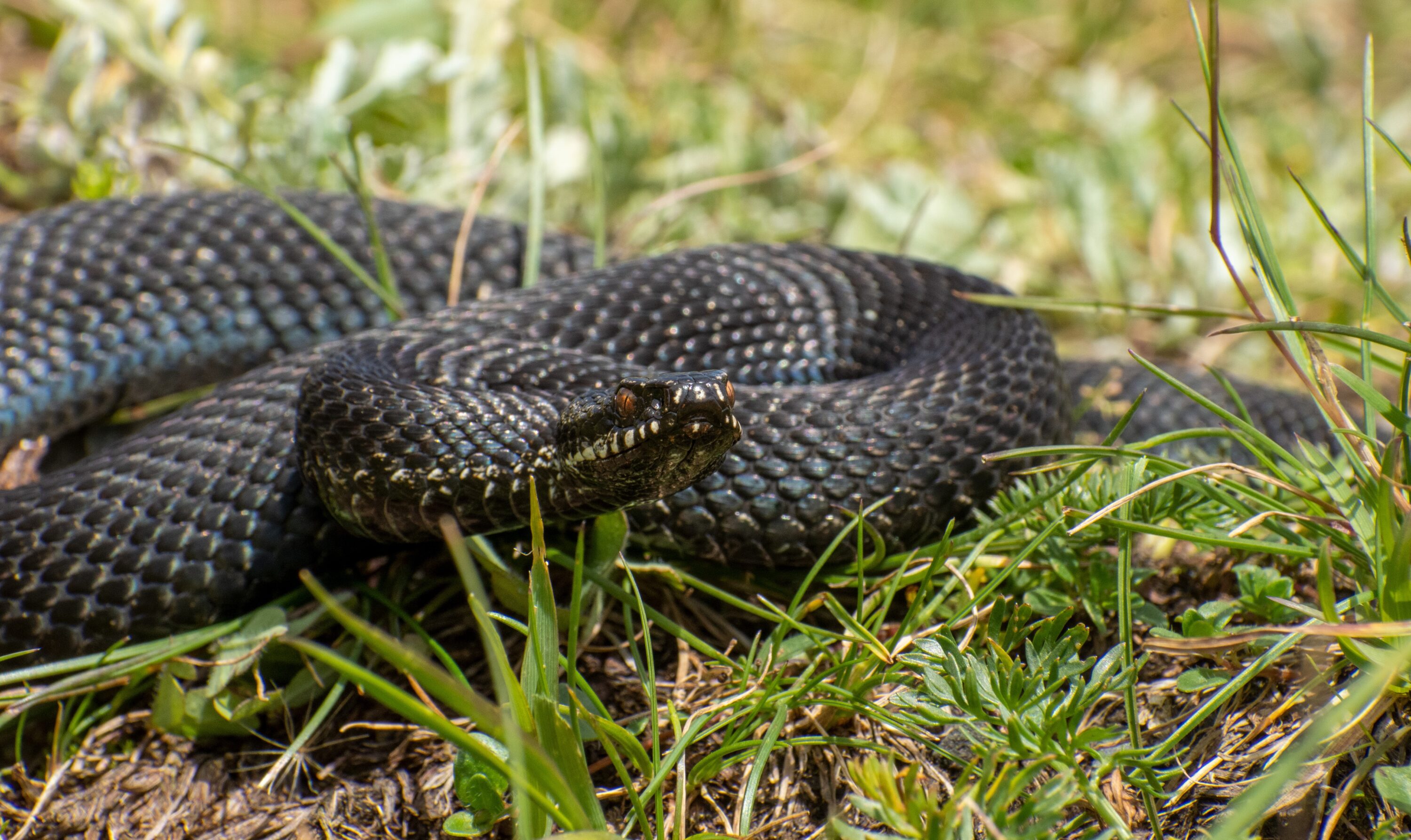
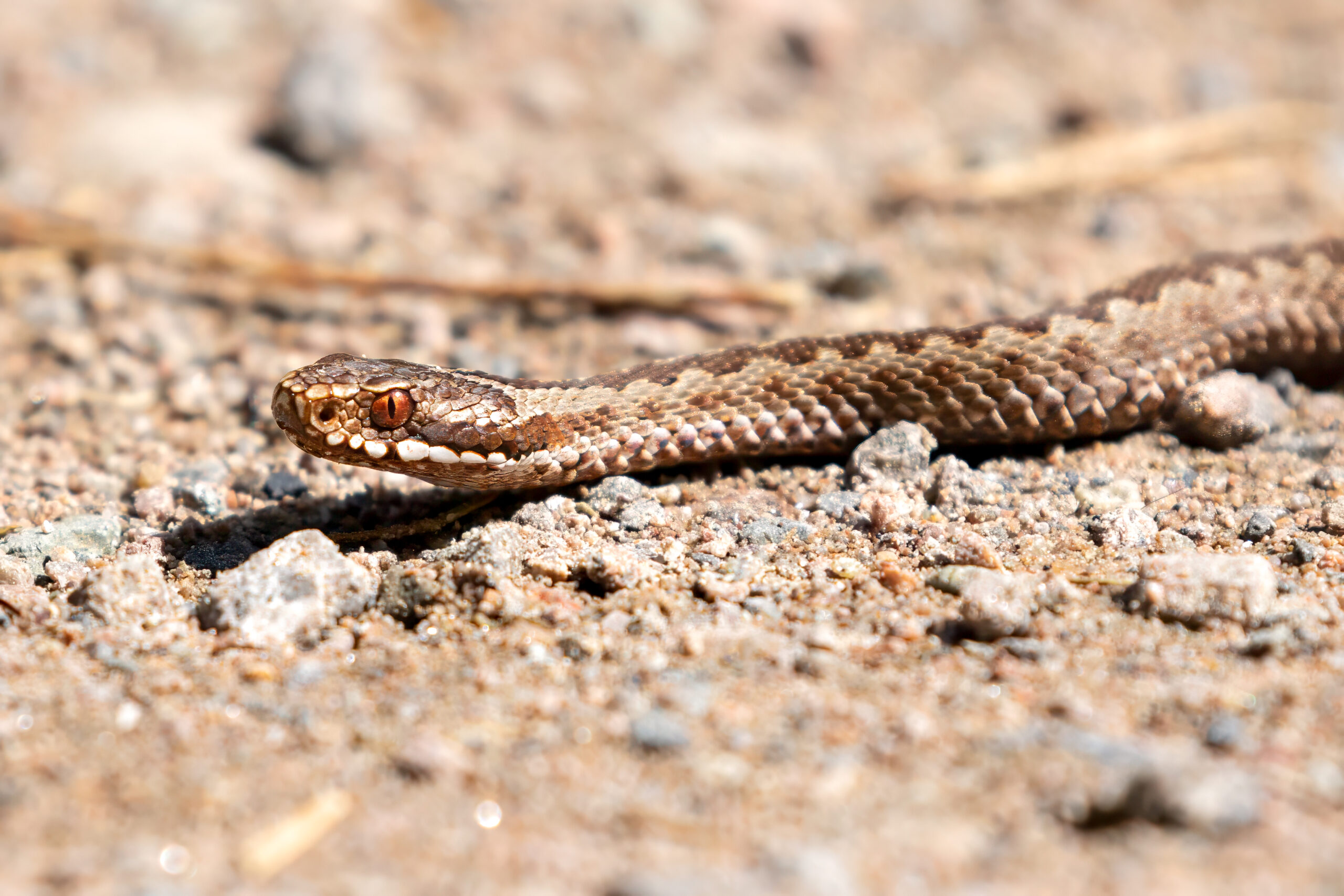
A trained detection dog was able to locate adder (Vipera berus) scent beneath soil and stone, and in a small pilot test independently indicated a known winter hibernation site without the handler knowing its exact position. The 2026 study tested whether scent collected non-invasively from adders could be used to find underground refuges that are otherwise difficult to locate.
The dog, a male English Springer Spaniel, was trained with shed skins and faecal swabs rather than live snakes. This matters because training can then be carried out without repeatedly handling or disturbing the target animals.
Detection became harder with depth
In controlled line-up tests, the dog correctly identified 127 of 140 positive scent targets. It detected adder scent at depths down to 1.2 metres, but performance declined as samples were buried deeper. At 1.2 metres, about 70% of positive targets were detected. Shed skins were detected somewhat more reliably than faecal swabs, while the type of substrate did not produce a clear difference in performance.
These tests showed that odour can travel through substantial layers of substrate, but they did not involve live snakes or natural hibernation sites. They were designed to test the dog’s ability to recognise buried adder scent under controlled conditions.
69 of 70 buried samples were found in field searches
The next stage used double-blind searches at two sites in North Rhine-Westphalia, Germany that were known to be free of adders. Neither the handler nor the dog knew where the targets had been buried. Shed skins or faecal swabs were placed about 50 cm below the surface together with blank samples.
The dog found 69 of 70 positive targets and made no false alerts. The one missed sample occurred during a search that had to be stopped because of an external disturbance. The 50 cm depth was chosen because it is representative of many known adder hibernacula in western Europe.
One live-adder hibernaculum provided an independent pilot test
Finally, the researchers asked whether a dog trained only on collected scent could generalise to living adders underground. They searched areas where radio telemetry had already identified winter refuges of tagged snakes. In radio telemetry, a small transmitter carried by an animal emits a signal that researchers can follow, allowing the snake’s position to be located without seeing it.
The dog alerted within 50 cm of both known hibernation locations. However, the authors regard only the Venner Moor search as an independent and valid detection. At the second confirmed site along the Dortmund–Ems Canal, the handler had prior knowledge of the area and unintentionally guided the dog toward the known location, creating a risk of handler cueing.
The dog also alerted at two control transects where no tagged snake was known to be present, but these alerts could not be verified. Untagged adders might have been present, so the researchers did not treat them as either confirmed hibernacula or clear false alerts.
A promising method that still needs broader testing
Adder hibernacula can be difficult to locate, yet their position can be crucial during peatland rewetting, construction and other land-use changes. Flooding or destroying a winter refuge can affect snakes that depend on a dry, protected underground site through the cold season.
The study therefore provides a proof of feasibility rather than a fully validated monitoring method. Only one dog was tested, and only one of the two known live-adder hibernacula produced a fully independent pilot detection. The authors recommend trials with more dogs, more tagged snakes and larger field samples before detection dogs are used as a standard method for locating adder hibernacula.
Management
Related news
Cornwall Project Will Examine How Roads, Rivers and Habitat Fragmentation Affect Adders
A new Cornwall project will investigate how roads, rivers and fragmented habitats affect adder populations and their movement…
Read story →
Balkan Adder Provided the First Wild Scavenging Record for Vipera berus
An adult female Balkan adder on Vitosha Mountain was found swallowing a dead bank vole whose severe injuries…
Read story →
Genomic Scan Linked Gossa’s Rare Adder Stripe Morph to a Region Containing PMEL
A 2026 genome scan of 76 adders on Gossa in western Norway linked the island’s rare longitudinal stripe…
Read story →SPECIES IN THIS STORY
Species in this story
Independent research and conservation news archive
Did you find this information useful?
Wildlife Vagabond is independently built and maintained. Voluntary support helps cover source verification, hosting and continued work on research and conservation news.
Support Wildlife VagabondThe news archive will remain freely available.