
Genomic Scan Linked Gossa’s Rare Adder Stripe Morph to a Region Containing PMEL
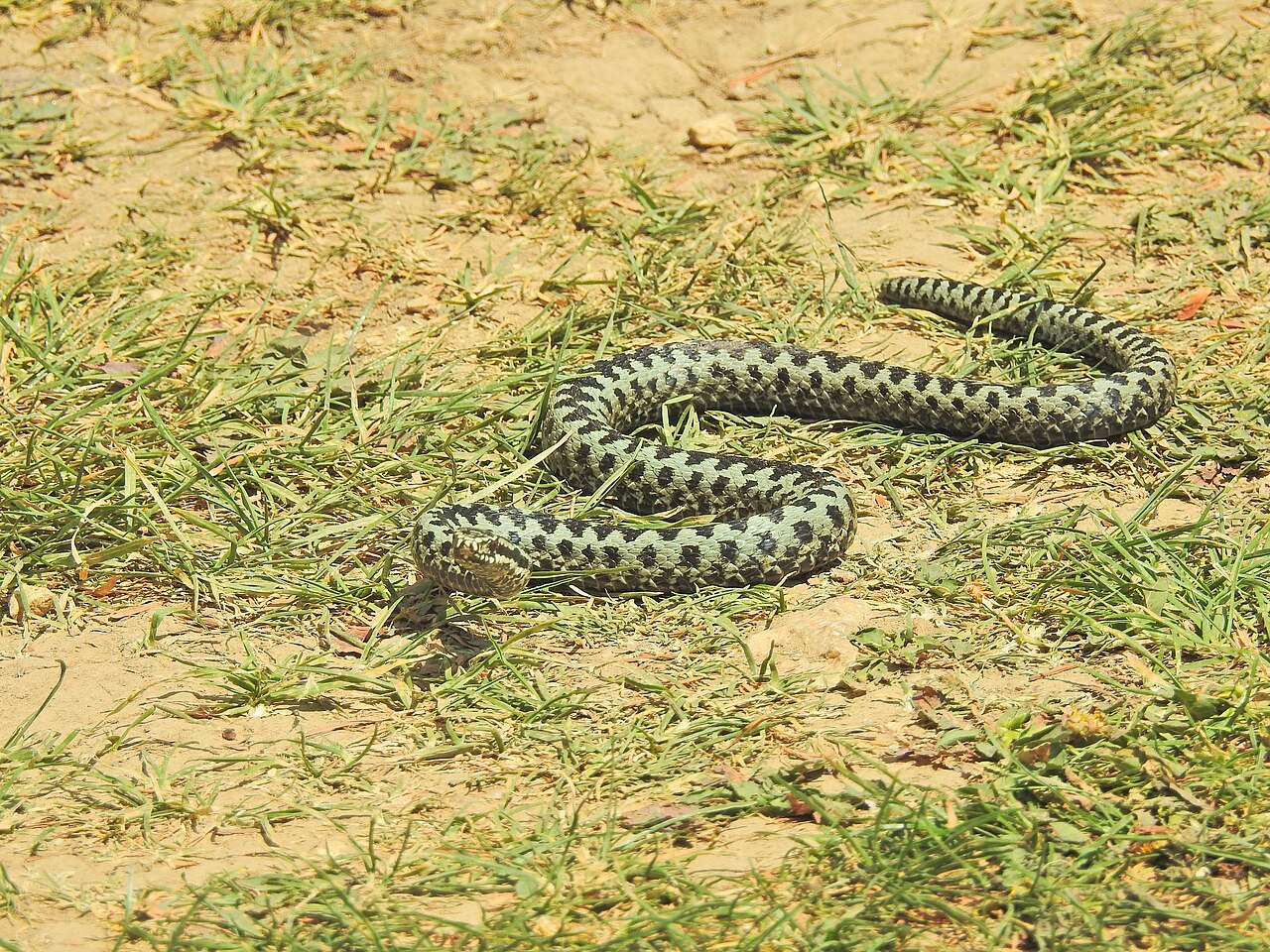
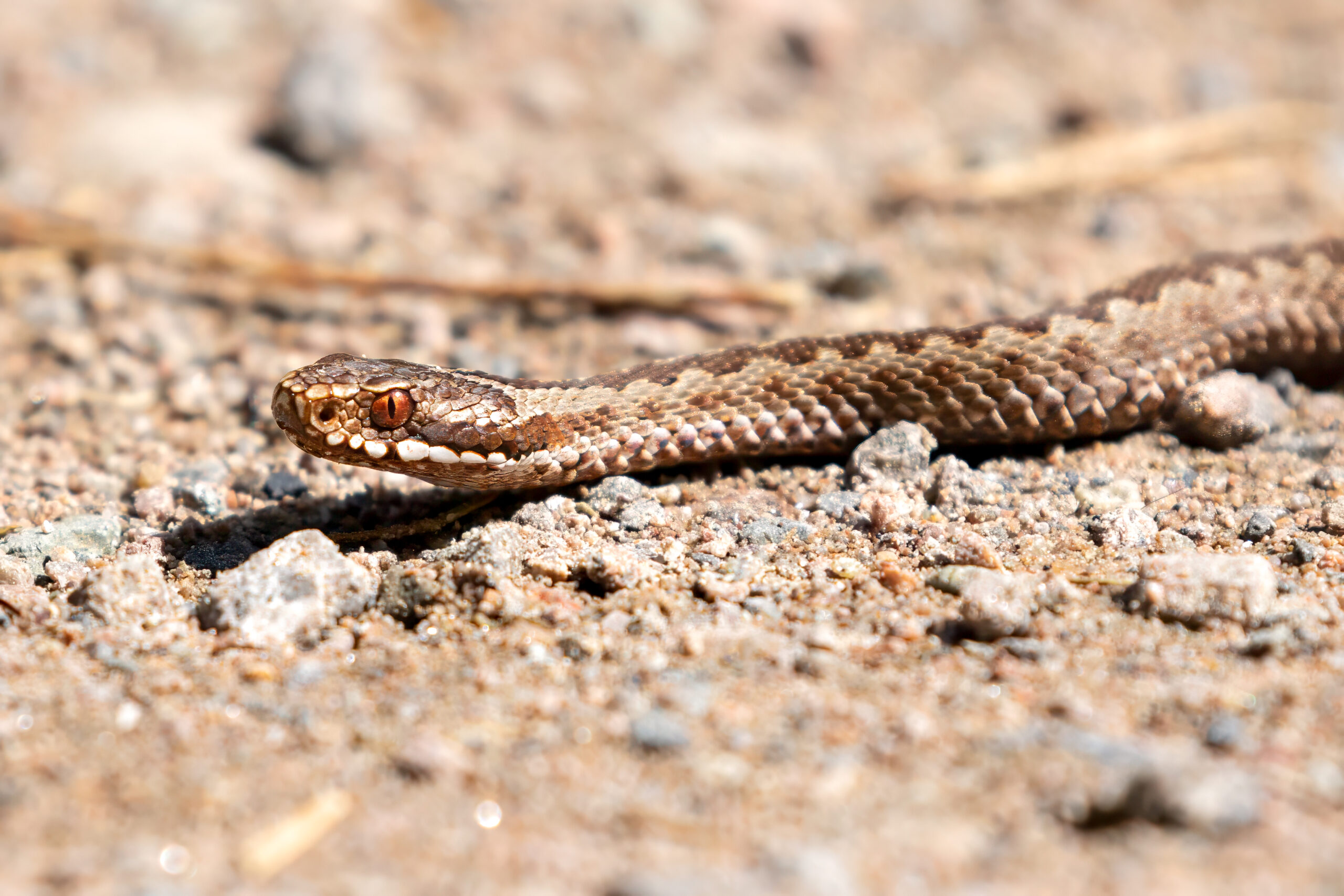
A genomic study published on 26 June 2026 linked the rare longitudinal stripe morph of adders (Vipera berus) on the Norwegian island of Gossa to a strongly differentiated region of chromosome 2. In preliminary field observations, around 5% of live adders on the island had a straight dorsal stripe instead of the species’ usual zig-zag pattern: two of roughly 42 snakes observed in 2017 and five of 92 in 2020.
Researchers sampled adders on Gossa between 2017 and 2021 and sequenced 76 individuals, including 19 striped snakes and 57 with the usual zig-zag pattern. They used low-depth whole-genome sequencing and genome-wide comparisons of genetic differentiation rather than testing only genes already suspected of affecting pigmentation.
Most of the genomic signal converged on one chromosome 2 region
The strongest outlier windows largely clustered in a single region of chromosome 2. Depending on the analysis and genome assembly used, the associated signal spanned roughly 250 kilobases to one megabase. Five genes fell within this region: PMEL, DGKA, RAB5B, DDN and MYL6. Because these genes are physically close together, the authors interpret the pattern as one linked genomic locus rather than five independent genetic effects.
PMEL emerged as the strongest functional candidate because it encodes the premelanosome protein, an important component of the organelles in which melanin is deposited. The researchers identified a Gly206Ser missense change in exon 5 of PMEL, within the protein’s core amyloid-forming domain. A missense variant changes one amino acid in the encoded protein. PMEL forms amyloid-like structures inside melanosomes that act as a scaffold for melanin deposition, making a change in this domain biologically plausible as a pigmentation mechanism. Four missense changes were also detected in DDN, while no nonsynonymous changes were found in the predicted exons of DGKA, RAB5B or MYL6.
The PMEL genotype was strongly associated with the stripe morph
For 39 snakes with enough sequencing depth to determine genotype at the relevant PMEL site, all 16 striped individuals were homozygous for the same allele — they carried two copies of that variant. Among 23 zig-zag individuals, 19 were heterozygous, carrying two different alleles, and four were homozygous for the alternative allele. This strong genotype–phenotype association is a major reason the authors favour PMEL as the primary causal candidate, while noting that the surrounding genes are inherited in the same linked region.
The fieldwork also produced an informative but more complicated inheritance observation. Two pregnant striped females were temporarily kept under care in 2017 and each produced seven young. Five of seven offspring from one female were striped, whereas all seven offspring from the other female had zig-zag patterns. The study reports these broods as additional inheritance information, but the genomic analysis — not the small brood sample — provides the main evidence for the chromosome 2 association.
A strong candidate, not final experimental proof
The authors describe the results as strong evidence that PMEL is involved in stripe pigmentation in the Gossa population and note that this is only the second report linking the gene to stripe patterning in a snake. A previous study in corn snakes used gene editing and other functional approaches; the Gossa study instead identifies a naturally occurring association through genome scanning. Experimental validation would therefore still be needed to show directly how the Gly206Ser change produces the dorsal pattern.
The study also does not test whether the striped morph gives Gossa adders a survival or antipredator advantage. The authors discuss possible ecological effects of longitudinal stripes in open heathland, moorland and wetland habitats, but these remain hypotheses. They also note limitations in the current adder genome annotation — including an inability to recover the pigmentation-related POMC gene for testing — and call for improved genomic resources to refine the genetic interpretation.
Genetics & genomics
Related news
Cornwall Project Will Examine How Roads, Rivers and Habitat Fragmentation Affect Adders
A new Cornwall project will investigate how roads, rivers and fragmented habitats affect adder populations and their movement…
Read story →
Balkan Adder Provided the First Wild Scavenging Record for Vipera berus
An adult female Balkan adder on Vitosha Mountain was found swallowing a dead bank vole whose severe injuries…
Read story →
Detection Dog Found an Adder Hibernaculum Without the Handler Knowing Its Location
A trained dog found 69 of 70 buried adder-scent samples in blinded field tests and independently located one…
Read story →SPECIES IN THIS STORY
Species in this story
Independent research and conservation news archive
Did you find this information useful?
Wildlife Vagabond is independently built and maintained. Voluntary support helps cover source verification, hosting and continued work on research and conservation news.
Support Wildlife VagabondThe news archive will remain freely available.