
Only 14% of Dunlins That Had Started Primary Moult Suspended It During Migration
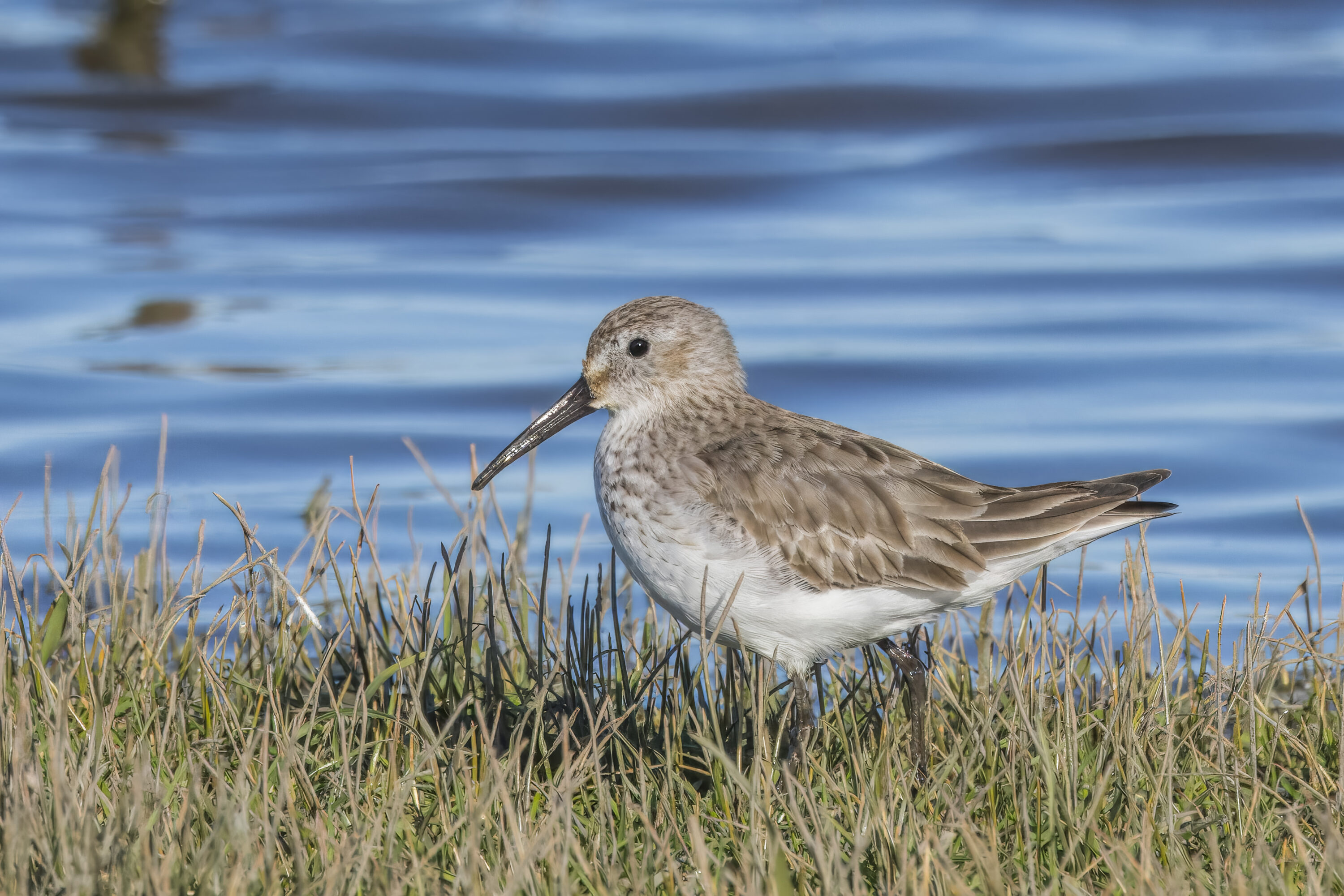
A 39-year study of Dunlins (Calidris alpina) migrating through the Gulf of Gdańsk in Poland found that only a minority of birds that had begun replacing their primary flight feathers suspended the process during autumn migration. Of 28,752 birds analysed between 1985 and 2023, 13,695 had started primary moult and 1,895 of these had suspended it — 13.8%, or about 14%.
Suspended moult means that some new primaries have already grown, the remaining feathers are still old and no new primary is actively growing. Most birds that suspended did so early, commonly after replacing the second or third primary.
Younger birds moulted more often, but older moulting birds suspended more often
Among second-year birds, 68.7% were replacing primaries, compared with 34.4% of older birds. Yet among birds that were already moulting, suspension was more frequent in the older group: 16.5% compared with 11.7% in second-year birds.
Age and sex were not consistent predictors across the full 39-year series. In the years when age mattered, older birds always suspended more often; when sex mattered, males suspended more often than females. The authors link these occasional patterns to differences in reproductive and parental investment, but the effects were too variable among years to support one fixed rule.
Timing was the most consistent predictor
Capture date affected moult suspension in 20 of the 29 years analysed with annual models, making it the clearest and most repeatable predictor. The proportion of birds with suspended moult increased from early July. Older birds showed a main peak in mid-August and a smaller second peak in the first half of September, while second-year birds showed one main August peak.
Birds encountered later in the season also tended to have replaced more primaries before stopping. Capture date therefore influenced both whether moult was suspended and how far feather replacement had progressed.
Birds that suspended moult were sometimes in better condition
The body-condition result ran opposite to the original prediction. The researchers had expected birds in poorer condition to suspend moult because energy reserves were limited. Instead, in every year when body condition had a statistically clear effect, birds with suspended moult were in better condition than birds still growing primaries.
The authors suggest that the causal direction may be reversed: suspending feather growth may help birds improve condition by reducing the energetic cost of growing feathers and the aerodynamic cost of flying with reduced wing area. Resources can then be redirected towards fuel for migration. The study did not manipulate moult, so this remains an interpretation rather than a demonstrated mechanism.
Annual breeding success did not explain suspension frequency
The researchers used the proportion of juveniles caught during a standard migration period as an annual index of breeding success. This index was not related to how often moult was suspended, either overall or when birds were separated by age and sex. It was also unrelated to how many primaries had been replaced before suspension.
This does not show that breeding costs are irrelevant. Dunlins passing the Gulf of Gdańsk come from a very large breeding range, where weather, food, predation and breeding success can differ strongly among regions. One broad annual index may therefore be too coarse to explain the decisions of individual migrants.
The late-season peak may include central Siberian birds
The smaller September peak in older birds coincides with the expected passage of Dunlins from central Siberia. Some central and eastern Siberian populations begin primary moult unusually early, during incubation and chick rearing, so breeding, feather growth and migration can overlap.
The authors therefore suggest that suspending moult may allow these birds to postpone the remaining feather replacement until after migration. The breeding origin of individual birds in the Polish dataset was not known, however, so the study could not test directly whether the late migrants were central Siberian birds.
Overall, suspended primary moult was a minority strategy, but one strongly structured by seasonal timing. The results support an energetic trade-off among breeding, feather growth and migration while showing that age, sex and condition effects change substantially among years.
Physiology
Related news
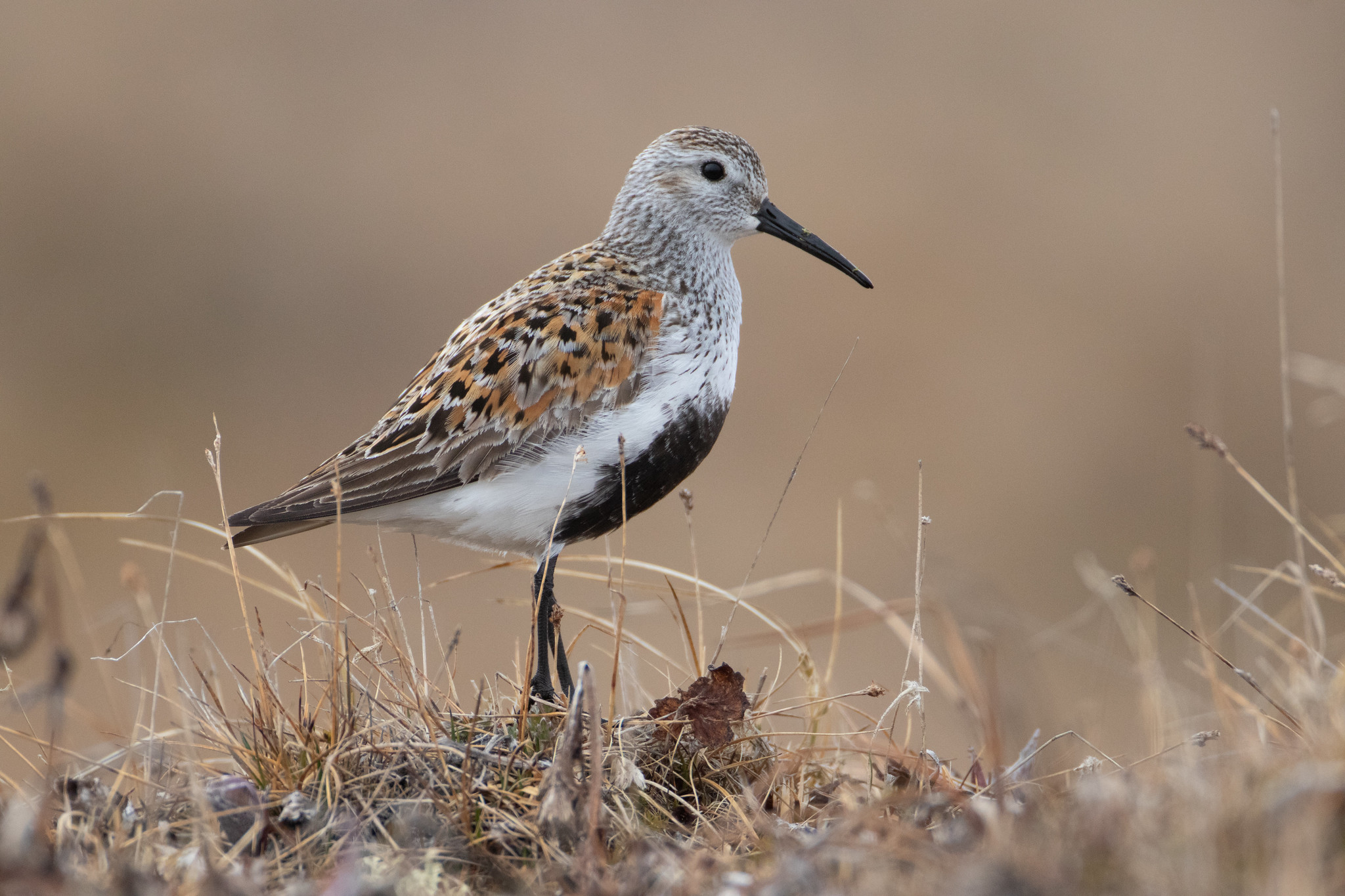
Survey Estimate for Arctic Alaska Dunlins Fell 89% Over 17.5 Years
Repeated surveys across 6,249 km² of Arctic National Wildlife Refuge estimated an 89% decline in breeding Calidris alpina…
Read story →
Opposite Spring Migration Strategies Were Linked to Breeding Success in Male and Female Dunlins
Tracked dunlins near Churchill showed opposite links between spring migration and breeding: shorter, more direct routes were associated…
Read story →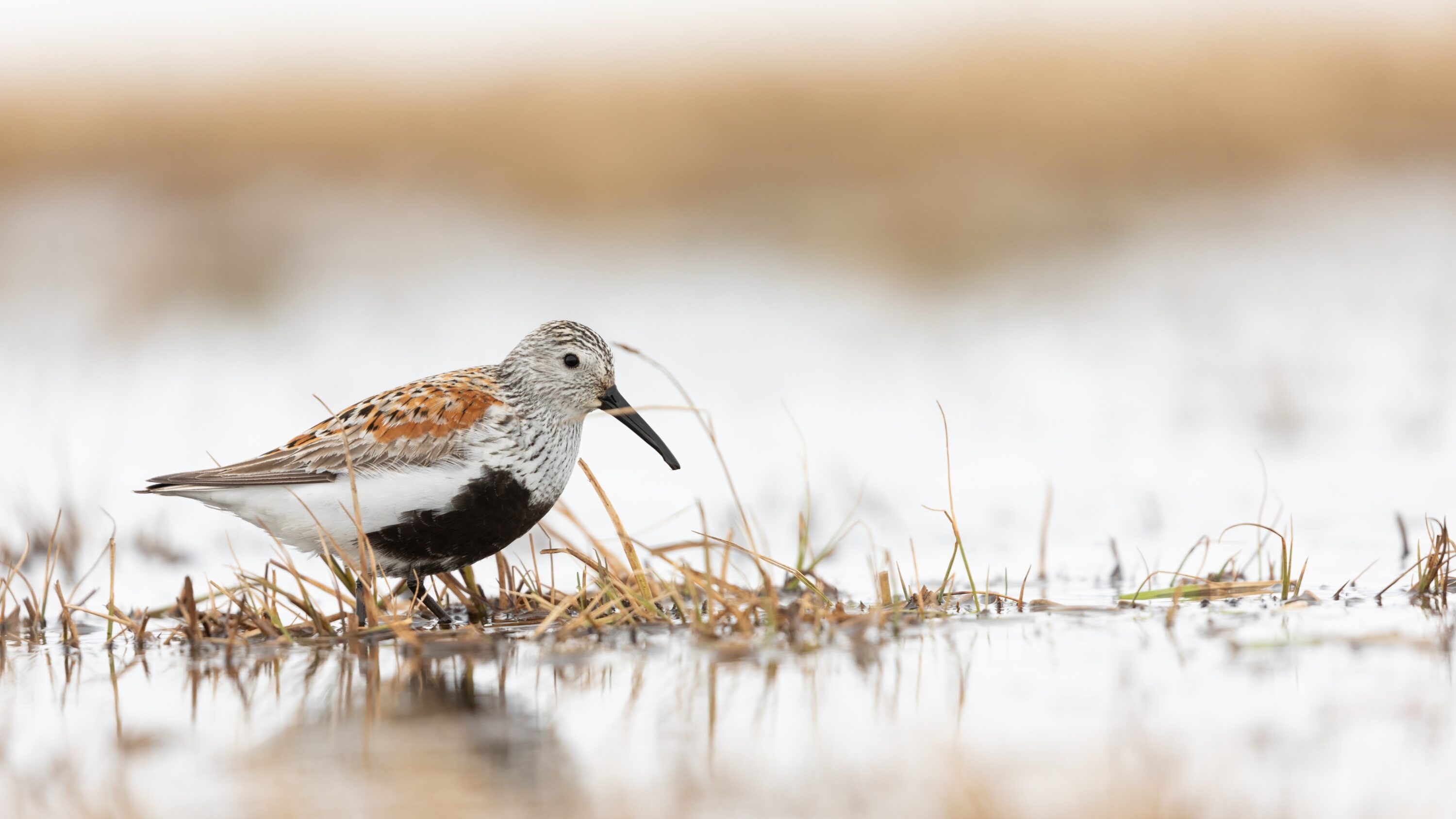
Dunlins Wintering in Japan Had 0.53 Estimated Apparent Annual Survival, Versus 0.78 in the Yellow Sea
An integrated study of arcticola dunlins linked strong differences in survival and 2010–2014 population trends to wintering region,…
Read story →SPECIES IN THIS STORY
Species in this story
Independent research and conservation news archive
Did you find this information useful?
Wildlife Vagabond is independently built and maintained. Voluntary support helps cover source verification, hosting and continued work on research and conservation news.
Support Wildlife VagabondThe news archive will remain freely available.