
Dunlins Wintering in Japan Had 0.53 Estimated Apparent Annual Survival, Versus 0.78 in the Yellow Sea
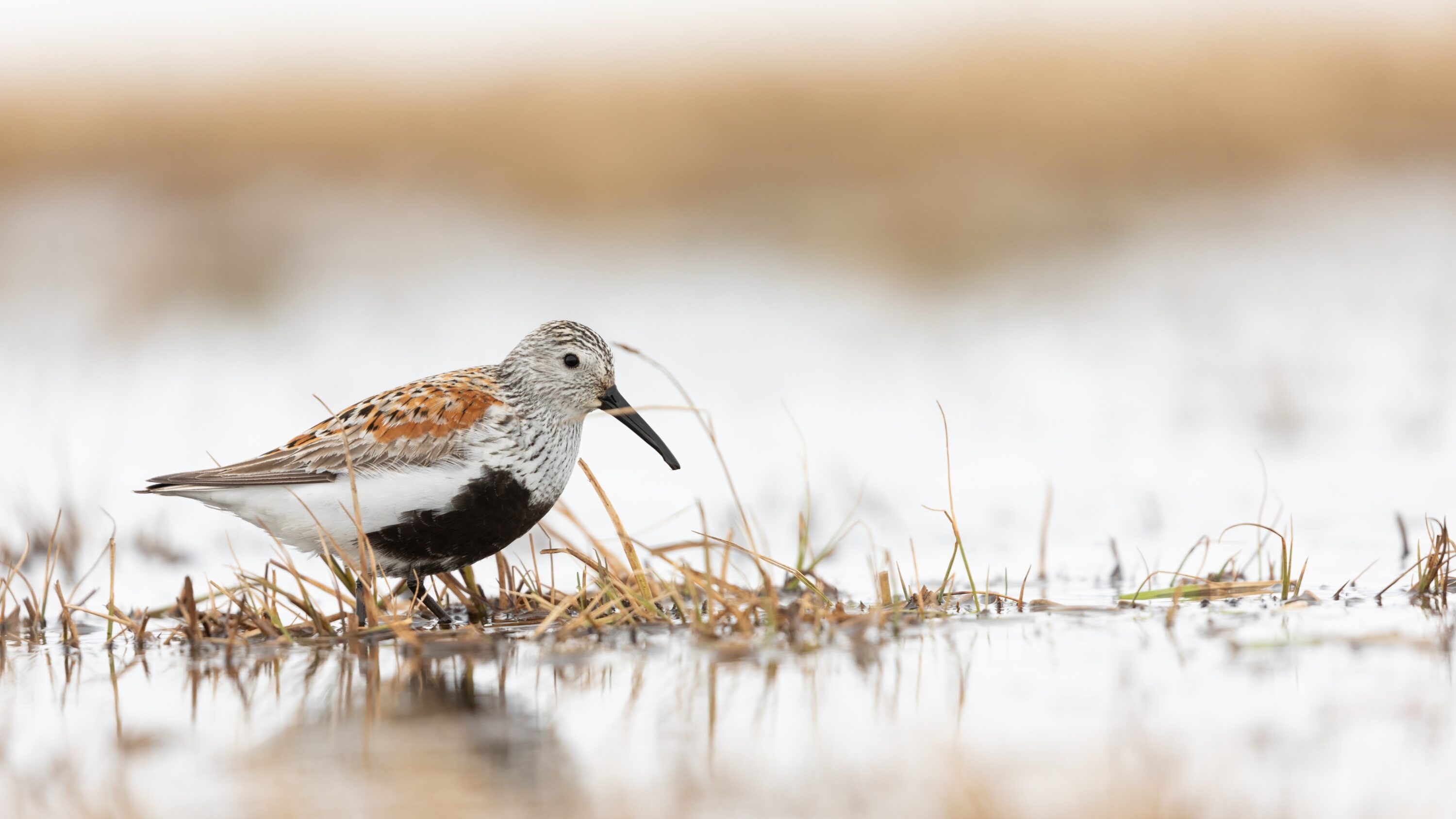
Dunlins of the Calidris alpina arcticola subspecies showed large differences in estimated annual apparent survival depending on where they spent the boreal winter in East Asia. Apparent survival combines true survival with return to the study population: a bird that survives but permanently leaves the monitored breeding sites can be counted as lost. In a study published on 11 March 2026, birds assigned to Japan had a mean annual apparent survival of 0.53, compared with 0.60 for the East China Sea and 0.78 for the Yellow Sea.
Light-level geolocators estimate broad geographic position from the timing of sunrise and sunset and the length of the day; they provide much coarser locations than GPS and are least reliable around the equinoxes.
The researchers combined nest monitoring, mark–recapture records and light-level geolocator tracks from dunlins breeding at three sites in northern Alaska. Their integrated model included 361 individuals for estimates of survival and winter-population membership, while 51 recovered geolocators provided usable information on movements along the East Asian–Australasian Flyway.
Survival differences tracked regional population trends
The regional survival differences were reflected in modelled population trends for 2010–2014. The Japan wintering group declined by an estimated 17% per year and the East China Sea group by 12% per year, while the Yellow Sea group was approximately stable at +4% per year. Across all three groups, the mean annual population decline was about 12%. The model assigned about 41% of the overall population to the East China Sea, 30% to the Yellow Sea and 29% to Japan; the East China Sea and Japan groups each contributed roughly half of the estimated overall decline.
Wintering duration differed more than migration time
The tracked groups spent similar amounts of time in the same migration regions but differed strongly in how long they occupied their wintering regions. The authors therefore concluded that the contrast in survival was most likely linked to conditions on the wintering grounds rather than to shared migration routes. They caution that the study cannot identify the exact drivers of mortality and that East China Sea birds also spent time in the Yellow Sea.
The results suggest that conserving major Yellow Sea stopover sites alone may not address the causes of decline for a population that disperses widely in winter. The authors argue that additional conservation efforts in the East China Sea and Japan are likely to be needed for shorebirds with this type of broad winter distribution.
Population & status
Related news
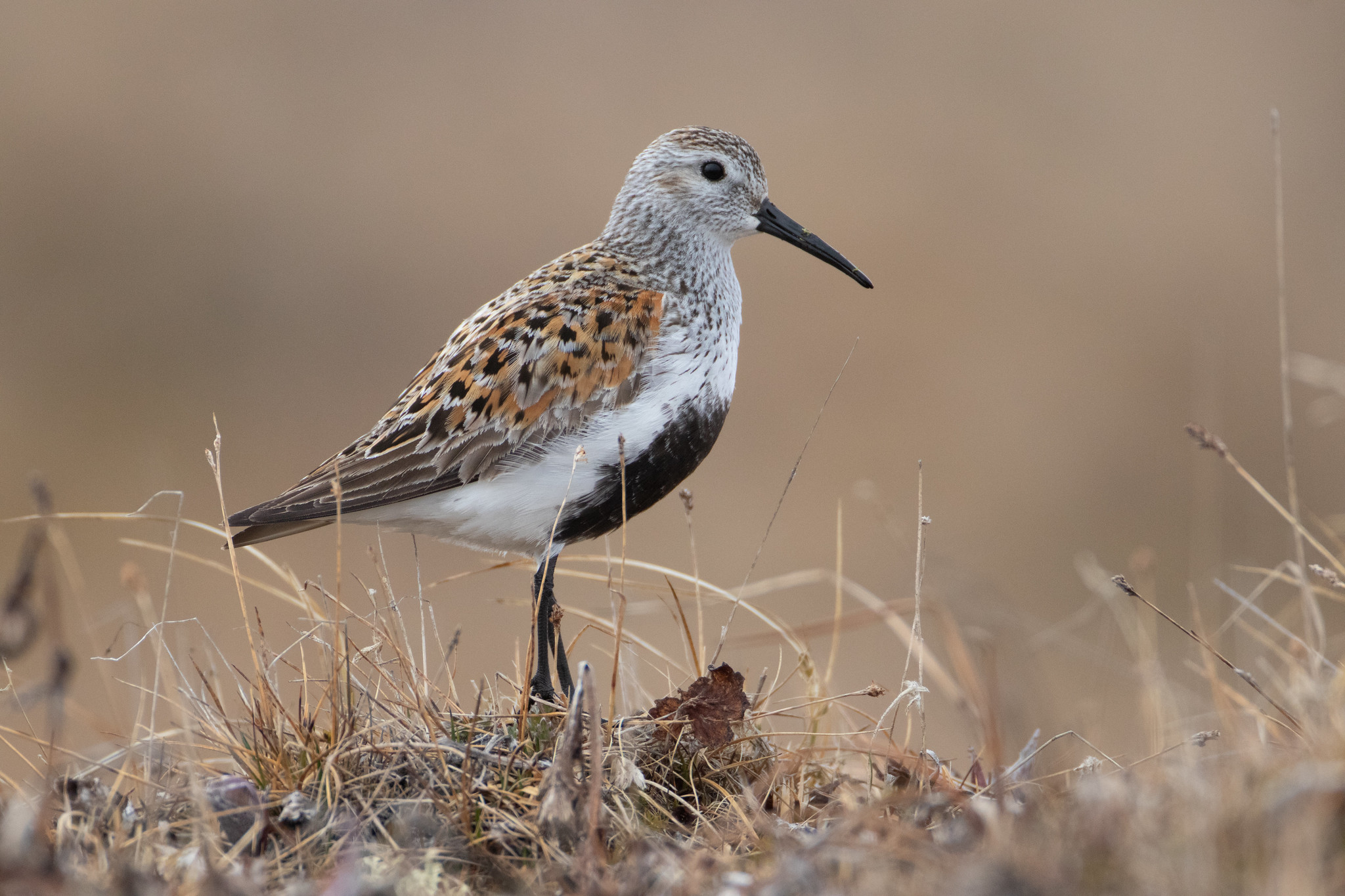
Survey Estimate for Arctic Alaska Dunlins Fell 89% Over 17.5 Years
Repeated surveys across 6,249 km² of Arctic National Wildlife Refuge estimated an 89% decline in breeding Calidris alpina…
Read story →
Opposite Spring Migration Strategies Were Linked to Breeding Success in Male and Female Dunlins
Tracked dunlins near Churchill showed opposite links between spring migration and breeding: shorter, more direct routes were associated…
Read story →
Only 14% of Dunlins That Had Started Primary Moult Suspended It During Migration
Across 39 years at the Gulf of Gdańsk, 1,895 of 13,695 Dunlins that had begun primary moult suspended…
Read story →SPECIES IN THIS STORY
Species in this story

Independent research and conservation news archive
Did you find this information useful?
Wildlife Vagabond is independently built and maintained. Voluntary support helps cover source verification, hosting and continued work on research and conservation news.
Support Wildlife VagabondThe news archive will remain freely available.