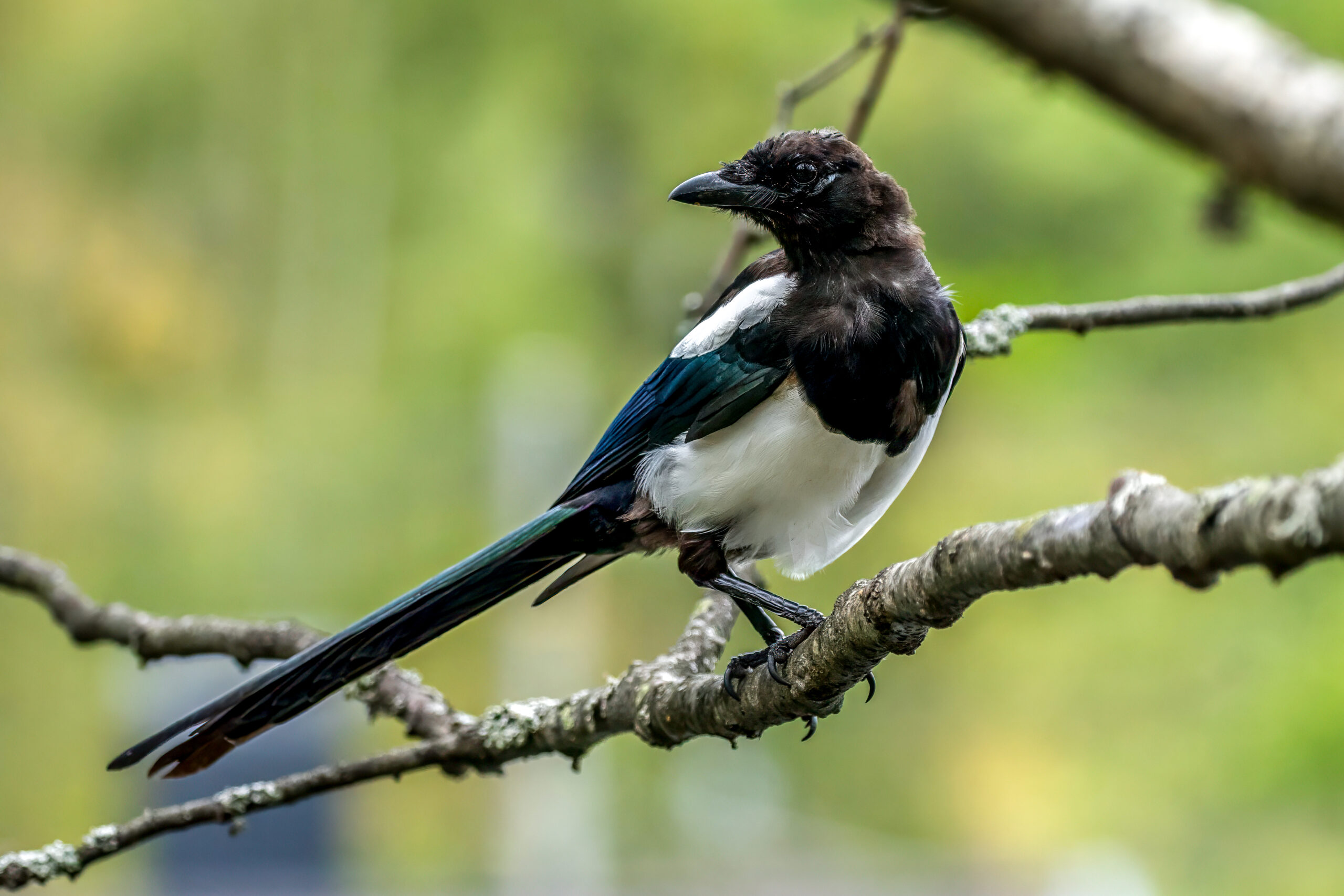
White Plastic Made Magpies Hesitate Before Raiding Artificial Nests
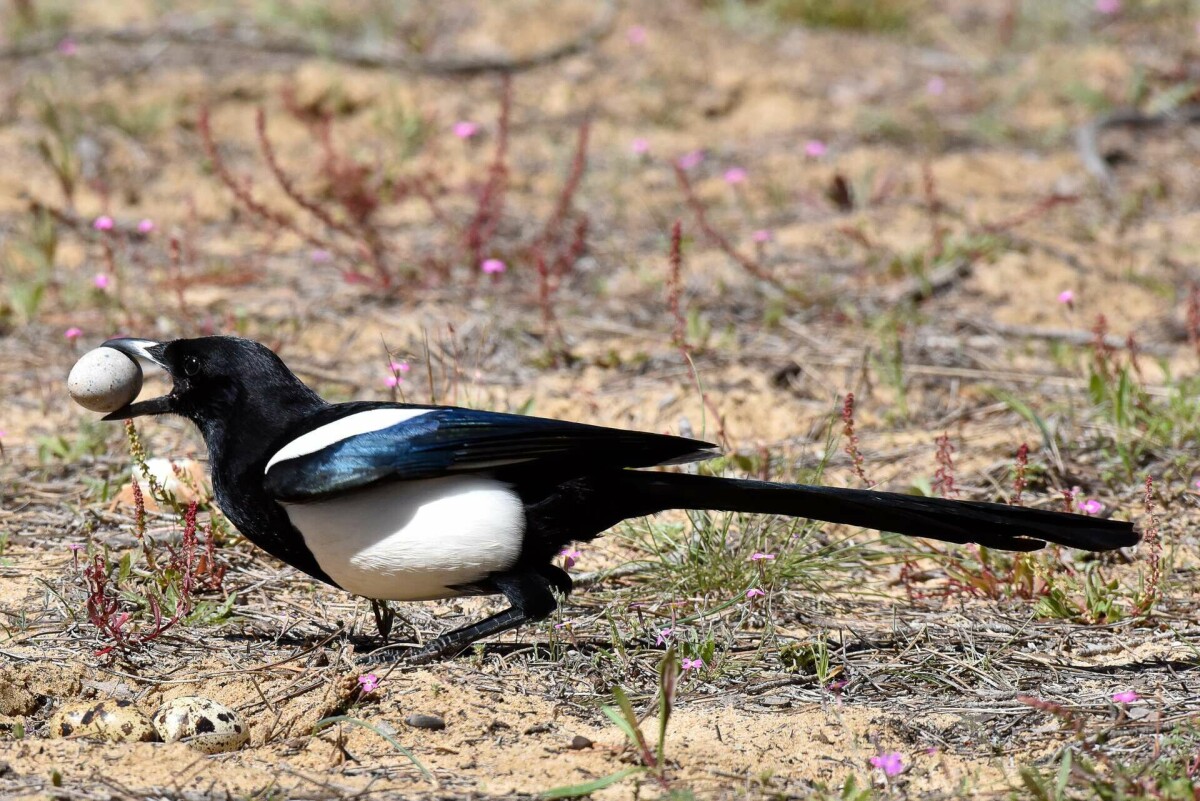
White plastic made Eurasian magpies (Pica pica) hesitate before taking eggs from artificial nests in a field experiment in central Norway. When a plastic-decorated nest and an undecorated nest were placed side by side, the magpies generally attacked the undecorated nest first.
The researchers worked in farmland gardens in Stjørdal, Frosta and Levanger. Inside established magpie territories they placed artificial ground nests containing two quail eggs. In the main experiment, a nest decorated with pieces of white plastic was placed one metre from an otherwise similar control nest.
Plastic delayed the start of nest raiding
During the first trials on 62 territories, egg removal began later from the plastic-decorated nests. Where the order could be determined, an egg from the plastic nest was taken first in only 32% of trials.
The effect was a delay rather than lasting protection. Once the magpies had begun taking eggs, birds that started later did not take longer to remove the remaining eggs.
The birds learned the experiment, but still hesitated at the plastic
When the researchers repeated the paired experiment later in the season on 60 territories, magpies approached the experimental nests sooner overall. The authors interpret this as habituation to the cameras and artificial nests. Even then, eggs from the plastic-decorated nests still tended to be taken later in the sequence than eggs from the control nests.
Plastic already present around a territory did not make the birds attack the decorated nests sooner, and experience with a similar experiment the previous year produced no detectable effect the following spring. Together, the results support neophobia — reluctance to approach something novel — as an explanation for the delay.
The advantage disappeared when there was no nearby control nest
When the magpies were offered only a single artificial nest, time to the first egg removal did not clearly differ between nests with and without plastic. The authors suggest that conspicuous white plastic may make a nest easier to find, offsetting the hesitation caused by the unfamiliar material.
The experiment does not show that plastic generally protects real bird nests. It does suggest a trade-off: conspicuous anthropogenic material can make a nest easier to detect while also making a neophobic predator hesitate after discovery. In colonies or other situations where nest owners can return quickly, even a short delay could potentially matter.
Behaviour
Related news
Hooded Crows Were Linked to 87 Reported West Nile Virus Bird Outbreaks in Europe
The September ECDC–EFSA report linked hooded crows to 87 reported West Nile virus bird outbreaks, Eurasian magpies to…
Read story →
Magpies Dominated Predation on Artificial Pheasant Nests in Polish Urban Sites, Red Foxes in Farmland
Eurasian magpies were the main predator at destroyed artificial pheasant nests in Polish urban sites, while red foxes…
Read story →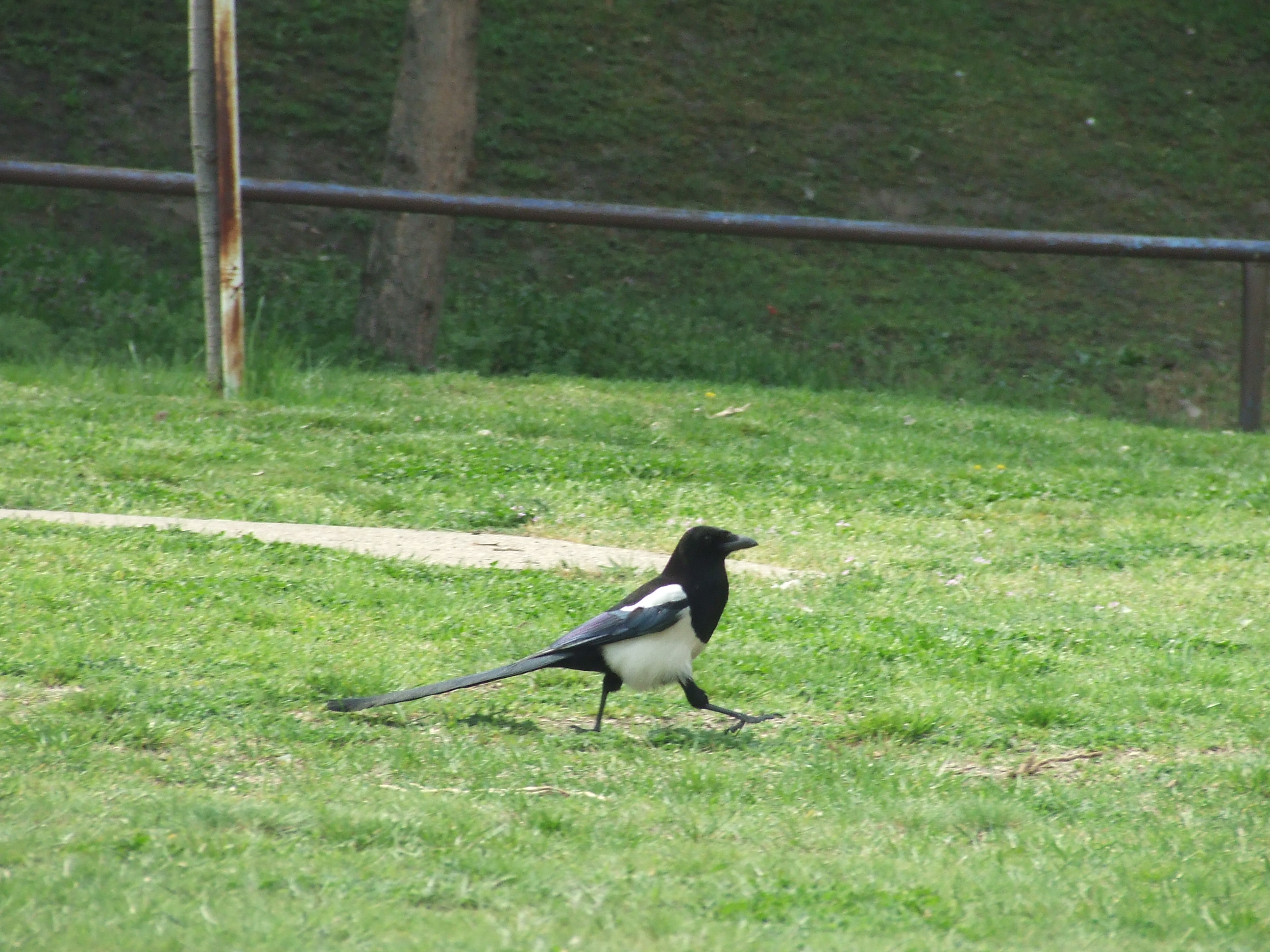
Parasite DNA Was Found in 7% of Eurasian Magpie Brain Samples in Hungary
Brain samples from 273 Eurasian magpies at two sites near urban areas in Hungary contained parasite DNA in…
Read story →SPECIES IN THIS STORY