
Female Moose Ranged More Widely After Bears Killed Their Calves
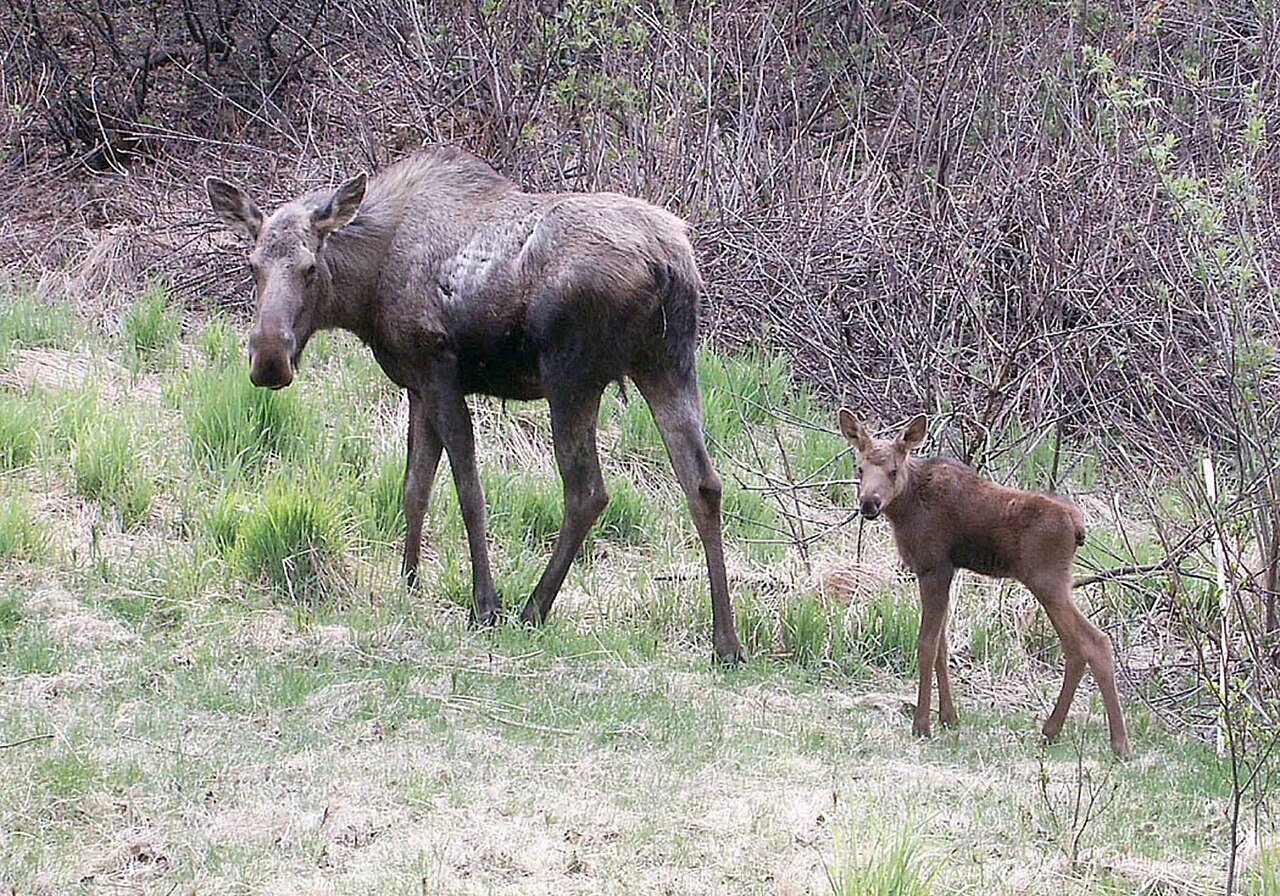
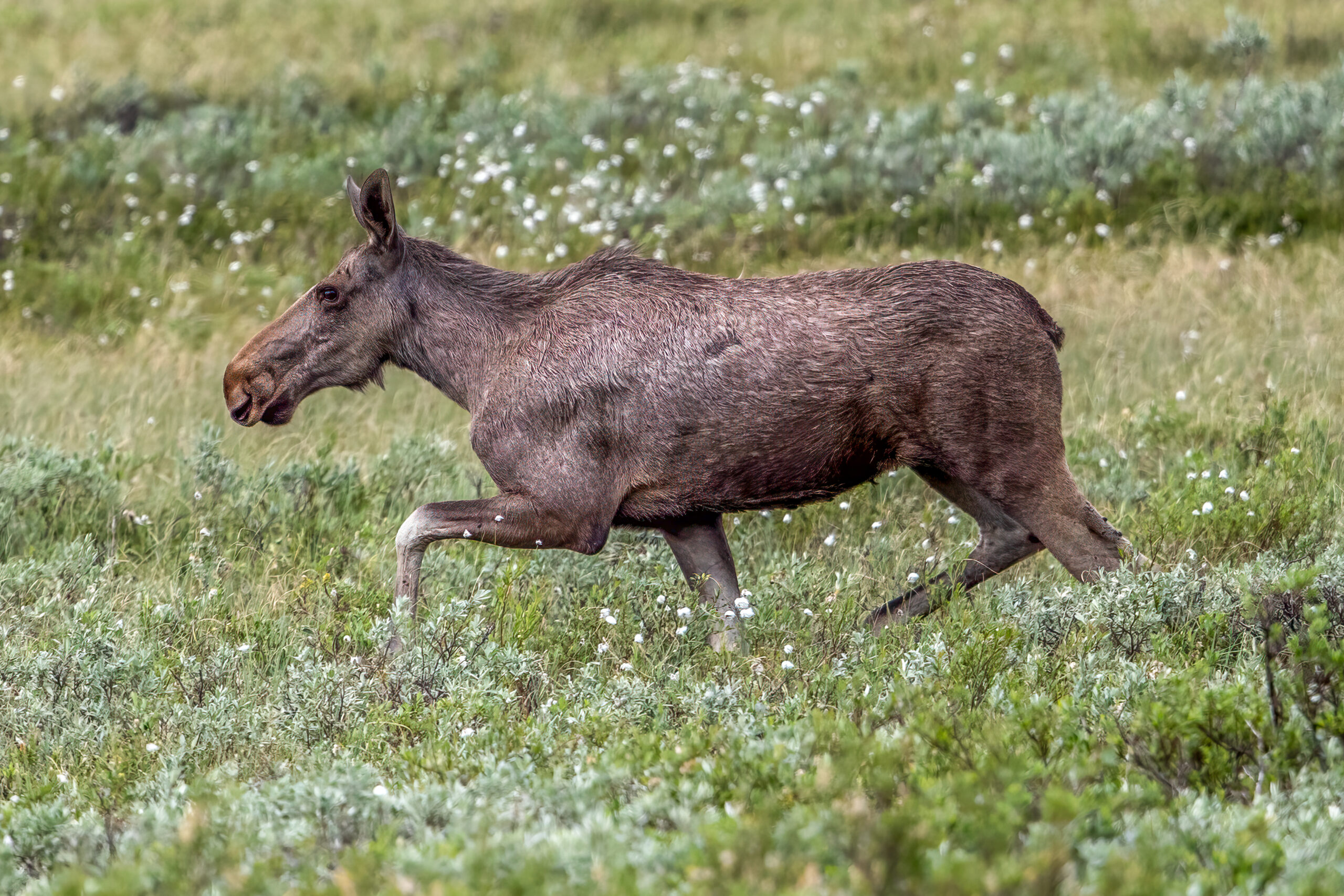
When a brown bear killed a calf, its mother changed how she moved. A study of female moose (Alces alces) in central Sweden found that, during the first month after giving birth, females that lost calves to bears moved at a higher rate and used much larger areas than females whose calves survived.
The researchers tracked the females with GPS and compared their movements and inferred behavioural states. Females that lost calves moved at a rate 72% higher and used ranges 2.5 times larger. The changes were strongest soon after the calf was killed, then diminished. Responses were also stronger when the calf was older at the time of its death.
The distance between the calving site and the site where a calf was killed also increased with the calf’s age. On average, the two sites were 251 metres apart for newborn calves and 1,369 metres apart for calves older than two weeks, although distances varied considerably. The authors suggest that choosing a calving site may help reduce predation risk for newborn calves, which in this study were often killed close to where they were born.
The researchers interpret the stronger response to the loss of older calves as consistent with maternal investment and the mother–calf bond growing as calves develop. They suggest that these short-term changes in movement could have consequences for females’ body condition, habitat use and later reproduction.
Ecology
Related news
Hunter observations produced stable moose indices, but precision varied
Across six Swedish hunting seasons, hunter observations produced stable indices of moose abundance and population structure. How precise…
Read story →
Anaplasma DNA found in all 32 dead moose calves examined in Agder
Spleen samples from 32 moose calves found dead in Agder contained Anaplasma DNA in all 32, Bartonella DNA…
Read story →
Arctic Moose Follow the River Valleys
GPS tracking in Alaska showed that half of 24 female moose migrated between summer and winter ranges. Migrants…
Read story →SPECIES IN THIS STORY
Species in this story
Independent research and conservation news archive
Did you find this information useful?
Wildlife Vagabond is independently built and maintained. Voluntary support helps cover source verification, hosting and continued work on research and conservation news.
Support Wildlife VagabondThe news archive will remain freely available.