
Six Ungulates Partitioned Elevation, Forest Types and Daily Activity in Giant Panda National Park
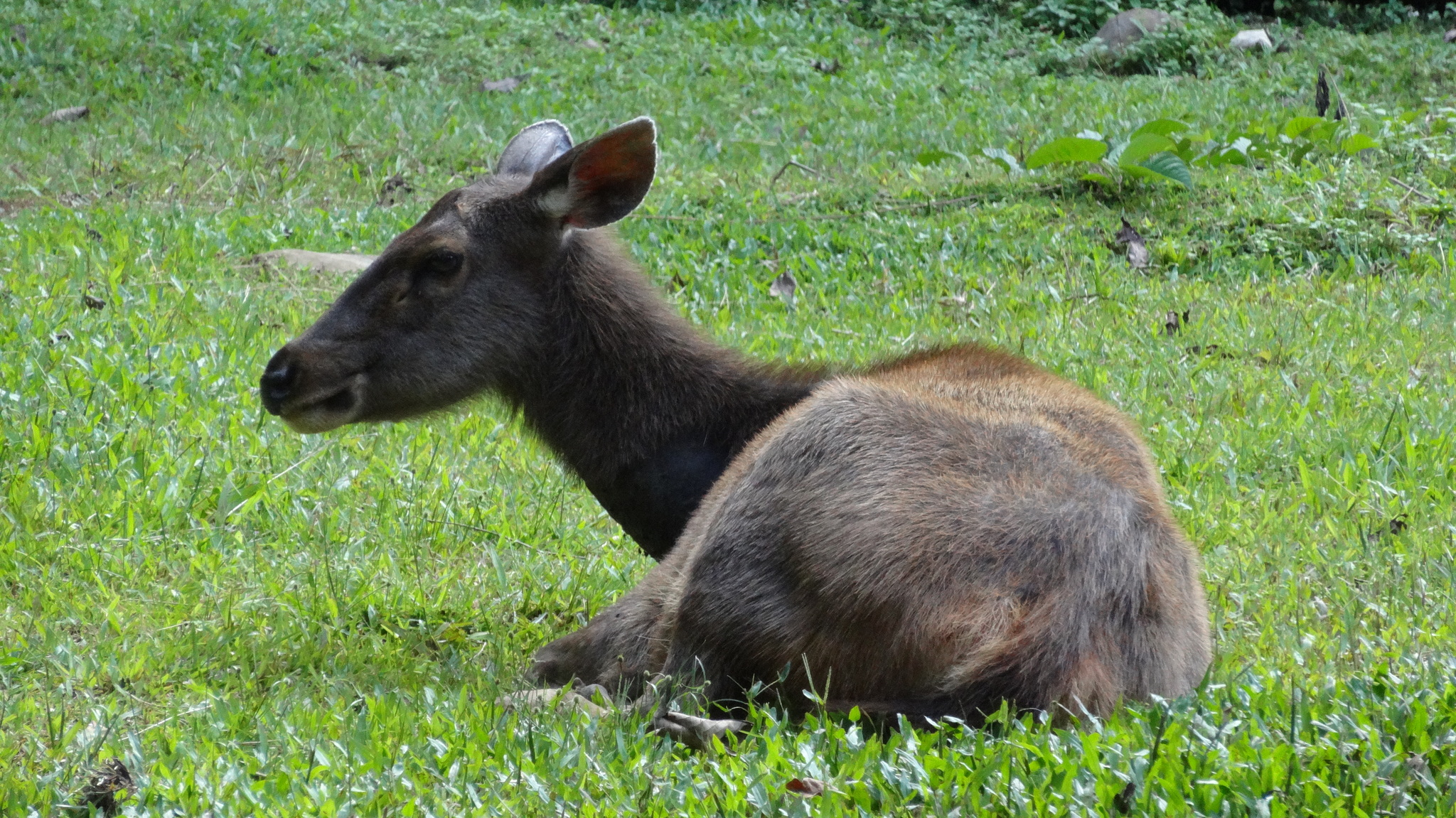
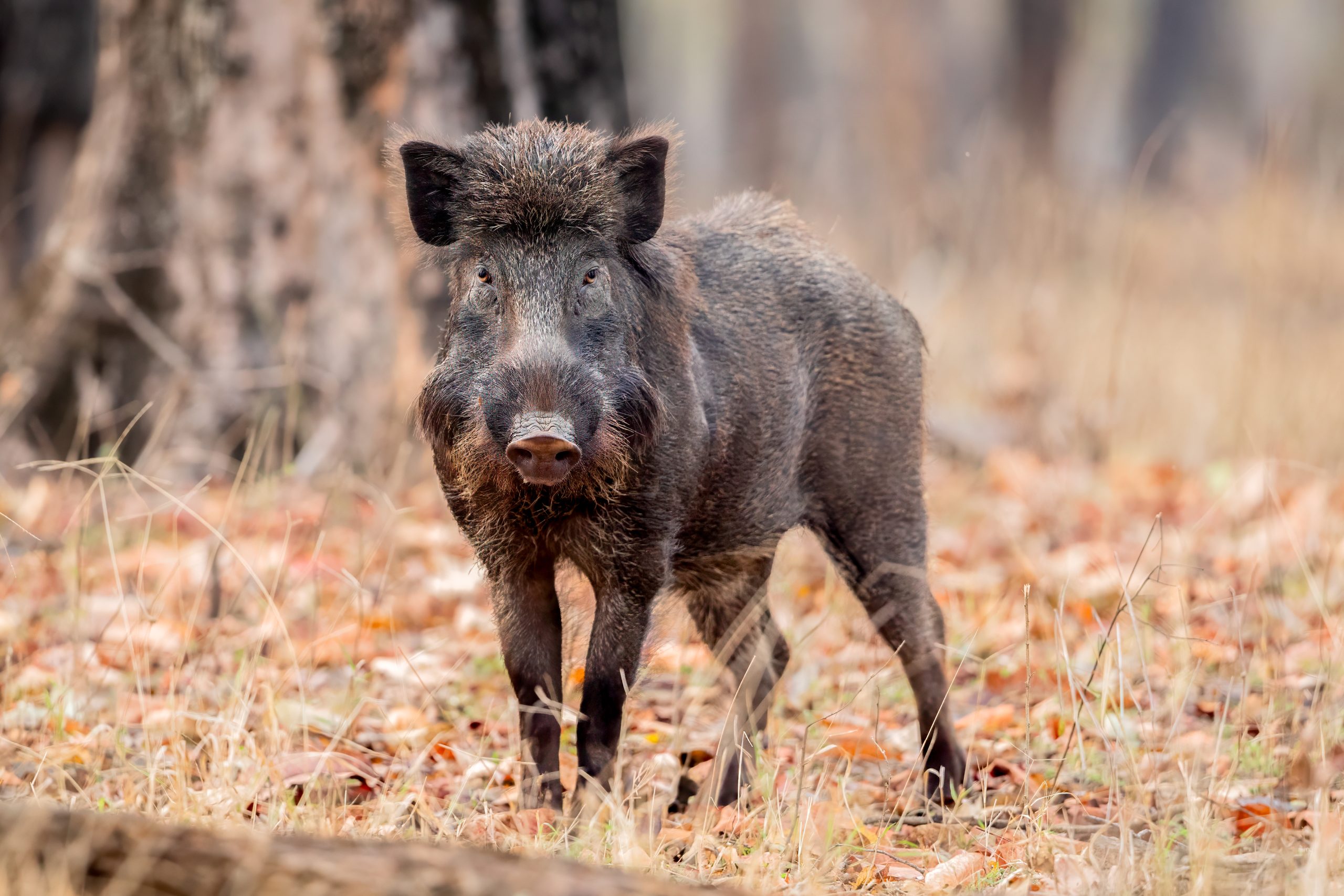
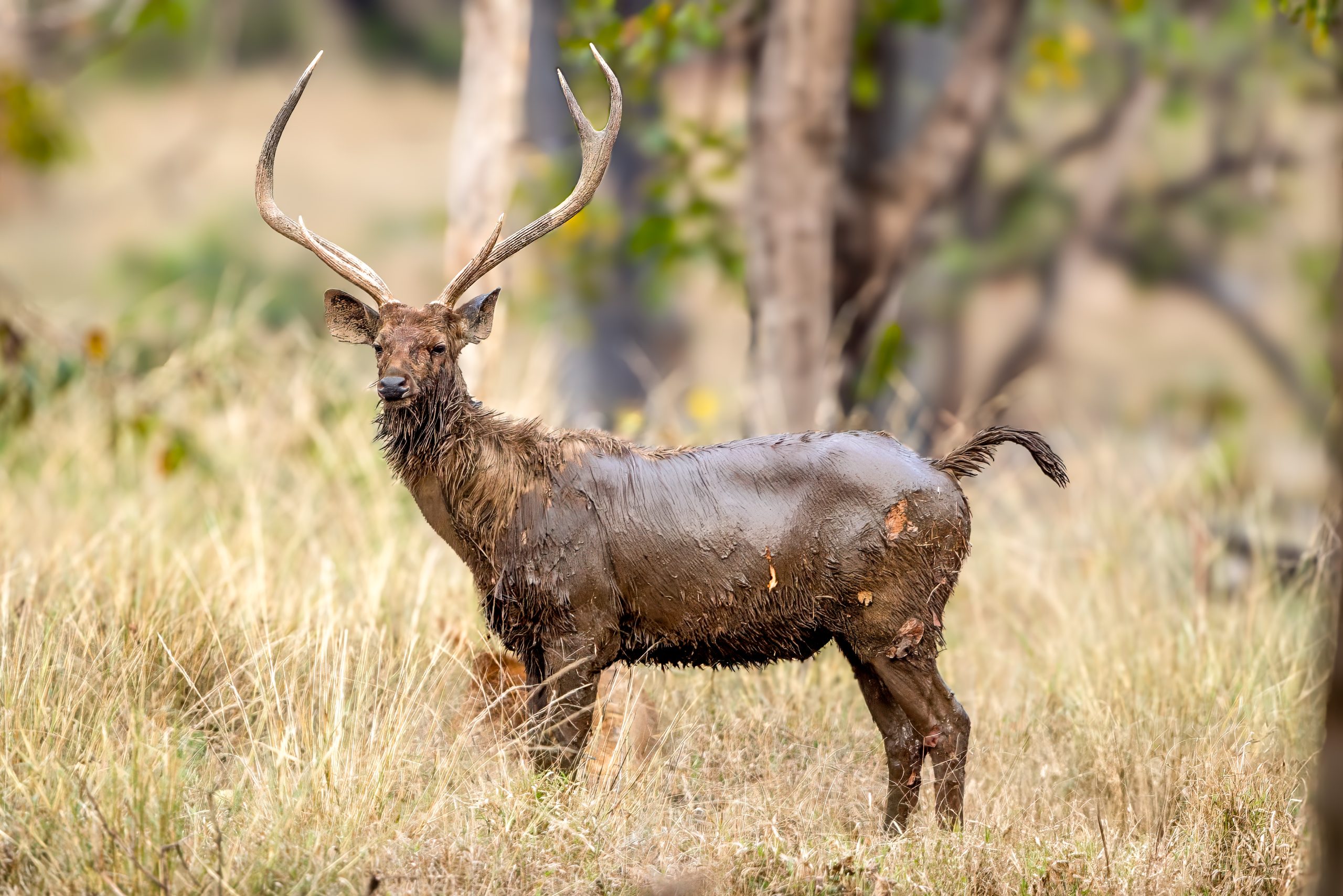
A camera-trap study in the Anzihe Nature Reserve of Giant Panda National Park found clear differences in where and when six sympatric ungulates were recorded. The community included wild boar (Sus scrofa) and sambar (Rusa unicolor) alongside tufted deer, Chinese goral, Chinese serow and blue sheep, with the six species differing in combinations of elevation, terrain, vegetation and daily activity.
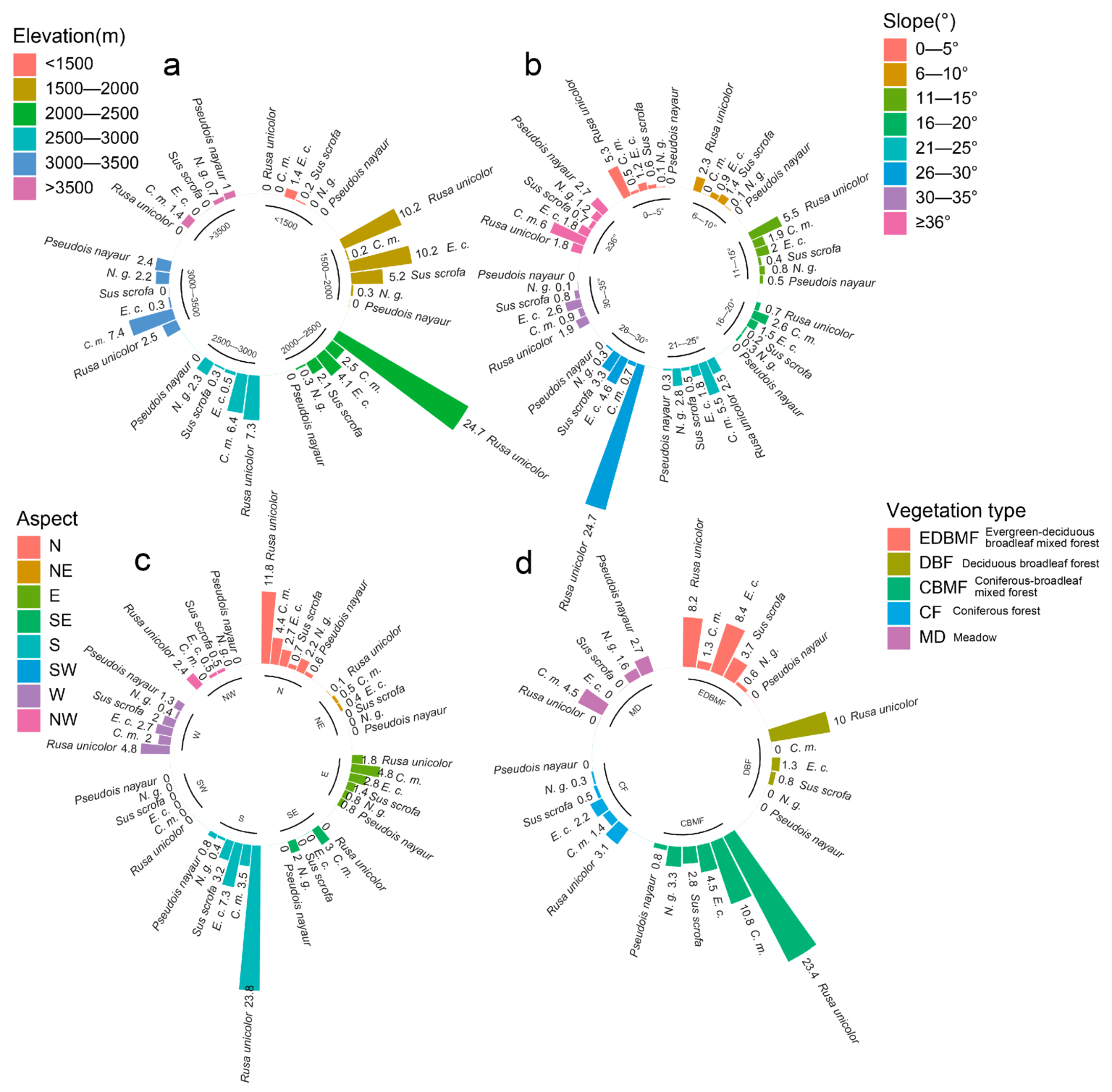
Researchers operated cameras at 60 sites for nearly 3,000 camera-trap days. Sambar was the most frequently detected species, while blue sheep and Chinese goral were the least frequently detected. The spatial patterns differed clearly among the six ungulates. Tufted deer and wild boar were associated mainly with low-to-mid elevation broadleaf forests. Sambar frequently used mixed conifer–broadleaf forest, Chinese goral was most active higher on the gradient around 2,500–3,000 m, and Chinese serow peaked higher still around 3,000–3,500 m and often used steep terrain. Blue sheep were concentrated above 3,000 m.
Species also partitioned time of day
The species also differed in daily timing. Tufted deer, sambar and Chinese goral showed two main activity periods, in the morning and again from late afternoon into the evening. Blue sheep, wild boar and Chinese serow each showed one main peak: around midday for blue sheep, late afternoon for wild boar and early evening for Chinese serow. Sambar and tufted deer had the most similar daily activity patterns, while tufted deer and blue sheep overlapped least.
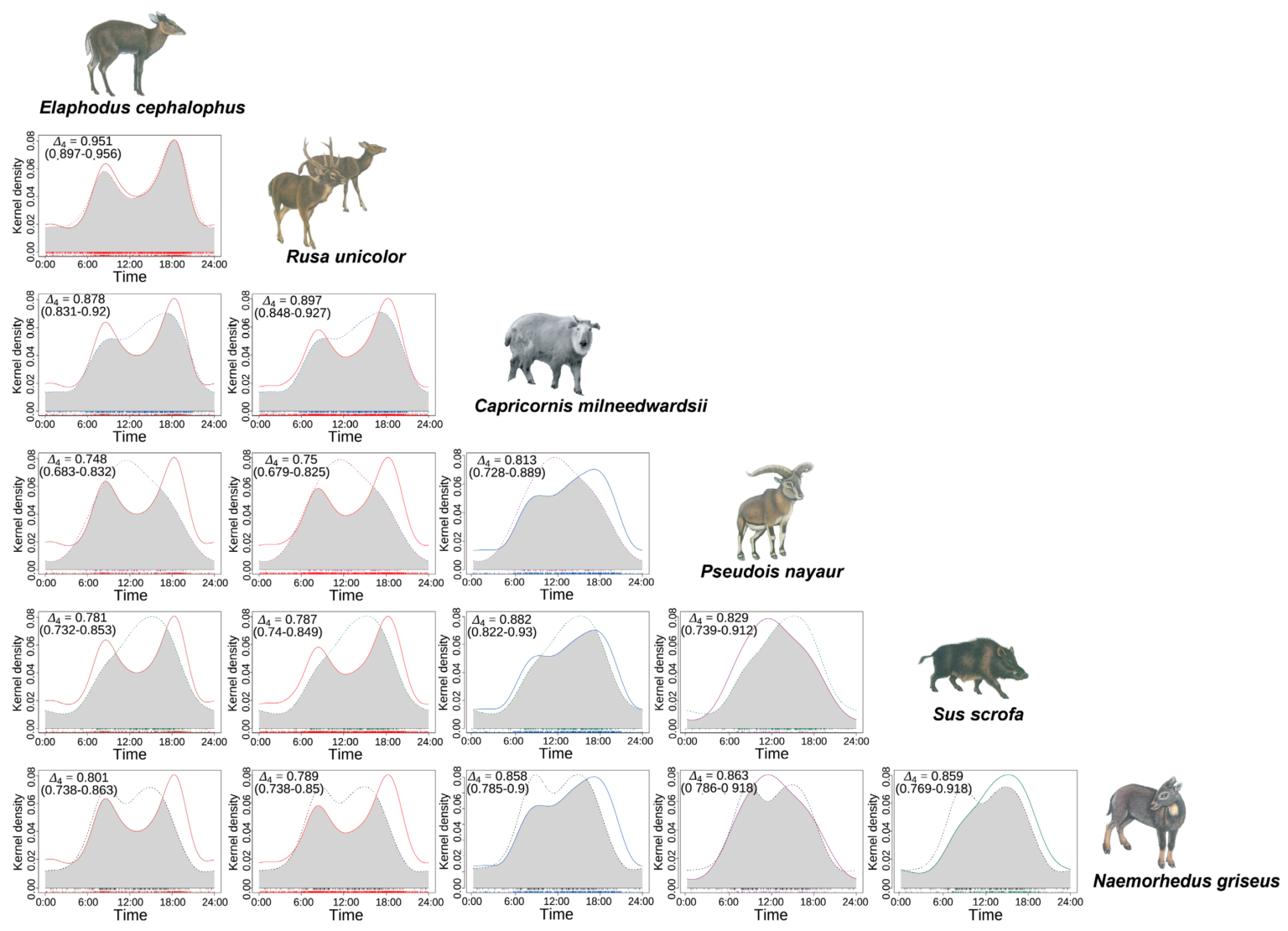
The researchers interpret the combined spatial and temporal differences as evidence that the six sympatric ungulates reduce ecological overlap by using different combinations of elevation, terrain, vegetation and time of day. Some species still overlapped strongly along one dimension, such as the daily activity of sambar and tufted deer, but differed in other parts of their habitat use. The coexistence pattern therefore emerged from several ecological dimensions acting together rather than from complete separation in either space or time.
Ecology
Related news
Inland Mute Swans Had Higher Winter Body Condition Despite Harsher Winters and Supplemental Feeding
A study of 853 mute swans from four Polish wintering regions found higher body condition inland than on…
Read story →
Gut Microbiomes Across Nine Kruger Mammals Clustered More Strongly by Dietary Group Than Species
A study of 89 quality-filtered faecal samples from nine wild mammals in Kruger National Park found that carnivores,…
Read story →
Dunnock Spring Passage Advanced by Up to 8.3 Days Over 61 Years at Hel
Standardised ringing data from northern Poland showed that the first, median and last phases of dunnock spring passage…
Read story →SPECIES IN THIS STORY
Species in this story
Independent research and conservation news archive
Did you find this information useful?
Wildlife Vagabond is independently built and maintained. Voluntary support helps cover source verification, hosting and continued work on research and conservation news.
Support Wildlife VagabondThe news archive will remain freely available.