
Harbour seal populations don’t always fit Norway’s county borders
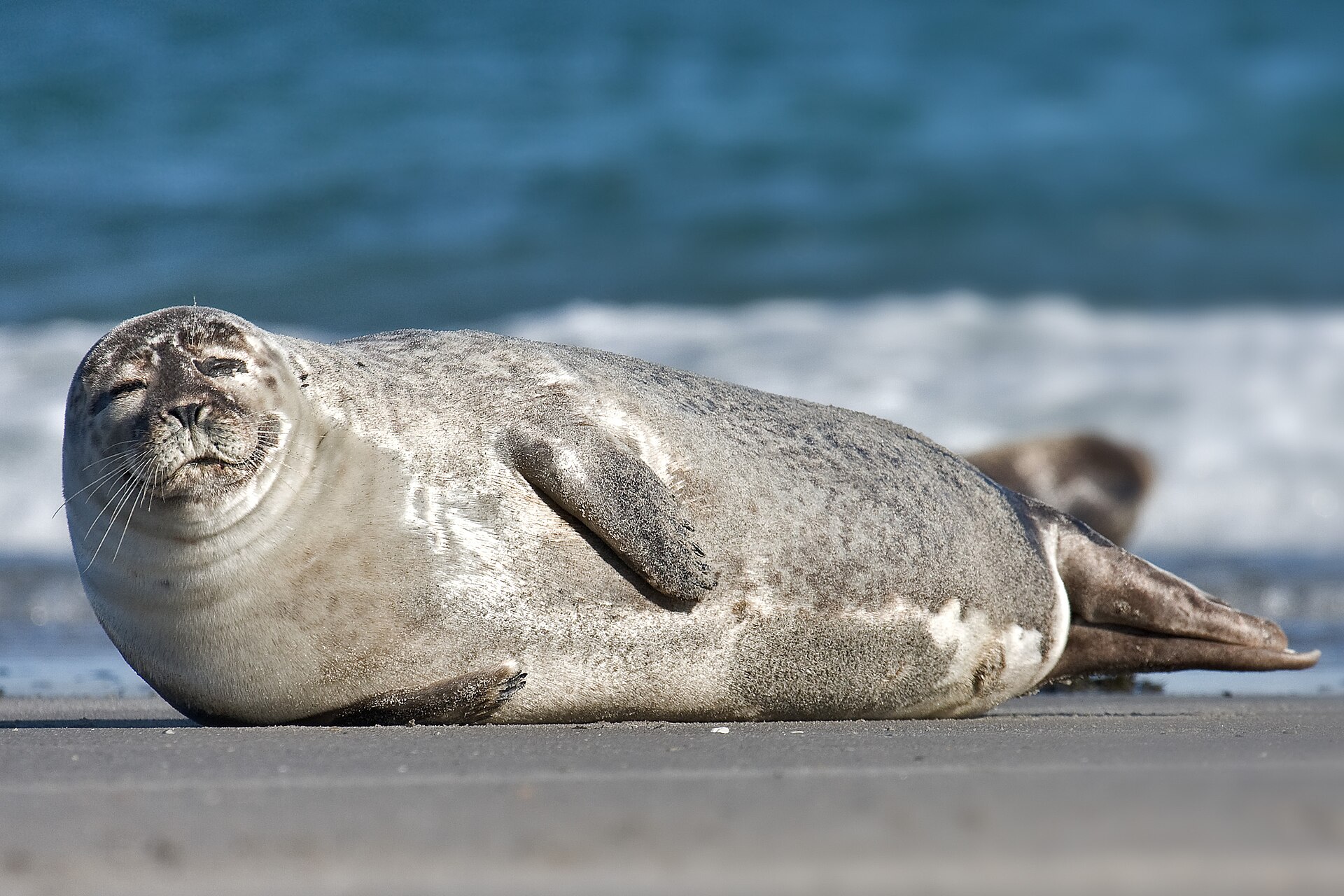
Norway’s roughly 7,000 mainland harbour seals are managed by county. Where local numbers are considered large enough to sustain hunting, the quota can correspond to 5% of the animals counted. But county borders do not always match the genetic structure of seal populations. A coast-wide study found signs of smaller biological units within parts of northern Norway, while seals sampled across four southeastern counties showed no detectable genetic differentiation.
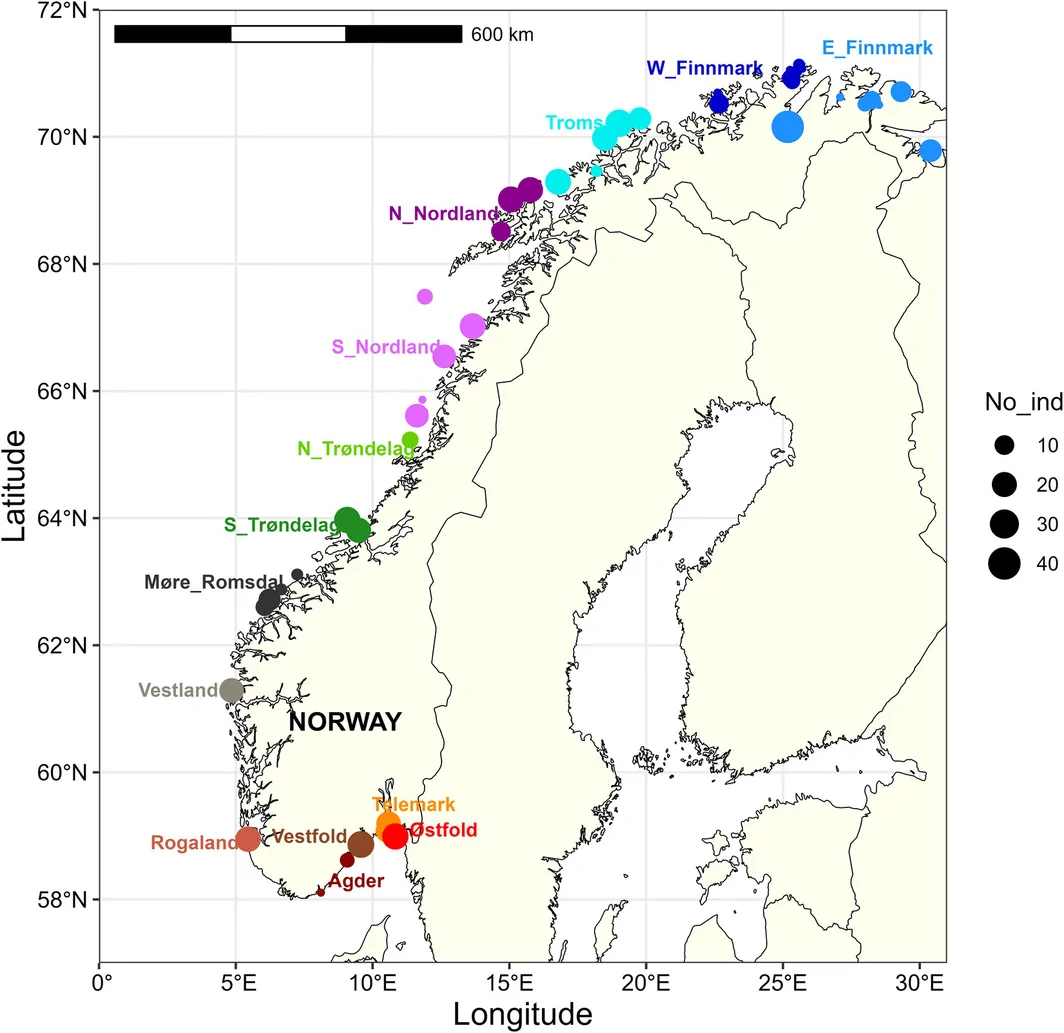
Researchers compared DNA from 573 harbour seals (Phoca vitulina vitulina) in 23 coastal samples, using 16 microsatellite markers—short, repeated DNA sequences that vary among individuals. Because these differences are inherited, comparing them can reveal how closely groups have been connected through reproduction over generations. The samples included 369 pups caught during the pupping season and 204 adults from the traditional hunt in Finnmark. Pups were sampled in June 2007 and in the years 2011–2025.
Genetic similarity generally declined with distance
Differences between sampling areas were modest overall: 3.6% of the measured genetic variation was among areas. Yet 87% of pairwise comparisons between adequately sampled areas showed statistically detectable differentiation. Most variation was within, rather than between, sampling areas, but small differences between many pairs were still detectable. The broad pattern was isolation by distance: seals from nearby places tended to be more genetically similar than seals from farther apart. In particular, seals from haul-out areas within 300 kilometres of one another, measured by waterway distance, were more similar than expected by chance. Waterway distance accounted for 17% of the variation in genetic distance, so it was a broad pattern rather than a complete explanation of how the samples differed.
This pattern fits the seals’ movements. They can travel far to forage, but tend to stay closer to their usual haul-out areas during the mating season. Returning to the same coastal areas to breed can keep reproduction—and therefore gene exchange—more local than swimming distances alone might suggest.
County borders fit differently in the north and south
In southeastern Norway, the researchers detected no genetic differentiation across Agder, Vestfold, Telemark and Østfold. The authors suggest that these neighbouring counties could be considered together as a management unit. Agder, however, was represented by only five seals, making the result less secure for that county.
The northern results point to finer structure, but not to a simple set of boundaries. A direct comparison showed almost no differentiation between the eastern sample from Sør-Varanger and the western sample from Måsøy–Nordkapp in Finnmark. Looking across the fuller set of samples and analyses, however, the authors’ overall interpretation supports eastern and western components, with Porsanger significantly differentiated from both. The findings support finer management units in Finnmark, but do not settle their precise boundaries.
In Nordland, the analyses indicated three differentiated population units. The northern sample from Stø, Hadsel and Røst differed from the Fugløy–Nesøy area, while the southern sample from Vega was also distinct from northern Nordland and neighbouring northern Trøndelag. In Troms, the Senja sample differed from other samples in the county, but not from the neighbouring northern part of Nordland, less than 400 kilometres away. The authors say these patterns suggest that large counties can contain smaller management units.
Rogaland was a striking exception to the general distance pattern: its seals were more genetically similar to some samples from Finnmark, including Porsanger, than their separation along the coast would predict. The authors discuss historical gene flow, long-distance dispersal outside the breeding season and shared genetic variation inherited from earlier populations as possible explanations.
No consistent bottleneck signal despite past declines
With the study’s main test settings, the researchers found no clear genetic signature of a recent population bottleneck—a sharp decline in numbers that can leave a detectable genetic trace—in the sampled areas. One Trøndelag sample showed a signal in some alternative test settings, but not consistently. The lack of a clear signal does not mean populations never declined: hunting depleted harbour seals in northern Norway in the early 2000s, and epidemics caused mass mortality in Skagerrak in 1988 and 2002.
Genetic differences show that reproduction has been more restricted between some areas over generations, but do not by themselves prove that their numbers now rise and fall independently. The authors conclude that Norway’s county-based management boundaries may warrant review, particularly in the north; the precise boundaries remain provisional because the marker panel may miss weak, recent or gradual differences.
Genetics & genomics
Related news
Seal counts fell at a haul-out site, but remained higher in the creek
At Log Pond in Bellingham, Washington, estimated harbour seal counts fell to near zero by 2023 as floating…
Read story →
Colour drone images gave better harbour seal length estimates than thermal images
A study of harbour seals in British Columbia tested drone-based body-length estimates and size classes. Colour images had…
Read story →
Blood Samples from 576 Wild Harbour Seals Establish 35 Health Reference Ranges
Blood samples collected from 576 wild harbour seals over 28 years produced reference intervals for 35 health parameters…
Read story →SPECIES IN THIS STORY
Species in this story
Independent research and conservation news archive
Did you find this information useful?
Wildlife Vagabond is independently built and maintained. Voluntary support helps cover source verification, hosting and continued work on research and conservation news.
Support Wildlife VagabondThe news archive will remain freely available.