
Hunters Supplied a Decade of Moose Fat Measurements in Montana
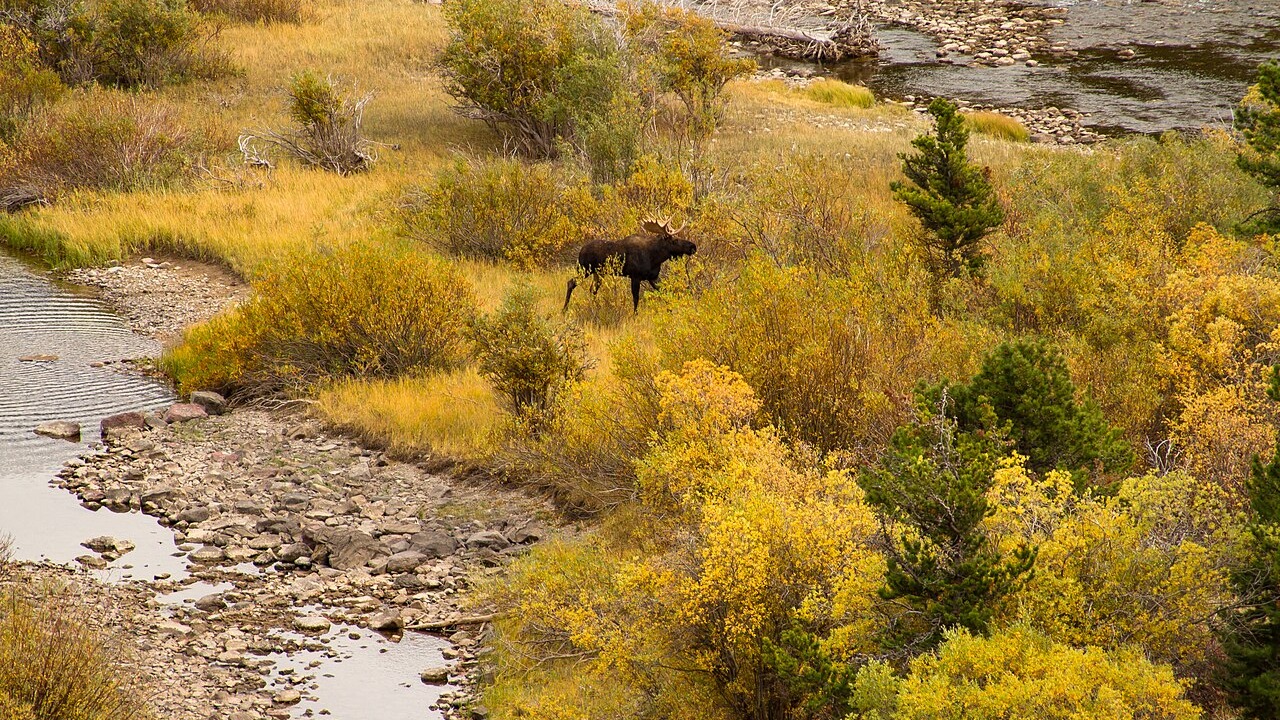
A toothpick, a padded envelope and clear instructions allowed hunters to provide a decade of information about fat reserves in Montana moose (Alces alces). A study based on 1,248 harvested animals found biologically expected changes during the autumn breeding season and broad geographic patterns in body condition. The authors say the approach could become an inexpensive supplement to more controlled wildlife research, but they also warn that the measurements have not yet been validated against those of trained biologists.
The study was published in Alces on 13 April 2026. Montana Fish, Wildlife and Parks sent letters and sampling materials to every holder of a moose licence during the 2013–2022 hunting seasons. Participation was voluntary. Hunters were asked to report information including antler spread and the thickness of subcutaneous fat near the rump.
More than a thousand usable measurements
Hunters returned usable fat-depth data from 1,248 moose: 1,114 males and 134 females. Across the ten years, an estimated 2,547 moose were harvested. The usable fat measurements therefore represented 49 per cent of successful hunters. Some records lacked the date of the kill or antler measurements needed for parts of the analysis, leaving complete information for 1,171 animals.
Body fat reflects the balance between energy intake and expenditure. In living moose it can be estimated with ultrasound, but capturing and handling enough animals over a large area is expensive and difficult. The Montana project tested whether simple measurements from harvested animals could reveal population-level patterns at much lower cost. Each sampling kit cost about US$2–3, including basic materials and two-way postage.
Bulls lost fat during the rut
The clearest pattern matched a biological expectation established before the analysis. Rump fat declined throughout the hunting season in males as the rut imposed energetic costs. Model predictions indicated that a large-antlered bull with a 50-inch spread began the season with more fat but lost it at about 0.88 millimetres per day. A small-antlered bull with a 27-inch spread lost about 0.56 millimetres per day. In the model, both examples reached zero measurable rump fat around 20 October.
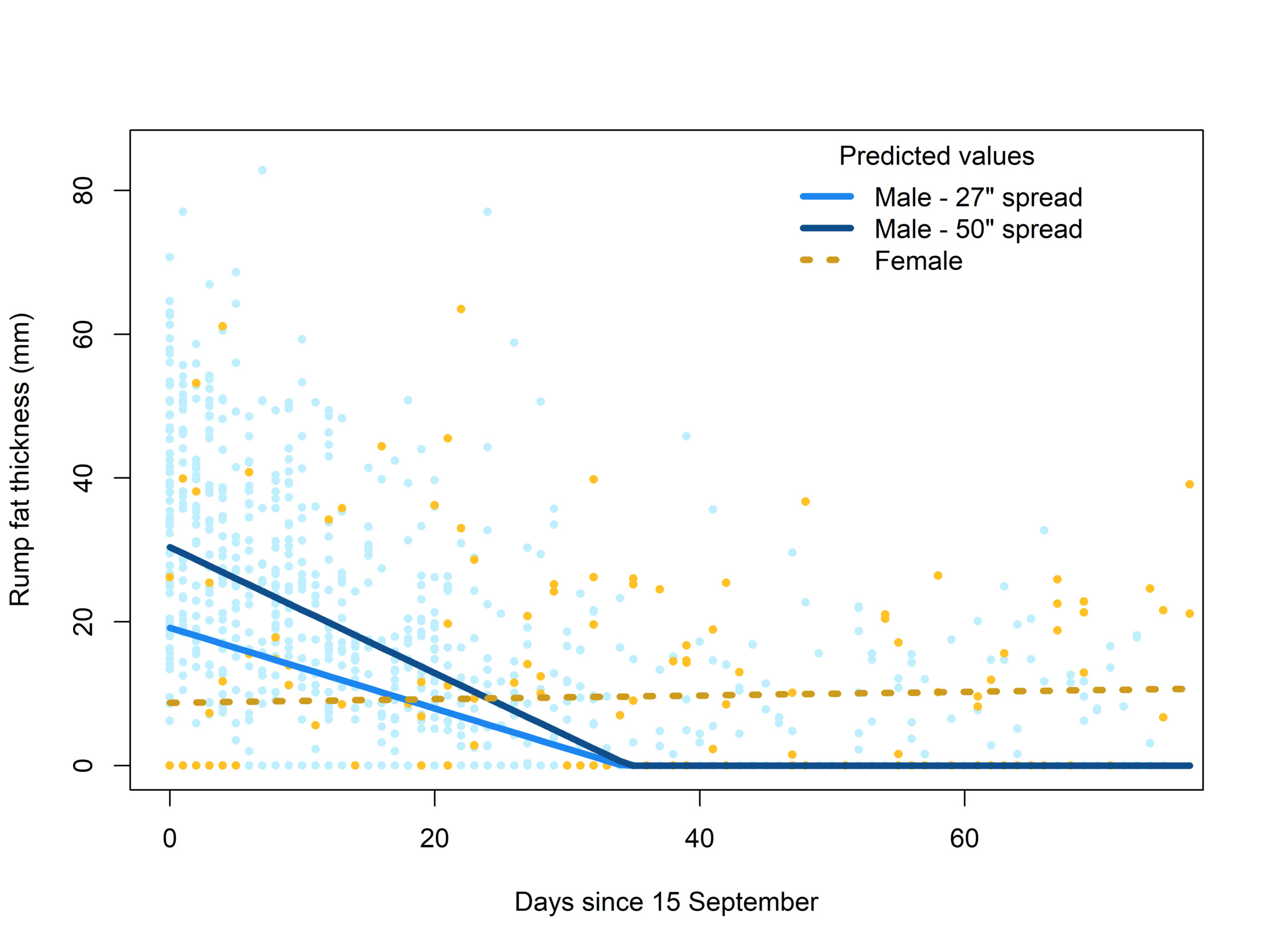
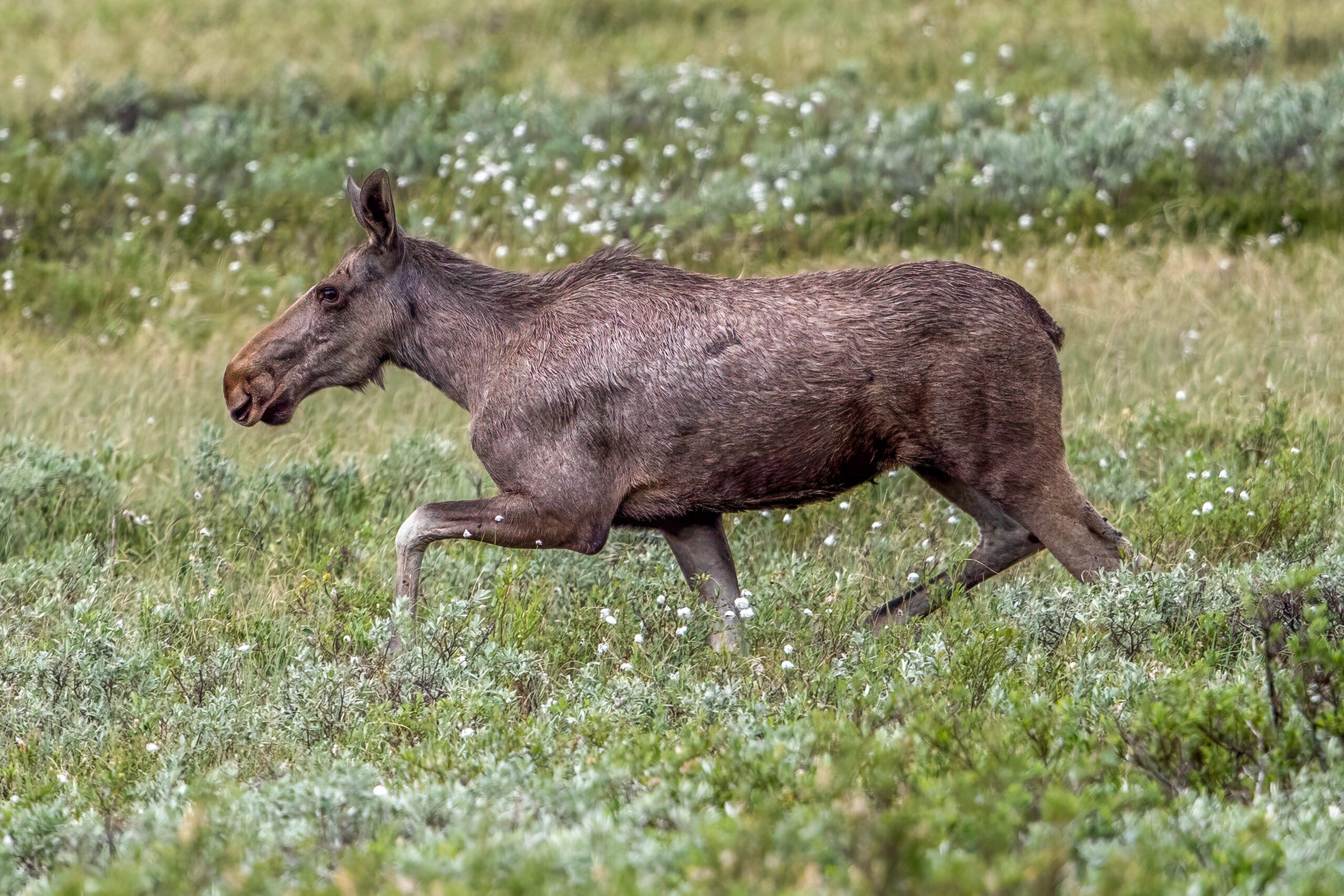
Females began with lower average reserves but did not show the same seasonal decline. Their data were much more limited because Montana’s harvest contains relatively few females. Interpreting female condition would also require information such as whether an individual had been lactating, which was not available from the measurements alone.
After accounting for date and antler size, the researchers found that nearby hunting districts tended to have more similar rump-fat values than distant ones. That spatial pattern suggests the method may detect broad regional variation. However, the fat index did not predict average antler growth at the hunting-district scale.
Promising data, but not a direct measure of forage
The authors did not independently check whether hunters’ measurements were accurate or unbiased. Differences in where the incision was made, the time between death and measurement, and other details could add error. They recommend paired measurements by hunters and trained biologists before adopting a long-term protocol.
Regional differences also cannot automatically be interpreted as differences in food quality. Fat reserves may reflect the amount and arrangement of forage, movement costs, the distribution of females during the rut, parasites, climate and other health factors. The study therefore treats hunter-collected rump fat as a possible index of nutritional condition, not a complete diagnosis of why condition differs.
Physiology
Related news
Arctic Moose Follow the River Valleys
GPS tracking in Alaska showed that half of 24 female moose migrated between summer and winter ranges. Migrants…
Read story →
Thermal Drones Found Nearly All Moose in Favourable Winter Weather
Swedish trials found detection close to 100% in cold, overcast winter conditions, but the survey effort needed for…
Read story →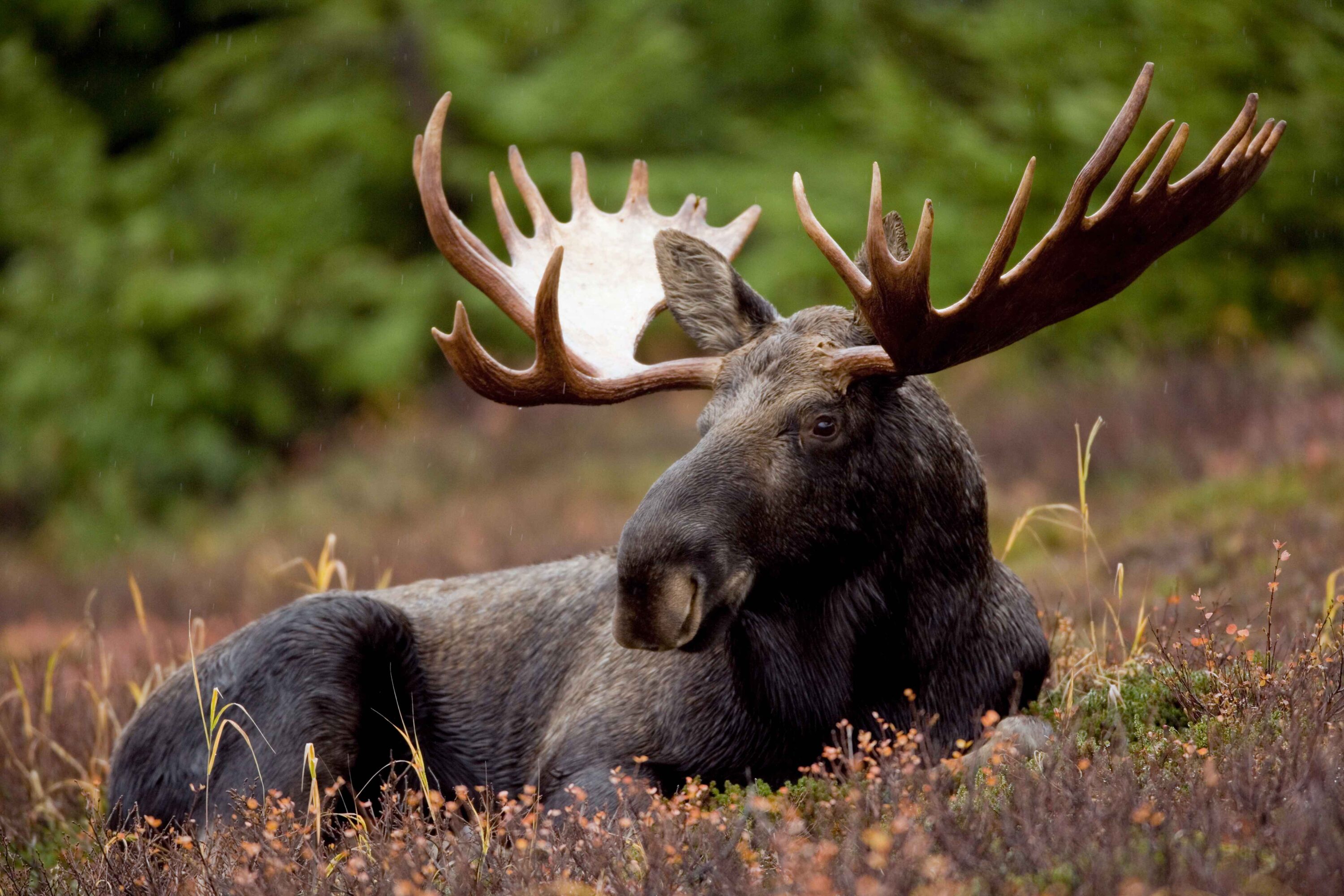
Even Adirondack Park’s Densest Moose Area Was Too Sparse for Precise Aerial Estimates
Helicopter surveys estimated about 92 moose in the Adirondack core in 2024 and 112 in 2025, but broad…
Read story →SPECIES IN THIS STORY
Species in this story
Independent research and conservation news archive
Did you find this information useful?
Wildlife Vagabond is independently built and maintained. Voluntary support helps cover source verification, hosting and continued work on research and conservation news.
Support Wildlife VagabondThe news archive will remain freely available.