
Immigration Could Both Change and Stabilise Great Tits’ Clutch Sizes

The number of eggs a great tit (Parus major) lays is partly heritable. But a population’s evolution depends on more than which local birds survive and produce young. On the Dutch island of Vlieland, incoming birds played an important part: they could drive genetic change or hold a local trend towards smaller clutches in check.
The researchers studied two neighbouring populations, one in the west and one in the east of the island, from 1980 to 2023. Records of egg clutches and family relationships allowed them to estimate the birds’ inherited tendency to lay more or fewer eggs, separately from environmental influences.
An experiment reversed the difference
Before the experiment, females in the west laid an average of 1.1 more eggs than those in the east. Between 1996 and 2003, researchers tried to reverse the inherited difference through artificial selection. In the west, they removed all the eggs laid by females with larger-than-average clutches. In the east, they did the same for females with smaller-than-average clutches. The affected females therefore produced no young that year.
This gave birds with a tendency towards smaller clutches greater influence on the next generation in the west, while favouring larger clutches in the east. The genetic difference between the populations reversed.
Yet this new distinction disappeared within eight years after the experiment ended. Natural selection alone did not explain the change: differences in survival and contribution to the following year’s breeding population were not clearly related to clutch size in a way that could account for it.
New arrivals could pull in the opposite direction
Incoming birds were an important part of the explanation. When they joined the breeding population, they also changed its mix of inherited traits. This movement of genetic variation is called gene flow.
Before the experiment, local processes in the east had pushed the population genetically towards smaller clutches, while immigration pushed towards larger clutches. The two contributions offset each other. An apparently stable clutch size therefore concealed ongoing change.
After the experiment, immigration instead contributed to change. The estimates suggested that, without newcomers, the eastern population would have remained close to genetically stable, while the western population would have continued towards smaller clutches.
Immigration therefore had no single, fixed effect. Its importance differed between the two populations and across the decades. To understand evolution in these great tits, the researchers had to track both the traits passed on by local birds and the new birds joining them.
Ecology
Related news

Great Tits Infected Ticks With Borrelia Most Often During Breeding
Across 420 xenodiagnoses in northern Belgium, wild Great Tits were much more likely to transmit Borrelia garinii to…
Read story →
Urban Bird Diversity Was More Strongly Linked to Forest Structure Than the Surrounding City
Across 12 urban forests in three Italian cities, researchers recorded 2,035 birds from 52 species. Local forest structure…
Read story →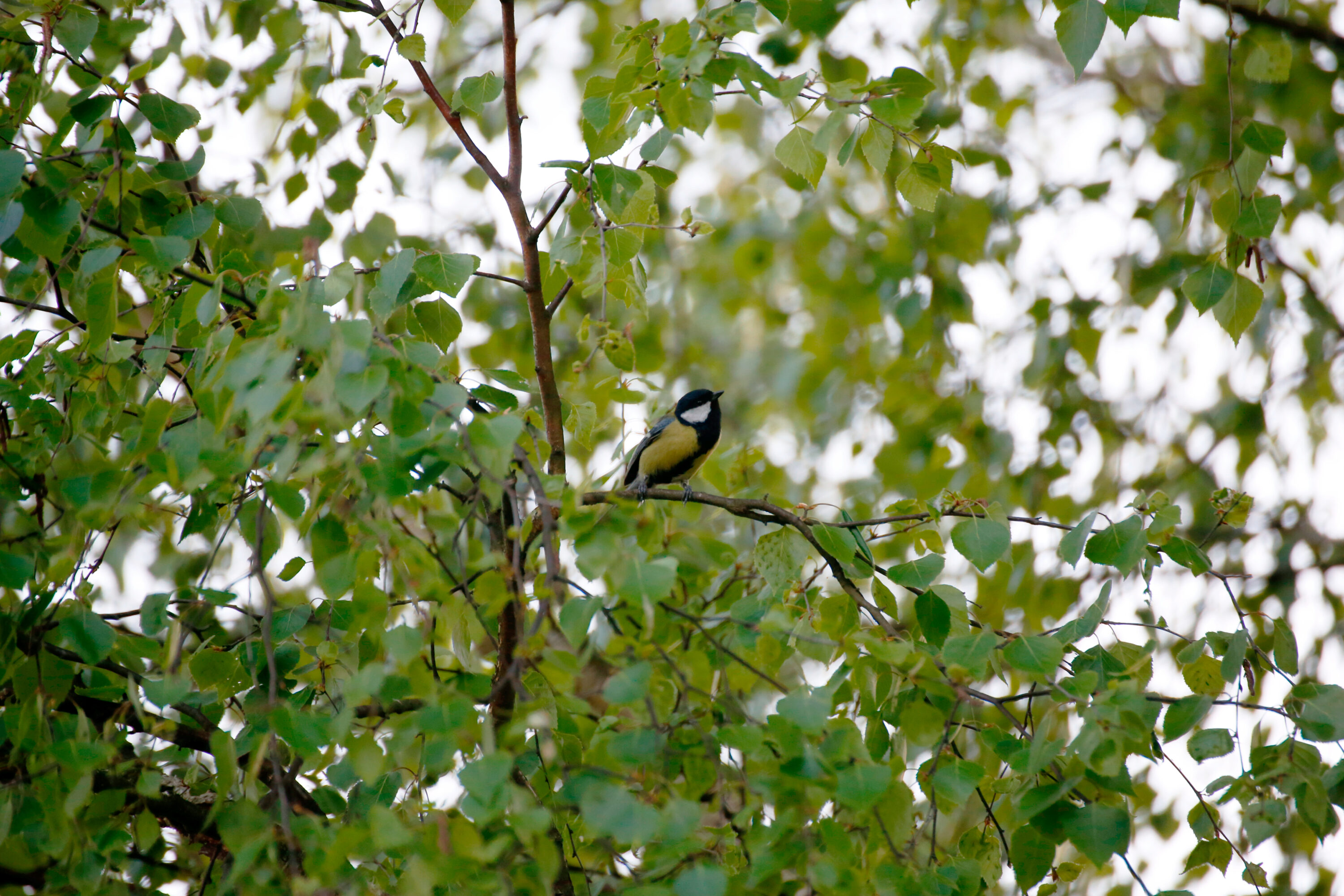
Great Tits Were Paler in Built-Up Neighbourhoods
Across six European cities, great tits had less vivid yellow breasts where buildings and roads covered more of…
Read story →SPECIES IN THIS STORY
Species in this story

Independent research and conservation news archive
Did you find this information useful?
Wildlife Vagabond is independently built and maintained. Voluntary support helps cover source verification, hosting and continued work on research and conservation news.
Support Wildlife VagabondThe news archive will remain freely available.