
Lower-ranking rhesus macaque infants spent more time shifting their gaze
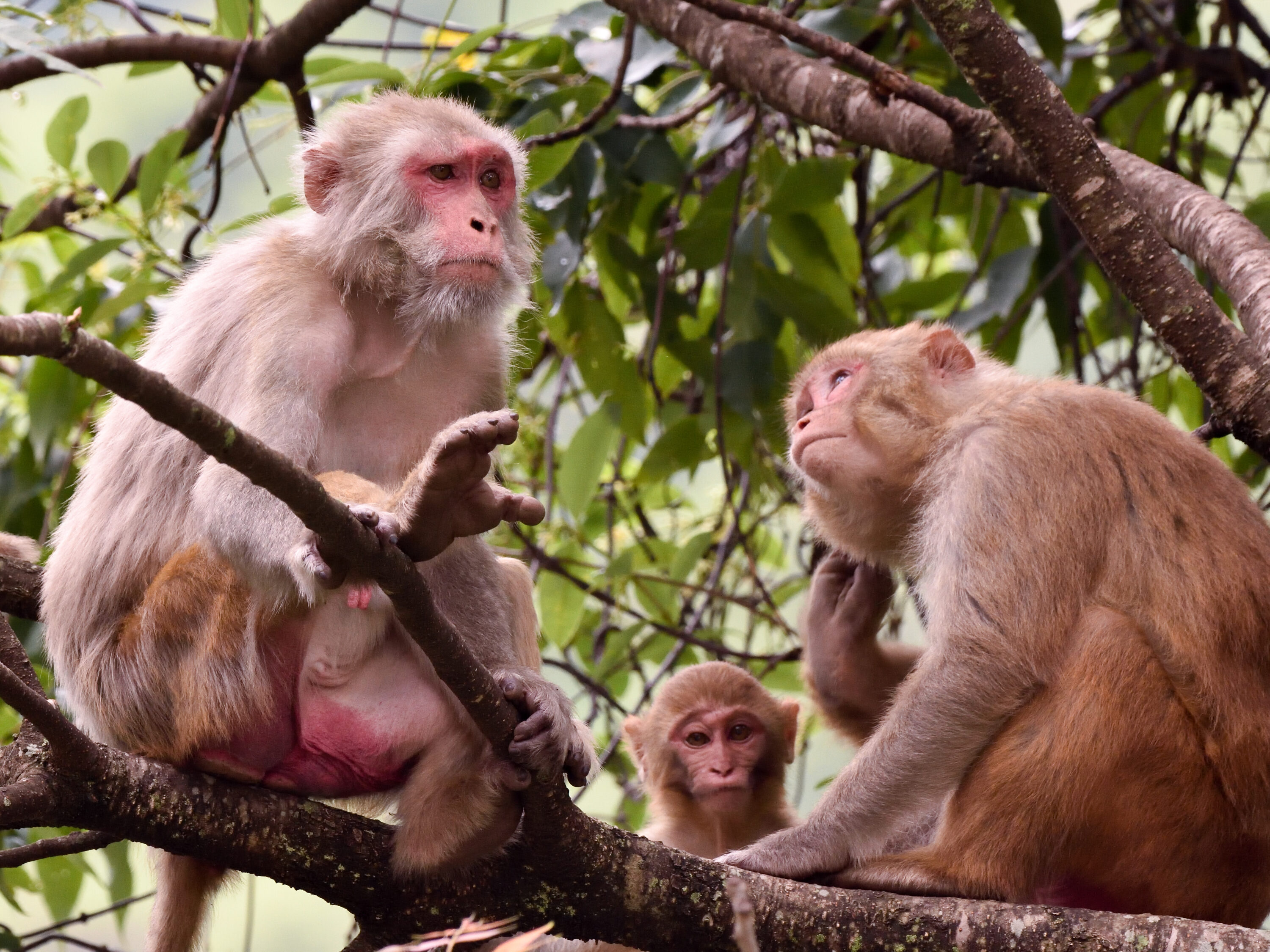
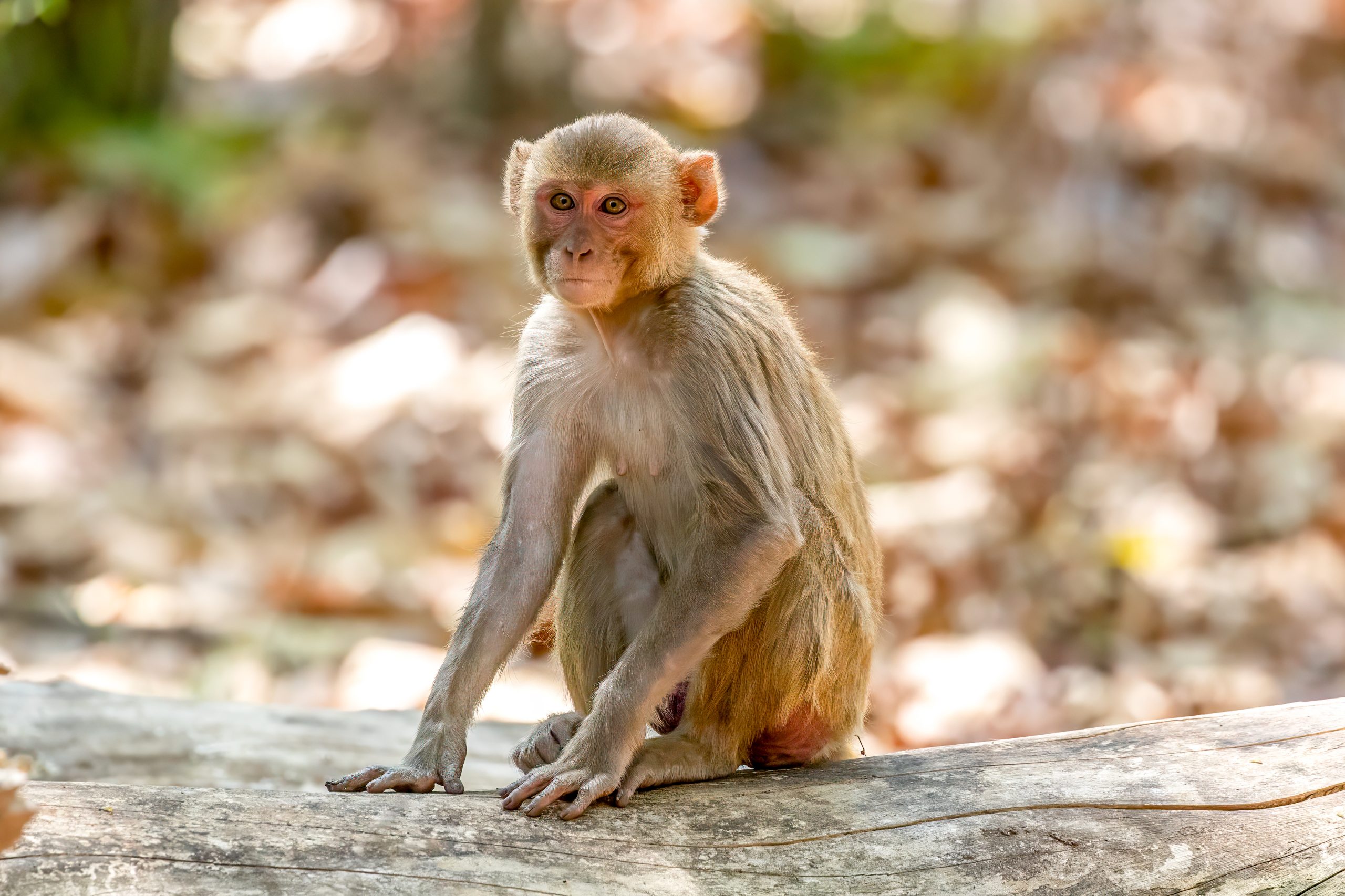
How an infant macaque scans a social scene may shape the information it takes in. In a study of 39 male rhesus macaques (Macaca mulatta), infants from lower-ranking family lines spent more of their viewing time making rapid shifts of gaze than infants from higher-ranking lines. The difference appeared from about five weeks of age.
The infants were raised by their mothers in large social groups at a research field station in Georgia, USA. Over their first six months, researchers used eye tracking at up to 14 sessions to record how the infants watched videos of unfamiliar macaques and mother–infant pairs. A saccade is a rapid movement of the eyes from one point to another; a fixation is when the gaze stays on a point. Researchers also recorded when an infant looked away from the screen. Each infant’s social rank was based on its mother’s matriline: a family line of related females that holds a position in the group’s hierarchy.
Across the first six months, the overall shares of viewing time spent making saccades, fixating on the videos and looking away changed little with age. In videos of unfamiliar macaques, infants spent about 26% of viewing time making saccades, 35% fixating on the video and 36% looking away from the screen. Rank was linked to one of these measures: from about five weeks onward, lower-ranking infants spent more viewing time making saccades. The relationship was statistically supported but modest; the saccade pattern accounted for about 15% of variation in rank. There was no clear rank-related difference in overall fixation time. The main contrast was therefore in how infants moved their gaze through a scene, not how long they looked at it.
Attention to the eyes of unfamiliar macaques also changed as the infants developed. The share of fixations directed at the eyes rose from 5.3% shortly after birth to 10.9% around ten weeks, then levelled off until about week 17 before rising again to 14.6% later in infancy. The relationship between rank and attention to social features was weaker: lower-ranking infants tended to reach an earlier peak and look more at the combined eye-and-head region of unfamiliar macaques later in infancy. This pattern was not found for attention to the eyes alone or in videos of mother–infant pairs, and differences between individual infants were larger than those associated with rank.
The researchers suggest that the greater share of time lower-ranking infants spent shifting their gaze may reflect a visual strategy shaped by their social environment. Quick looks could help an animal monitor a social scene without maintaining a direct stare; earlier research has linked such looks to how lower-ranking macaques navigate social interactions, where direct staring can be an aggressive signal.
Behaviour
Related news
Older rhesus macaques show hundreds of gene-expression differences in blood
In a study at a research facility in Sochi, Russia, 741 genes differed in expression between young and…
Read story →
Oxytocin’s effect on macaques’ brain responses to sound depended on visual context
In two awake rhesus macaques, oxytocin dampened sound-evoked brain responses when sounds were presented alone. The dampening disappeared…
Read story →
Some rhesus macaques kept SIV in check after antibody treatment and ART interruption
Eight of 21 macaques given SIV-targeting antibodies met the study’s definition of post-treatment control. Their CD4+ T cells…
Read story →SPECIES IN THIS STORY
Species in this story
Independent research and conservation news archive
Did you find this information useful?
Wildlife Vagabond is independently built and maintained. Voluntary support helps cover source verification, hosting and continued work on research and conservation news.
Support Wildlife VagabondThe news archive will remain freely available.