
Red Foxes Tracked Annual Vole Abundance While All Three Carnivores Aggregated Around Local Prey Hotspots
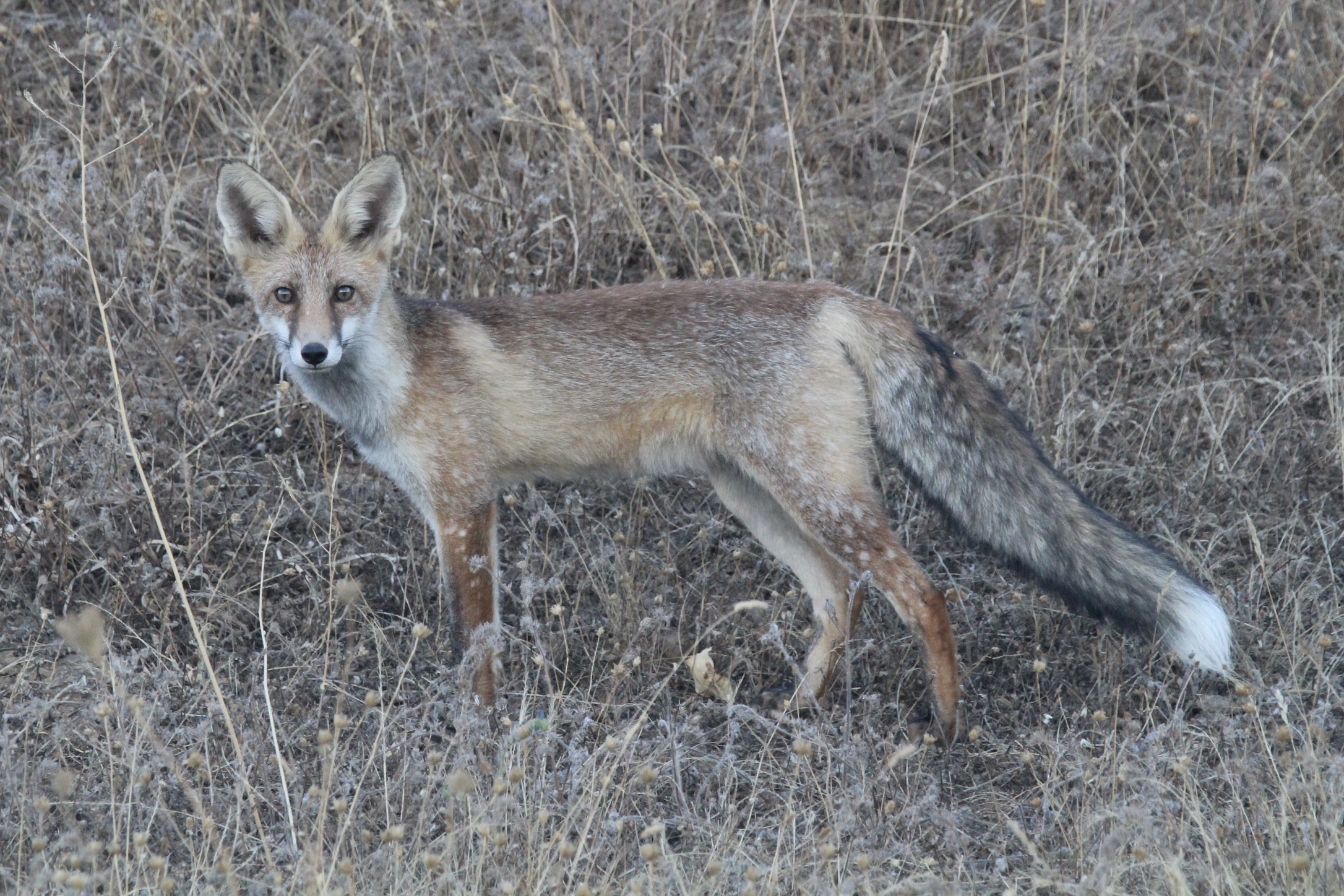
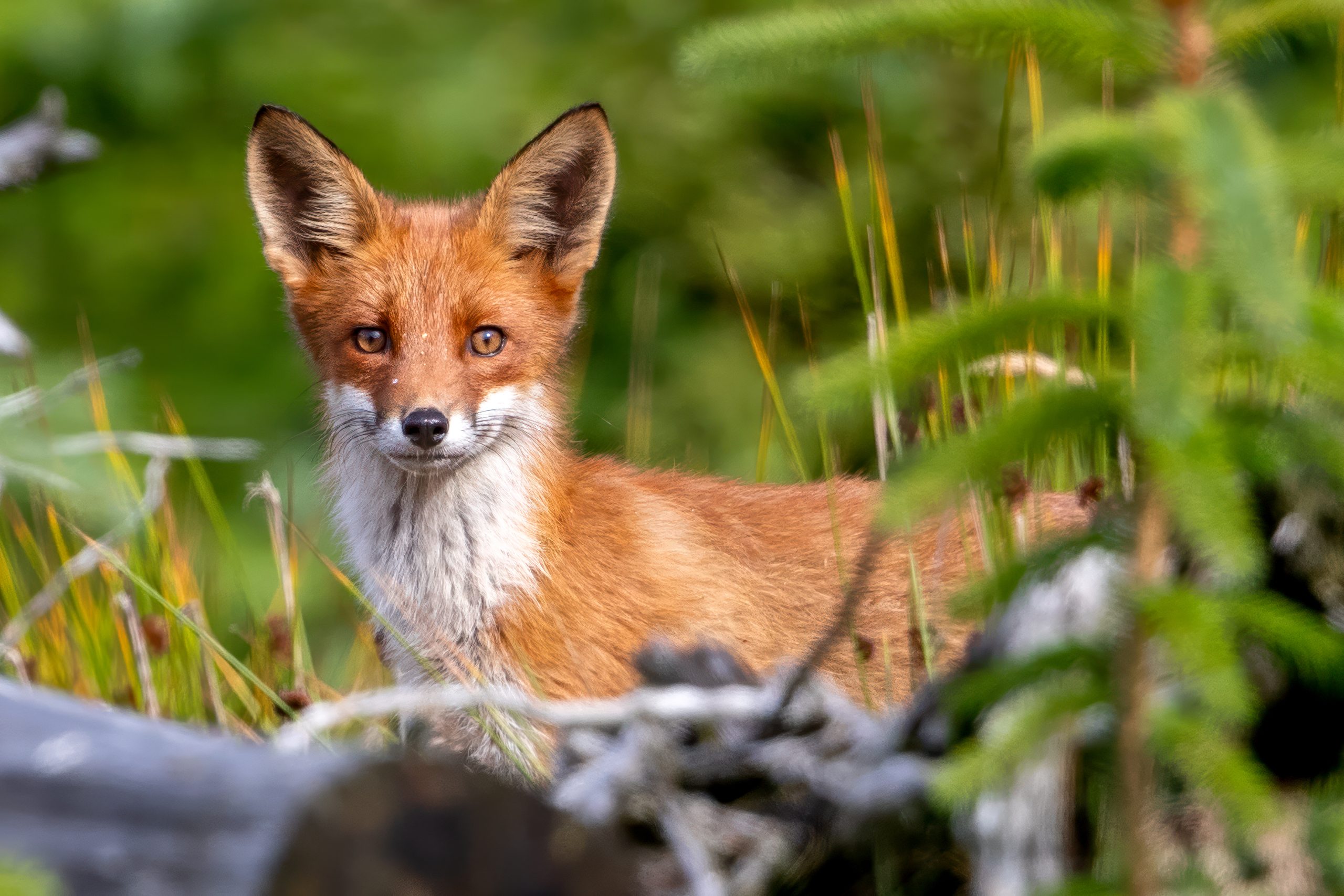
A ten-year study in Montaña Palentina Natural Park in northern Spain found that red foxes (Vulpes vulpes), European wildcats (Felis silvestris) and domestic cats (Felis catus) responded to the same fluctuating rodent prey differently depending on spatial scale. Across years, red-fox detections tracked abundance of the Montane water vole (Arvicola scherman) most closely. At a local scale, however, all three carnivores concentrated around especially prey-rich patches.
The study analysed standardised vehicle surveys from 2016 to 2025 in mountain grazing meadows. After observations outside meadow and grassland habitat were excluded, the broad-scale dataset contained 1,423 carnivore detections: 443 red foxes, 378 wildcats and 602 domestic cats.
Red fox detections tracked annual vole abundance most clearly
Vole activity was measured separately at 278 sampling points from the presence of fresh molehills along standardised transects. The index measured signs of vole activity, not a direct count of individual rodents.
Red-fox detections showed a strong positive same-year relationship with the annual vole index. Domestic cats showed no statistically clear annual association, while wildcats showed essentially no same-year relationship.
When wildcat detections were compared with vole abundance from the previous year, the association became much stronger. One correlation test was just outside the conventional significance threshold, while another was significant. The authors therefore interpret the result as a possible delayed wildcat response rather than a firmly demonstrated one-year demographic lag.
For red foxes, the immediate pattern is consistent with a functional response: foxes may quickly shift where and how intensely they use meadows when voles become abundant. The data do not show that fox population size immediately increased in vole-rich years.
All three carnivores aggregated around local prey hotspots
The researchers then asked a different question at a much finer scale. Around each carnivore observation they examined vole activity within a 300-m radius and compared the local maximum with what would normally be expected for that year. The 300-m radius was a practical analysis window, not an estimate of how far a carnivore can detect prey or normally travel.
After observations without a nearby vole-sampling point were excluded, 1,373 carnivore detections remained. A locally higher-than-expected vole index occurred around 80.4% of red-fox observations, 82.4% of wildcat observations and 81.7% of domestic-cat observations.
The similarity is striking because the three carnivores have different foraging ecologies. It does not mean they used the whole landscape in the same way. Rather, within the meadow areas each species used, all three were disproportionately associated with local prey-rich patches.
Predator–prey coupling changed with scale
The authors had expected the more rodent-specialised wildcat to track vole abundance more closely than the generalist red fox and human-associated domestic cat. The results did not follow that simple specialist–generalist gradient.
Red foxes showed the clearest immediate response to year-to-year prey fluctuations, while all three species converged on local prey hotspots. Wildcats may respond more slowly because they are more strongly tied to particular habitat structures, whereas domestic cats can also receive food from people. These mechanisms are interpretations consistent with the observations, not experimentally separated causes.
Detections are not population estimates
The carnivore data came from vehicle-based observations in open grazing meadows. Differences in how easily each species can be seen cannot be completely separated from differences in how strongly they use that habitat.
The study therefore does not estimate total carnivore population size or complete landscape distribution. Its defensible result is narrower: meadow detections changed with prey availability, and the apparent predator–prey relationship depended strongly on the spatial scale at which it was measured.
Ecology
Related news
Similar Mammal Diversity, Different Activity Patterns in Grazed and Ungrazed Areas
Camera traps in four northern Israeli reserves found similar numbers of mammal species with and without livestock grazing.…
Read story →
Wolf Kills Provided Plenty of Food for Red Foxes
Red foxes visited all 26 wolf-killed red deer monitored in Stelvio National Park. The amount of meat left…
Read story →
Red Foxes and Stone Martens Share Places at Different Times
Red foxes and stone martens often used the same sites in central Spain. Their daily activity differed more…
Read story →SPECIES IN THIS STORY
Species in this story
Independent research and conservation news archive
Did you find this information useful?
Wildlife Vagabond is independently built and maintained. Voluntary support helps cover source verification, hosting and continued work on research and conservation news.
Support Wildlife VagabondThe news archive will remain freely available.