
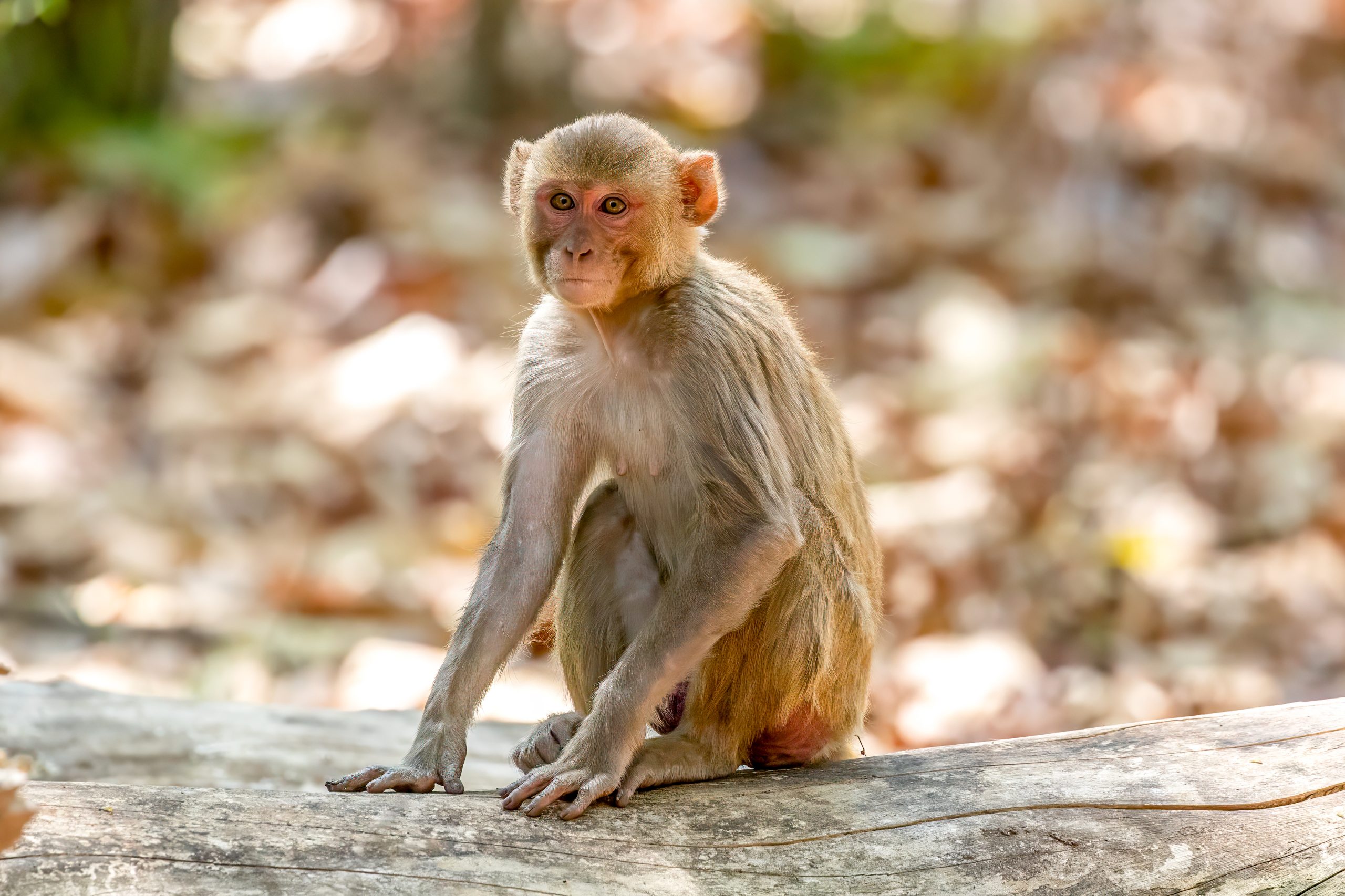
Rhesus macaque gut microbes vary along the gut and differ from those in humans
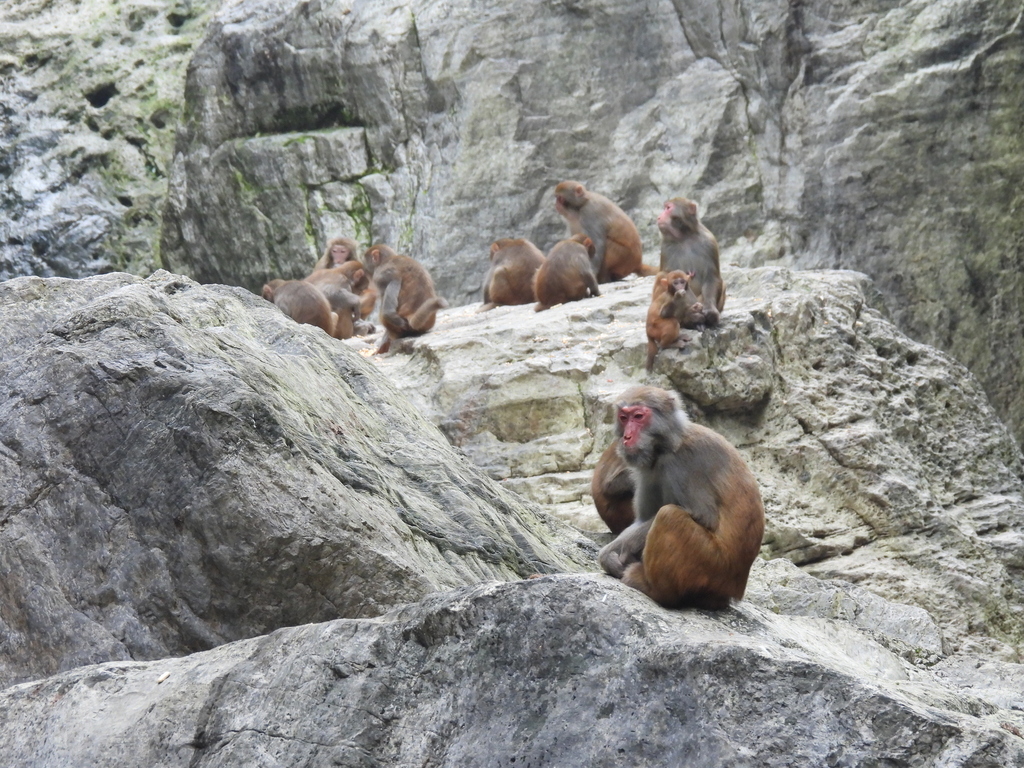
The gut is not one uniform habitat for microbes. In rhesus macaques (Macaca mulatta), microbial communities and their metabolic potential differed among regions of the gastrointestinal tract. A 2026 study also found substantial differences between macaque and human gut samples, including a striking contrast in bile acids in the large intestine.
Researchers collected 148 samples from four macaques, sampling both gut contents and the mucosal surface—the lining facing the gut contents. Microbial DNA revealed which microbes were present and which functions their genes could support; separate measurements identified bile-acid compounds in selected samples. For comparison, the researchers reanalysed gut data from four people, collected using ingestible sampling capsules rather than direct sampling throughout the gut.
Gut regions had different microbial communities and functions
Microbial abundance was high in the mouth, fell in the oesophagus and stomach, then rose through the small intestine—especially in the ileum—and peaked in the rectum, at about 2,000 times the small-intestinal level. Species diversity followed a different pattern: it was high in the upper gut, fell sharply in the small intestine and rose again in the large intestine and stool. The stomach stood out: despite having few microbes, it retained high taxonomic and functional diversity. Across regions, the overall diversity of predicted metabolic pathways was relatively even, but the particular pathways that were abundant differed. Large-intestine samples were enriched in pathways related to energy production, fermentation and carbohydrate breakdown. Despite its sparse microbial population, the stomach showed distinctive pathways, including ones associated with aerobic respiration.
Microbes in the gut contents and on the mucosal surface were broadly similar at higher taxonomic levels, but differed in their species-level signatures. Several species, including Segatella copri, were more abundant in gut contents; no individual species was robustly enriched on the mucosal surface. Thus, a broad view of microbial groups can miss differences among the species occupying the gut’s contents and lining.
In the study’s comparison, host species accounted for more variation in microbial communities and functions than gut region did. This is a pattern in a small dataset, not a general ranking for macaques and people: it involved four animals and four people, and the human samples came from a separate capsule-based dataset.
Plant-fibre enzymes and a distinctive bile acid
One host-associated difference involved S. copri. Macaque-associated genomes of this gut bacterium contained a broader repertoire of carbohydrate-active enzymes than human-associated groups of the same species. These enzymes help microbes break down complex plant carbohydrates. The macaque-associated genomes included additional enzyme families linked to starch and plant-sugar processing, as well as the breakdown of hemicellulose and pectin—components of plant cell walls. This suggests a broader potential to process plant material, although the study did not directly test the enzymes’ activity.
Bile acids, which are made by the host and can also be transformed by gut microbes, showed another marked contrast. In macaques, total bile-acid concentrations rose from the small intestine to the large intestine; the human comparison showed a different, generally declining pattern along the gut. The macaque large intestine was especially rich in isoallo-lithocholic acid (isoalloLCA), which made up a median 89% of the bile acids measured there. It was not detected in the human bile-acid comparison dataset.
IsoalloLCA is an immune-modulating bile-acid metabolite that can promote the development of regulatory T cells, which help restrain immune responses. The researchers found candidate genes for its production in microbial genomes assigned to Parabacteroides sp900549585 and Egerieousia sp900544815. These are possible producers, not confirmed ones: the study did not show that either microbe made the compound.
The researchers also compared predicted structures of three enzymes involved in isoalloLCA biosynthesis: 5AR, 5BR and 3β-HSDH. The predicted 5AR and 5BR structures were very similar between monkey- and human-associated microbes, while 3β-HSDH was less conserved. The predicted monkey-associated 3β-HSDH had extra alpha helices, which the researchers suggested could affect the enzyme’s stability and catalytic efficiency. Because these were computer-predicted structures, the possible functional effect was not experimentally confirmed.
Together, the findings show that microbial differences between hosts are not simply a matter of which species are present. The genes carried by those microbes suggest different capacities for processing plant carbohydrates, while the bile-acid measurements reveal a distinct metabolic product in the macaque large intestine. The structural comparison offers a further possible lead on why isoalloLCA biosynthesis may differ between host-associated microbial communities.
Ecology
Related news
Older rhesus macaques show hundreds of gene-expression differences in blood
In a study at a research facility in Sochi, Russia, 741 genes differed in expression between young and…
Read story →
Oxytocin’s effect on macaques’ brain responses to sound depended on visual context
In two awake rhesus macaques, oxytocin dampened sound-evoked brain responses when sounds were presented alone. The dampening disappeared…
Read story →
Some rhesus macaques kept SIV in check after antibody treatment and ART interruption
Eight of 21 macaques given SIV-targeting antibodies met the study’s definition of post-treatment control. Their CD4+ T cells…
Read story →SPECIES IN THIS STORY
Species in this story
Independent research and conservation news archive
Did you find this information useful?
Wildlife Vagabond is independently built and maintained. Voluntary support helps cover source verification, hosting and continued work on research and conservation news.
Support Wildlife VagabondThe news archive will remain freely available.