
Rook Hind Limbs Grew Fastest Before Hatching, Forelimbs During Most Nestling Development
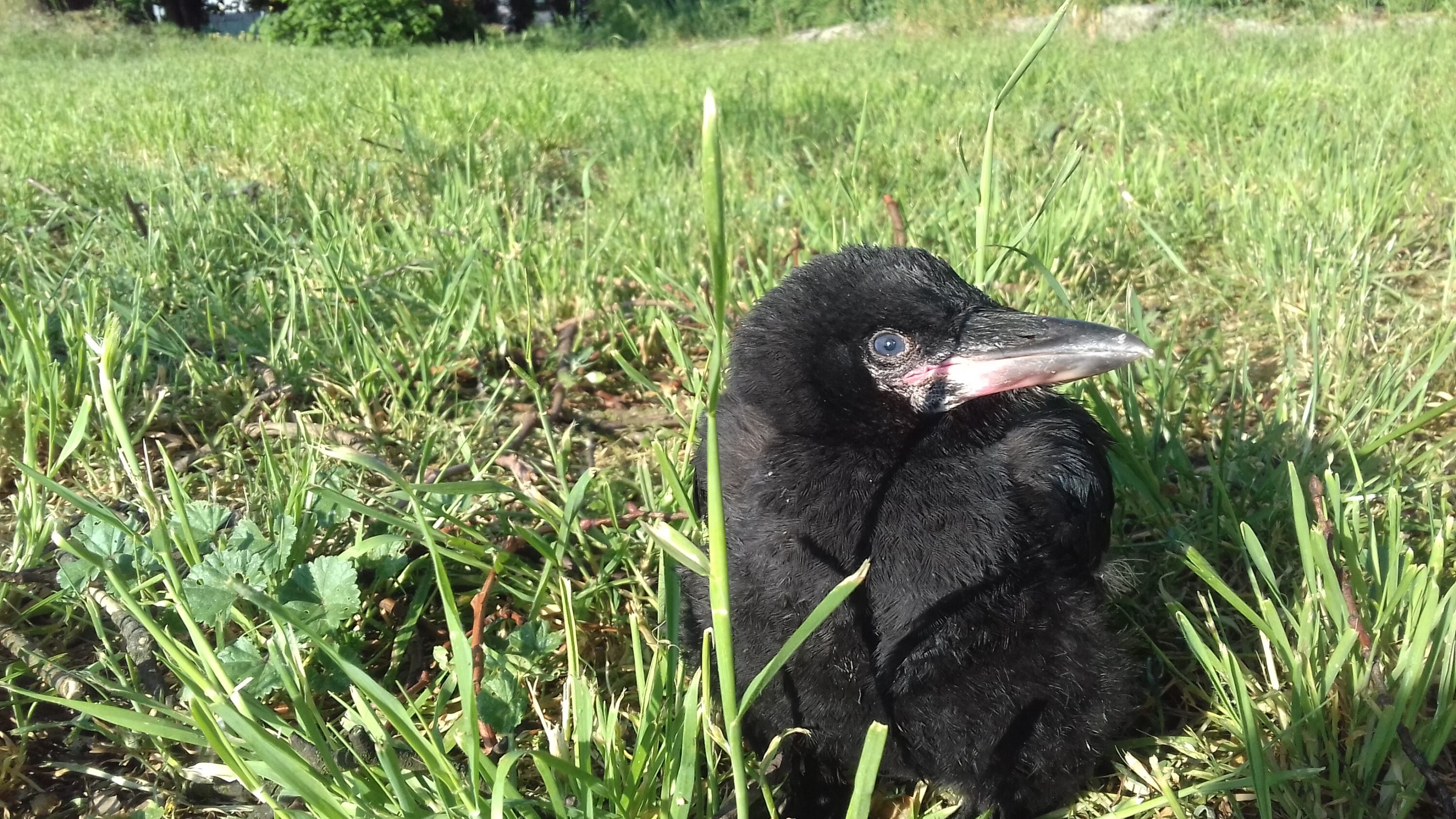
A study of rook (Corvus frugilegus) development found that the proportions of the head, forelimbs and hind limbs changed repeatedly from the embryo stage through the nestling period. The researchers compared body-part length with overall body size to ask whether each structure grew proportionally, faster than expected or slower than expected as the bird became larger. They identified four distinct phases in these growth trajectories.
Body proportions changed in four phases
From embryonic days 10–13, the measured structures generally showed positive allometry: they lengthened faster than expected if they had simply kept the same proportions as overall body size increased. From embryonic day 14 through the third day after hatching, they showed mostly negative allometry, meaning their length increased more slowly than overall body size. Positive allometry returned from postnatal days 5–23, before growth became approximately isometric during days 25–30 — the stage when body-part proportions changed comparatively little as the bird continued growing.
The different body parts did not share the same relative growth rate within these phases. The hind limbs — the developing legs — grew fastest relative to overall body size during embryonic development, whereas the forelimbs — the developing wings — showed the highest relative growth through most of the postnatal nestling period. This does not mean that one structure necessarily added the most millimetres; it means its size increased fastest relative to the growth of the bird as a whole. These shifting rates changed body proportions even though the broad developmental phases were shared among the traits.
The authors interpret the shifting growth patterns as consistent with different body parts being prepared for function at different times, while whole-body growth also constrains how quickly individual structures can develop. They present this as an interpretation of the changing trajectories rather than a direct test of when each limb becomes functionally mature.
Reproduction & development
Related news
Rook Breeding Numbers Fell 42–62% in Several Regions of Northern and Western Poland
Surveys across northern and western Poland counted 26,318 occupied rook nests, while comparable regional datasets showed declines of…
Read story →
Wintering Eastern Rooks in Korea Shared Broadly Overlapping Breeding Origins
Stable isotopes and mitochondrial DNA indicated that eastern rooks wintering at four South Korean sites came from broadly…
Read story →
French Wildlife Culling Was Not Linked to Lower Reported Damage
A 2026 national evaluation of ten native species found no relationship between lethal-control effort and lower reported damage…
Read story →SPECIES IN THIS STORY
Species in this story
Independent research and conservation news archive
Did you find this information useful?
Wildlife Vagabond is independently built and maintained. Voluntary support helps cover source verification, hosting and continued work on research and conservation news.
Support Wildlife VagabondThe news archive will remain freely available.