
Buildings Were Linked to About 50% Lower Space Use by Migrating Serengeti Wildebeest
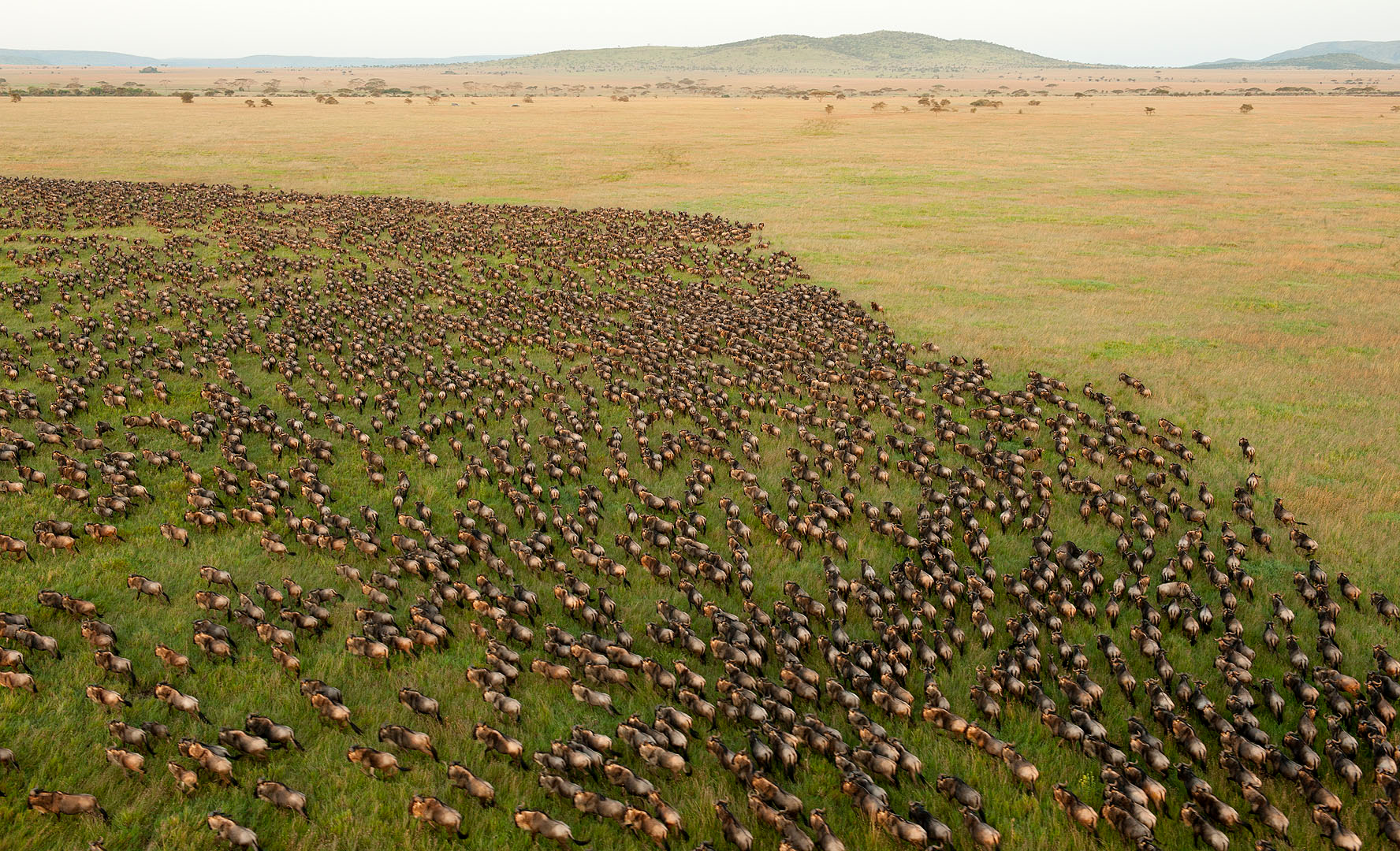
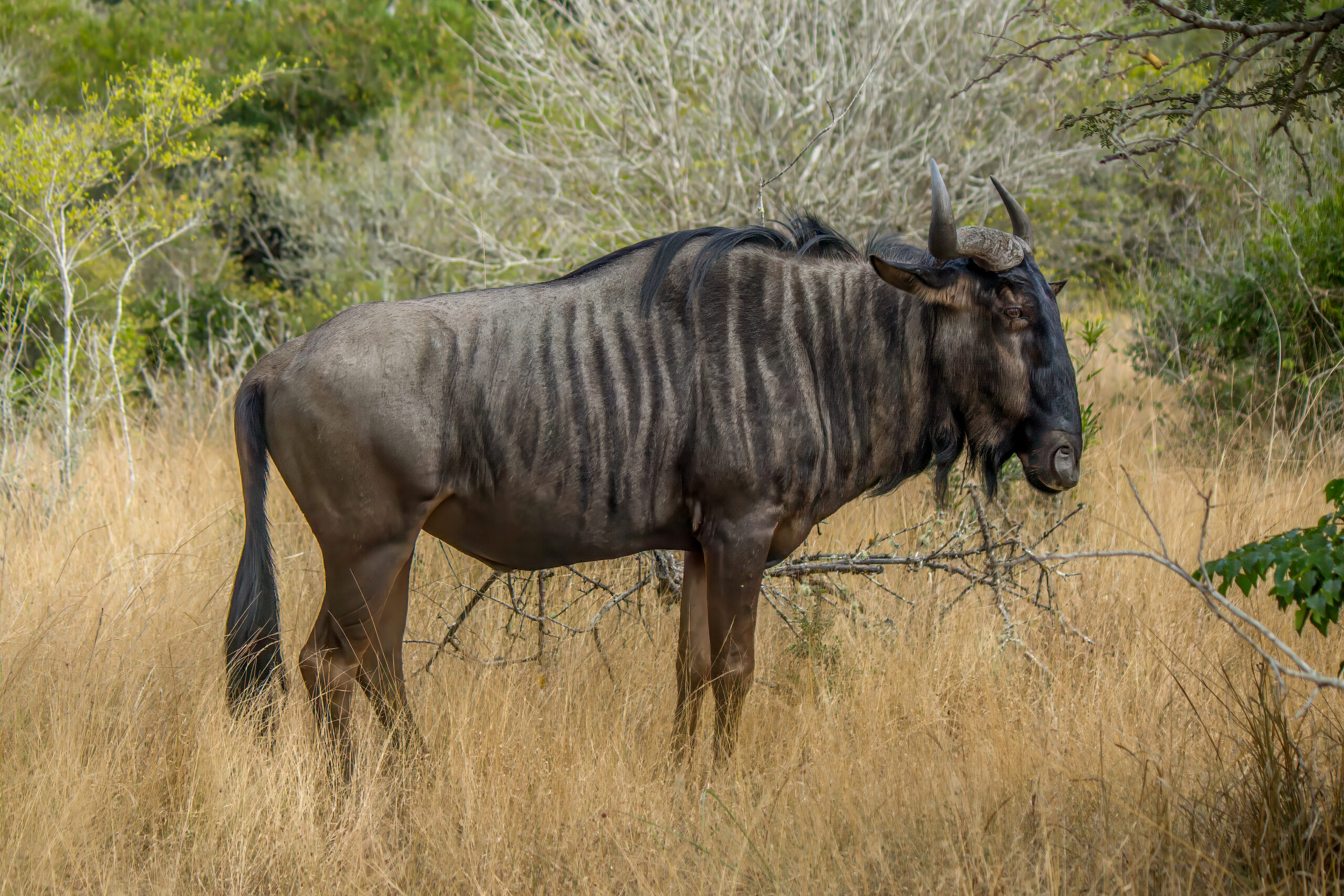
A 2026 movement study found that migrating blue wildebeest (Connochaetes taurinus) in the Greater Serengeti–Mara ecosystem across Tanzania and Kenya tended to avoid areas near human-made buildings, including structures inside protected areas.
Researchers analysed 143,168 GPS locations from 57 adult migratory wildebeest tracked between 2019 and 2023. They combined the movement records with a satellite-derived map of buildings across the ecosystem, including houses, Maasai bomas, commercial developments and tourism infrastructure such as tented camps.
The analysis showed a clear avoidance response. Wildebeest were less likely to use locations close to buildings, although the structures did not completely exclude the animals. In the model, the effect of a single building fell by half for every 1.37 kilometres of distance and was reduced to about 5% of its strongest effect at 5.91 kilometres.
Building-affected areas had about 50% lower predicted space use
When the researchers translated the movement response into predicted long-term space use, areas affected by buildings were used about 50% less than comparable areas without buildings. The reduction was particularly visible in parts of central Serengeti National Park where tourism infrastructure is concentrated.
Buildings were also widespread across the migration landscape. About 79% of the Greater Serengeti–Mara ecosystem lay within 5.94 kilometres of a building, the distance the researchers used as an approximate threshold for a very weak remaining effect. Within Serengeti National Park, about 63% of habitat fell within that distance.
Clustering infrastructure may reduce its spatial footprint
The number of buildings in one place did not have a simple additive effect. The nearest building had the strongest influence, while each additional nearby building contributed a progressively weaker response. This led the authors to suggest that clustering necessary infrastructure away from key grazing areas could be preferable to spreading structures more evenly through the landscape.
Responses also varied through the year as the migration moved between different parts of the ecosystem. Avoidance was particularly strong when herds were relatively settled in an area, whereas it weakened during some transitional periods of migration.
Because the study was observational, the researchers could not completely separate the effect of the physical buildings from human activity or other factors associated with where buildings occur. The strong avoidance pattern is therefore evidence of a building-associated disturbance response, not proof that the structures alone caused it.
The authors conclude that buildings and their associated disturbance can alter how wildebeest distribute their time and space even when the animals continue to use the surrounding landscape. They recommend that infrastructure development inside migratory ecosystems be planned with these behavioural effects in mind, particularly where buildings overlap with important seasonal grazing areas.
Ecology
Related news
Faecal egg counts missed many nematode infections in African ungulates
In Kruger National Park, egg counts in faeces often detected fewer infections than counts of adult worms recovered…
Read story →
Impala fGCM Levels Were 57% Higher on Dry-Season Weekends in Four-Species Tourism Study
At Somabula, impala fGCM levels were about 57% higher over dry-season weekends than weekdays, while the other three…
Read story →
Livestock Made Up Only 4.1% of Prey-DNA Detections in 24 Years of Ngorongoro Hyena Samples
Across 371 spotted-hyena faecal samples from Ngorongoro, livestock accounted for 18 of 434 prey-DNA detections and no black-rhinoceros…
Read story →SPECIES IN THIS STORY
Species in this story
Independent research and conservation news archive
Did you find this information useful?
Wildlife Vagabond is independently built and maintained. Voluntary support helps cover source verification, hosting and continued work on research and conservation news.
Support Wildlife VagabondThe news archive will remain freely available.