
110 of 259 Publicly Documented Tiger Seizure Incidents Were Linked to Prison or Fines
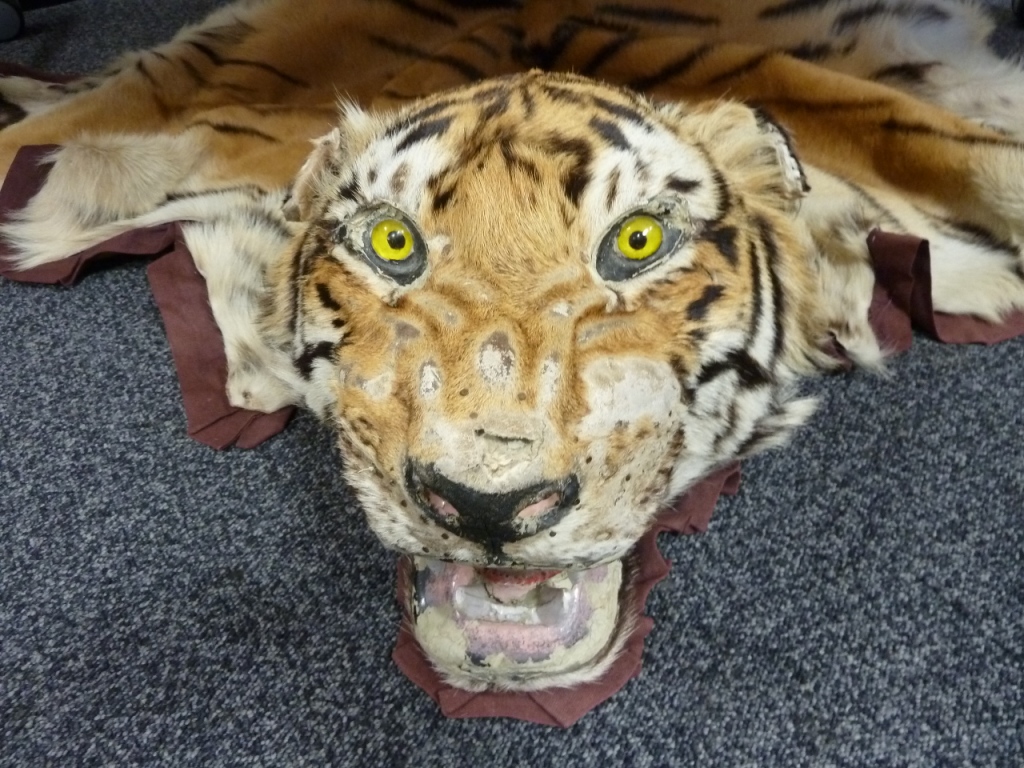
A regional review of tiger (Panthera tigris) trafficking recorded at least 259 seizure incidents across seven Southeast Asian countries between 2019 and 2024. Publicly available records linked 110 of those incidents — about 42% — to convictions involving imprisonment and/or fines, while 14% were associated with suspended sentences.
The report, published on 24 June 2026 by the GuArdean Centre for Conservation Research, WWF and TRAFFIC, examined Cambodia, Indonesia, Lao PDR, Malaysia, Myanmar, Thailand and Viet Nam. Its central limitation is also one of its main findings: in many cases, public information ends at the seizure or arrest, making it impossible to determine what happened later in the criminal-justice process.
Missing court records obscure what happened after many seizures
The 110 incidents with imprisonment and/or fines should not be read to mean that every other seizure ended without punishment. Outcomes were unavailable or unclear for many cases. The report therefore treats transparency and public access to judicial records as essential for understanding where cases are lost between detection, investigation, prosecution and sentencing.
Recorded outcomes varied strongly among countries, but data availability also varied. Indonesia and Viet Nam accounted for most of the publicly recorded convictions. Thailand and Malaysia had 36 and 35 arrests respectively, yet the available records identified only five individuals in Thailand and nine in Malaysia who received imprisonment. Cambodia, Lao PDR and Myanmar had especially limited public judicial information.
Indonesia provided the most detailed court-case material
Indonesia was the only country in the regional comparison with an openly accessible database of convicted cases. The researchers therefore examined 59 Indonesian court cases from January 2015 to June 2025 in greater detail.
Those records showed that successful investigations could combine information from communities, undercover operations, targeted surveillance, forensic evidence and cooperation among agencies. The authors use these cases to illustrate how evidence can be built beyond the initial seizure itself.
Higher-level organisers were rarely visible in court records
Across the regional material, prosecuted defendants were predominantly lower- and mid-level actors such as hunters, couriers and small-scale traders. Higher-level organisers and financiers were largely absent from the accessible court records.
The documented prosecutions also relied almost exclusively on wildlife legislation. The report found no use in the publicly available cases of anti-money-laundering, corruption, financial-crime or organised-crime statutes alongside wildlife laws. The authors argue that broader financial and organised-crime tools could help investigations reach higher levels of trafficking networks.
The report recommends greater judicial transparency, stronger coordination among enforcement and prosecution agencies, and wider use of forensic, digital and financial evidence. Its main conclusion is that seizure totals alone cannot show how effectively tiger trafficking is being addressed: the later stages from investigation to prosecution and sentencing also need to be visible and traceable.
Trade & poaching
Related news

Human Activity and Large Wildlife Overlapped Most in Chitwan’s Buffer Zone
Camera traps across Chitwan National Park and surrounding forests showed the greatest overlap of human activity with large…
Read story →
India launches a new evaluation cycle for its 58 tiger reserves
India’s sixth management effectiveness evaluation is planned to cover all 58 tiger reserves. The new cycle adds solid…
Read story →
One Male Tiger Confirmed in Bhutan’s Biological Corridor 7
A 5,144-trap-night survey photographed one adult male tiger at two stations in Bhutan’s Biological Corridor 7, confirming use…
Read story →SPECIES IN THIS STORY
Species in this story
Independent research and conservation news archive
Did you find this information useful?
Wildlife Vagabond is independently built and maintained. Voluntary support helps cover source verification, hosting and continued work on research and conservation news.
Support Wildlife VagabondThe news archive will remain freely available.