
Wild Boar Rooting Reduced Nitrogen, Phosphorus and Potassium but Increased Iron and Clay in a Budapest Grassland
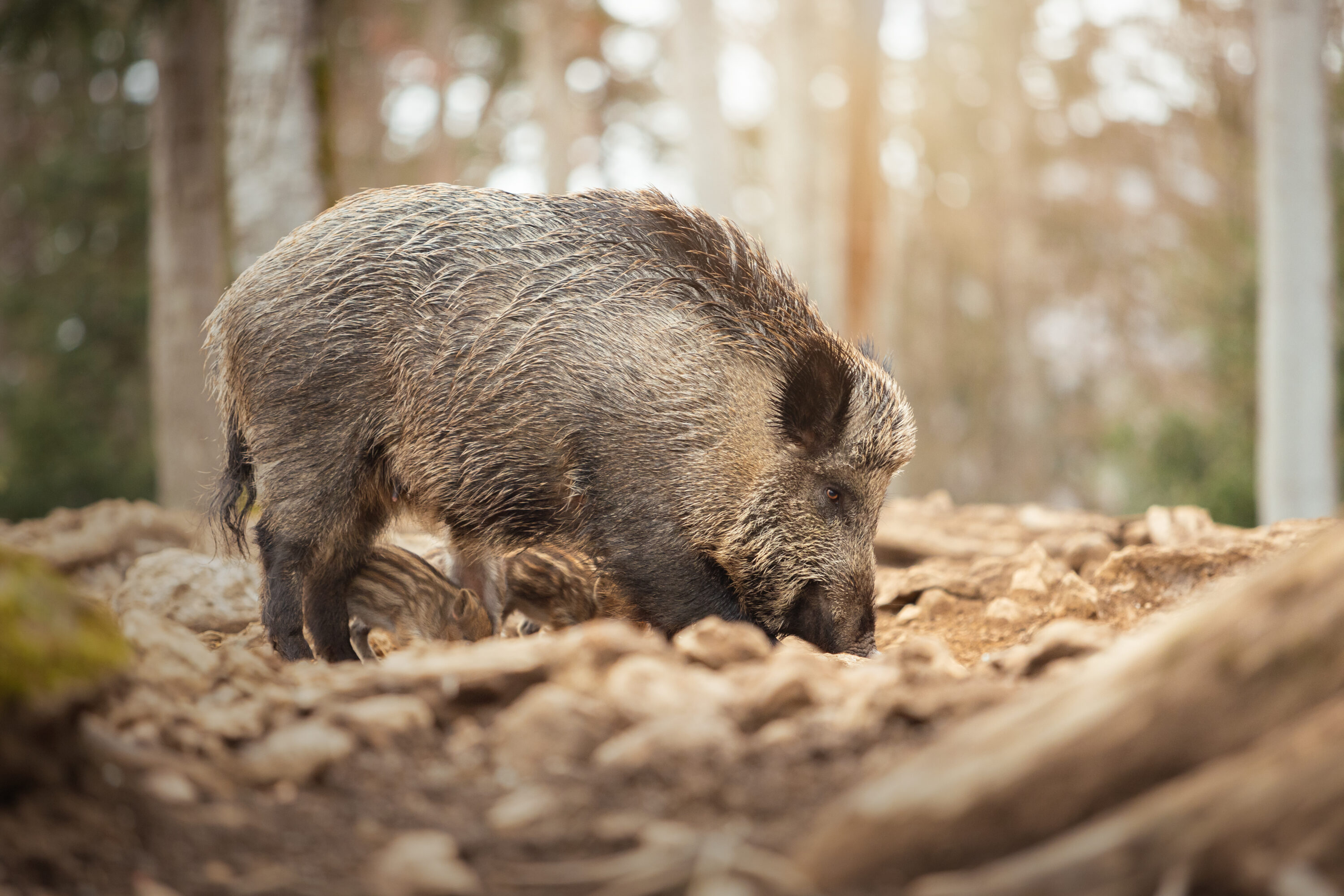
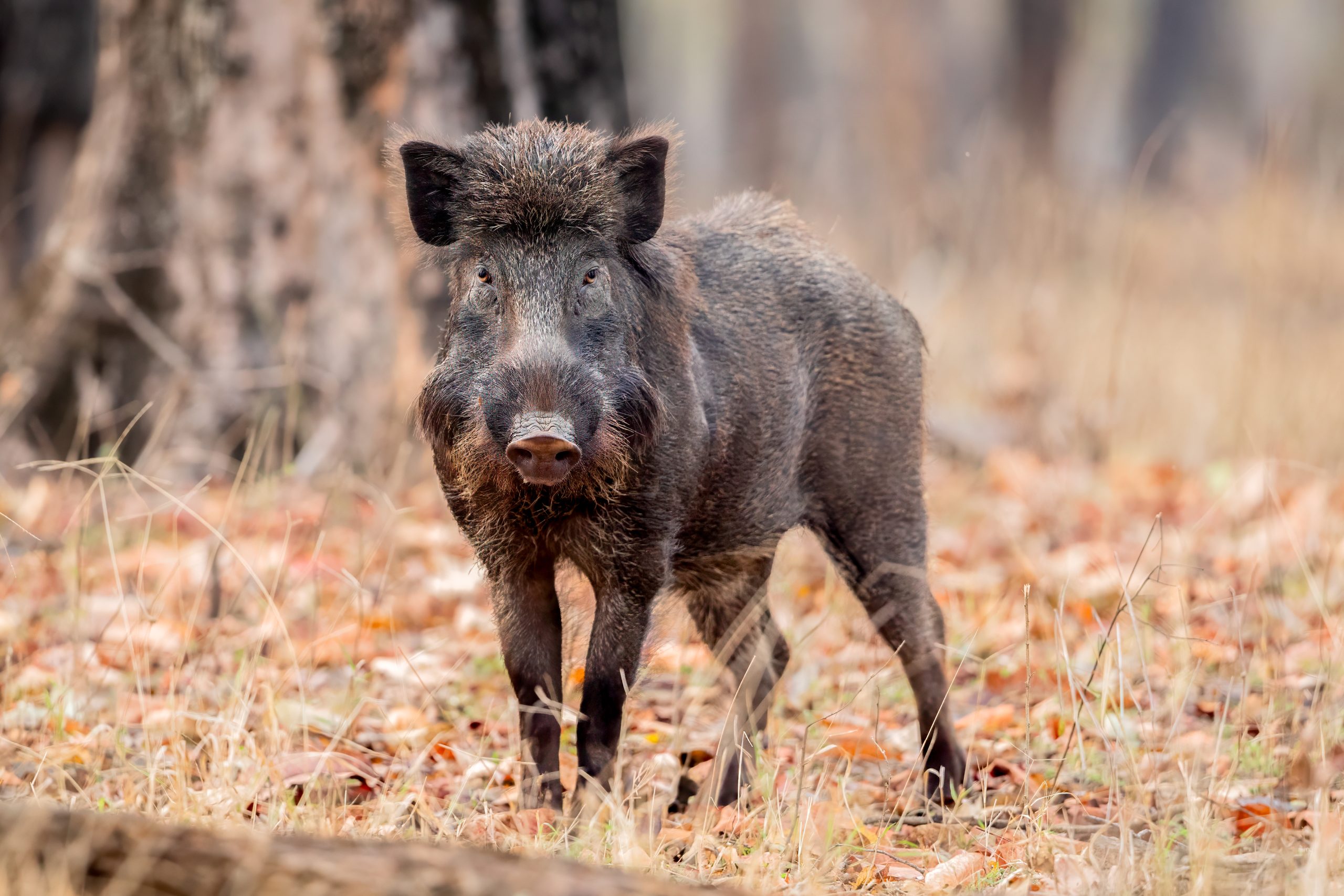
Wild boar (Sus scrofa) rooting altered both soil chemistry and particle composition in a mildly eroded grassland at Vörös-kővár on the outskirts of Budapest, Hungary. The clearest changes occurred inside the excavated rooting pits: total nitrogen, phosphorus and exchangeable potassium were lower than in nearby undisturbed soil, while iron and clay content were higher.
The study was designed to separate rooting from two other processes that can shape soil on a slope: topographic position and shrub encroachment. In April 2023, the researchers selected 39 rootings across the upper and lower parts of a 2–6° slope. At each rooting they sampled the excavated pit, the surrounding ring of redistributed soil, undisturbed open grassland and undisturbed soil beneath shrubs at two depths, producing 312 composite samples.
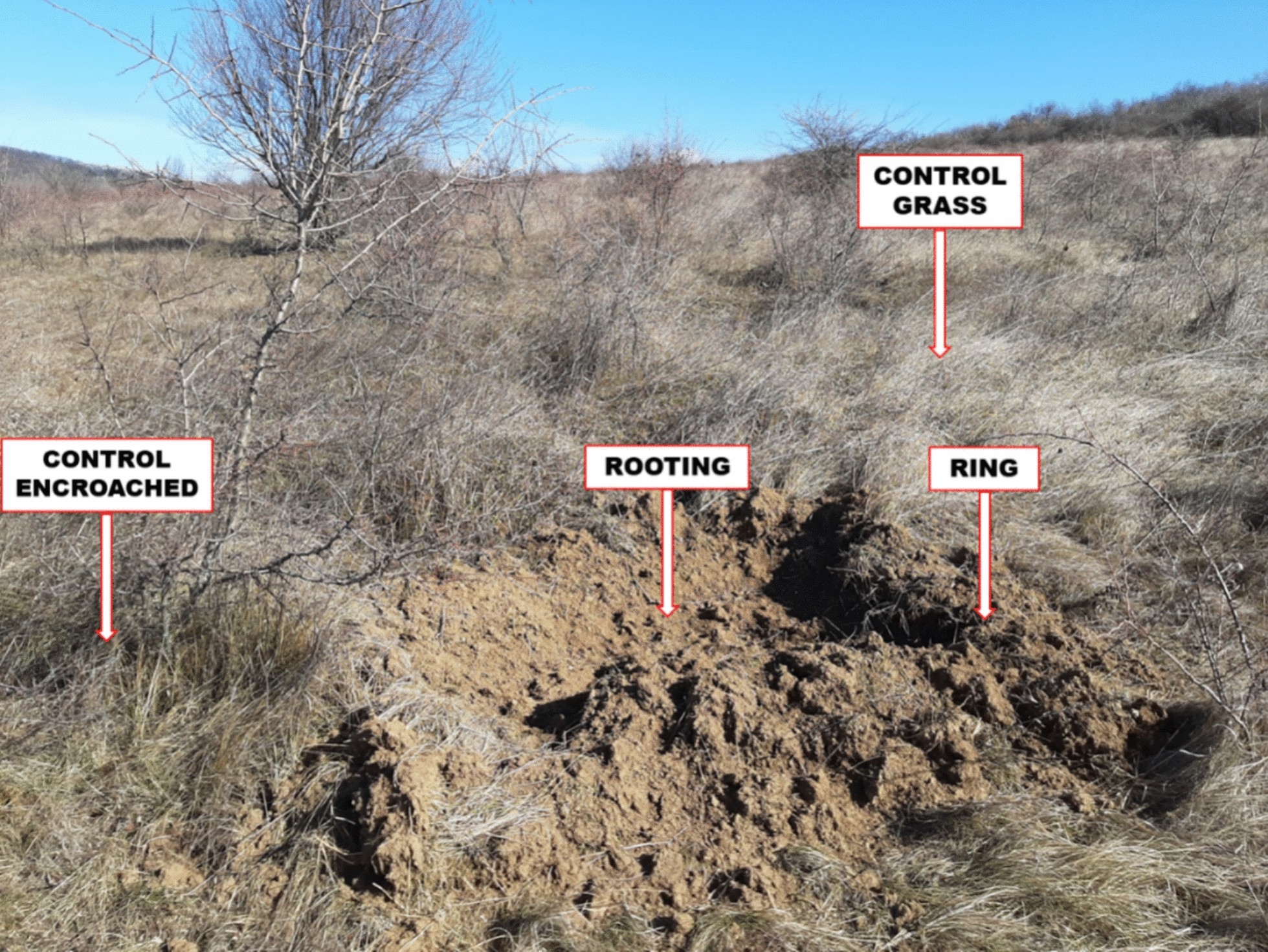
The excavated pits showed the strongest soil changes
Inside the rooting pits, concentrations of N, P and K were consistently lower than in the redistributed ring and control soils at both sampled depths. Iron and clay showed the opposite pattern and were highest in the excavated soil. Calcium, magnesium and pH did not show comparable rooting-related differences.
The authors interpret the combination of lower concentrations of surface-associated macronutrients and more iron and clay as consistent with deep rooting mixing nutrient-richer surface soil with material from deeper layers. The redistributed soil around the pits remained much more similar to the undisturbed controls, indicating that the strongest chemical effect was concentrated in the exposed depression rather than spread evenly around each rooting.
Slope position independently shaped the soil
Topography produced a separate pattern. Nitrogen and phosphorus were generally higher toward the bottom of the slope in the comparisons where slope effects were clearest, consistent with downslope movement of nutrients through erosion. Other properties, including iron, clay and pH, tended to be higher upslope, and the authors point to local parent material and site conditions as part of the explanation.
Importantly, the modelling gave little support to a strong interaction between rooting and slope position. Rooting clearly changed the soil inside the pits, and slope position clearly shaped several soil properties, but the study found little evidence that rooting strongly altered the existing nutrient pattern along the slope. Shrub encroachment also buffered the soil less consistently than expected: a clear shrub effect was confirmed only for calcium in one set of upper-slope controls.
The study therefore does not present wild-boar rooting as uniformly harmful or beneficial. Rooting can locally mix soil layers, expose bare ground and reduce concentrations of major nutrients, while the pits may also change microtopography, runoff and sediment movement. The authors conclude that rooting, slope, vegetation and the existing disturbance regime need to be considered together when assessing effects in sloping grasslands. Most rooting comparisons came from a single spring sampling, so longer-term and seasonal responses remain less certain.
Ecology
Related news
Inland Mute Swans Had Higher Winter Body Condition Despite Harsher Winters and Supplemental Feeding
A study of 853 mute swans from four Polish wintering regions found higher body condition inland than on…
Read story →
Gut Microbiomes Across Nine Kruger Mammals Clustered More Strongly by Dietary Group Than Species
A study of 89 quality-filtered faecal samples from nine wild mammals in Kruger National Park found that carnivores,…
Read story →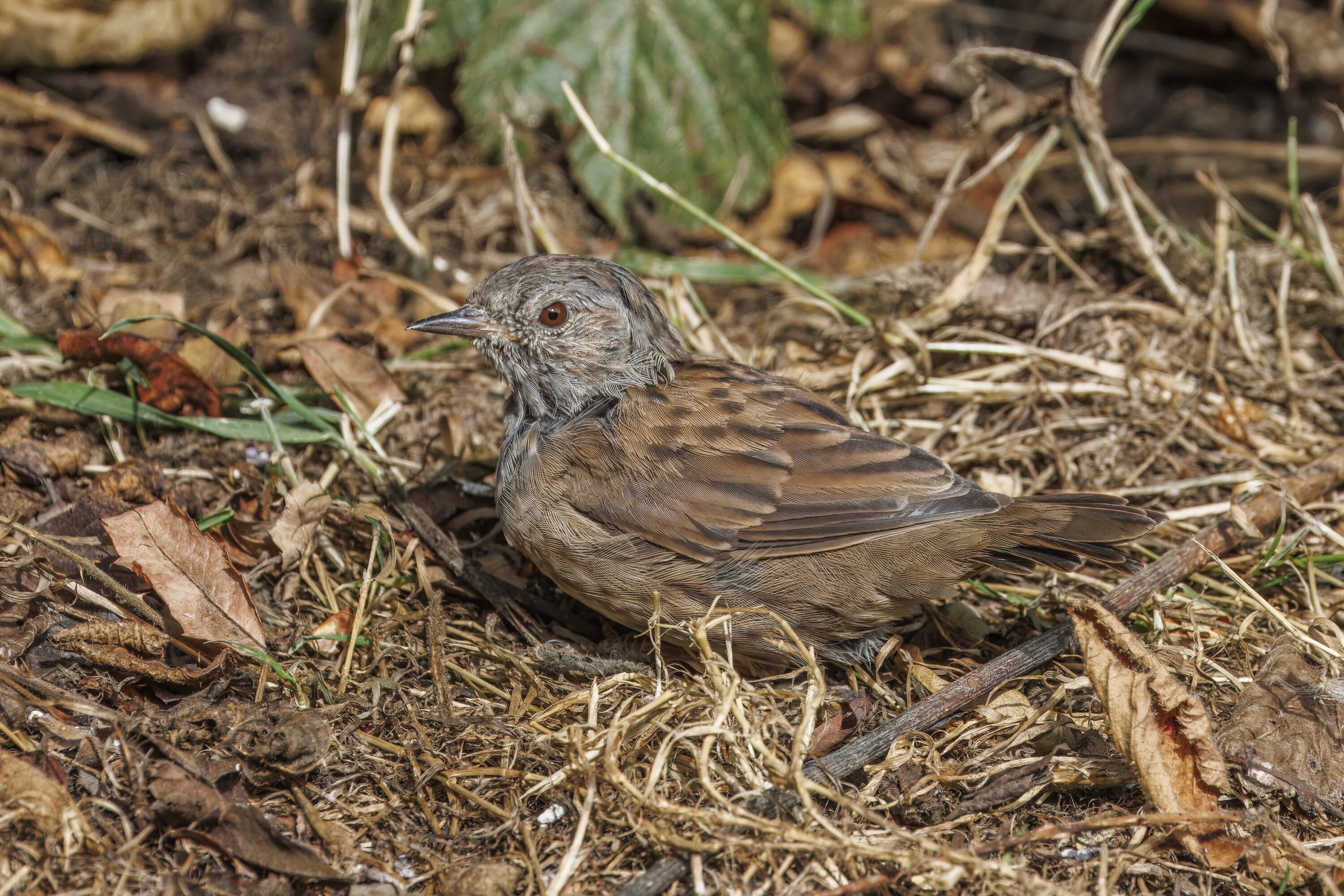
Dunnock Spring Passage Advanced by Up to 8.3 Days Over 61 Years at Hel
Standardised ringing data from northern Poland showed that the first, median and last phases of dunnock spring passage…
Read story →SPECIES IN THIS STORY
Species in this story
Independent research and conservation news archive
Did you find this information useful?
Wildlife Vagabond is independently built and maintained. Voluntary support helps cover source verification, hosting and continued work on research and conservation news.
Support Wildlife VagabondThe news archive will remain freely available.