
Wire snares dominated 17 years of recorded leopard deaths in Sri Lanka
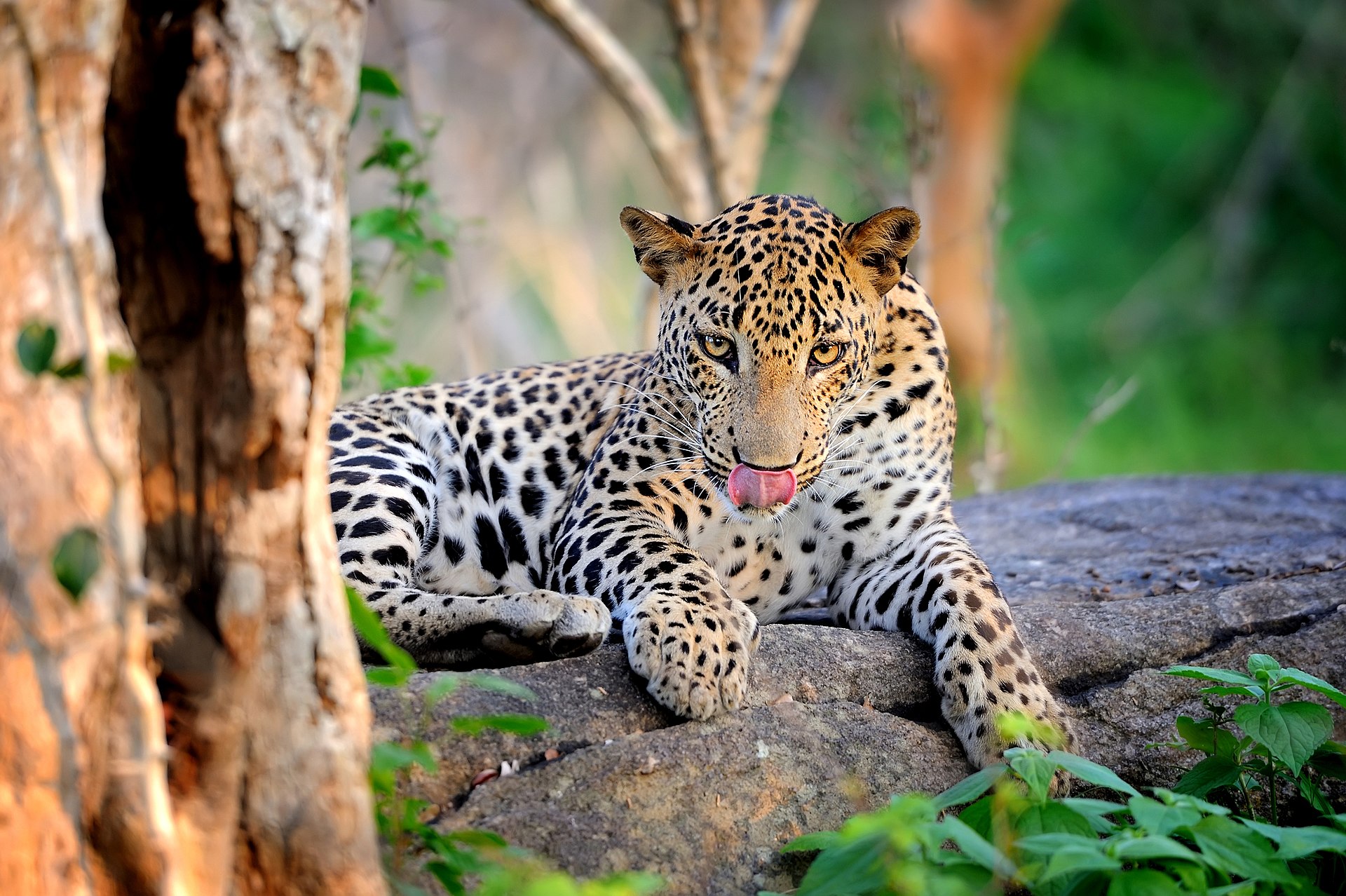
Wire snares accounted for 62.3% of 138 recorded human-caused deaths with a known cause in a 17-year study of the Sri Lankan subspecies of the leopard (Panthera pardus kotiya). The records were especially concentrated in tea-estate landscapes in the central highlands.
The researchers compiled 164 confirmed records from across Sri Lanka between 2008 and 2024. They combined field investigations and reports from wildlife officers, veterinarians, police, estate workers and residents with government files, court records, media, social media and published research. Possible duplicates were cross-checked by date, place and incident details.
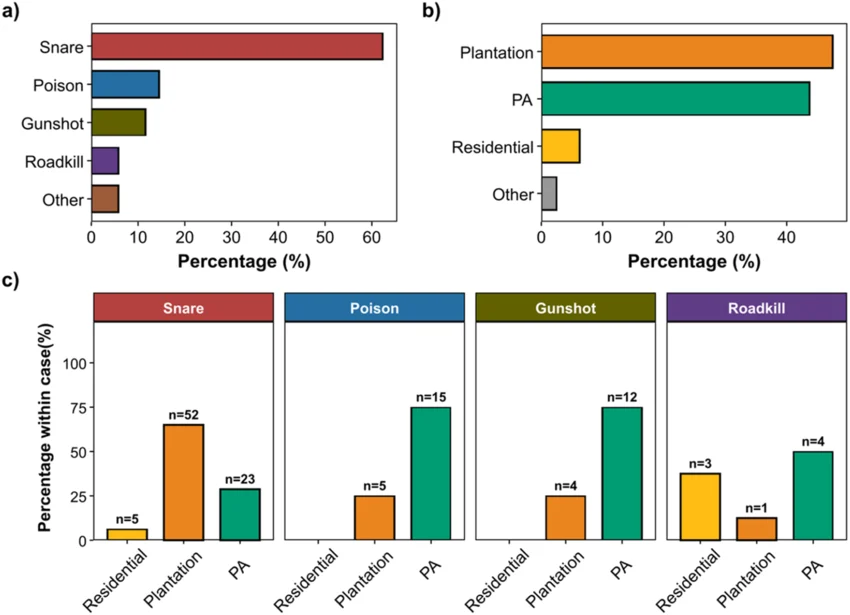
Wire snares dominated known causes of death
Cause of death was known in 138 cases. Snares were responsible for about 86 of these records. A wire snare is a loop of cable or wire that tightens around an animal when it passes through; such traps may be set for other wildlife but can also catch leopards. Poisoning, gunshots and roadkill together accounted for 31.9%. Habitat was assigned in 160 cases: 47.5% occurred in plantations, 43.8% in protected areas and 6.2% in residential areas.
Cause and habitat were associated statistically. Among snare deaths for which habitat was classified, 65% — 52 records — occurred in plantation landscapes. Gunshot and poisoning records were more often located inside protected areas, with 12 of 16 gunshot cases and 15 of 20 poisoning cases recorded there. These figures describe the distribution of documented incidents; they do not compare the risk per leopard or per square kilometre among habitat types.
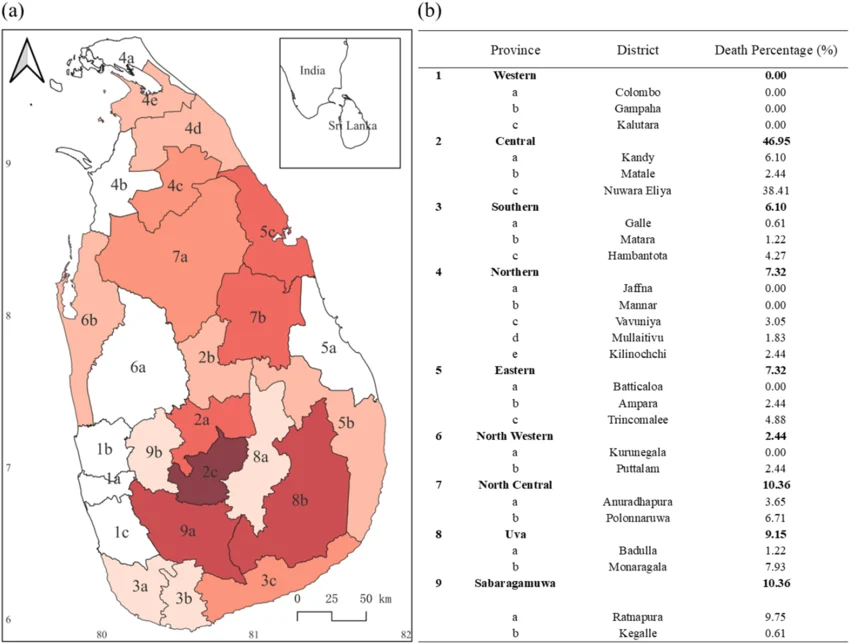
Nuwara Eliya contained 38.4% of the records
The geographical concentration was pronounced. Central Province contained 77 records, or 46.9% of the total. Nuwara Eliya District alone accounted for 38.4%, although the district represents about 4.4% of the estimated leopard range in Sri Lanka. A presence-only spatial model also assigned the highest relative values to central-highland and plantation-dominated areas.
The demographic information was incomplete but showed a clear pattern among known cases. Sex was recorded for 114 animals, of which 68.4% were male. Age class was available for 142, and 87.3% were adults. The data do not establish the sex or age structure of the living population, but they show which groups dominated the recorded deaths.
Recorded deaths increased, but reporting also changed
The dataset contained roughly ten recorded deaths per year on average, and the number of records increased across the 17-year period by about 0.7–0.8 cases per year. Snare-related records accounted for most of this temporal increase, while the combined records of poisoning, gunshots and roadkill did not show a clear upward trend.
The authors caution that an increase in records is not necessarily the same as an equal increase in actual mortality. Mobile connectivity, internet access and social-media reporting expanded during the study period. Better documentation may therefore explain part of the trend, although a real rise in snaring pressure cannot be excluded.
The records show hotspots, not complete mortality
The dataset also cannot reveal how many deaths went undetected. It contains reported incidents rather than complete mortality, and reporting intensity may be higher in accessible, densely worked tea estates. The spatial model consequently maps relative likelihood of a recorded incident, not absolute mortality risk.
Nor could the researchers determine why individual snares had been set. The concentration of snare deaths in plantations is consistent with leopards being caught as non-target animals, but the records lacked information about snare design and intended targets. The study therefore does not classify every case as accidental bycatch or deliberate killing.
Within those limits, the concentration of documented deaths identifies a practical priority: plantation–forest edges and movement corridors in the central highlands. The authors recommend targeted snare detection and removal, stronger enforcement in high-record districts and structured work with estate management and local communities. The result is a map of where recorded mortality has accumulated—not a complete count—but it shows that one preventable method dominated the verified cases.
Threats
Related news
Living With Carnivores Is About More Than Livestock Losses
Near Iran’s Golestan National Park, researchers explored what was associated with people’s willingness to accept leopards, wolves and…
Read story →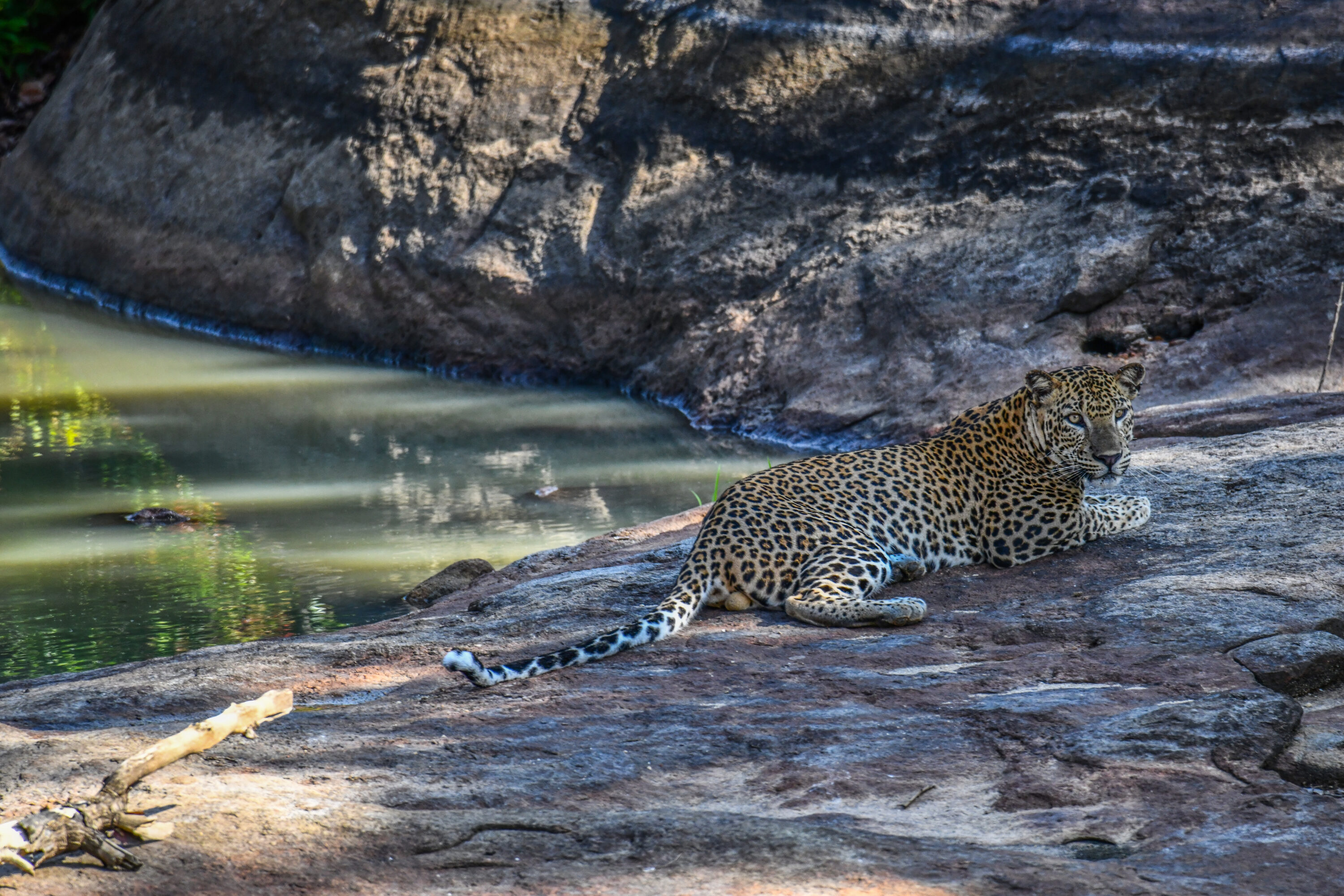
Sri Lankan Leopards in Tea Landscape Were Less Active by Day and More Active at Dusk
In Sri Lanka’s Central Highlands, only 4.4% of leopard records in an unprotected tea landscape were diurnal while…
Read story →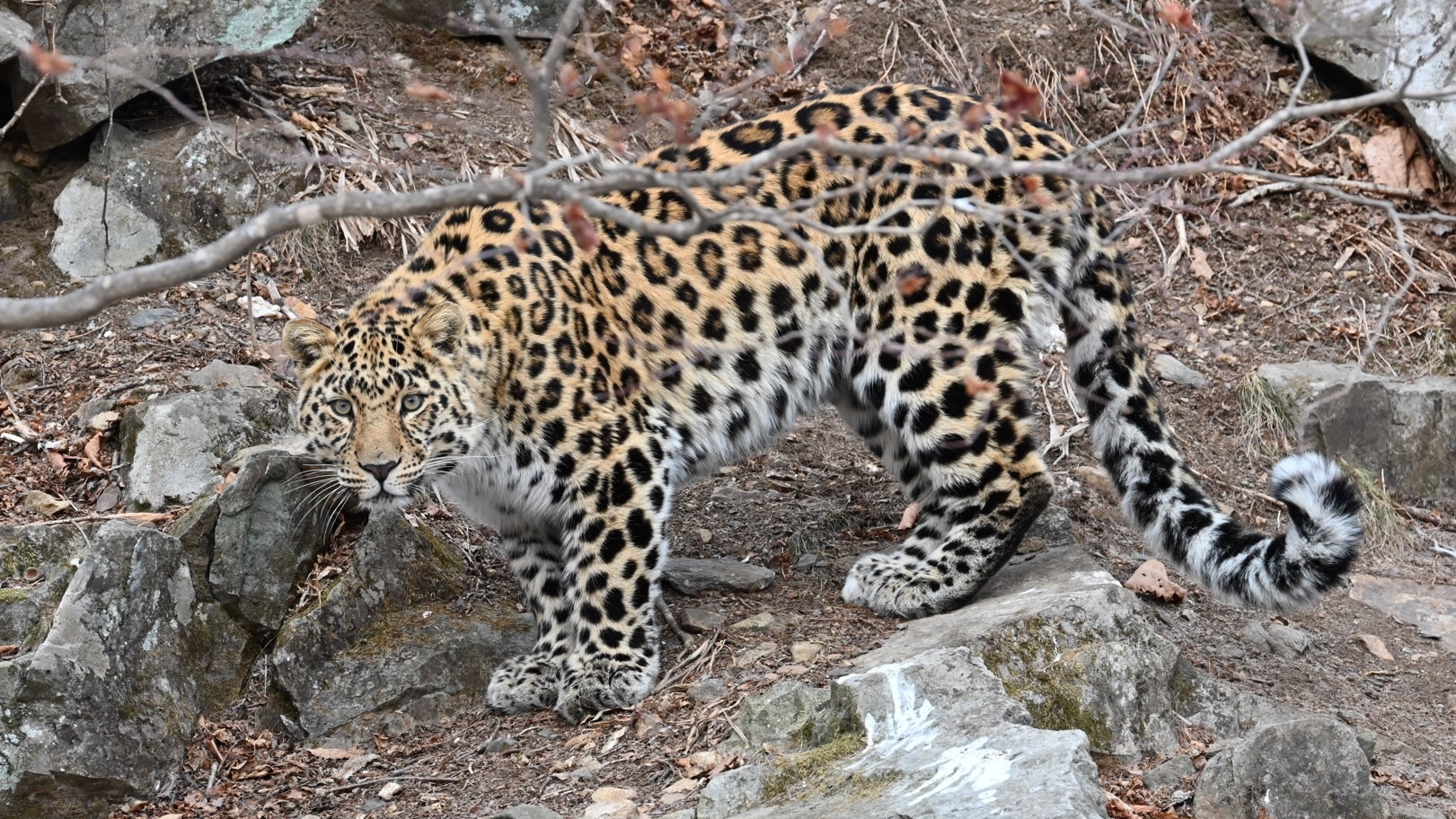
Amur leopard density nearly tripled in a decade
Ten years of camera-trap data from Russia’s Land of the Leopard National Park show a strong recovery in…
Read story →SPECIES IN THIS STORY
Species in this story
Independent research and conservation news archive
Did you find this information useful?
Wildlife Vagabond is independently built and maintained. Voluntary support helps cover source verification, hosting and continued work on research and conservation news.
Support Wildlife VagabondThe news archive will remain freely available.