
Neckband Resightings and GPS Gave Similar Year-Round Range Estimates for Migratory Greylag Geese
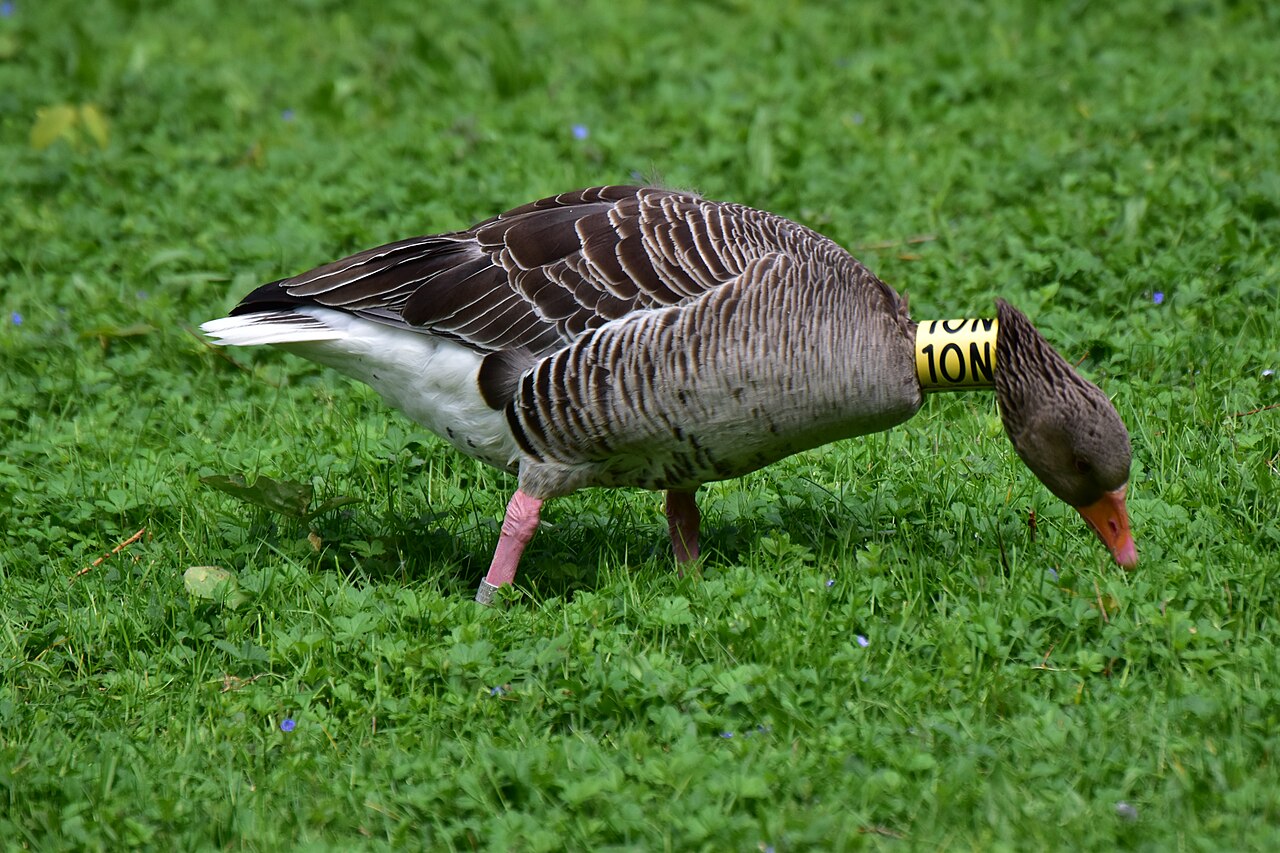
A Swedish study tested whether coded-neckband resightings and GPS tracking tell the same large-scale story about greylag goose (Anser anser) movements. For migratory birds, the answer was broadly yes: the two methods produced similar estimates of year-round and seasonal space use despite very different sampling intensity.
The dataset came from five capture sites across Sweden. Between 2017 and 2022, 665 geese received individually coded neckbands and 156 received GPS collars. Neckband locations depend on observers seeing and reporting a bird, whereas GPS collars record positions automatically and far more frequently.
Both methods gave similar large-scale range patterns
For birds with enough observations, neckband and GPS data produced broadly comparable estimates of where migratory geese occurred through the year. Summer and winter distributions also overlapped to a similar degree regardless of whether birds were followed with the same or different methods.
The observer-based neckband data were somewhat more geographically biased, but not enough to prevent useful estimates of the large-scale distribution of well-reported migratory geese.
Movement speed required the finer time resolution of GPS
The methods differed much more when the analysis depended on the time between successive positions. GPS data described movements on a scale of weeks, whereas sparse neckband observations produced estimates extending over several months. The authors regard the latter as a severe overestimate caused by long and irregular intervals between sightings.
Neckband data are therefore useful for questions about where migratory geese occur across seasons, but not for reliable estimates of migration speed or other fine-scale movement processes.
More resident southern birds were harder to study with neckbands
Neckbanded geese from the two southernmost capture sites were reported too infrequently for a robust comparison with GPS-tracked birds. These populations included more resident and short-distance migrants, so the strong agreement between methods applies most clearly to migratory geese from better-reported sites.
The authors conclude that long-running neckband datasets remain suitable for management questions about the broad space use of migratory greylag geese in Europe. As more geese shorten their migrations and winter closer to breeding areas, however, maintaining enough resightings to detect those changes becomes increasingly important.
Other research
Related news

Some Greylag Geese Migrate One Year and Stay the Next
GPS tracking at Lake Neusiedl showed that most of the geese migrated, with winter destinations ranging from Germany…
Read story →
North-west European Greylag Goose Winter Population Estimated at 802,320
The north-west European greylag goose population was estimated at 802,320 wintering birds in January 2025, well above the…
Read story →
Machine Learning Maps the Overlapping Calls of Greylag Geese
Analysis of 6,651 greylag goose calls found both distinct signals and graded overlap—and showed that machine-learning choices can…
Read story →SPECIES IN THIS STORY
Species in this story
Independent research and conservation news archive
Did you find this information useful?
Wildlife Vagabond is independently built and maintained. Voluntary support helps cover source verification, hosting and continued work on research and conservation news.
Support Wildlife VagabondThe news archive will remain freely available.