
Botulism was the primary confirmed cause of repeated mallard deaths in a degraded Spanish pond
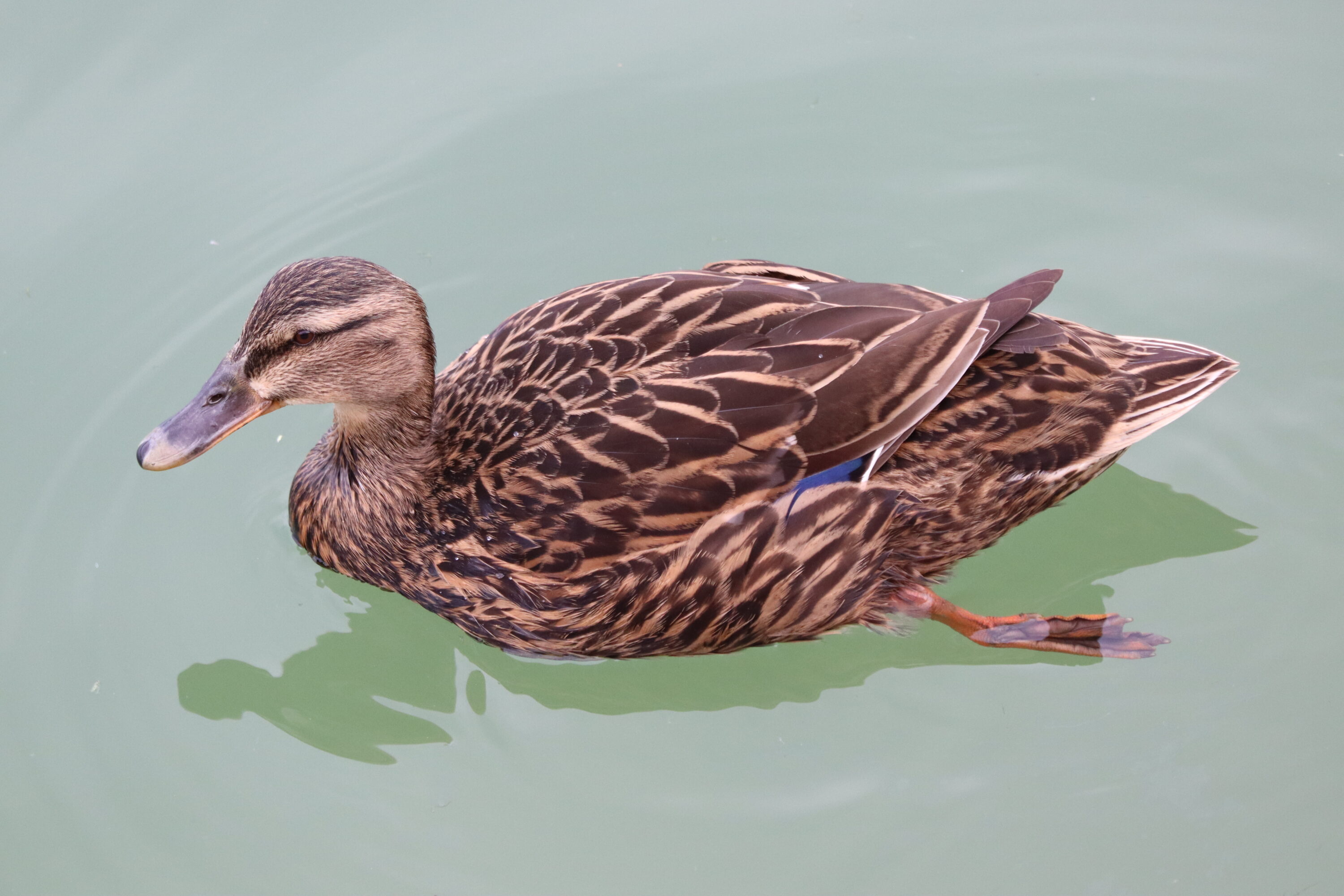
Repeated deaths of mallards (Anas platyrhynchos) at A Congorza, a small coastal freshwater pond in Galicia in northwestern Spain, were primarily caused by avian botulism, according to a study published on 8 May 2026. The first mass mortality occurred in summer 2024, followed by further deaths in spring and summer 2025.
Avian botulism is poisoning by neurotoxins produced by the bacterium Clostridium botulinum. The toxins interfere with communication between nerves and muscles, producing the characteristic weakness and flaccid paralysis seen in affected waterbirds and, in severe cases, respiratory failure and death.
Botulinum toxins matched the birds’ symptoms
Researchers analysed water, plankton, tissues from affected mallards and maggots associated with carcasses. Birds found alive showed weakness, prostration and flaccid paralysis of the neck and limbs. Botulinum neurotoxins were detected in larvae associated with mallard tissues: type C/D in 2024 and type C in 2025. Together, the clinical signs and toxin detections led the authors to identify avian botulism as the primary confirmed cause of mortality.
The study did not directly test environmental samples for C. botulinum itself. The evidence therefore confirms exposure to botulinum neurotoxins and a clinical syndrome consistent with botulism, rather than mapping where the bacterium was present in the pond.
A severely oxygen-depleted pond
The pond was also strongly eutrophic and degraded. In summer 2025, dissolved oxygen fell to 1.5–5.2 mg per litre. Biological and chemical oxygen demand were high — measurements that indicate how much oxygen is consumed by microbial decomposition and chemical reactions. High demand together with low dissolved oxygen means less oxygen remains available for aquatic organisms and favours stagnant, low-oxygen conditions.
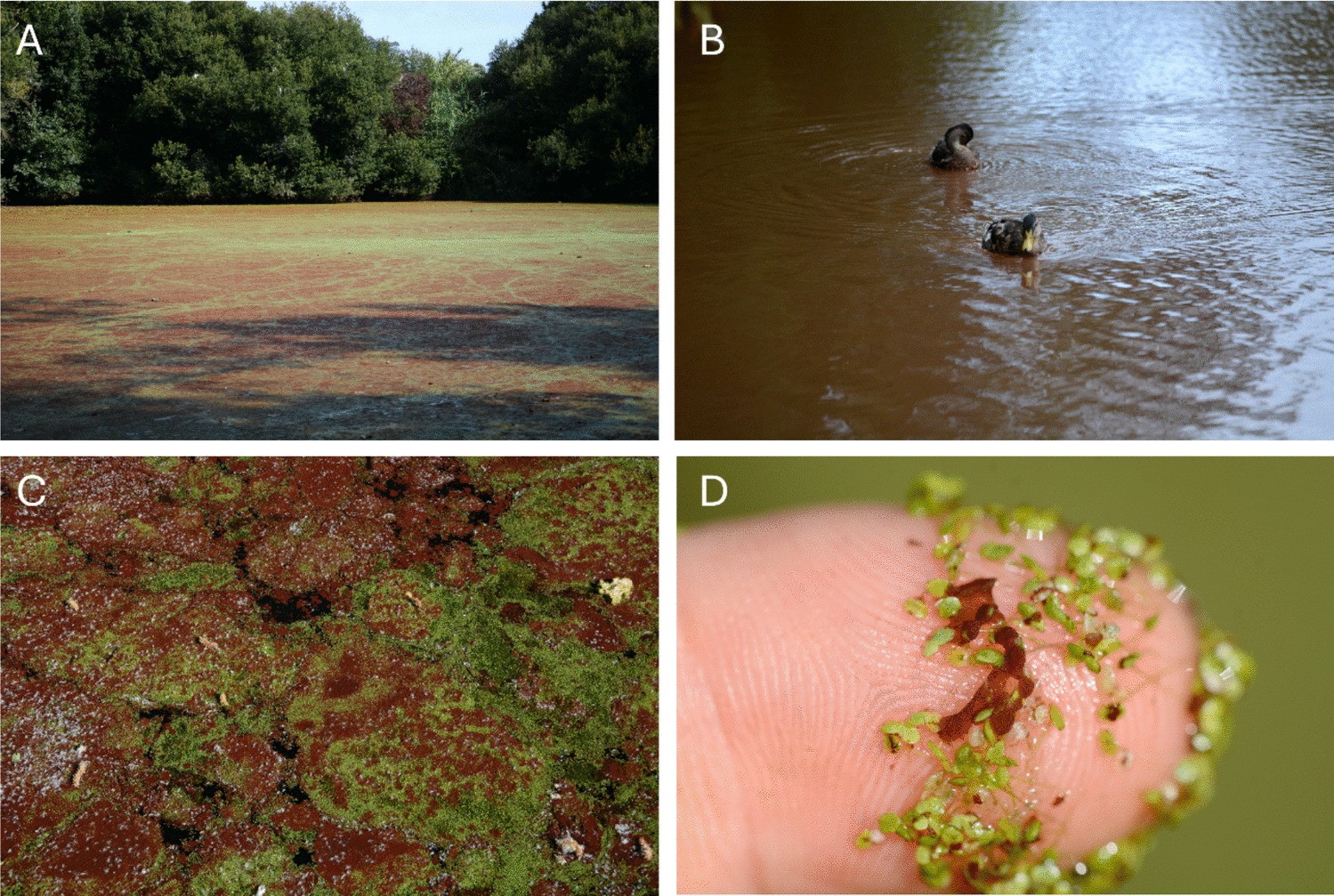
Much of the surface was covered by dense common duckweed (Lemna minor). In a nutrient-rich pond, thick duckweed mats can shade the water, reduce exchange with the atmosphere and add further oxygen demand when plant material decomposes. The authors note that hot, dry weather together with oxygen-poor conditions can also favour botulism outbreaks.
The red bloom was not established as the cause of death
A recurrent red surface scum was identified by molecular, pigment and morphological analyses as the flagellate Euglena sanguinea, a single-celled photosynthetic organism capable of forming blooms. Chemical analysis found compounds in concentrated E. sanguinea material that were considered possible isomers of euglenophycin, a biologically active compound produced by some euglenids.
However, the compounds were only provisionally identified and were not confirmed against an analytical standard or cultured material. The authors therefore do not present E. sanguinea or euglenophycin as a demonstrated cause of the mallard deaths. By contrast, botulism was supported by both toxin detection and the birds’ clinical signs.
Several persistent organic pollutants were also detected, but at concentrations considered too low to explain the mortality. Tests in 2025 for West Nile virus, Newcastle disease and avian influenza were negative.
Carcasses can help sustain an outbreak
The researchers describe the mortality events as occurring in a heavily degraded system where several stressors coincided. Mallards also moult at A Congorza during summer and temporarily lose the ability to fly, which may make them especially vulnerable when conditions in the pond deteriorate.
Carcass removal is particularly important during avian botulism because of the “carcass–maggot cycle”. Toxin-producing bacteria can multiply in decomposing carcasses; fly larvae feeding on the carcass can accumulate the toxin; and other birds can then ingest toxic larvae. Removing carcasses can interrupt this route and reduce the chance that an outbreak sustains itself.
Disease, parasites & microbiology
Related news
Seven overlaps linked wild-bird H5 clusters with poultry outbreaks in the US
Across seven periods between 2022 and 2025, clusters of H5 detections in wild waterfowl overlapped in time and…
Read story →
H5 Avian Influenza RNA and ESBL E. coli Detected in Water Bins Used by Wild Mallards in Germany
Water from baited bins visited mainly by wild mallards on Germany’s Baltic coast contained RNA from highly pathogenic…
Read story →
Papillomavirus Genomes Recovered from Three Northern Pintails and One Mallard in New Mexico
Cloacal swabs from three northern pintails and one mallard in New Mexico yielded four complete papillomavirus genomes. All…
Read story →SPECIES IN THIS STORY
Species in this story

Independent research and conservation news archive
Did you find this information useful?
Wildlife Vagabond is independently built and maintained. Voluntary support helps cover source verification, hosting and continued work on research and conservation news.
Support Wildlife VagabondThe news archive will remain freely available.