
Model Exposes Hard Trade-offs in Managing Moose, Wolves and Caribou
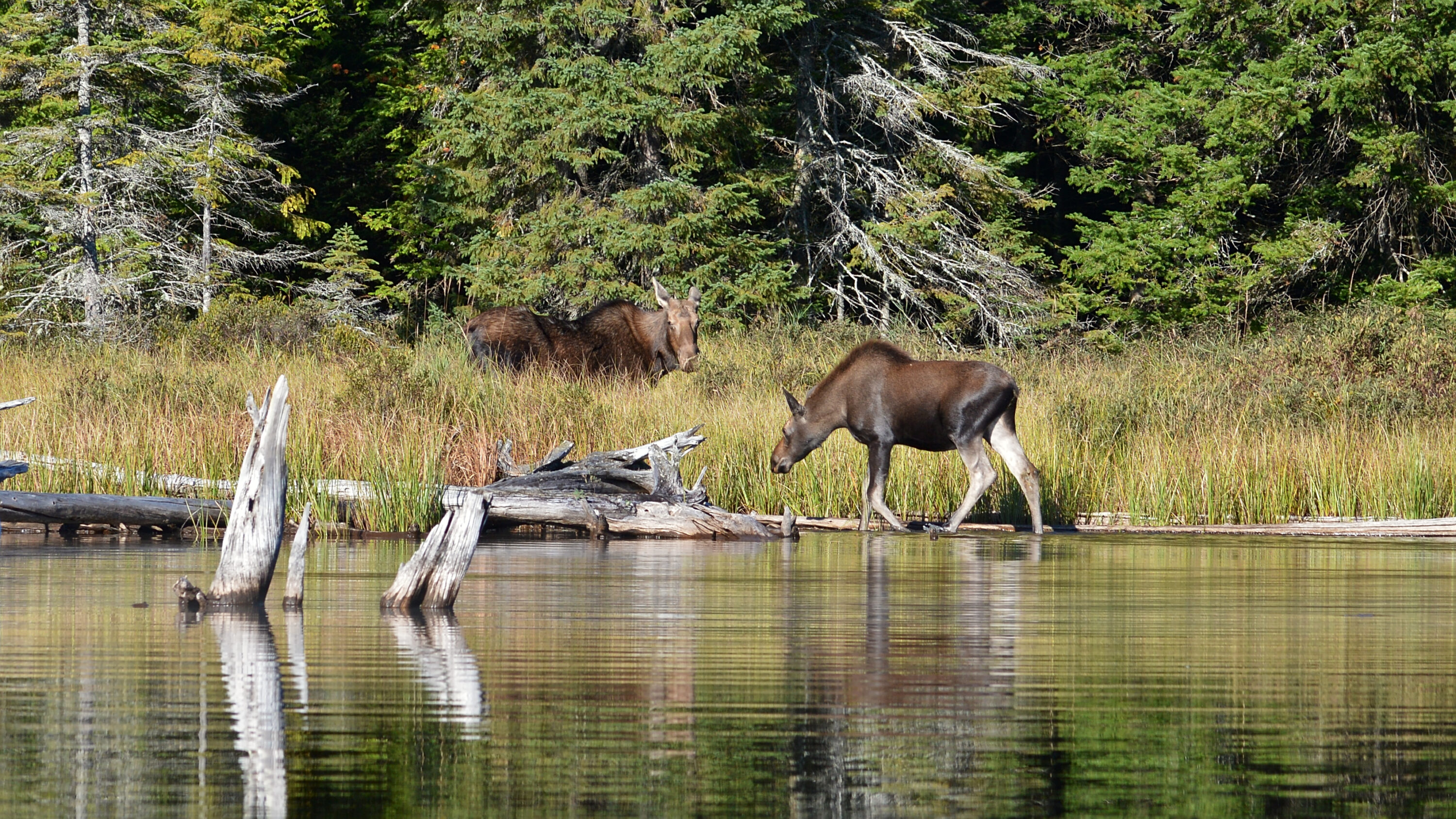
A modelling study of northern Ontario, Canada’s Ring of Fire region found that no single intervention solved the challenge of conserving woodland caribou (Rangifer tarandus) while maintaining moose (Alces alces) and wolf (Canis lupus) populations. The strongest simulated outcome came from combining moderate reductions of moose and wolves with periodic maternal penning of caribou, but the authors stress that the result depends on uncertain ecological relationships and must be adapted through Indigenous-led or co-managed decision-making.
The peer-reviewed study was published in Frontiers in Forests and Global Change on 4 June 2026. Researchers modelled the interacting moose–wolf–caribou system across the combined Mississa and Ozhizki caribou ranges, an area of about 108,000 square kilometres in Ontario’s Far North.
Development and climate reshape the system
The scenarios followed landscape and population change from 2015 to 2060. They included proposed roads, transmission corridors and five possible mines, together with fire, a high-emissions climate scenario and wildlife harvest. The model linked these landscape changes to habitat, carrying capacity, reproduction, mortality, dispersal and predation.
Under the baseline simulation, warmer conditions shifted the climatic envelope for moose northwards. More recently burned forest also increased the amount of young vegetation that can provide browse. These changes raised simulated habitat suitability and carrying capacity for moose in suitable parts of the landscape.
More moose could support more wolves. Increased wolf abundance then limited rapid moose growth while also increasing predation pressure on woodland caribou. At the same time, almost 1,000 kilometres of projected new roads and transmission corridors reduced caribou habitat quality and could make it easier for predators to move through the landscape.
The study therefore describes a linked problem rather than three independent population trends. A change that benefits moose can indirectly increase pressure on caribou, while an intervention intended to protect caribou can reduce an animal that remains culturally and nutritionally important to northern Indigenous communities.
Single interventions created difficult trade-offs
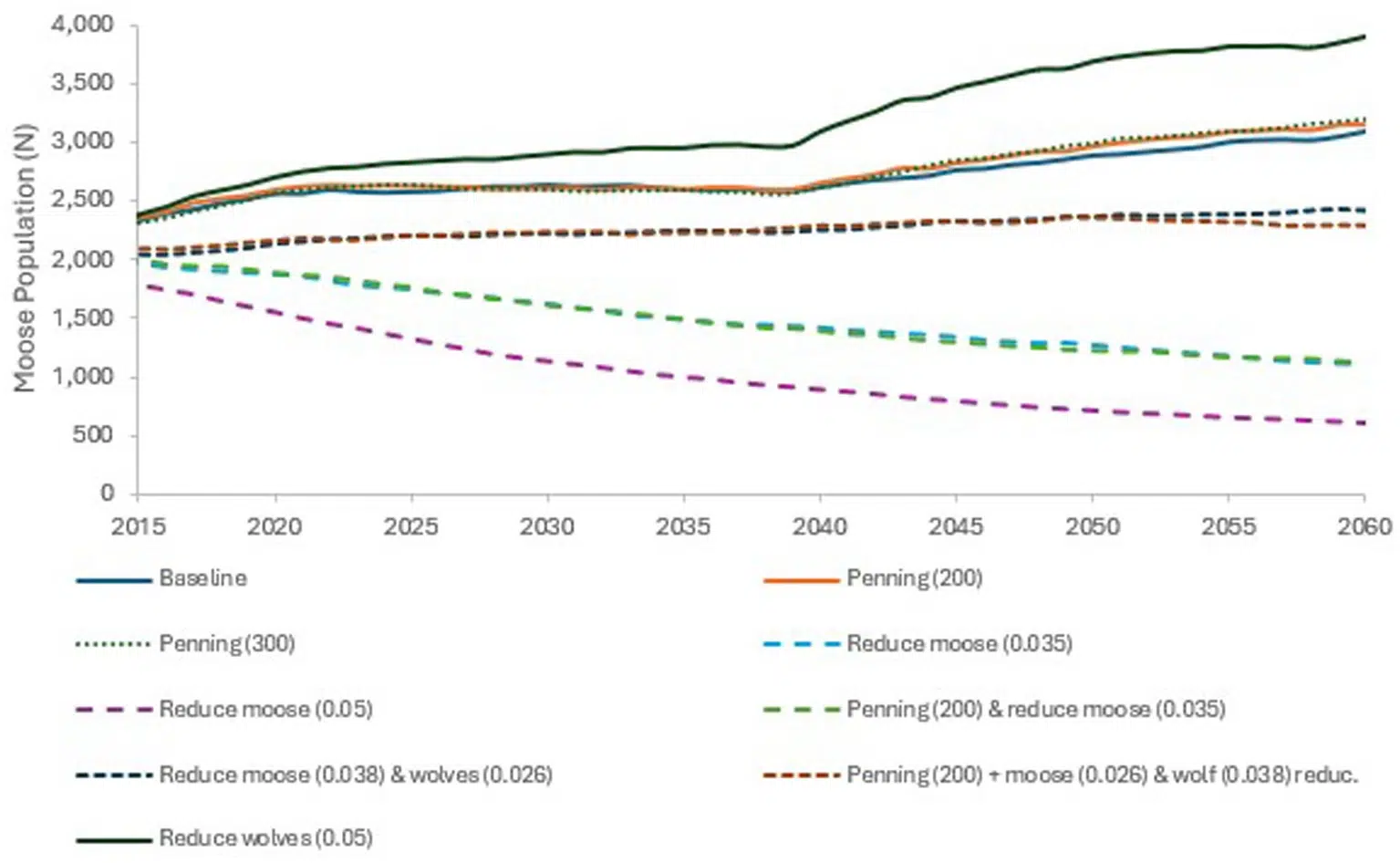
A simulated annual increase of five percentage points in moose mortality largely halted the caribou decline, but reduced the moose population by almost 60 per cent by the end of the modelled period. A smaller increase in moose mortality had a weaker effect on caribou and still caused moose numbers to fall.
Direct wolf reduction produced some of the highest simulated moose and caribou populations. The authors nevertheless describe sustained control at that level as logistically difficult and likely to face opposition because of wolf-conservation concerns.
Maternal penning, in which pregnant caribou are temporarily protected and calves are released later, avoided reducing moose. On its own, however, the simulated addition of 200 or 300 caribou calves at ten-year intervals did not stop the caribou decline. The researchers also note that penning is expensive and is generally most useful for small populations.
Combined action performed best in the model
The most balanced result came from combining lower rates of moose and wolf reduction with maternal penning. In that scenario, caribou decline was halted while simulated moose and wolf populations remained at sustainable or increasing levels. The study presents this as a comparison of plausible strategies, not a ready-made prescription for the region.
That distinction matters because the results changed when the researchers altered uncertain model relationships. Adding climate-driven effects of winter ticks reduced moose survival, while weakening the assumed link between moose abundance and wolf carrying capacity changed outcomes for all three species. The authors identify four critical uncertainties: the strength of the moose response to climate change, the moose–wolf relationship, the caribou habitat model and caribou vital rates.
The simulations also held harvest levels constant. In reality, Indigenous hunting patterns may change as moose expand northwards, which could alter both moose abundance and caribou outcomes without a separate targeted reduction programme.
Habitat impacts should be limited where possible, monitoring must test whether predictions match reality, and management should be adjusted as new information becomes available. Because moose and caribou are both important to Indigenous communities, the study specifically calls for strategies to be developed collaboratively through Indigenous-led or co-managed processes.
Management
Related news
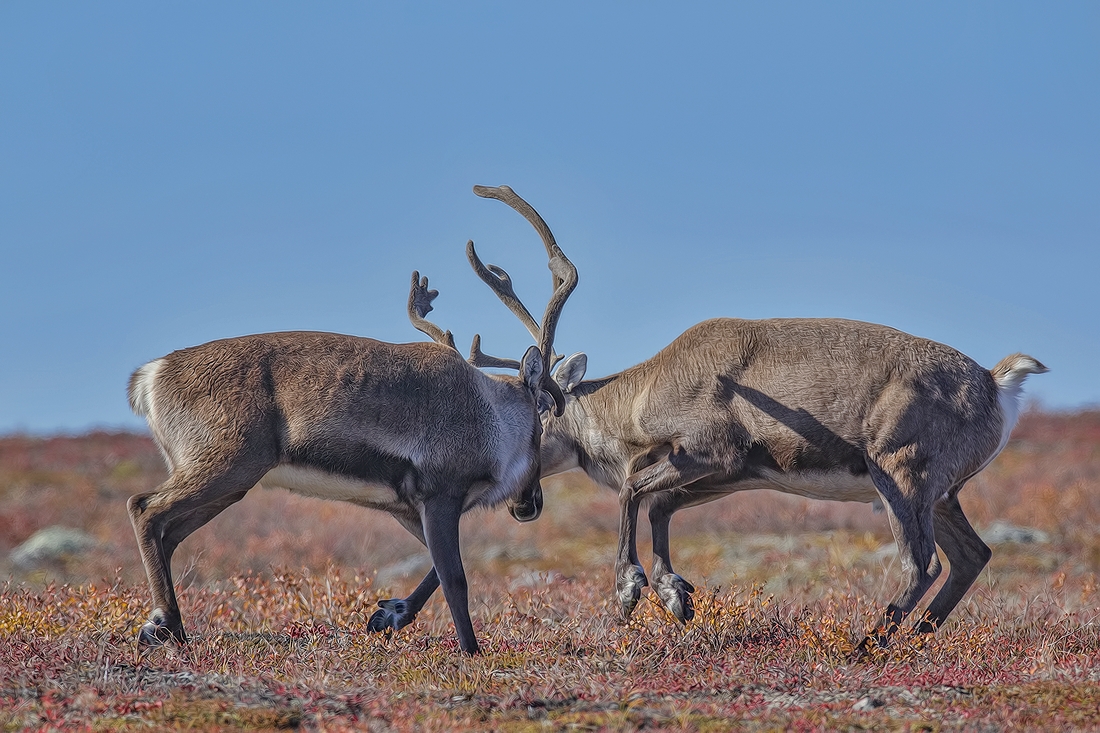
Inuit harvesters help detect an emerging parasitic disease in Arctic caribou
Near Kugluktuk in Nunavut, Inuit harvesters reported unusual tissue changes in caribou. Tests found DNA from two parasitic…
Read story →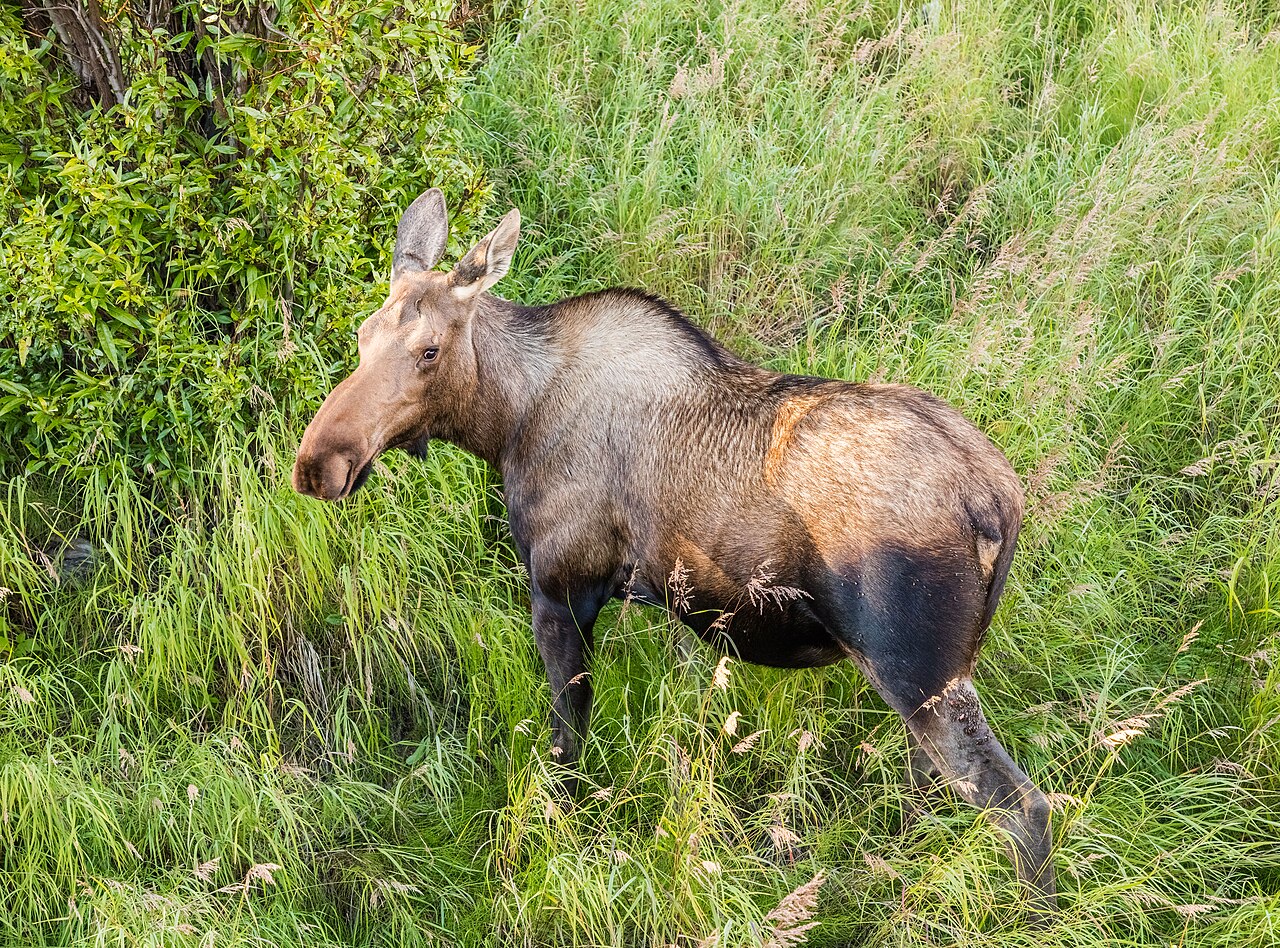
Arctic Moose Follow the River Valleys
GPS tracking in Alaska showed that half of 24 female moose migrated between summer and winter ranges. Migrants…
Read story →
Video Collars Showed GPS Methods Were Only About 70% Accurate at Detecting Caribou Calving
Video collars from 160 adult females in the Porcupine and Western Arctic herds showed that two GPS movement…
Read story →SPECIES IN THIS STORY
Species in this story
Independent research and conservation news archive
Did you find this information useful?
Wildlife Vagabond is independently built and maintained. Voluntary support helps cover source verification, hosting and continued work on research and conservation news.
Support Wildlife VagabondThe news archive will remain freely available.