
Thyroid hormone remained suppressed for 36 hours in dogs bitten by puff adders
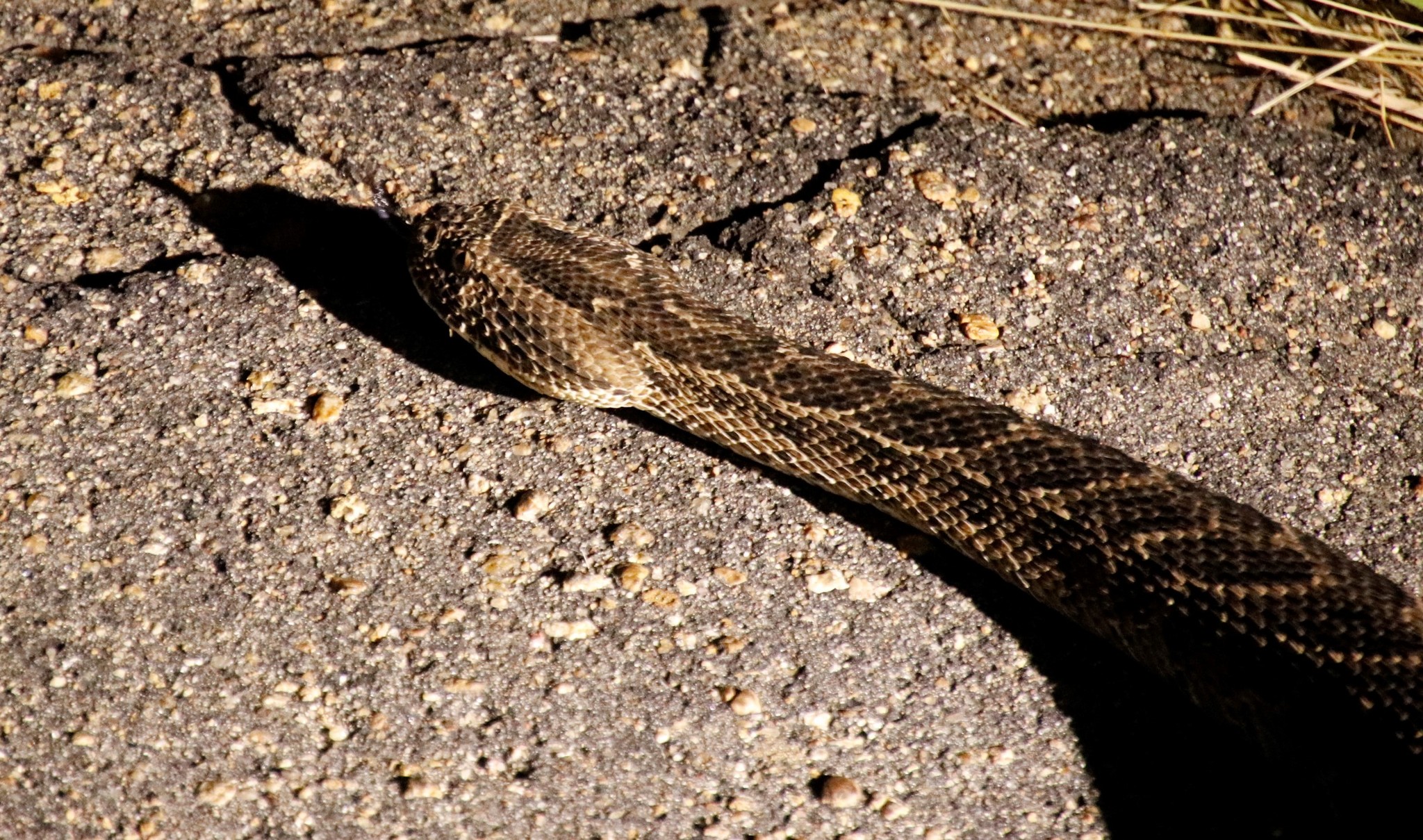
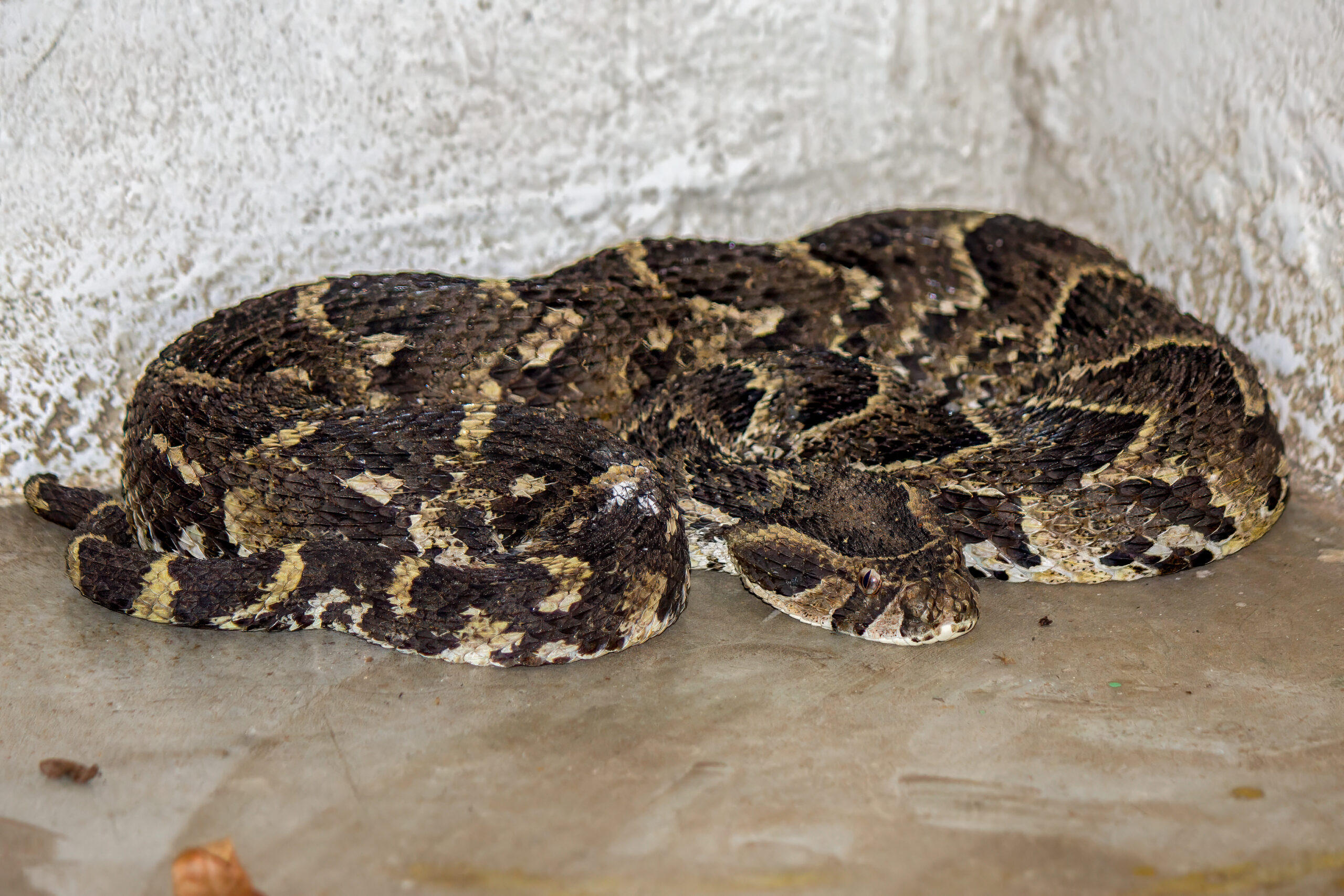
A study of dogs naturally bitten by venomous snakes has found a rapid and prolonged change in thyroid hormone concentrations after puff adder (Bitis arietans) envenomation. In the puff adder group, total thyroxine remained significantly lower than both admission values and healthy controls 36 hours after the bite. The study was published on 21 February 2026 in the Journal of Veterinary Internal Medicine.
The researchers examined 17 privately owned dogs that had been naturally envenomed in South Africa. Eight had been bitten by puff adders and nine by snouted cobras (Naja annulifera). The dogs were compared with healthy control groups. Blood samples were taken at admission and again 12, 24 and 36 hours after envenomation.
The study focused on the body’s endocrine response to envenomation. Researchers measured total thyroxine, or TT4, which is a major thyroid hormone; thyrotropin, or TSH, which helps regulate thyroid hormone production; cortisol, an important stress hormone; and C-reactive protein, or CRP, which rises during systemic inflammation.
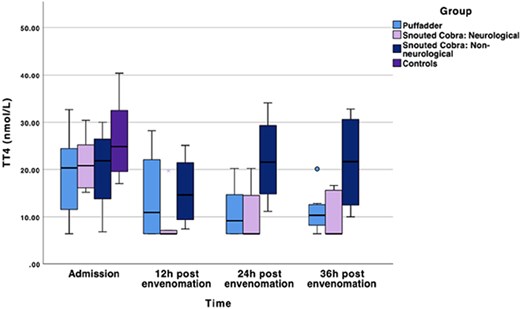
TT4 remained suppressed through 36 hours after puff adder bites
Across all snakebite cases, TT4 was significantly lower than in healthy control dogs at every sampling point. The puff adder group reached its lowest median TT4 concentration at 24 hours. At 36 hours, TT4 in this group was still significantly lower than at admission and significantly lower than in the healthy controls. Dogs with neurological signs after snouted cobra bites showed the same prolonged pattern, with TT4 still suppressed at 36 hours, whereas the non-neurological cobra subgroup reached its lowest values at 12 hours and had recovered to control-like levels within 24 hours.
Cortisol followed a different pattern. In the puff adder group, median cortisol was highest at admission and had fallen significantly by 36 hours. The strongest cortisol response in the study occurred in the subgroup of cobra-bitten dogs that showed neurological signs. Thyrotropin (TSH) did not show a clear overall difference between envenomed dogs and healthy controls, although TSH in the puff adder subgroup fell from its admission level over the following 36 hours. The authors caution that the TSH assay had limited sensitivity and several extreme outliers.
Lower TT4 was associated with stronger systemic inflammation
When all envenomed dogs were analysed together, there was a weak but statistically supported negative association between TT4 and CRP concentrations. The authors interpret this as evidence that suppression of thyroid hormone is linked to the systemic inflammatory response during acute snake envenomation. They describe the pattern as a form of endocrine disturbance associated with critical illness rather than evidence of primary thyroid disease.
The authors note several limitations, including the relatively small number of dogs, missing values at some sampling times and limited screening for concurrent illnesses. The study was also a post-hoc analysis of prospectively collected clinical data, and the original study had not included a snakebite severity score. Within the first 36 hours after envenomation, both puff adder and snouted cobra bites were associated with measurable changes in thyroid and stress-hormone responses.
Physiology
Related news
Barietin From Puff Adder Venom Raised Heart Rate by About 30% in Rats
Purified barietin from puff adder venom increased heart rate by about 30% in rats while changing blood pressure…
Read story →
Injuries Were More Extensive After Zebra Spitting Cobra Bites Than Puff Adder Bites in Namibia
Among 20 hospitalized snakebite patients in Namibia, tissue necrosis occurred in 11 of 12 zebra spitting cobra cases…
Read story →
Patchier, More Diverse Landscapes Were Linked to More Reported Snake–Human Encounters in Eswatini
Using 2,216 public snake-rescue records from Eswatini, the study found that reported encounter likelihood increased with patch density…
Read story →SPECIES IN THIS STORY
Species in this story
Independent research and conservation news archive
Did you find this information useful?
Wildlife Vagabond is independently built and maintained. Voluntary support helps cover source verification, hosting and continued work on research and conservation news.
Support Wildlife VagabondThe news archive will remain freely available.