
Common Buzzards Had a Lower Modelled Threshold for Rodenticide Poisoning Than Red Kites
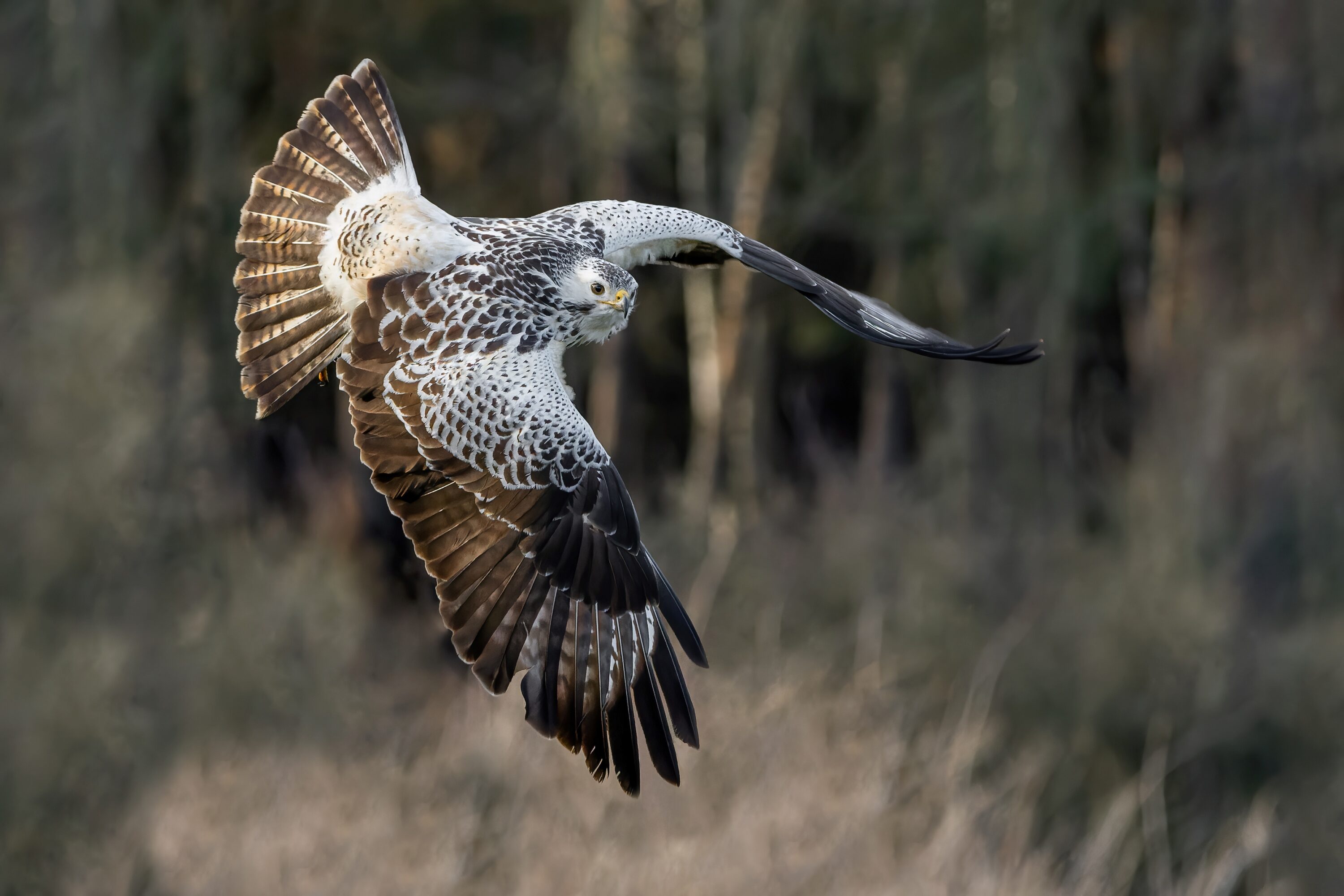
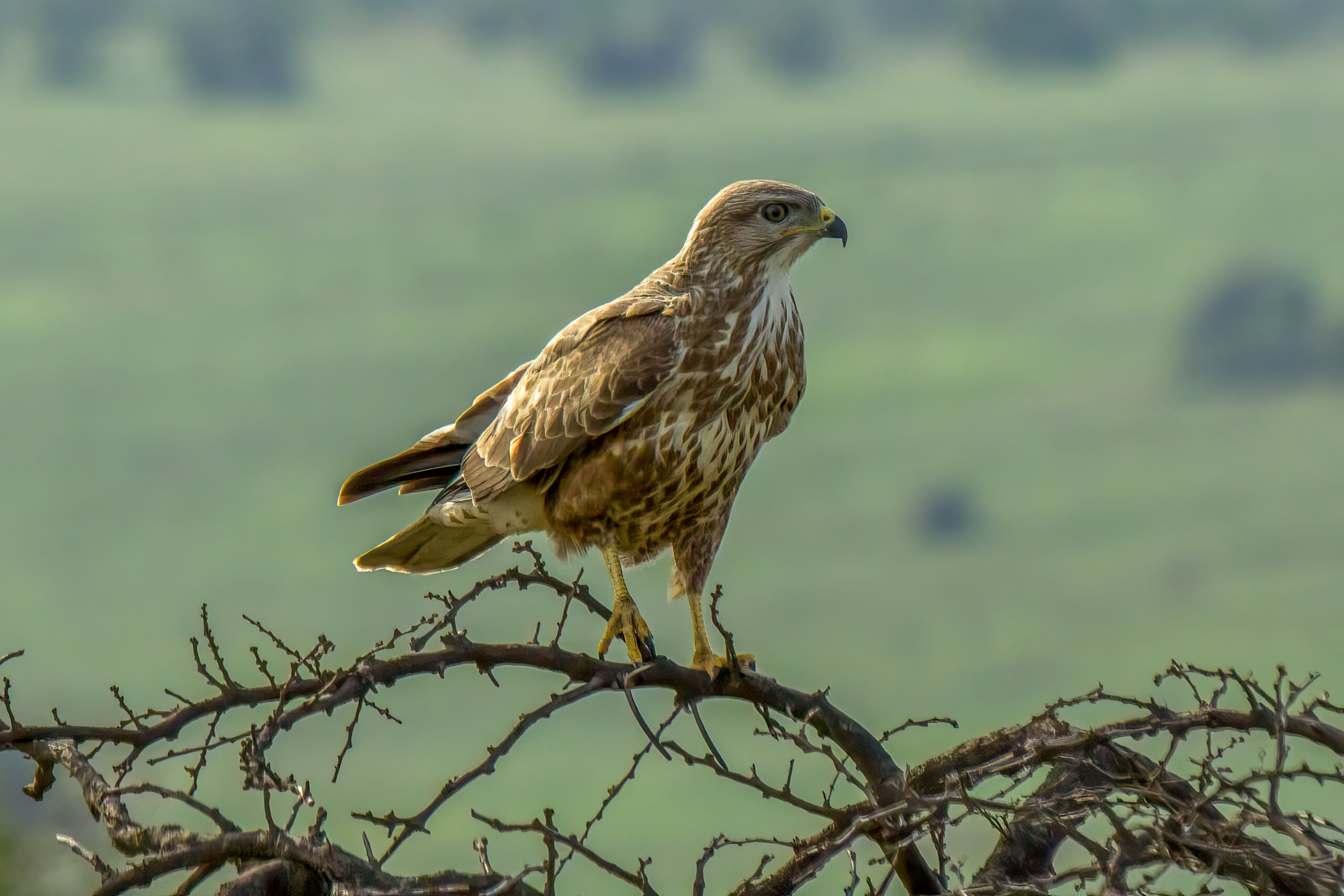
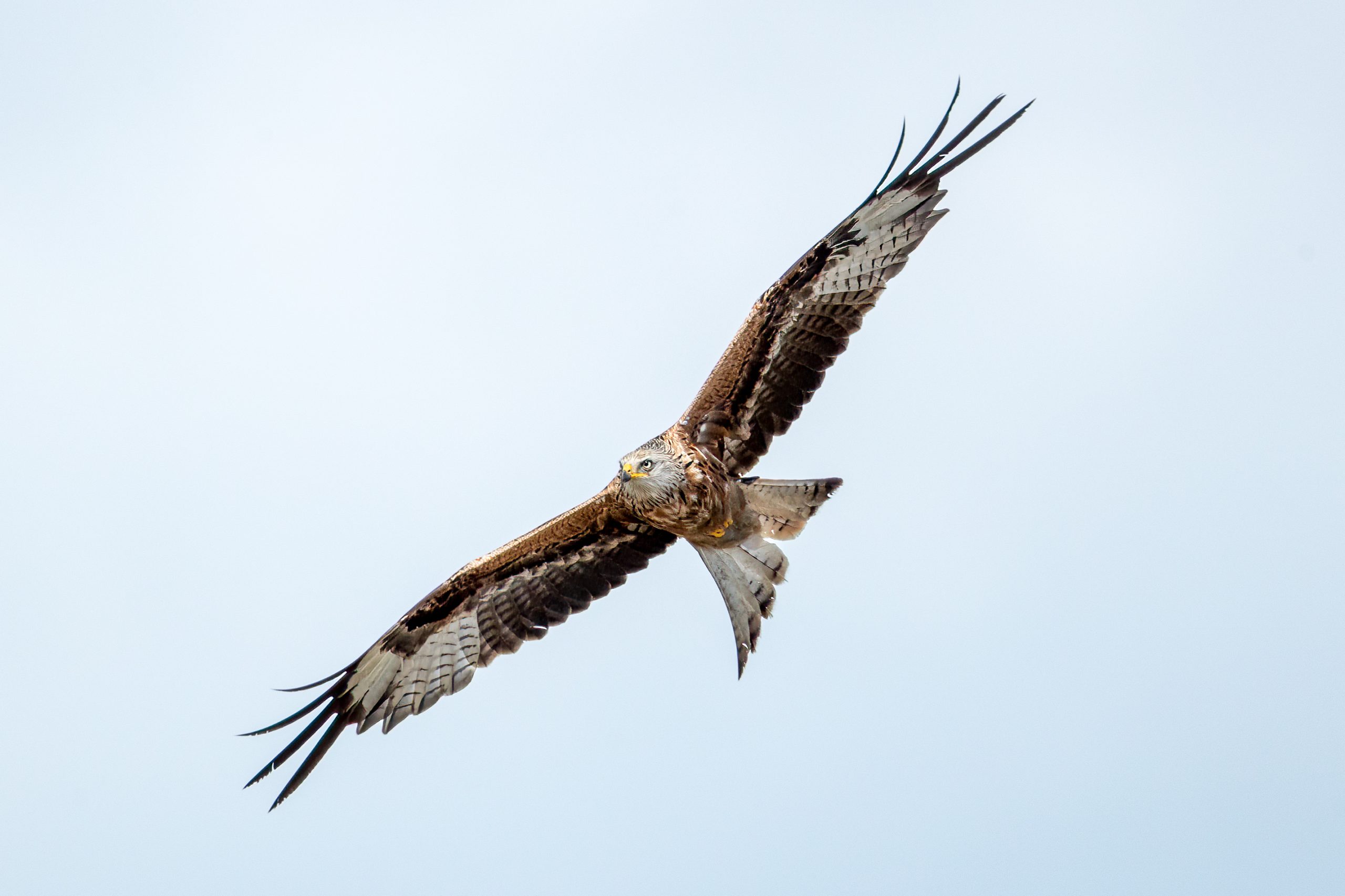
A British study of second-generation anticoagulant rodenticides found widespread exposure in common buzzards (Buteo buteo) and red kites (Milvus milvus). At least one of the five analysed rodenticides was detected in 88.7% of 159 buzzards and 94.3% of 263 red kites examined after death.
The study, published online on 24 January 2026 in Environment International, used carcasses collected through wildlife monitoring and veterinary surveillance schemes. The buzzards came from England between 2009 and 2021, while the red kites were collected across Great Britain between 2015 and 2022.
Poisoned birds had much higher liver residues
Post-mortem evidence was used to distinguish deaths attributed to anticoagulant poisoning from other causes; residue concentration alone was not used to diagnose poisoning. Twenty-three buzzards, or 14.5% of the sample, and 42 red kites, or 16.0%, were classified as having been lethally poisoned.
Buzzards reached the 1% risk threshold at lower residues
The researchers linked summed liver residues to the probability of lethal poisoning and used a 1% probability as their conservation benchmark. This corresponded to 38.2 ng/g wet liver weight in common buzzards and 54.2 ng/g in red kites, rounded to suggested thresholds of about 40 and 55 ng/g.
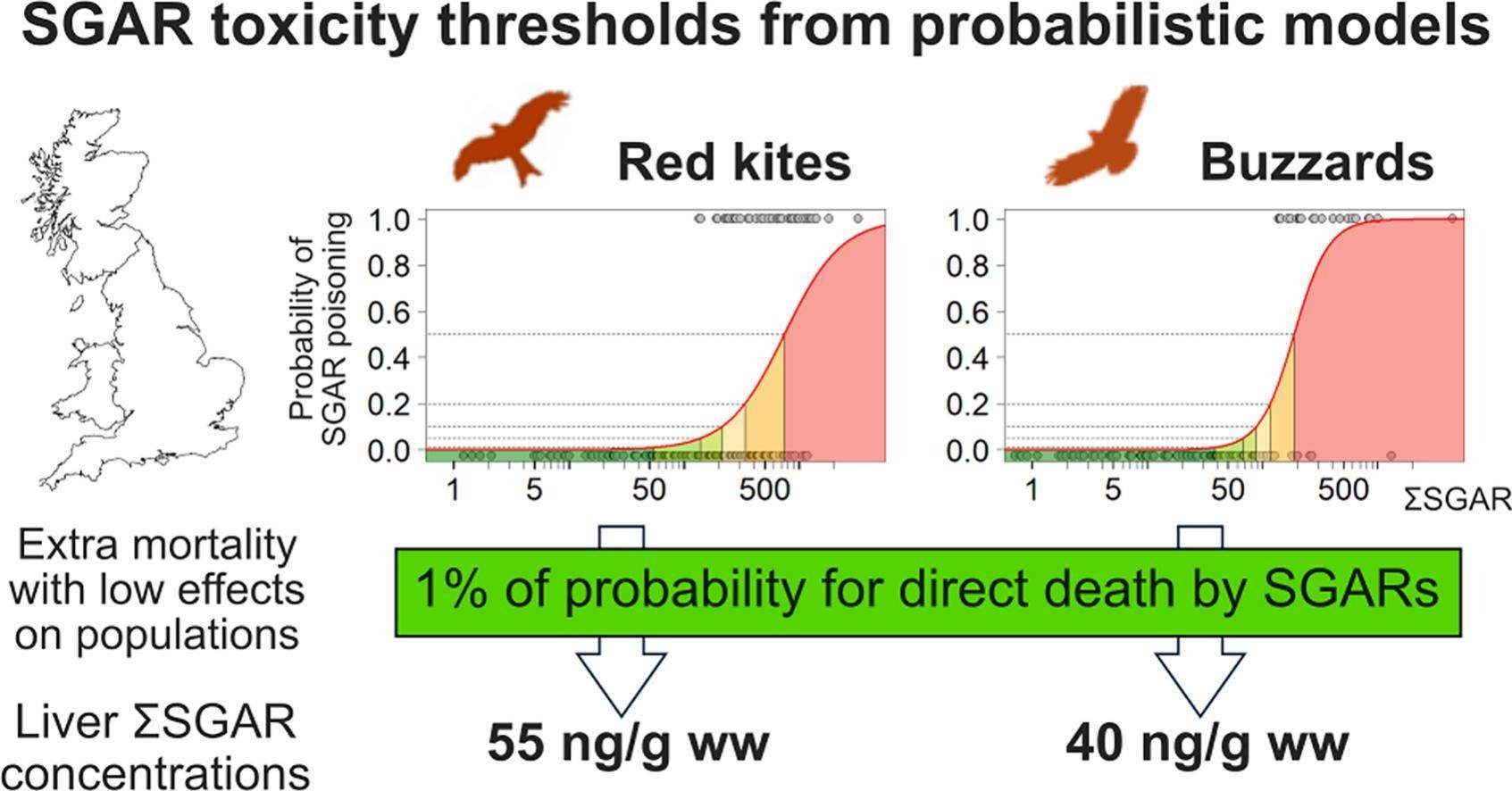
The species difference is biologically important. Red kites had higher overall exposure to second-generation anticoagulant rodenticides (SGARs) than common buzzards, yet the lower modelled thresholds in buzzards indicate greater susceptibility to lethal effects at a given summed liver residue. The authors argue that this balance between exposure and susceptibility helps explain why the proportion of carcasses classified as lethally poisoned was fairly similar in the two species.
These values are lower than the 100–200 ng/g concentrations that have often been used as conventional reference thresholds for predatory birds. The authors therefore argue that species-specific field data can reveal meaningful differences in susceptibility that broader reference values may miss.
The thresholds are for risk assessment, not diagnosis of individual birds
The authors emphasise that the model contains uncertainties and that anticoagulant poisoning in an individual bird cannot be diagnosed from liver concentration alone. Their proposed values are intended as probabilistic thresholds for assessing population-level risk from exposure to second-generation anticoagulant rodenticides.
Buzzards and red kites can be exposed when they eat rodents or other animals carrying anticoagulant residues. By deriving species-specific thresholds from large sets of free-living birds rather than relying only on laboratory reference values, the study provides a new tool for monitoring and managing the risk of secondary poisoning in British raptors.
Threats
Related news
Red Kites Return to Jaén as Dangerous Power Poles Are Made Safer
Red kites are breeding again in Jaén, southern Spain, following a reintroduction programme. Twenty-one released birds used the…
Read story →
Berlin Common Buzzards Forage in Courtyards and Breed in Urban Green Islands
Four years of GPS tracking showed juvenile common buzzards in Berlin using small urban foraging hotspots associated with…
Read story →
GPS Data Show Strong Wind-Turbine Avoidance in Red Kites
Tracking data from hundreds of red kites show very high overall avoidance around wind turbines, while weather and…
Read story →SPECIES IN THIS STORY
Species in this story
Independent research and conservation news archive
Did you find this information useful?
Wildlife Vagabond is independently built and maintained. Voluntary support helps cover source verification, hosting and continued work on research and conservation news.
Support Wildlife VagabondThe news archive will remain freely available.