
Six Marker-defined ASFV Clusters Followed Different Routes Through South Korean Wild Boar
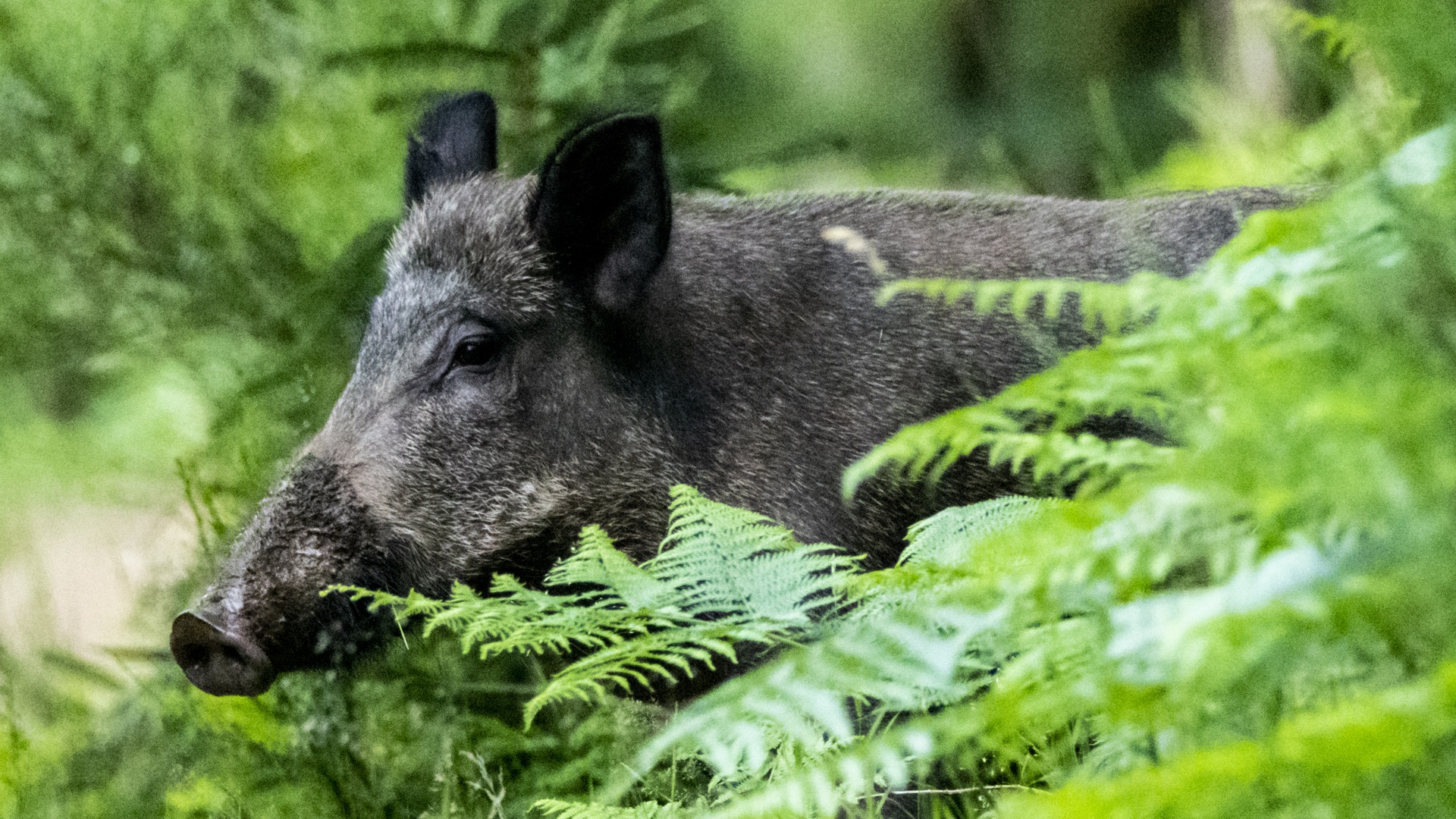
A six-year molecular study of African swine fever virus (ASFV) in South Korean wild boar (Sus scrofa) found six marker-defined viral clusters with different geographic and temporal patterns. The analysis included 4,209 ASFV-positive wild-boar cases detected between 2019 and 2024.
African swine fever is caused by a large double-stranded DNA virus that infects domestic pigs and wild boar and can cause extremely high mortality. The virus does not need to change into a completely new genotype for epidemiologically useful genetic differences to appear; small sequence changes in variable parts of the genome can act as molecular fingerprints for tracing spread.
All typed viruses belonged to genotype II
The standard p72 marker placed all typeable Korean wild-boar viruses in ASFV genotype II. p72 is useful for separating the major global genotypes, but it has limited resolution within a genotype. The researchers therefore combined p72 with three more variable markers: the IGR between I73R and I329L, MGF 360-1La and the repeat region between MGF 505-9R and 10R.
About 70% of the samples had complete information for all four markers and could therefore be assigned to one of six groups: Clusters 1, 1.1, 1.2, 2, 3 or 4. These are not six new ASFV genotypes. They are finer epidemiological clusters within genotype II, defined by different combinations of molecular markers.
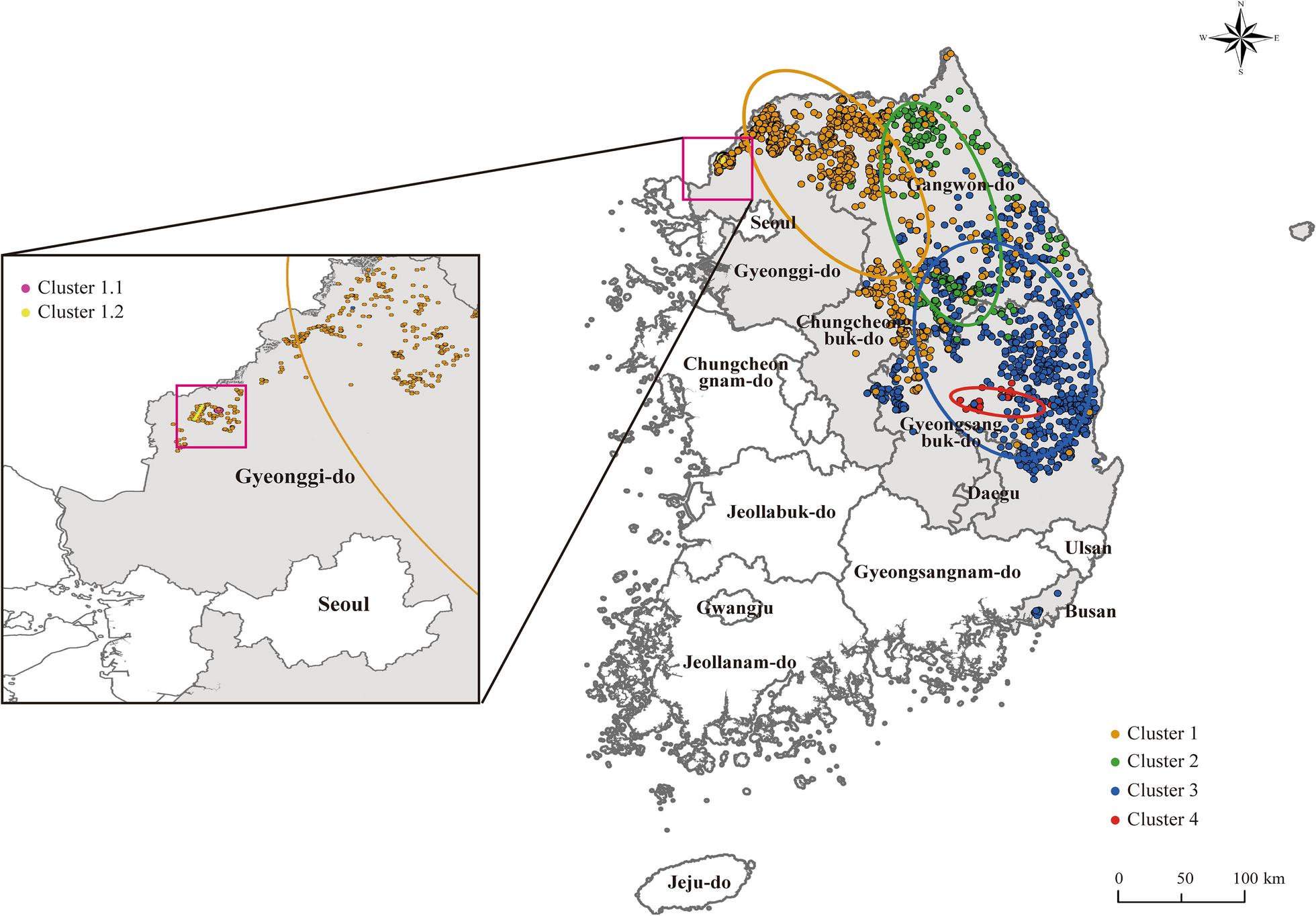
The clusters followed different spread patterns
Cluster 1 dominated the early epidemic and spread southward from northern Gyeonggi-do and Gangwon-do. The tiny early subclusters 1.1 and 1.2 were represented by only one and three classified cases. Cluster 2 was concentrated mainly in central Gangwon-do and northern Chungcheongbuk-do and showed a much more restricted spread.
Cluster 3, distinguished in part by an MGF-5 repeat pattern, spread southeastward through eastern Gangwon-do, Chungcheongbuk-do and Gyeongsangbuk-do and became increasingly common from 2022. Cluster 4 was concentrated in eastern Gyeongsangbuk-do and followed a different westward route from the coast into inland areas.
The MGF-5 pattern became dominant by 2024
The clearest change through time occurred at the MGF 505-9R/10R marker. MGF-1 was the only pattern detected in 2019. MGF-5 first appeared in 2020, represented 12.0% of samples in 2021, 55.8% in 2022, 71.7% in 2023 and 89.5% in 2024.
Biologically, this does not mean that 89.5% of viruses had become a different major genotype. It means that one finer marker pattern within genotype II had become overwhelmingly common among the sampled wild-boar viruses, especially in central and southeastern South Korea.
Several incursions are plausible, but not proven
The largely non-overlapping distributions of the major clusters led the authors to favour a scenario in which already differentiated genotype-II lineages entered different regions and then circulated locally, rather than every cluster arising step by step from one domestic lineage after the initial 2019 outbreak. At the same time, they consider some local diversification plausible, particularly for Cluster 2.
The marker approach cannot determine the origin of every lineage with certainty. Whole-genome sequencing provides much more genetic information than four selected markers and is needed to test whether apparently separate clusters reflect additional introductions, local evolution or a combination of both.
The study therefore shows how molecular surveillance can add a genetic layer to maps of disease spread. Instead of treating every genotype-II case as genetically identical, marker combinations can reveal different transmission histories that may otherwise be hidden within the same broad viral genotype.
Disease, parasites & microbiology
Related news
Maps Show Where Wild Boar Could Thrive and Spread on Jeju Island
Researchers mapped potentially suitable wild-boar habitat across roughly 36% of Jeju Island and identified eight possible corridors linking…
Read story →
Roe Deer and Wild Boar Remained Key Wolf Prey as Diet Shifted Across North-western Italy
From 2021 to 2025, wolves in north-western Italy continued to feed mainly on wild prey. In the Po…
Read story →
Copper levels in wild boar differed across Slovak districts
An analysis of kidney, liver and muscle from 147 wild boar in four districts found that iron and…
Read story →SPECIES IN THIS STORY
Species in this story
Independent research and conservation news archive
Did you find this information useful?
Wildlife Vagabond is independently built and maintained. Voluntary support helps cover source verification, hosting and continued work on research and conservation news.
Support Wildlife VagabondThe news archive will remain freely available.