
Nearly Two-Thirds of 76 Tiger Conservation Landscapes Were Classified as at Risk

A range-wide study of tiger (Panthera tigris) habitat found that human pressure and forest fragmentation increased across most of the 76 Tiger Conservation Landscapes in Asia between 2000 and 2020. Together, these landscapes covered about 1.18 million km², equivalent to only about 7% of the tiger’s historical range.
The researchers tracked two different dimensions of habitat pressure: the Human Footprint Index, which combines several forms of human influence, and a Forest Fragmentation Index describing how forest cover is broken into increasingly disconnected patches. They compared change during 2000–2010 with change during 2010–2020, using the launch of the Global Tiger Recovery Program and its Tx2 goal in 2010 as the dividing point.
Habitat pressure accelerated after 2010
Human pressure accelerated in 73 of the 76 landscapes after 2010, while forest fragmentation intensified in 48. Across the full 20-year period, both indicators showed widespread increases. When the researchers combined the two measures, 64.4% of the Tiger Conservation Landscapes were classified as at risk.
The pattern was uneven rather than uniform. Disturbance rates differed among regions, countries and habitats of the surviving tiger subspecies. Southeast Asia stood out as particularly threatened: both habitat and tiger populations have declined sharply there, and tigers have already been locally extirpated from Vietnam, Laos and Cambodia.
Priority landscapes fared better, but degradation continued
The study separately examined 29 landscapes considered especially important for the Tx2 recovery goal. These priority landscapes generally had lower rates of disturbance than the other 47 landscapes, but habitat degradation continued within them. The authors describe this as a mismatch between conservation ambition and the landscape-scale processes affecting tiger habitat.
That distinction matters because the global number of wild tigers rose from roughly 3,200 in 2010 to about 4,500 in 2022, while habitat pressure continued to increase. The authors argue that population recovery and habitat recovery therefore cannot be treated as the same thing. Landscapes with lower disturbance were associated with more favourable conditions for population recovery, but rising tiger numbers alone do not show whether habitat remains connected and intact.
Recovery plans need habitat indicators as well as tiger counts
The authors conclude that future tiger recovery planning should track changing habitat condition, fragmentation and connectivity alongside population targets. They also stress that the strong differences among countries and subspecies mean that habitat management must reflect national governance, regional conditions and transboundary context rather than rely on a single range-wide prescription.
Threats
Related news
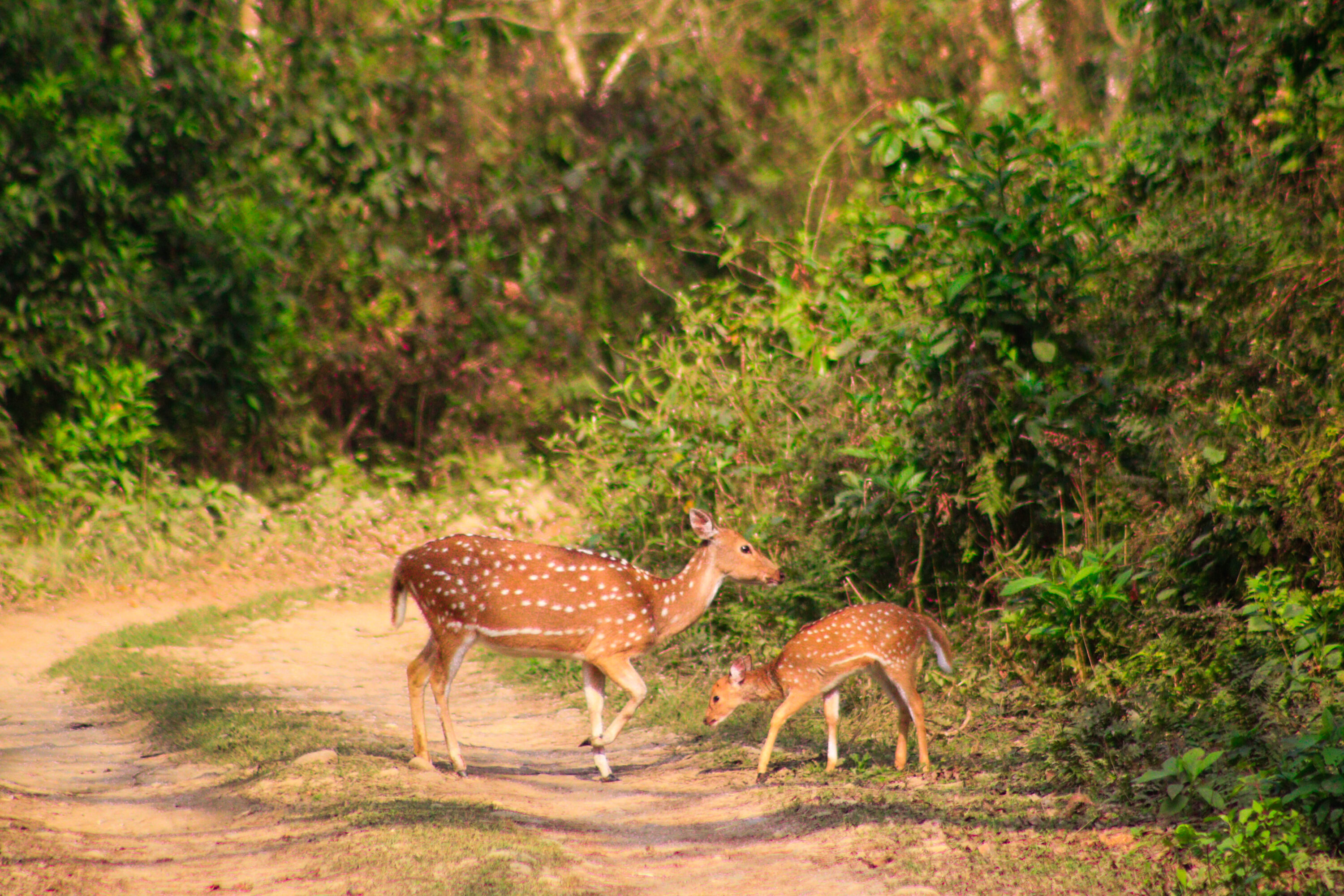
Human Activity and Large Wildlife Overlapped Most in Chitwan’s Buffer Zone
Camera traps across Chitwan National Park and surrounding forests showed the greatest overlap of human activity with large…
Read story →
India launches a new evaluation cycle for its 58 tiger reserves
India’s sixth management effectiveness evaluation is planned to cover all 58 tiger reserves. The new cycle adds solid…
Read story →
One Male Tiger Confirmed in Bhutan’s Biological Corridor 7
A 5,144-trap-night survey photographed one adult male tiger at two stations in Bhutan’s Biological Corridor 7, confirming use…
Read story →SPECIES IN THIS STORY
Species in this story
Independent research and conservation news archive
Did you find this information useful?
Wildlife Vagabond is independently built and maintained. Voluntary support helps cover source verification, hosting and continued work on research and conservation news.
Support Wildlife VagabondThe news archive will remain freely available.