
Twelve Western Canadian Caribou Subpopulations Had Estimated Effective Population Size Below 50
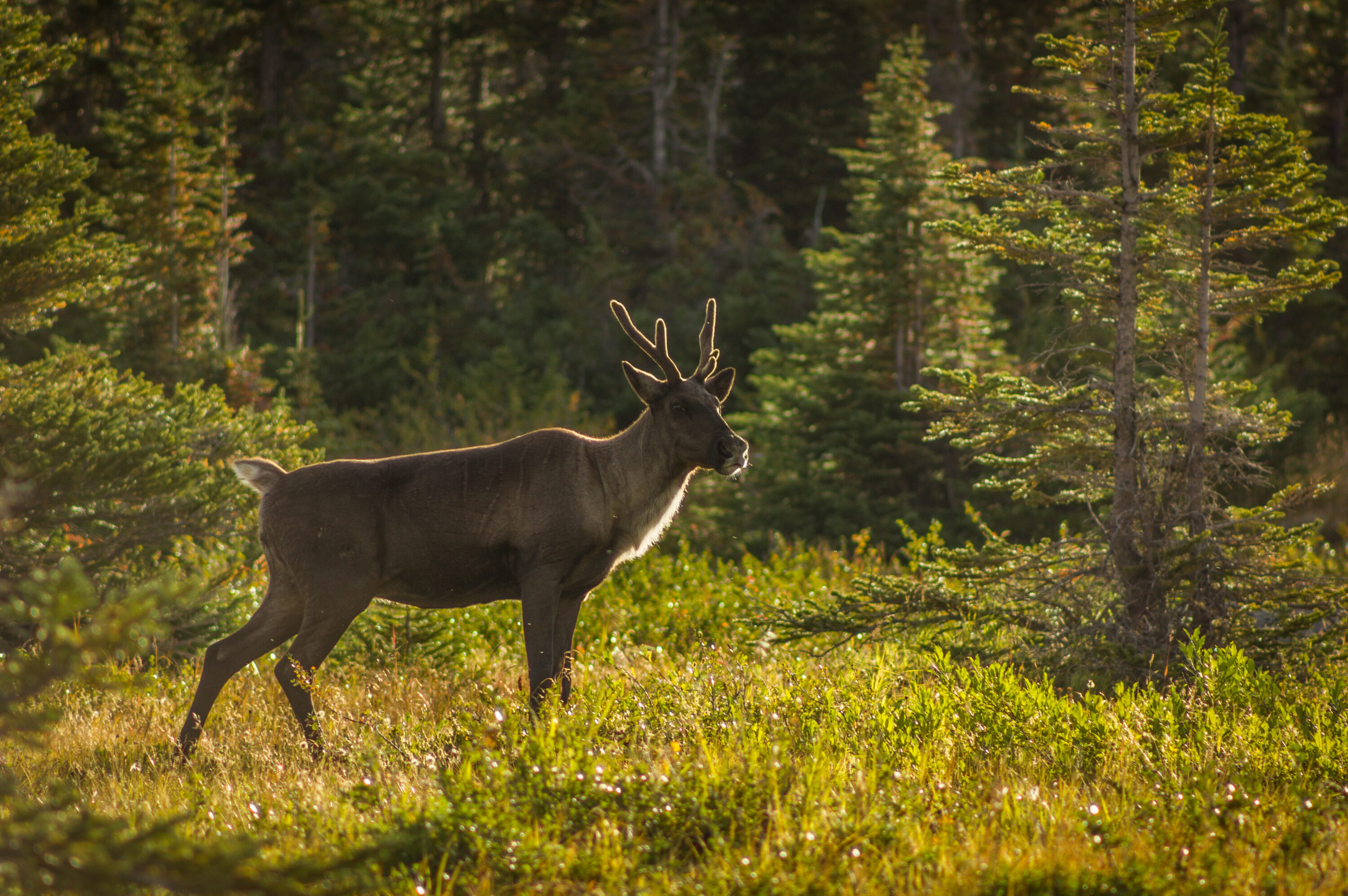
Genome-wide data from 759 woodland caribou (Rangifer tarandus caribou) in British Columbia, Canada and Alberta showed very small estimated effective population sizes in several subpopulations. Among the 32 individual subpopulations for which contemporary effective population size could be estimated, 12 had point estimates below 50. In seven of those, even the uncertainty around the estimate remained entirely below that threshold. The study was first published on 7 August 2026.
Effective population size, written Ne, is not the number of caribou present. It is a genetic measure: roughly, the size of an ideal breeding population that would experience the same rate of genetic drift or inbreeding as the real population. The study uses the widely applied 50/500 framework, in which Ne below 50 is associated with short-term inbreeding risk and values below 500 with reduced long-term adaptive potential. The authors also note that these thresholds are debated and are best treated as conservation benchmarks rather than absolute biological cut-offs.
Most estimable subpopulations were below the 500 benchmark
Twenty-eight of the 32 subpopulations with contemporary Ne estimates had point estimates below 500, and in 23 the estimate still remained entirely below 500 even when statistical uncertainty was taken into account. When the researchers accounted for population structure at the broader metapopulation level, three of six metapopulations — Jasper-Banff, South-Eastern and Itcha-Ilgachuz — also remained below 500.
Census size and effective population size did not tell exactly the same story. The number of mature animals in a subpopulation was related to the level of inbreeding. The contemporary Ne estimate was not. The authors therefore treat census size, effective size and direct genomic measures of inbreeding as complementary rather than interchangeable indicators.
DNA carried signs of both older and recent inbreeding
The researchers analysed 33,346 single-nucleotide polymorphisms and measured runs of homozygosity — stretches of the genome where the two inherited chromosome copies are identical. Shorter runs can reflect older shared ancestry, while long runs are more consistent with recent mating among relatives. Most subpopulations contained a mixture of both, and small endangered subpopulations, particularly in the south, generally showed the highest levels of inbreeding. Some larger populations also had elevated inbreeding, so small census size was not the only warning signal.
Historical reconstructions also showed a broad north-to-south shift in the timing of population bottlenecks. Northern groups declined around 1700–1780, central groups around 1780–1860 and southern groups around 1860–1940. The authors say this timing broadly coincides with regional climatic shifts and increasing human disturbance, while cautioning that reconstructing the most recent demographic changes in structured populations carries uncertainty.
Genetics & genomics
Related news
Inuit harvesters help detect an emerging parasitic disease in Arctic caribou
Near Kugluktuk in Nunavut, Inuit harvesters reported unusual tissue changes in caribou. Tests found DNA from two parasitic…
Read story →
Video Collars Showed GPS Methods Were Only About 70% Accurate at Detecting Caribou Calving
Video collars from 160 adult females in the Porcupine and Western Arctic herds showed that two GPS movement…
Read story →
Reindeer and Caribou Showed Broad Genetic Differences Across Russia, Alaska and Canada
Microsatellite data from 1,544 reindeer and caribou in 42 populations showed broad genetic differentiation among Russia, Alaska and…
Read story →SPECIES IN THIS STORY
Species in this story
Independent research and conservation news archive
Did you find this information useful?
Wildlife Vagabond is independently built and maintained. Voluntary support helps cover source verification, hosting and continued work on research and conservation news.
Support Wildlife VagabondThe news archive will remain freely available.