
More Foraging Around Buildings and Bins Was Not Linked to Greater Flexibility in Vervet Monkeys
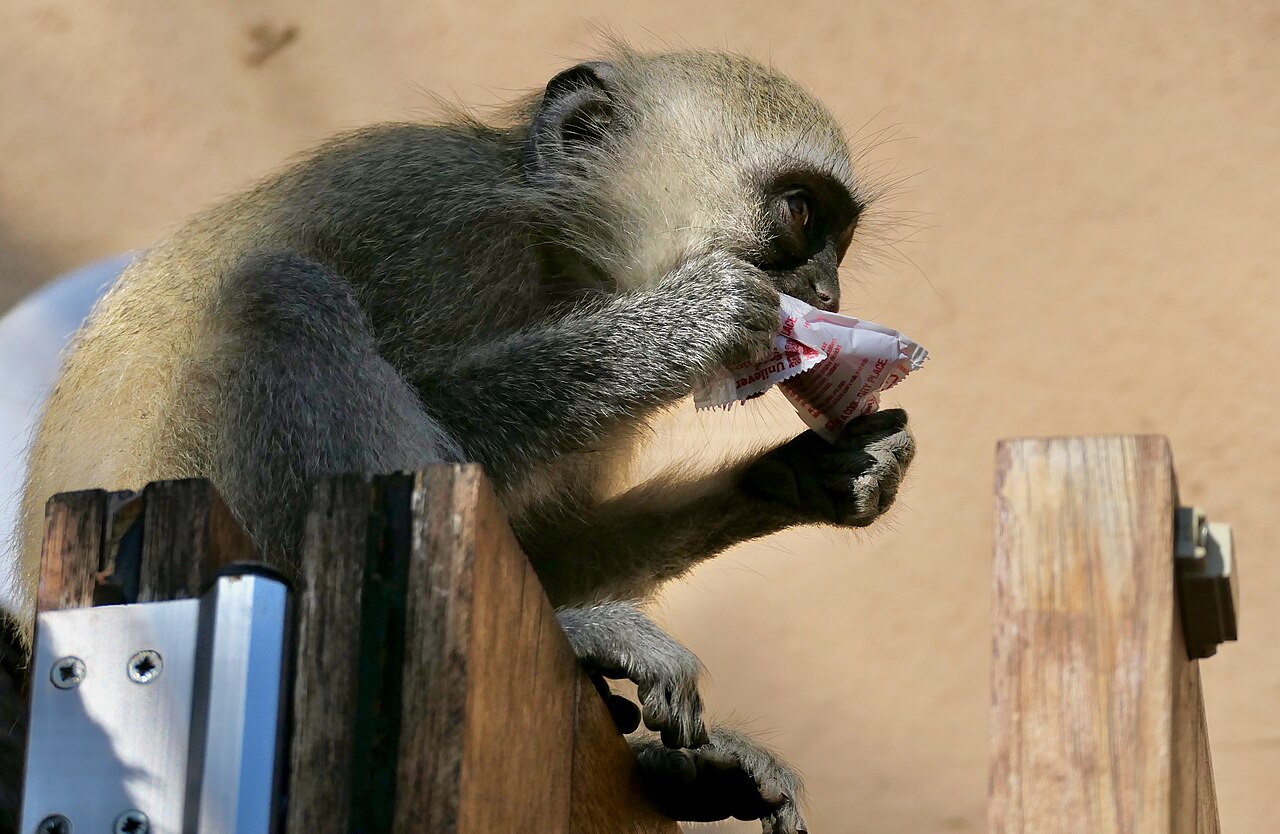
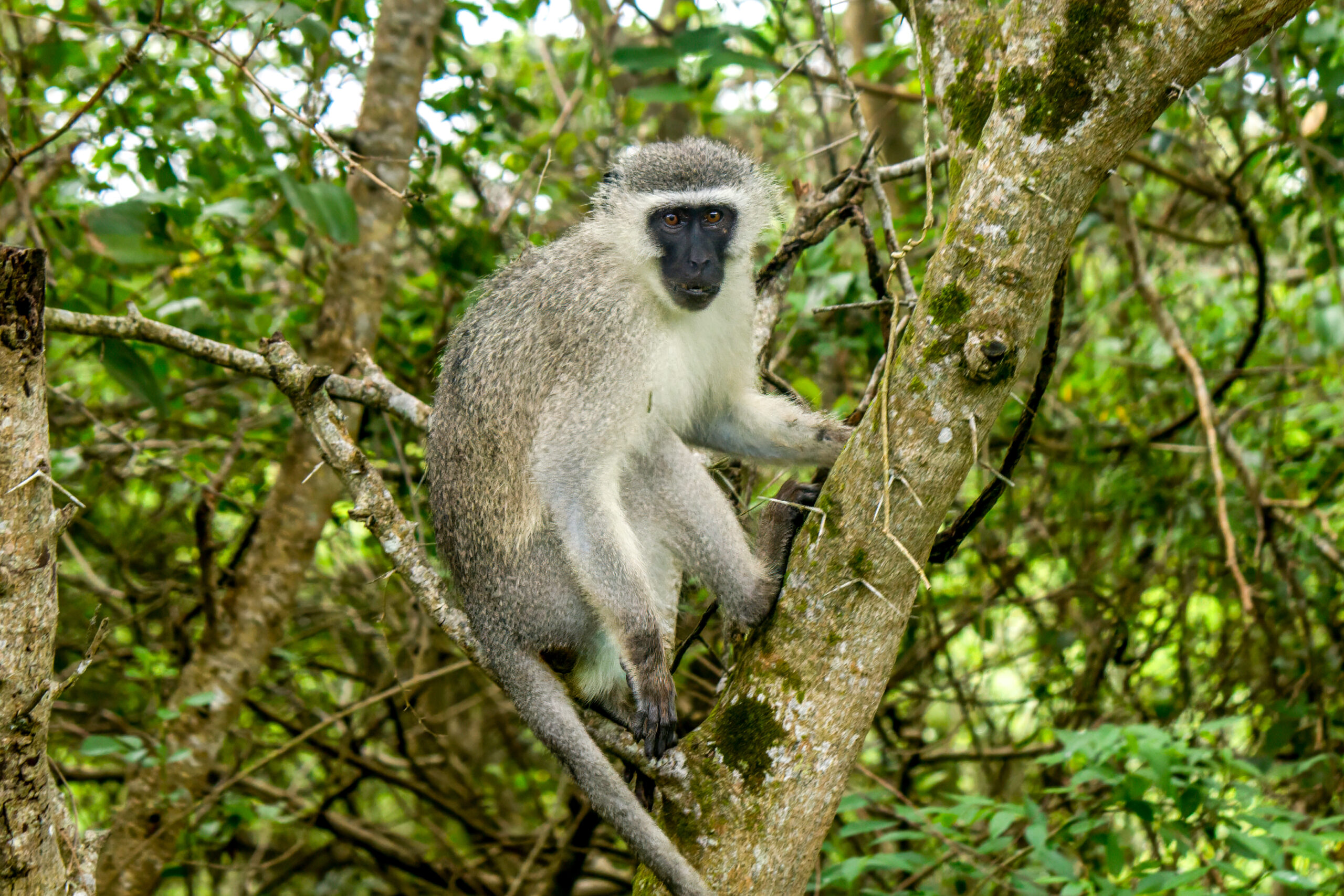
A 2026 study of semi-urban vervet monkeys (Chlorocebus pygerythrus) in KwaZulu-Natal, South Africa found that individuals with more experience seeking food around human structures were not more behaviorally flexible when faced with a new technical problem.
Researchers studied 42 individually known monkeys from two groups living in Simbithi Eco-Estate in Ballito, a residential landscape containing forest patches, roads and houses. Long-term observations between July 2023 and September 2024 produced 3,137 hours of behavioural data. The researchers quantified each monkey’s “anthropogenic foraging tendency” as how often it entered a building or interacted with a rubbish bin, adjusted for the group-observation time during which that individual was present. This provided a practical measure of experience with human-made structures rather than a general measure of how urban each monkey was.
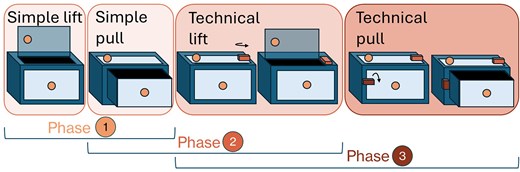
The monkeys were also presented with a three-phase transparent puzzle box containing a peanut. As the experiment progressed, the solutions became more technically demanding. Forty-one of the 42 monkeys engaged with the experiment initially, but only 27 completed enough technical trials for the researchers to estimate the full set of problem-solving traits reliably. The sequence of each monkey’s attempts was used to describe three components of behavioural flexibility: switching between known solutions, innovating a solution the individual had not previously used, and learning sensitivity — the tendency to repeat solutions that had worked before.
Human-associated foraging did not predict flexibility
Experience with human-associated foraging did not explain how readily monkeys switched between solutions or how likely they were to innovate a technically demanding solution. The flexibility traits also did not form one general behavioural-flexibility profile. Technical innovativeness was positively related to learning sensitivity — the better innovators were also better at repeating a solution that had worked before — but neither trait was related to switch tendency.
Innovativeness nevertheless mattered within the experiment itself. Monkeys with higher technical innovativeness were more successful at solving the food puzzle, whereas switch tendency did not predict experimental success. Neither technical innovativeness nor switch tendency predicted how much human food individuals consumed during normal life in the estate.
Existing cognitive abilities may already be sufficient
The authors interpret this pattern as consistent with vervet monkeys bringing pre-existing cognitive capacities into semi-urban environments rather than acquiring their measured flexibility through experience with buildings and bins. As dietary generalists, vervets already use varied foraging techniques in natural environments, and the researchers suggest that these existing abilities may be sufficient for dealing with many novel urban challenges.
The study is a snapshot, not a test of long-term change
The study does not rule out longer-term evolutionary or behavioural change in urban populations. The authors describe their measurements as a snapshot in time and note that Simbithi still contains extensive forest patches, where the monkeys obtain much of their food from natural vegetation. Human-food consumption was also used only as a practical proxy for success in exploiting the anthropogenic environment, rather than as a direct measure of fitness.
The researchers suggest that future studies could revisit the same known population as the estate changes and as residents introduce additional barriers to monkeys, such as screens and modified rubbish bins. This could reveal whether repeated human–vervet interactions eventually alter the cognitive traits associated with solving new problems.
Behaviour
Related news
Only dominant vervet monkeys tackled the hardest food puzzle
In a field experiment with wild vervet monkeys, monkeys of different ranks used easier food puzzles, but only…
Read story →
Wild Vervet Monkeys Used Vision in 96.8% of Food Evaluations
In 18,868 food-evaluation observations from 44 wild vervet monkeys in South Africa, vision was used in 96.8% of…
Read story →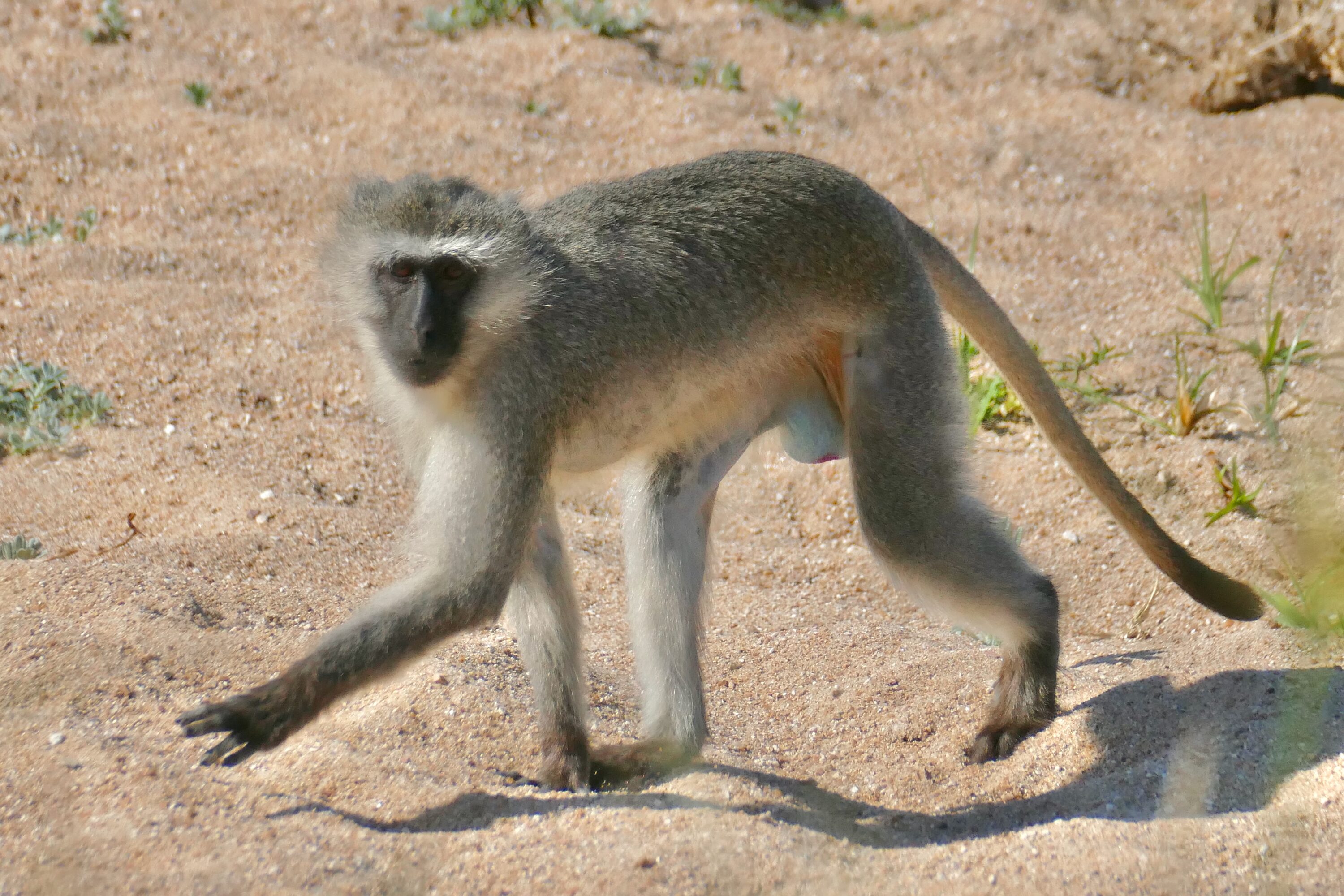
Adult Male Vervet Monkeys Were Disproportionately First at More Exposed River Crossings
Across 391 crossings in five vervet groups, adult males were disproportionately likely to cross first, with the strongest…
Read story →SPECIES IN THIS STORY
Species in this story
Independent research and conservation news archive
Did you find this information useful?
Wildlife Vagabond is independently built and maintained. Voluntary support helps cover source verification, hosting and continued work on research and conservation news.
Support Wildlife VagabondThe news archive will remain freely available.