
Vigilance was the most common context for bipedal behaviour in chacma baboons
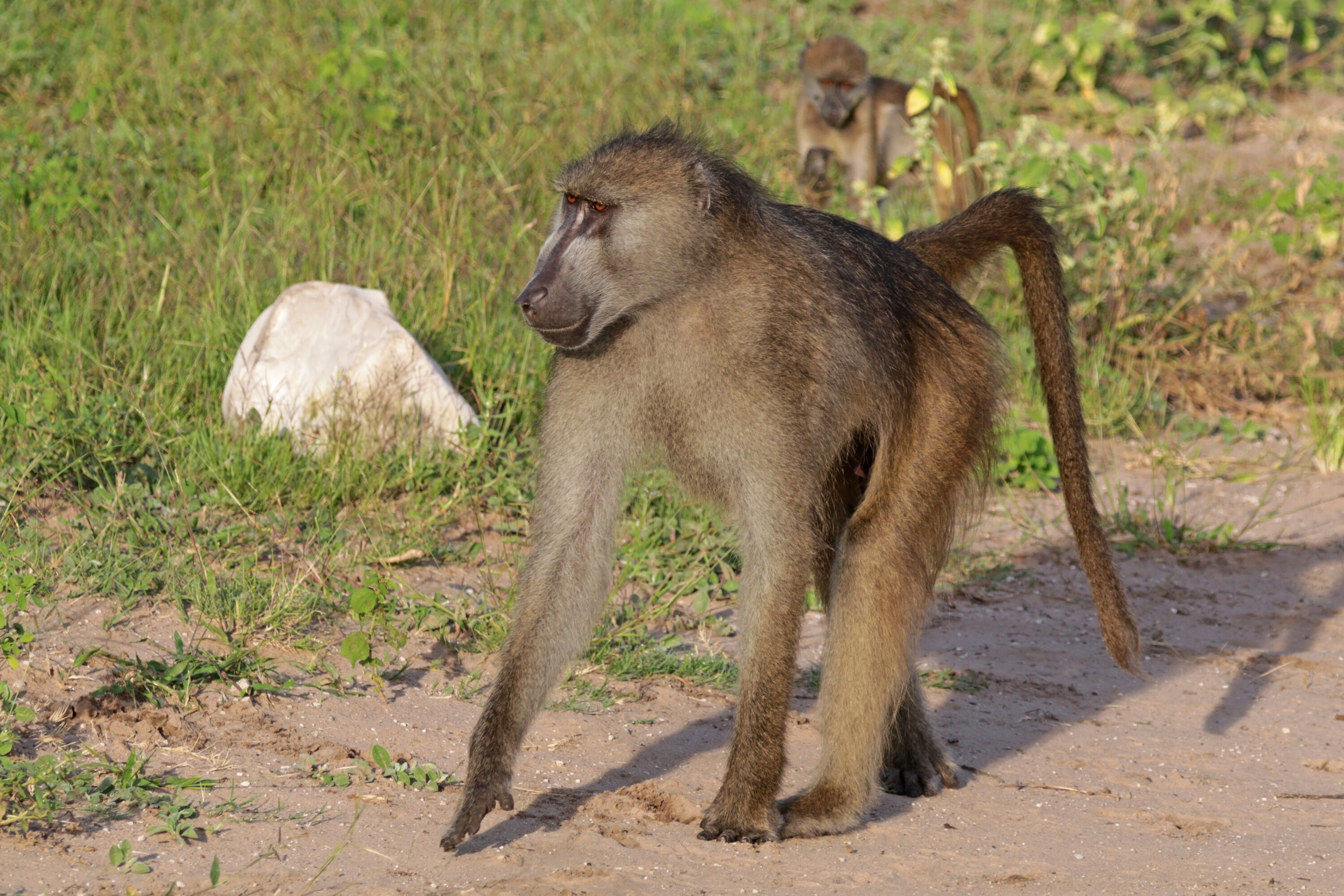
A 2026 study in Gorongosa National Park, Mozambique, provides the first systematic description of bipedal behaviour in chacma baboons (Papio ursinus griseipes). The observations show that standing or moving on two legs occurs in a wide range of situations, with vigilance emerging as the most frequent context.
In two baboon troops, the researchers recorded every bipedal episode they observed — a method known as all-occurrence sampling — rather than estimating the share of the whole activity budget spent on two legs. They recorded 231 bipedal bouts over 12 observation days. Most were bipedal postures rather than walking: 162 bouts, or 70.1%, were postural, while 69 bouts, or 29.9%, involved bipedal locomotion.
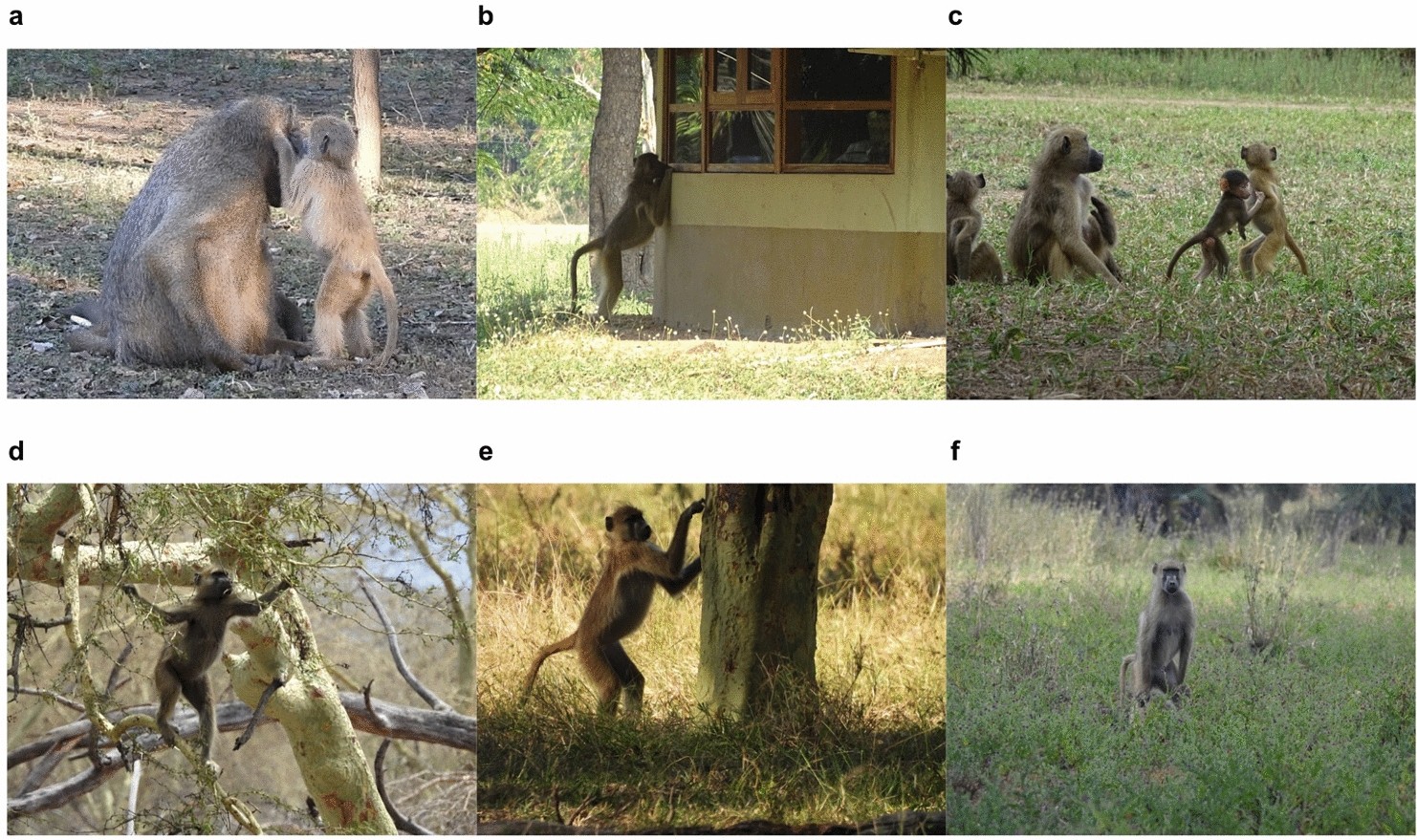
The behaviour was overwhelmingly terrestrial. Of the 231 bouts, 212 occurred on the ground, 12 on raised objects such as car roofs, tents and low branches, and seven in trees. Five of the seven arboreal bouts occurred while the baboons were foraging.
Vigilance was the most common context for bipedalism
Bipedalism appeared in many different behavioural contexts. Vigilance was the most frequent, accounting for 63 bouts, or 27.3%. Play was second with 49 bouts, followed by exploration with 28. Other observations included foraging, carrying objects or other baboons, grooming, attempted infant snatching, socio-sexual mounting and one instance of bipedal wading.
Infants and juveniles used two legs most often relative to observation time
Age also mattered. Infants and juveniles had the highest modelled rate of bipedalism and were the only age-sex class observed using two legs in every recorded context. Their estimated rate was 3.52 times that of adult females after accounting for observation opportunity and troop identity. This is a modelled rate comparison, not a statement that researchers simply counted 3.52 times as many juvenile bouts. They accounted for most of the bipedal bouts recorded during play, vigilance, exploration, foraging and grooming.
Vigilance was the only context in which bipedal behaviour occurred in every age-sex class. The researchers note that vigilance often concerned activity within the troop, including conflict and group movement, rather than only scanning for predators. This broadens the range of social situations associated with standing upright.
The authors compare the Gorongosa observations with earlier work on olive baboons and discuss what living primates can contribute to hypotheses about the evolution of human bipedalism. They do not present chacma baboons as direct models of human ancestors. Instead, the study shows that occasional bipedalism in a semi-terrestrial primate can serve several functions, including social ones, and can vary strongly with age and behavioural context.
Behaviour
Related news
Intense vigilance was the behavioural response most closely linked to human disturbance in Garden Route baboons
Three Cape chacma baboon troops showed similar overall activity budgets across a human-disturbance gradient, but intense vigilance was…
Read story →
Chacma baboons deposited more seeds in the dry season, and seedlings emerged from defecated seeds
Researchers recovered 23,132 seeds from 240 chacma-baboon scats in Suikerbosrand, with more seeds deposited in the dry season…
Read story →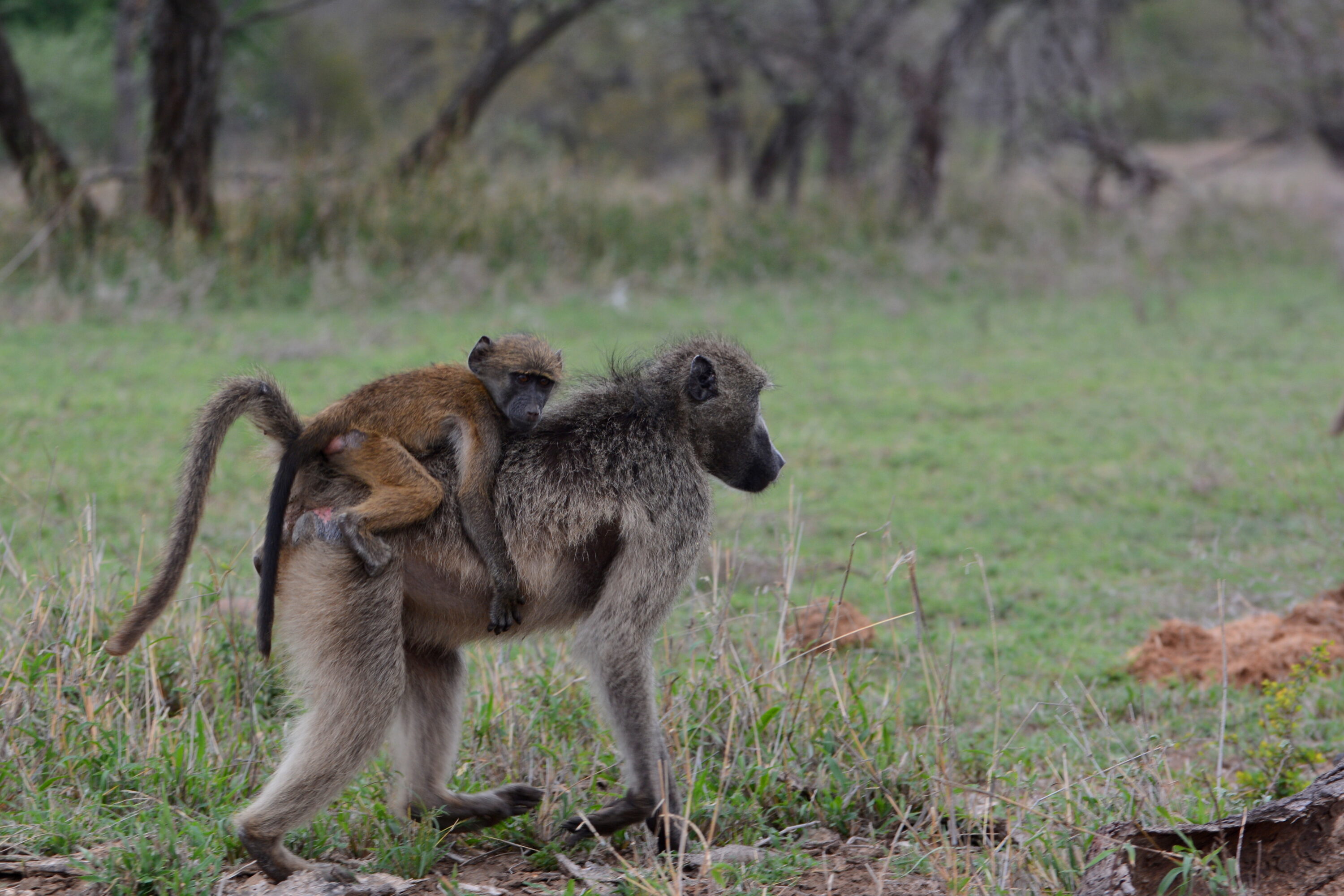
Camera traps found no evidence that baboons avoided sites for days after predators passed
Across four savanna sites, camera traps showed no clear decrease in baboon detections during the 72 hours after…
Read story →SPECIES IN THIS STORY
Species in this story
Independent research and conservation news archive
Did you find this information useful?
Wildlife Vagabond is independently built and maintained. Voluntary support helps cover source verification, hosting and continued work on research and conservation news.
Support Wildlife VagabondThe news archive will remain freely available.