
Chital, Sambar and Gaur Partitioned Food and Habitat Differently Across Seasons in Kanha
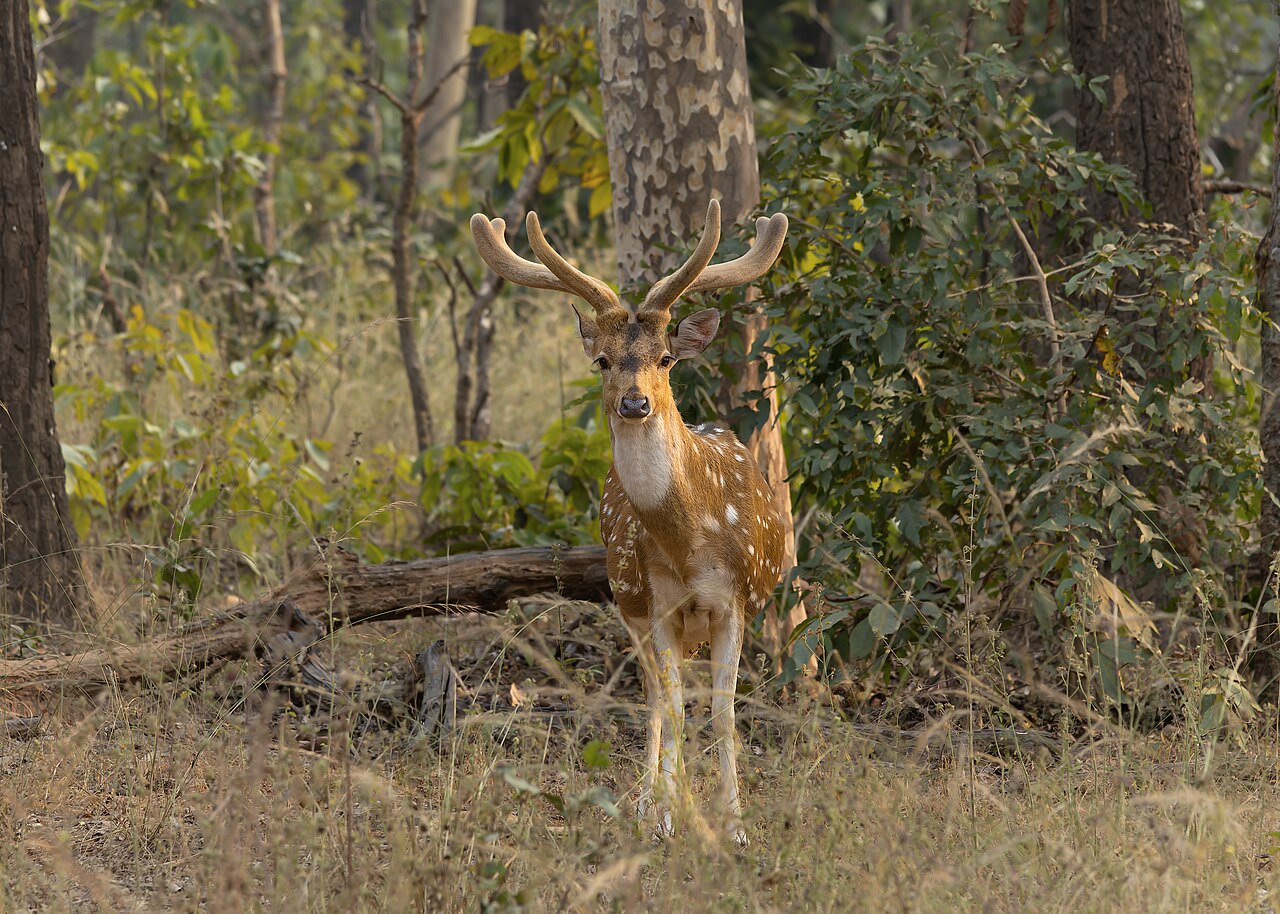
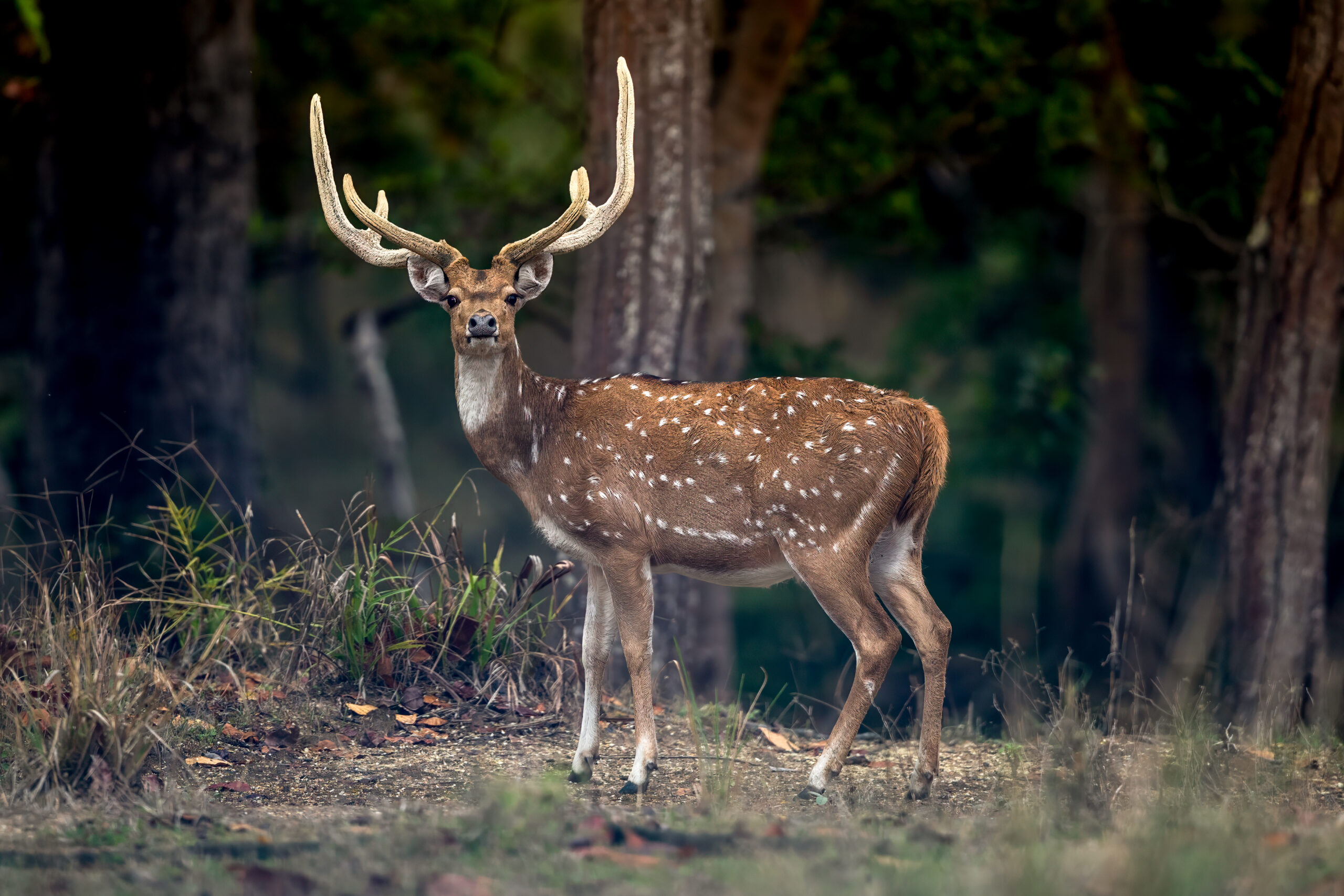
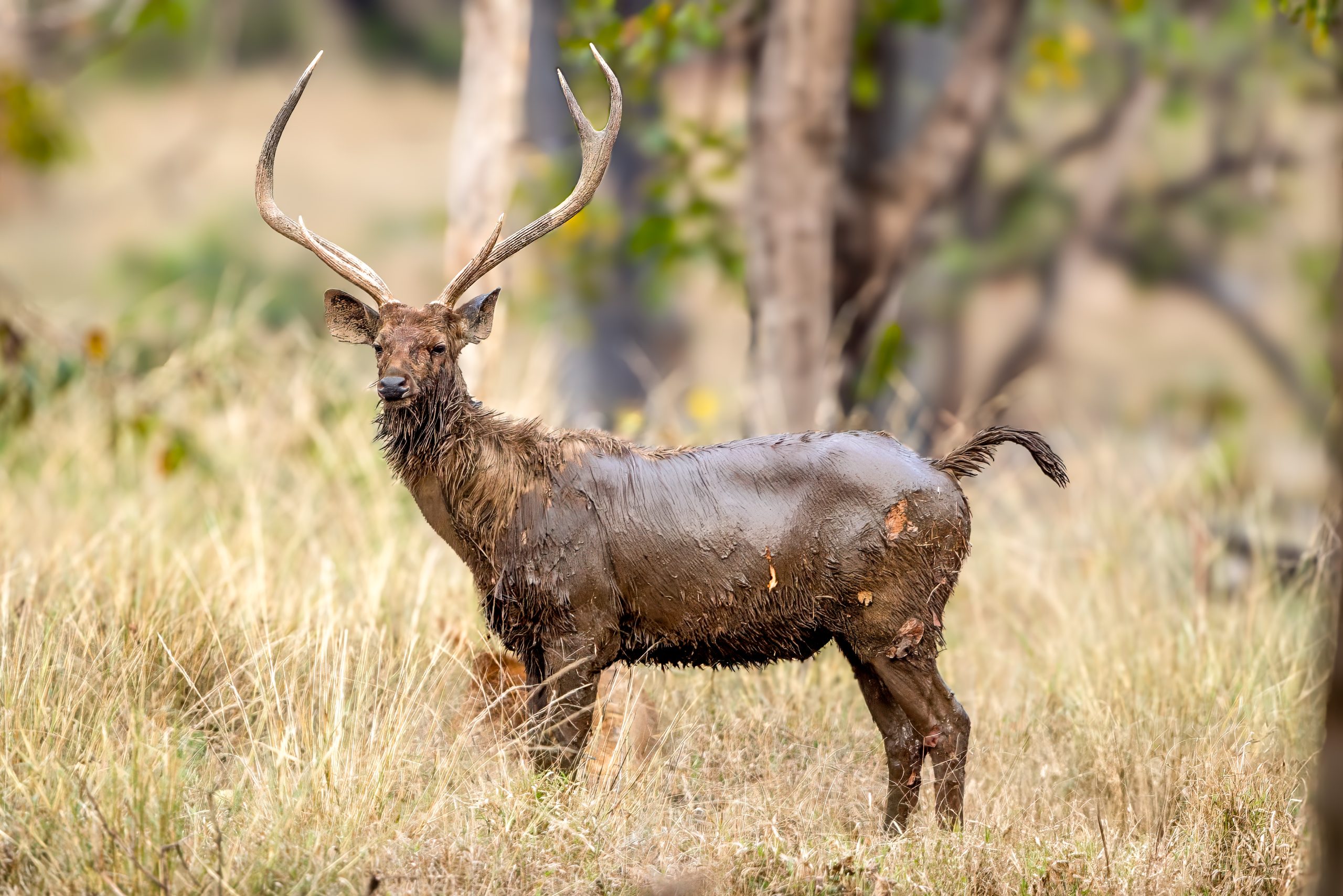
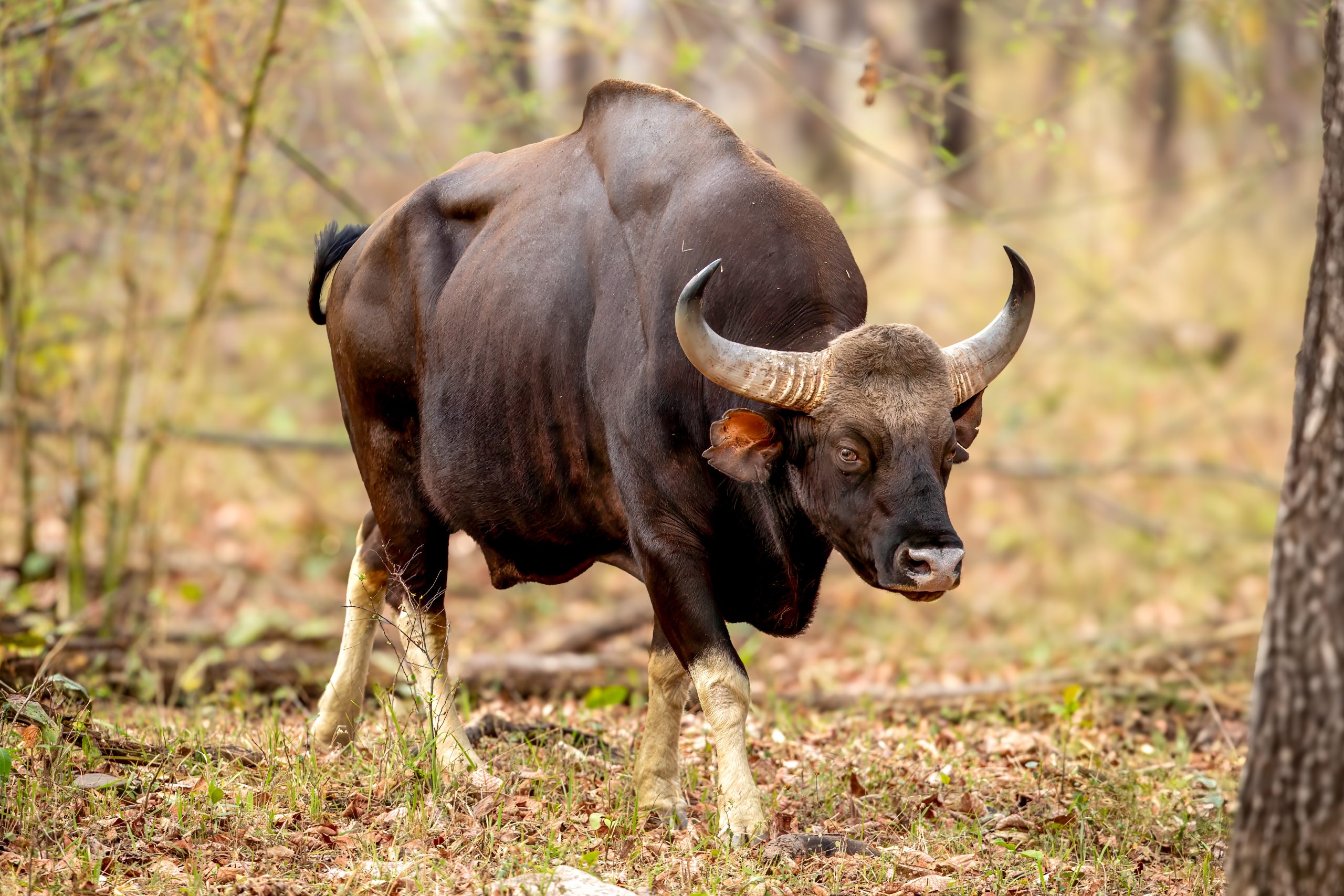
Chital (Axis axis), sambar (Rusa unicolor) and gaur (Bos gaurus) coexisted in Kanha National Park, India, by dividing both food and habitat — but the balance between those mechanisms changed with the season. Direct observations from summer and winter in 2018–2019 showed that the three large herbivores differed in what they ate, how broad their diets were and where they foraged.
The study is important because species can overlap strongly in one ecological dimension while separating in another. Two herbivores may eat many of the same plants, for example, but reduce direct competition if they obtain those foods in different habitat types.
Chital had the broadest diet
Across the two seasons, the researchers recorded 61 different food items. Chital fed on 50 plant species, compared with 36 for gaur and 14 for sambar. Chital was primarily a grazer, but broadened its diet in the dry summer to include more browse — leaves and other woody plant material — before returning to a more clearly grass-dominated diet in winter.
Sambar remained strongly browse-dominated in both seasons and was closely associated with bamboo-mixed forest. Gaur was more flexible: it functioned as an intermediate feeder in summer, combining grazing and browsing, but shifted toward a more browse-dominated diet in winter.
The overall dry biomass of the major foods reflected these differences. Grazing contributed more than half of the main foods eaten by chital, whereas browse accounted for about 99% of the main foods of sambar and 75% of those of gaur. Bamboo (Dendrocalamus strictus) was especially important to the two browsers, contributing about 49.6% of the sambar diet and 27.5% of the gaur diet among the major food items.
Habitat separation became crucial when diets converged
Habitat use also differed. Chital foraged mainly in grassland. Sambar was strongly concentrated in bamboo-mixed forest, while gaur used a broader range of habitats in summer. In winter, gaur shifted mainly to miscellaneous forest and was not recorded foraging in grassland, whereas chital remained concentrated in grassland and sambar in bamboo-mixed forest.
This spatial separation mattered most for sambar and gaur. Their diets became very similar in winter, but they concentrated their foraging in different habitat types. The two species could therefore overlap strongly in the kinds of plants they ate without necessarily using the same feeding areas at the same time.
Chital and sambar maintained relatively low dietary overlap, while overlap between chital and gaur declined from summer to winter. The study therefore does not support a single fixed explanation for coexistence. Diet, habitat, body size and feeding strategy interacted differently as seasonal resources changed.
Coexistence depended on flexibility as well as feeding type
Classifying an ungulate as a grazer, browser or intermediate feeder captures an important part of its ecology, but the Kanha results show that those categories are not enough on their own. Chital and gaur changed their diets between seasons, and habitat partitioning became particularly important when food choices converged.
The biological picture is therefore dynamic: grassland, bamboo-mixed forest and other forest habitats each supported different parts of the three-species system. Seasonal behavioural flexibility allowed the animals to adjust to changing food availability while retaining enough separation in diet, space or both to coexist in the same tropical deciduous landscape.
Ecology
Related news
Older Female Blackbirds Used More Human-Made Items in Their Nests
An eight-year study of an urban Blackbird population in Szczecin, Poland, found that human-made nest material was common…
Read story →
Red Foxes and Stone Martens Shared Space but Separated Their Activity More When Both Were Abundant
Camera traps at 24 sites in central Spain showed high spatial co-occurrence between red foxes and stone martens.…
Read story →
Red Foxes Visited All 26 Wolf-Killed Red Deer Carcasses and Responded More to Food Availability Than Wolf Activity
Camera traps at 26 wolf-killed red deer carcasses in Stelvio National Park recorded red foxes at every site.…
Read story →SPECIES IN THIS STORY
Species in this story
Independent research and conservation news archive
Did you find this information useful?
Wildlife Vagabond is independently built and maintained. Voluntary support helps cover source verification, hosting and continued work on research and conservation news.
Support Wildlife VagabondThe news archive will remain freely available.