
Inheritance and Early-life Environment Both Shaped Pied Flycatcher Nonbreeding Areas
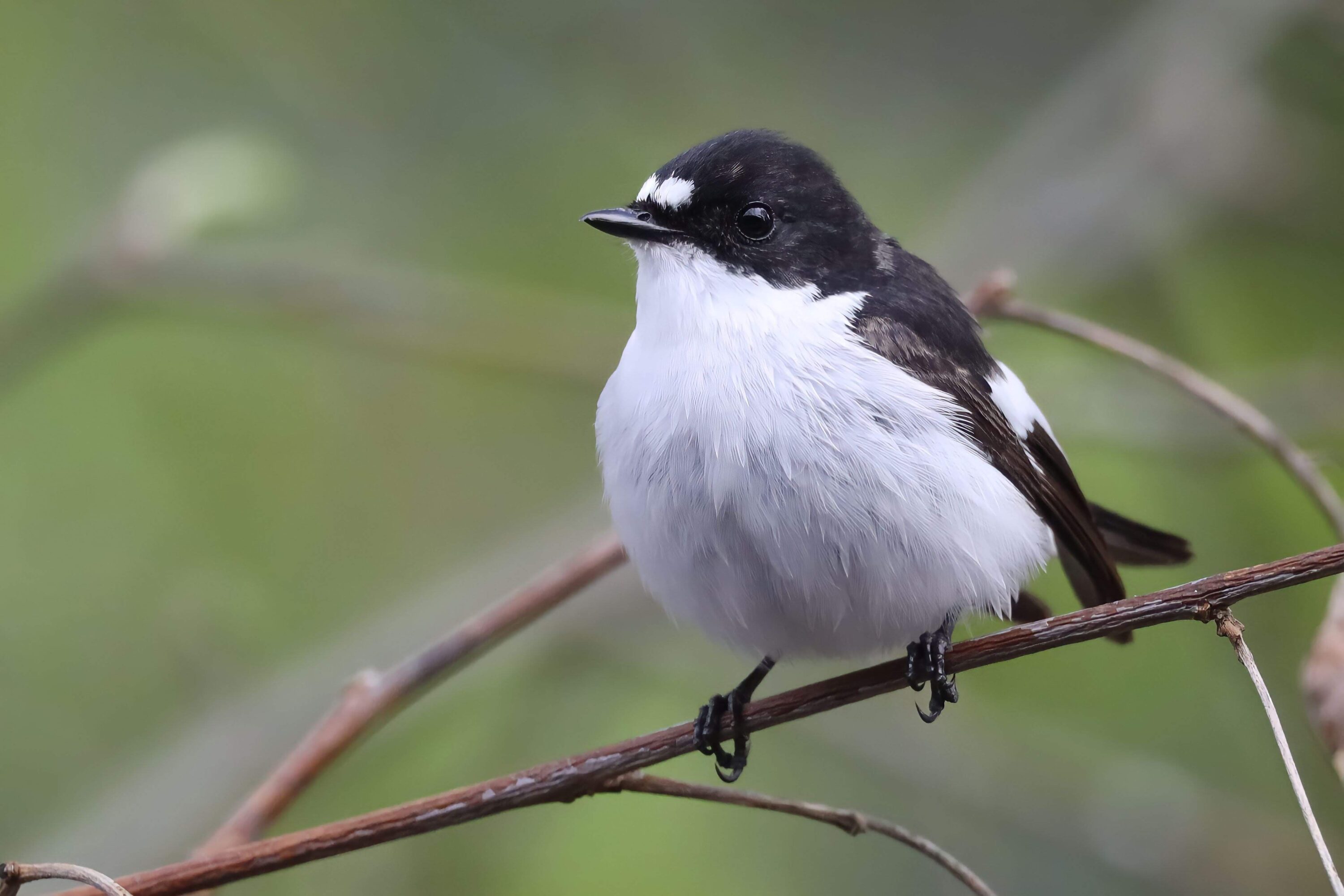
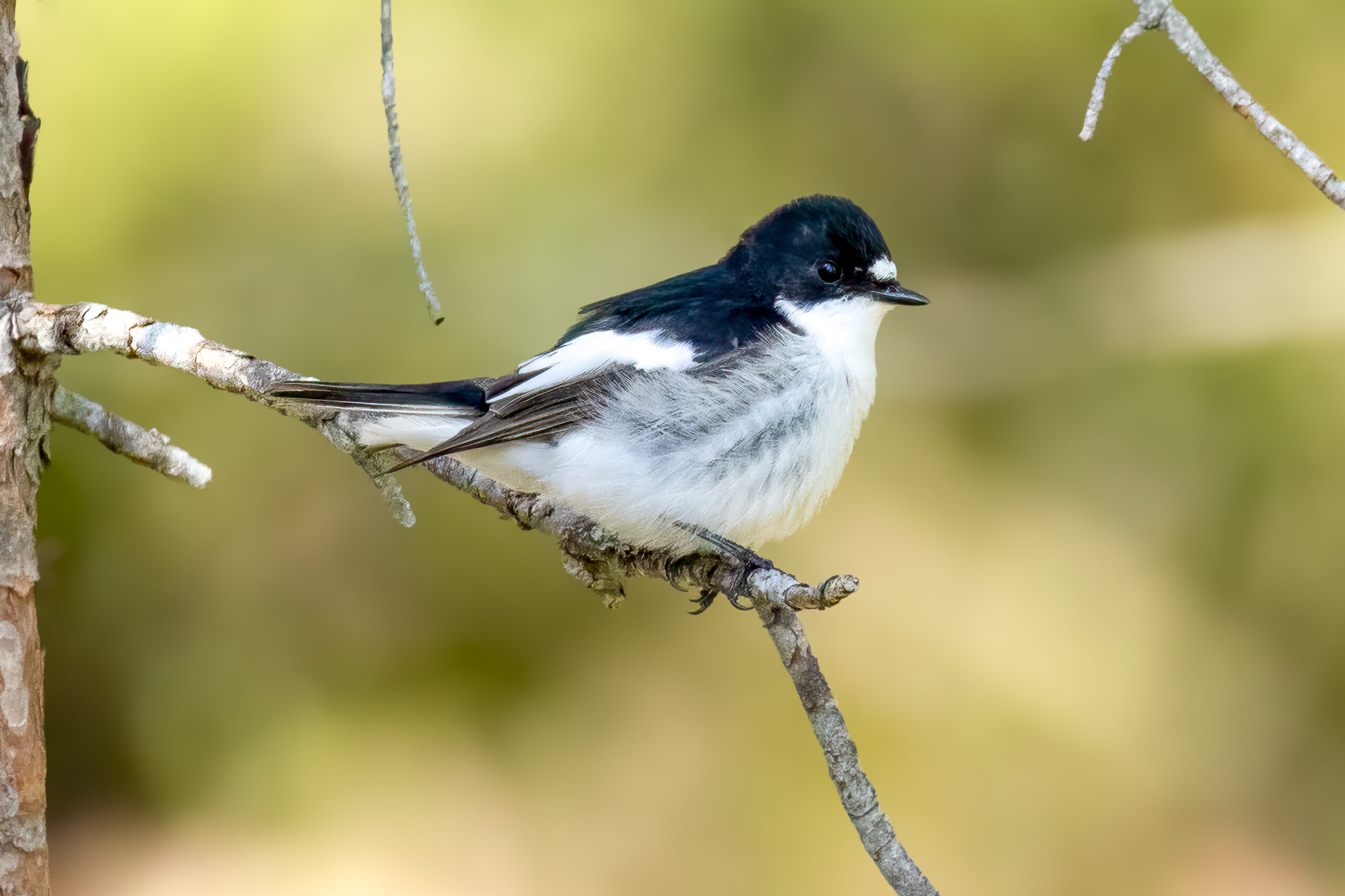
A study published in Science on 25 June 2026 found that both inheritance and the environment experienced early in life help determine where European pied flycatchers (Ficedula hypoleuca) spend the nonbreeding season in Africa. The researchers tracked birds from eight breeding populations spanning the species’ range from Spain to western Siberia and identified distinct population-specific nonbreeding areas.
Despite breeding thousands of kilometres apart, the tracked populations followed a strikingly shared autumn route. They converged on the Iberian Peninsula, used Spain and Portugal as stopover areas and then made a roughly 40-hour nonstop flight to the western edge of Africa before turning east. Spanish breeders travelled roughly 3,000 kilometres in autumn, while birds from western Siberia made journeys approaching 13,000 kilometres because they first detoured far to the southwest before continuing east within Africa.
The shared route is important for interpreting what is inherited. The coordinating research team argues that population differences are unlikely to consist simply of different inherited compass directions from each breeding area. Instead, at least part of the inherited programme may determine how long the birds continue migrating along broadly similar routes. The robust result is the longitudinal pattern itself: western breeding populations wintered farther west, while the easternmost breeding population continued much farther east in Africa.
Moving Dutch eggs to Sweden separated ancestry from natal environment
To distinguish inherited effects from the environment experienced after hatching, researchers moved eggs from Dutch nests to southern Sweden, where the chicks hatched and were raised by Swedish foster parents. Non-translocated Dutch birds normally wintered about 500 kilometres farther east than Swedish birds. Genetically Dutch birds raised in Sweden later occupied nonbreeding areas between the typical Dutch and Swedish areas.
The experiment also included offspring with mixed Dutch and Swedish ancestry produced in Sweden. These birds wintered in locations shifted toward the Swedish pattern. Together, the fostered and mixed-ancestry birds show that neither ancestry nor natal environment alone determined the final nonbreeding area.
The environmental effect was not simple route learning from parents
Pied flycatchers migrate alone and mostly at night, and the young leave on autumn migration later than their parents. The researchers therefore reject a simple explanation in which juveniles learn their route by following experienced adults. The natal-environment effect must instead arise through development, timing or other information acquired before or during the first independent migration; the study does not reduce it to one single mechanism.
The result matters because population-specific nonbreeding areas are part of the birds’ annual schedule. An inherited component can constrain how quickly migratory connectivity changes when climates and seasonal timing shift. At the same time, dispersal between breeding populations can create new combinations of breeding and nonbreeding areas, as the translocation experiment demonstrated. The study therefore shows both constraint and flexibility: the destination is neither genetically fixed in isolation nor freely learned from experience.
Ecology
Related news
Ten Migrants Followed Early-slow and Late-fast Passage Strategies Through Nigeria
Twenty-four years of ringing data from Jos showed striking species differences in migration timing: Icterine Warblers were among…
Read story →
Late Spring Frost Was Linked to About 4% Smaller Pied Flycatcher Eggs
After a severe April frost damaged emerging oak foliage at Valsaín in central Spain, Pied Flycatchers laid eggs…
Read story →
Five of Six Indicator Birds Could Lose Large Areas of Suitable Habitat in Luxembourg
Under the warmer SSP5–8.5 scenario, Red-backed Shrike, Northern Wheatear and Northern Lapwing were projected to lose especially large…
Read story →SPECIES IN THIS STORY
Species in this story
Independent research and conservation news archive
Did you find this information useful?
Wildlife Vagabond is independently built and maintained. Voluntary support helps cover source verification, hosting and continued work on research and conservation news.
Support Wildlife VagabondThe news archive will remain freely available.