
Some Great Cormorants Repeatedly Used Fishponds, Others Rivers or Lakes Across Seasons
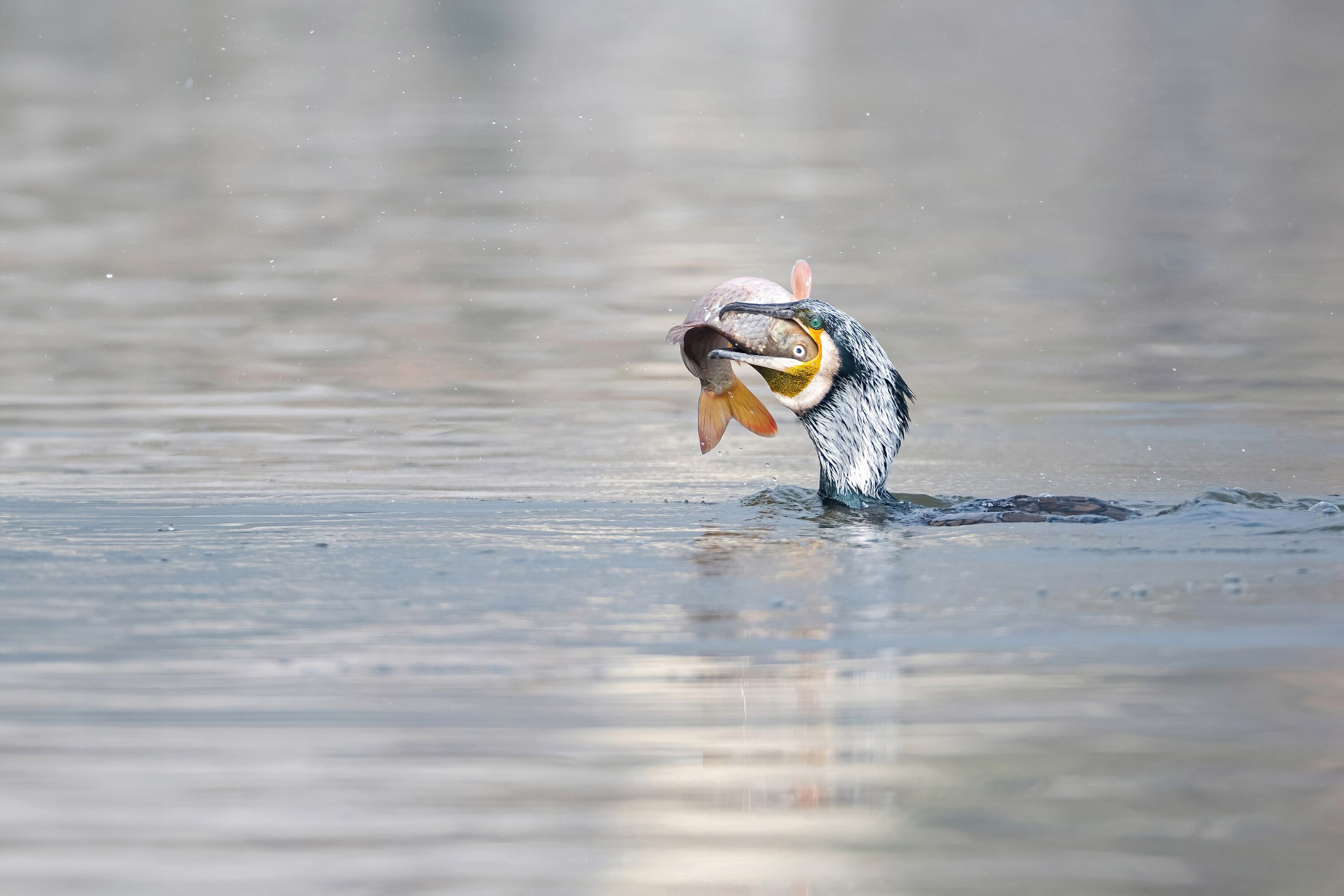
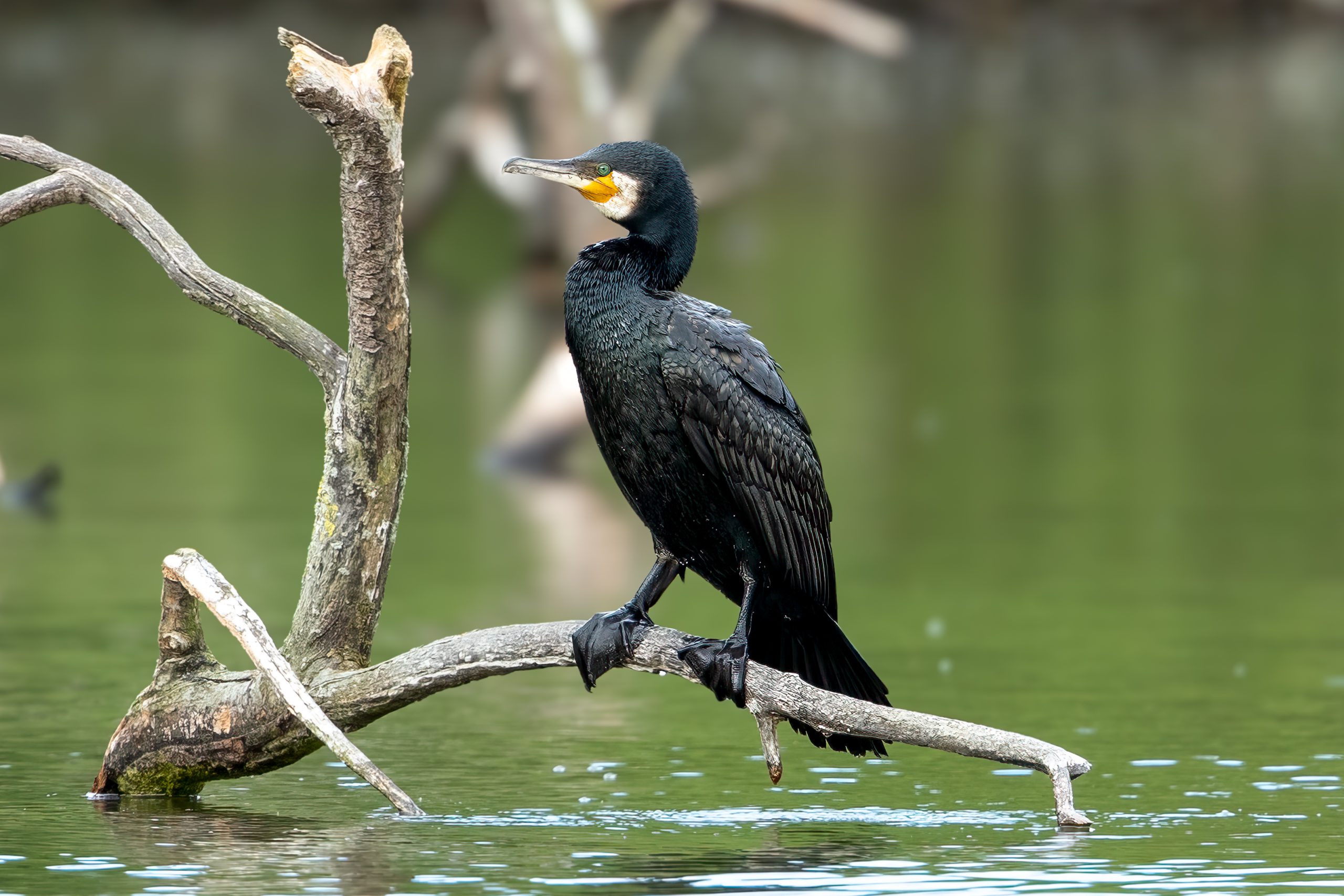
Great Cormorants (Phalacrocorax carbo sinensis) breeding at Lake Balaton in Hungary did not all forage in the same kinds of freshwater habitat. Some individuals repeatedly concentrated on fishponds, while others repeatedly used rivers or lakes, often to the near-exclusion of the other main habitat types. These differences persisted across seasons. The study was published on 21 July 2026 in Movement Ecology.
Individual identity mattered far more than age
The researchers fitted solar-powered GPS transmitters to 24 birds — five adults and 19 fledglings — between 2021 and 2023. They classified 20,678 GPS positions as likely foraging locations from the birds’ movement patterns, across six habitat types. Most of the variation reflected which individual bird was being tracked: differences among individuals accounted for 73.6% of the variation in seasonal habitat use, while age class accounted for only 1.2%. In practical terms, knowing which bird was being followed told far more about its habitat use than knowing whether it was an adult or a young bird. Use of rivers and fishponds was especially consistent from season to season, and the researchers also found stable patterns for lakes and regulated water bodies.
The authors interpret this as stable individual foraging tactics, rather than age-related changes or birds simply switching habitats opportunistically. The GPS data show where birds were likely to be foraging, however, not how much time they spent diving or how many fish they caught. The study therefore documents consistent differences in habitat use, not individual differences in actual fish consumption.
Not every cormorant used fishponds
This matters where cormorants and fisheries come into conflict. If only part of a population regularly uses managed fishponds, measures aimed at all cormorants may affect many birds that rarely visit those sites. The authors therefore argue that management focused on particular habitats — and, where possible, the individuals that repeatedly use them — may be more effective than treating the whole population as if every bird foraged in the same way.
Ecology
Related news
Great Cormorants Increased as Southern Baltic Diving Seabirds Stayed 40% Below Early-1990s Levels
A 35-year analysis of Polish Baltic winter surveys found strong growth in great cormorants, while the wider diving-seabird…
Read story →
European Inventory Estimated More Than €670 Million in Annual Fish Damage From Great Cormorant Predation
A 2026 European inventory using information from more than 300 organizations estimates annual cormorant-related damage to fish stocks…
Read story →
Estimated Great Cormorant Predation Reached 52–88% in Tagged Cod and 14–84% in Tagged Flounder
In Genner Bay, Denmark, a PIT-tag study estimated that great cormorants consumed 52–88% of tagged cod and 14–84%…
Read story →SPECIES IN THIS STORY
Species in this story
Independent research and conservation news archive
Did you find this information useful?
Wildlife Vagabond is independently built and maintained. Voluntary support helps cover source verification, hosting and continued work on research and conservation news.
Support Wildlife VagabondThe news archive will remain freely available.