
Swedish Moose Winter Core Areas Reflected Forest-Patch Arrangement More Than Individual Patch Geometry
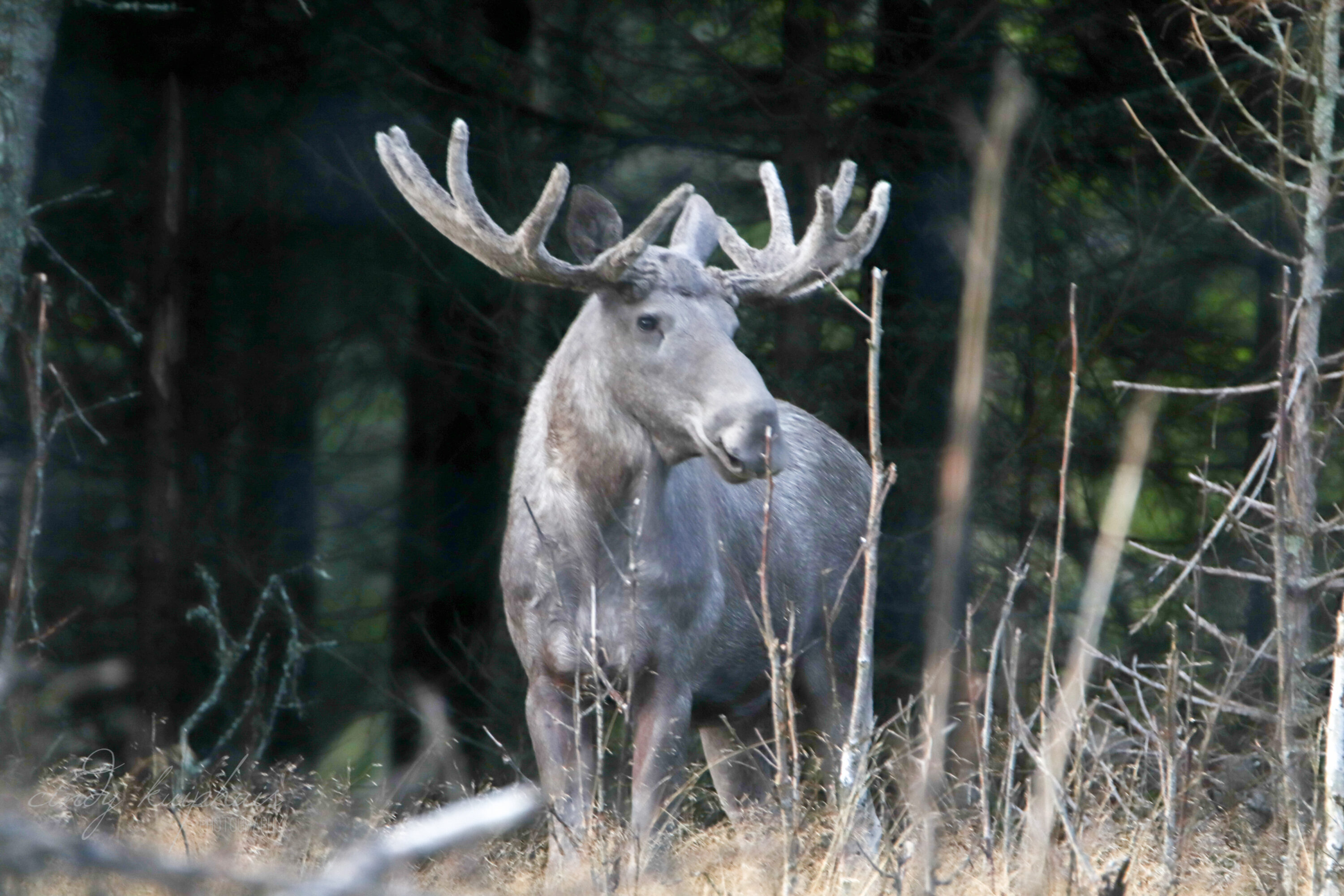
Moose (Alces alces) in Sweden’s managed boreal forests concentrated winter use according to how young and taller forest patches were arranged across the landscape, rather than simply according to the size or shape of one individual feeding patch. The study, published in Landscape Ecology on 20 June 2026, examined habitat organisation inside already established winter ranges, not where moose occurred across Sweden as a whole.
The researchers analysed GPS data from 176 adult moose in seven populations across central and northern Sweden between 2016 and 2024. For each animal and winter, a movement-based utilisation distribution described how intensively different parts of the range were used. The 50% contour defined the most intensively used core area, while the outer portion of the 95% winter range formed the less intensively used peripheral zone. The landscape was divided into young forest with trees under five metres, forest with trees at least five metres tall, and non-forest habitat.
Core areas differed from the surrounding winter range
Core areas contained fewer, larger and more consolidated patches and a higher representation of young forest. Peripheral parts of the winter ranges were more fragmented and contained larger patches of taller forest. These broad differences were consistent across the seven study populations.
At the level of individual young-forest patches, however, patch area and shape were nearly identical when core areas were compared with peripheral zones. The distinction between the two zones therefore emerged mainly from the way patches were arranged across the wider landscape rather than from the geometry of one feeding patch.
Use within core areas depended on landscape context
A second analysis asked a different question: once a core area existed, which parts of it were used most intensively? Use increased where forest with trees at least five metres tall had greater edge density — more forest boundary per unit area — and stronger cohesion between patches, while use declined as individual young-forest patches became larger. Patch geometry therefore did not distinguish core from peripheral zones overall, but within the core itself smaller young-forest patches tended to receive more intensive use.
The surrounding landscape showed another scale-dependent pattern. At roughly 800–1000 metres around high-use locations, stronger cohesion of taller forest and more neighbouring young-forest and non-forest patches were associated with high use, while greater overall forest edge density, larger taller-forest patches and a higher proportional cover of young forest were associated with lower use. The authors interpret the contrasting directions as multi-scale behaviour rather than inconsistency: moose established cores in relatively cohesive landscapes, then concentrated activity where forage and shelter could be reached close together. Young stands often contain accessible browse, while taller forest provides cover, thermal shelter and resting sites — a form of resource complementation in which different but nearby habitats provide different needs.
Patch number strongly predicted winter-range size
The number of taller-forest patches accounted for 35.1% of the model gain used to rank predictors of winter-range size, and the number of young-forest patches contributed 24.5%. Together they accounted for nearly 60% of the model gain. Snow depth, soil moisture and elevation each contributed less than 2% in that variable-ranking analysis. In practical terms, the degree to which the forest was divided into patches dominated the model’s ranking of winter-range size, while those abiotic variables contributed little in this particular comparison.
The authors caution that these percentages rank the relative importance of variables within the models; they do not establish universal causal effects. The study describes associations in the seven Swedish populations and also notes that differences in the spatial resolution of environmental datasets may affect how strongly some variables appear.
For forest planning, the results suggest that the arrangement and connectivity of forest stands can influence where winter use — and therefore browsing pressure — becomes concentrated. A small young-forest feeding patch beside connected taller forest can function differently from a large isolated opening. The main message is not simply that moose need young forest, but that the structure of the surrounding forest mosaic helps determine how intensively particular areas are used.
Ecology
Related news
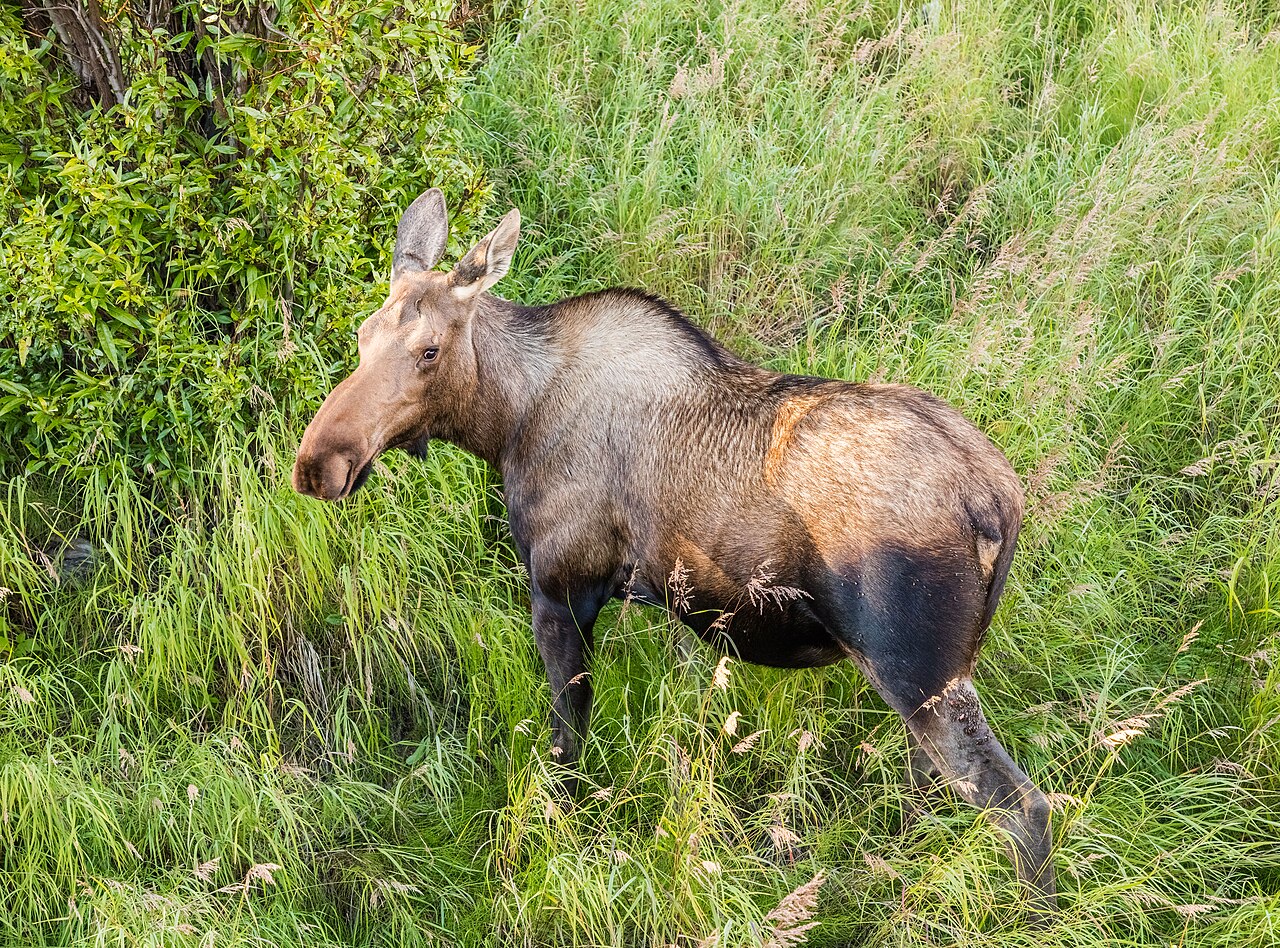
Arctic Moose Follow the River Valleys
GPS tracking in Alaska showed that half of 24 female moose migrated between summer and winter ranges. Migrants…
Read story →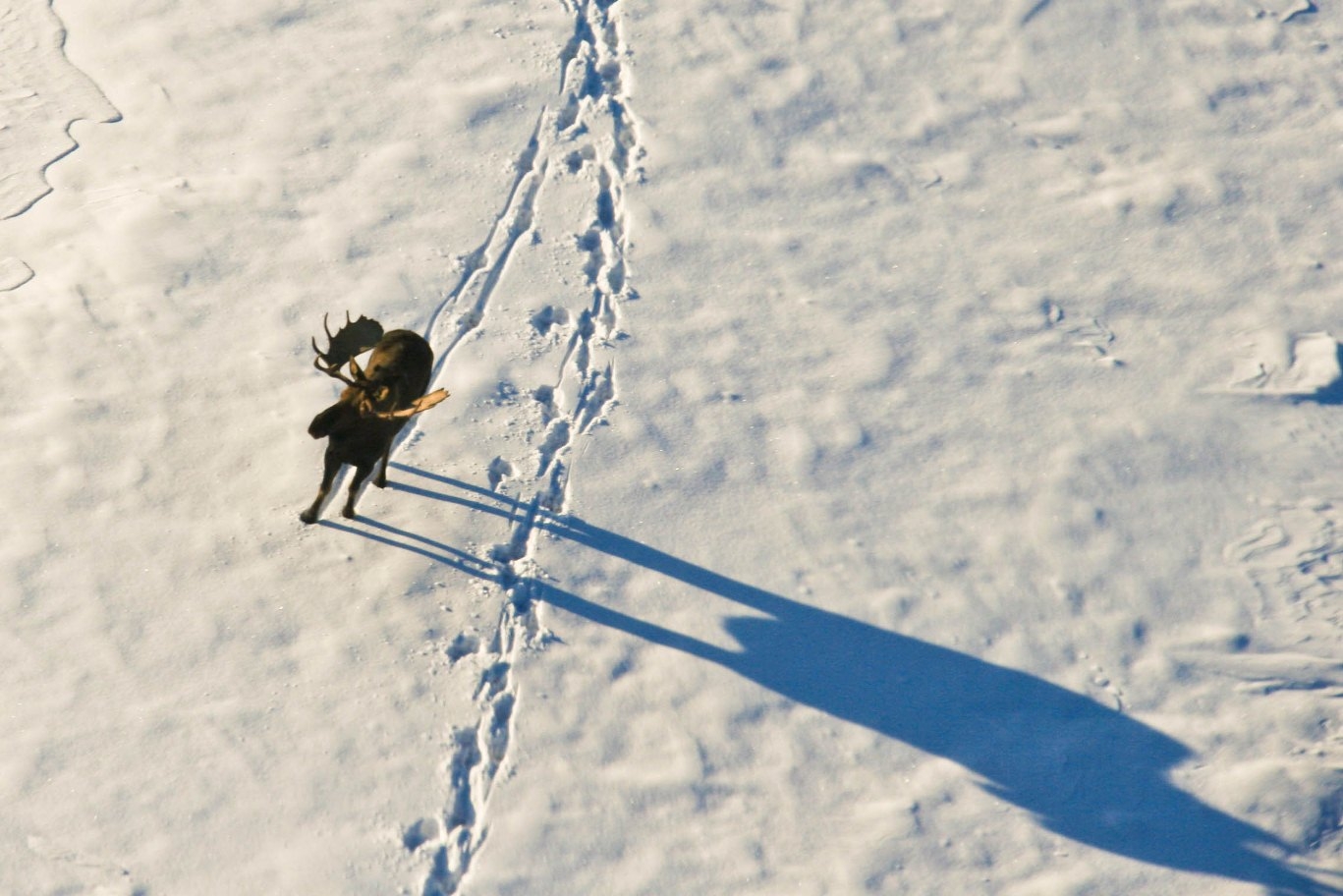
Thermal Drones Found Nearly All Moose in Favourable Winter Weather
Swedish trials found detection close to 100% in cold, overcast winter conditions, but the survey effort needed for…
Read story →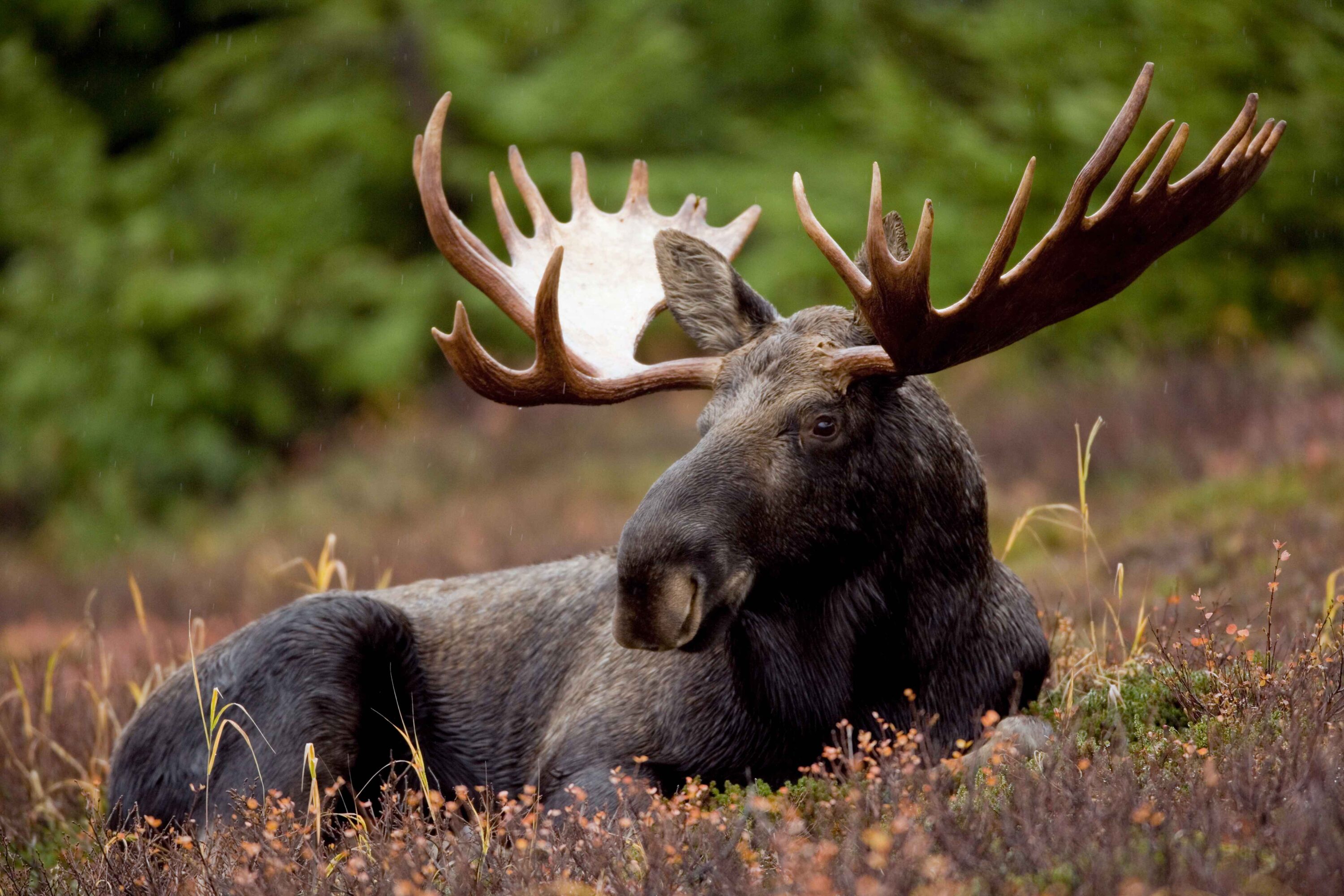
Even Adirondack Park’s Densest Moose Area Was Too Sparse for Precise Aerial Estimates
Helicopter surveys estimated about 92 moose in the Adirondack core in 2024 and 112 in 2025, but broad…
Read story →SPECIES IN THIS STORY
Species in this story
Independent research and conservation news archive
Did you find this information useful?
Wildlife Vagabond is independently built and maintained. Voluntary support helps cover source verification, hosting and continued work on research and conservation news.
Support Wildlife VagabondThe news archive will remain freely available.