
Thick-tailed Greater Galago Moved to Near Threatened in South Africa–Eswatini–Lesotho Red List
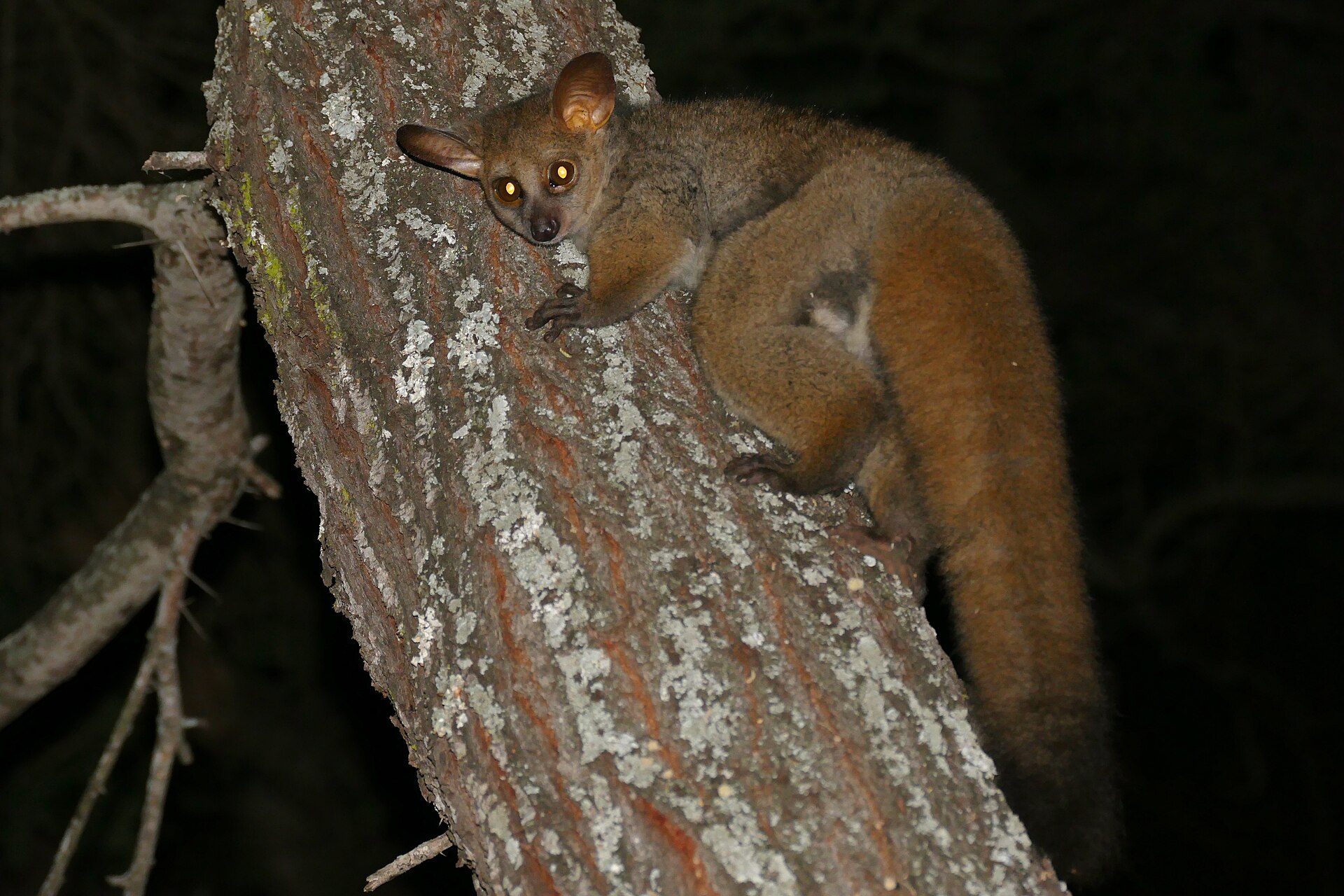
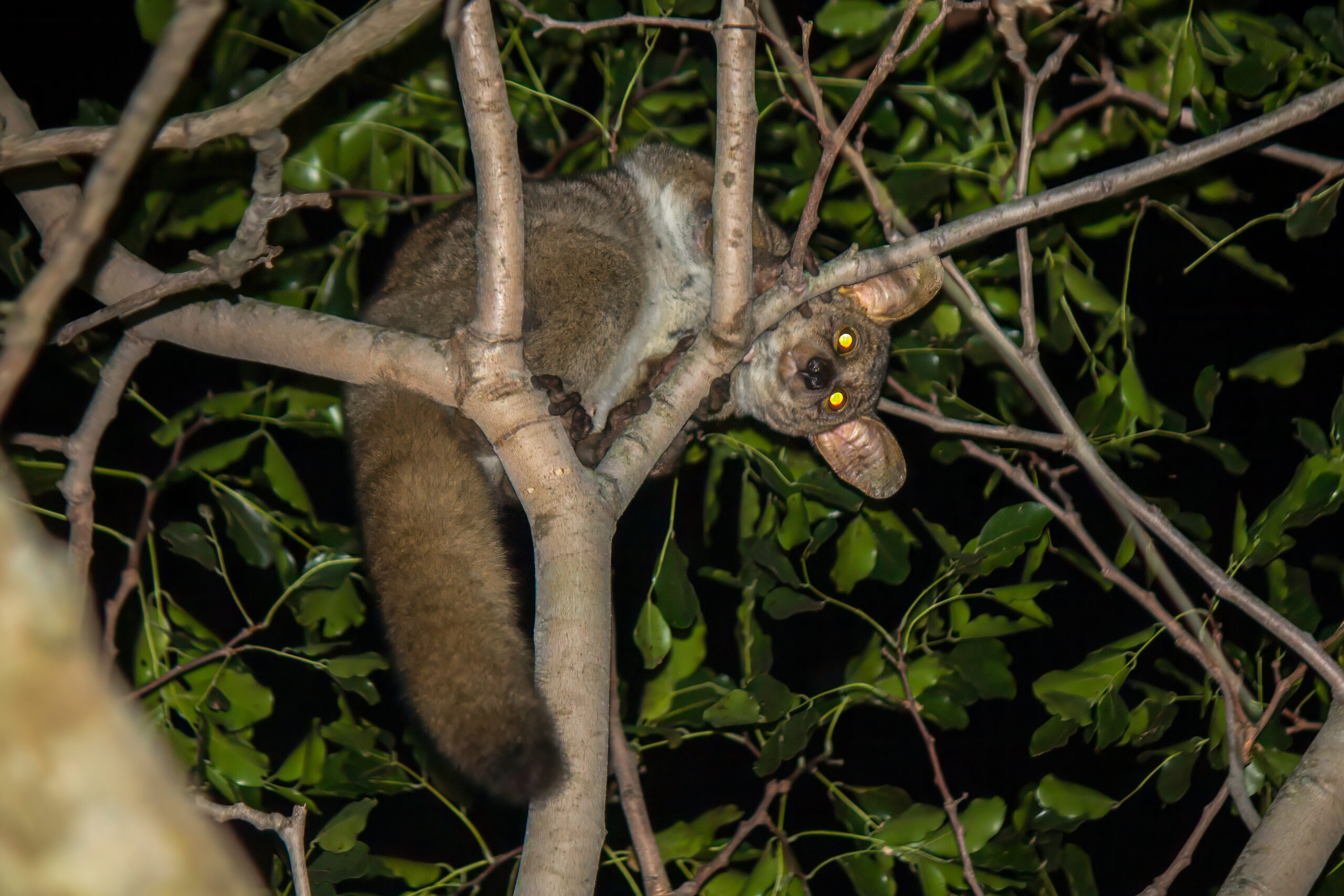
The thick-tailed greater galago (Otolemur crassicaudatus) has been moved from Least Concern to Near Threatened in the latest Regional Mammal Red List for South Africa, Eswatini and Lesotho. The revised 2025 list was released in January 2026 and represents a regional assessment rather than a change to the species’ global IUCN Red List status.
The new assessment was prepared by the Endangered Wildlife Trust and the South African National Biodiversity Institute as part of a wider review of 336 mammal taxa. For the thick-tailed greater galago, the assessors concluded that threats documented over the past decade have increased and that new threats and new information on population genetics have changed the conservation picture since the previous regional assessment.
Forest loss and fragmentation drove much of the concern
The assessment highlights the loss and fragmentation of suitable forest habitat as a central concern. Within the assessment region, land-cover change across the species’ range was estimated at 3.6% per decade. Its calculated area of occupancy was 748 km². Area of occupancy is the part of a species’ broader range that is actually occupied rather than the full geographical extent, so this figure indicates a relatively small and fragmented occupied area within the assessment region. The value is below the 2,000 km² threshold used in the IUCN criteria for Vulnerable under criterion B2, although the assessors placed the species in Near Threatened because it does not clearly meet all of the conditions required for Vulnerable.
Documented threats include roads, power lines and electric fences, along with road mortality and deaths caused by domestic dogs. In northern South Africa, the species depends heavily on moist savanna, riverine and Afromontane forest, habitats that are naturally patchy and have become increasingly fragmented by agriculture, plantations, settlements and other development.
One local loss is already documented at the Mokopane Biodiversity Centre in Limpopo Province. According to the assessment, construction of a dam upstream contributed to rapid deterioration of riverine forest in the reserve, after which the local thick-tailed greater galago population disappeared.
Near Threatened does not mean a measured regional population decline
The regional listing does not mean that a quantified population decline has been demonstrated across South Africa, Eswatini and Lesotho. The assessment states that no overall population estimate is available and describes the current regional trend as assumed stable, while calling for a formal survey across the assessment region. The change in category is instead based on the combination of restricted and fragmented suitable habitat, continuing habitat deterioration and the growing range of documented threats.
The assessment lists the species as Near Threatened B2ab(iii) and notes that it is close to qualifying as Vulnerable under this criterion. In that code, B2 refers to a restricted area of occupancy; a concerns severe fragmentation or a small number of locations, while b(iii) refers to a continuing decline in the area, extent or quality of habitat. The assessors also propose practical measures including canopy bridges over roads and covering or removing outdoor dog food at night, aimed at reducing road mortality and encounters with domestic dogs.
Population & status
Related news
Barnacle Goose Breeding Population Fell 98% on Gotland and Öland – Eagle Predation a Likely Factor
Breeding pairs of Barnacle Geese on Gotland and Öland fell from about 5,290 in 2002 to roughly 100…
Read story →
51 Years of Bullfinch Monitoring Revealed Decline, Male Bias and Age-Matched Pairs
A 51-year study in Treswell Wood, England, recorded a strong Eurasian Bullfinch decline. Among 2,065 ringed birds, males…
Read story →
DNA in Droppings Revealed Big Differences in Dhole Density
Researchers used DNA from droppings to monitor dholes in six forest sites in India’s Western Ghats. They estimated…
Read story →SPECIES IN THIS STORY
Species in this story
Independent research and conservation news archive
Did you find this information useful?
Wildlife Vagabond is independently built and maintained. Voluntary support helps cover source verification, hosting and continued work on research and conservation news.
Support Wildlife VagabondThe news archive will remain freely available.