
Tigers kept a stable daily activity pattern across seasons while deer shifted in Bardia
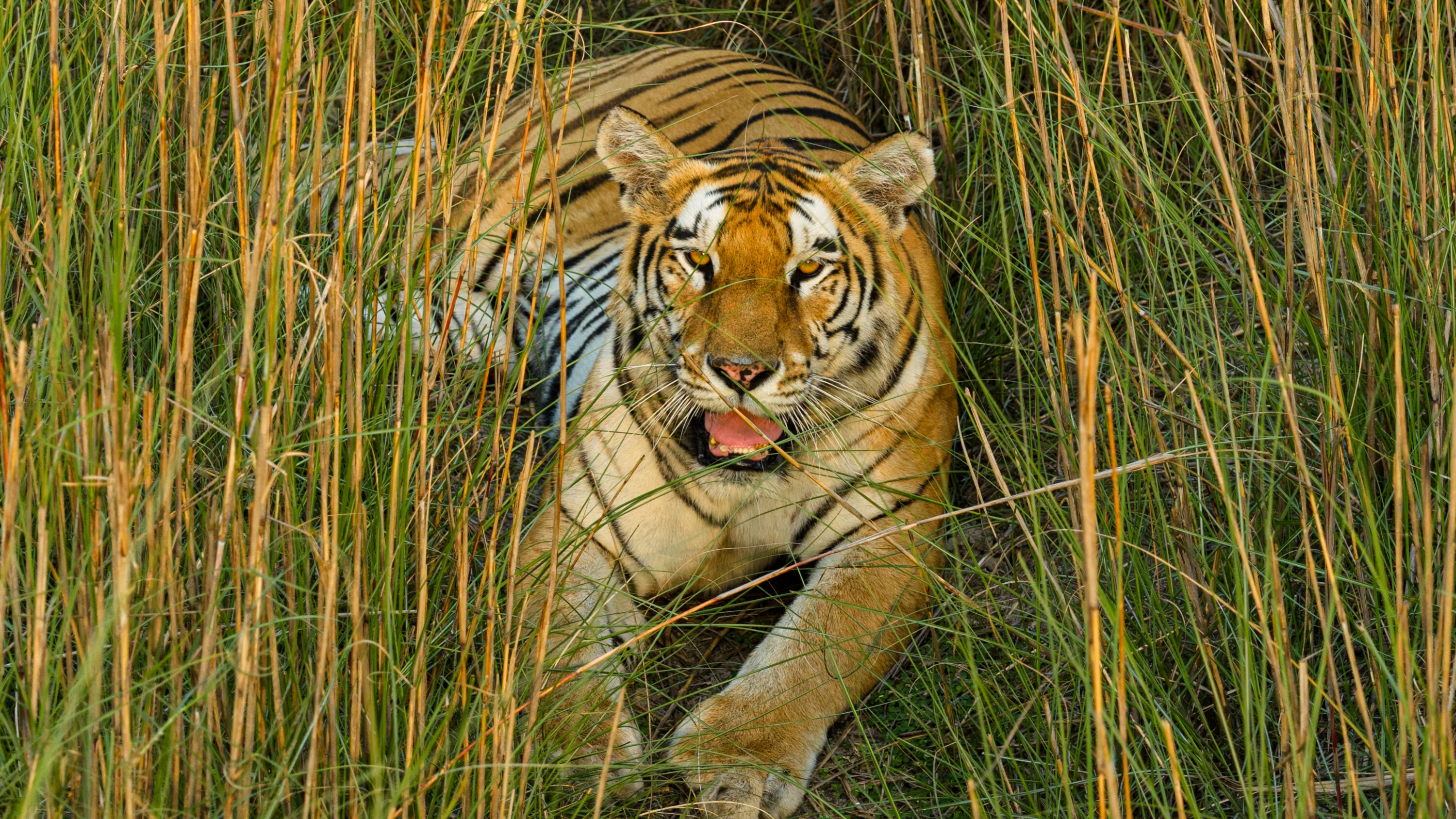
Five years of camera-trap data from Bardia National Park in Nepal showed that the daily activity pattern of Bengal tiger (Panthera tigris tigris) remained broadly similar across seasons, while four important deer prey species shifted their activity through the year.
Researchers analysed photographs collected from May 2019 to April 2024 with 50 camera traps arranged across the Karnali floodplain. The dataset contained 26,057 independent events: 787 tiger events, 22,813 chital (Axis axis) events, 1,029 sambar (Rusa unicolor) events, 358 hog deer (Axis porcinus) events and 1,070 northern red muntjac (Muntiacus vaginalis; reported as M. muntjak in the study) events.
Camera timestamps were used to reconstruct daily activity
The researchers treated photographs separated sufficiently in time as independent detection events and used the event times to estimate a 24-hour activity curve for each species and season. These curves describe when animals were most likely to be active in front of the cameras; they are not continuous tracks of individual animals.
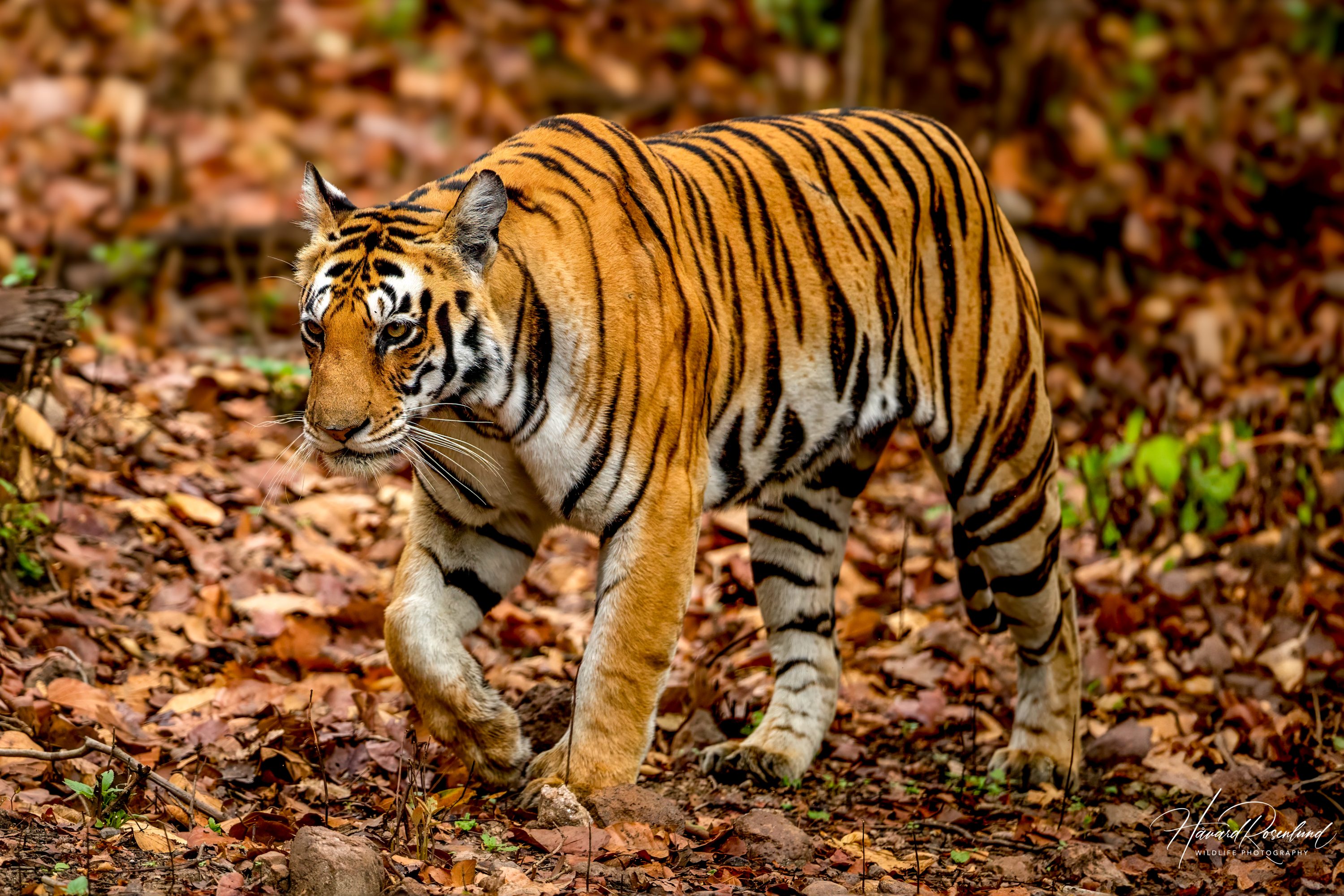
Tigers were cathemeral, meaning they were active during both daylight and darkness. Activity generally peaked around sunrise and sunset, with some additional night-time activity in the cool dry season. Tigers reduced activity during the hottest part of the day in the hot dry season, but the overall 24-hour activity pattern did not show a clear seasonal shift.
The four deer species shifted more strongly with season
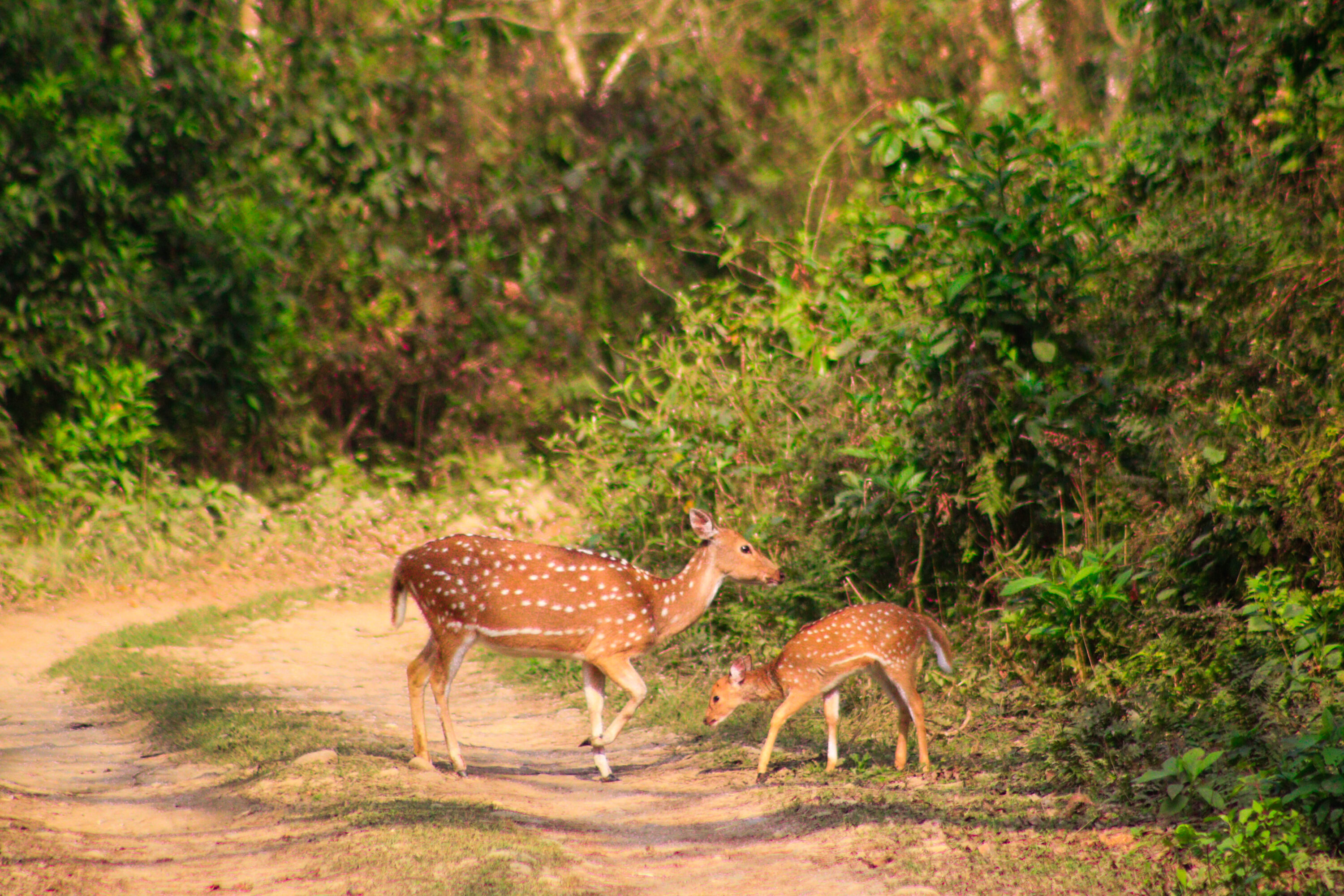
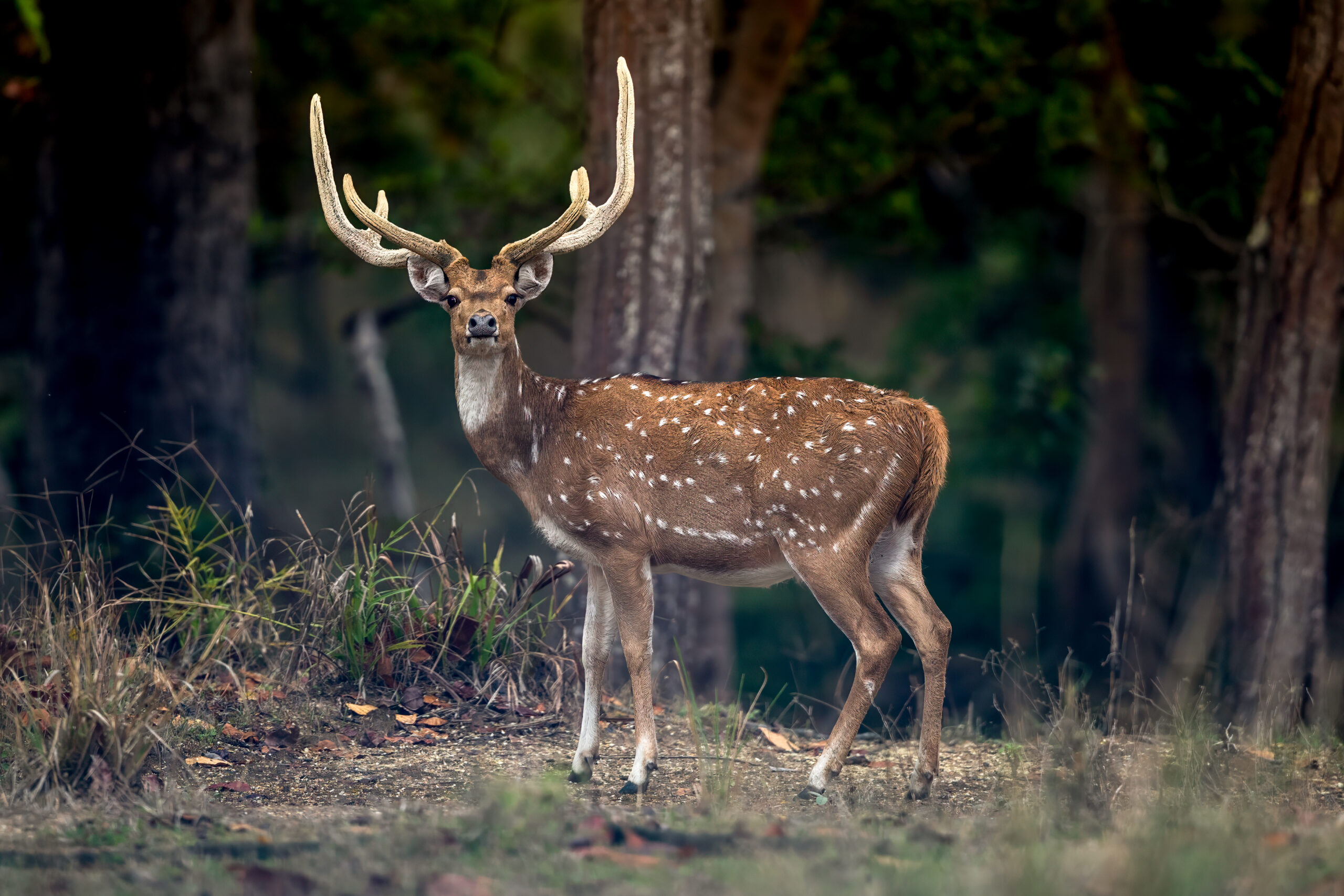
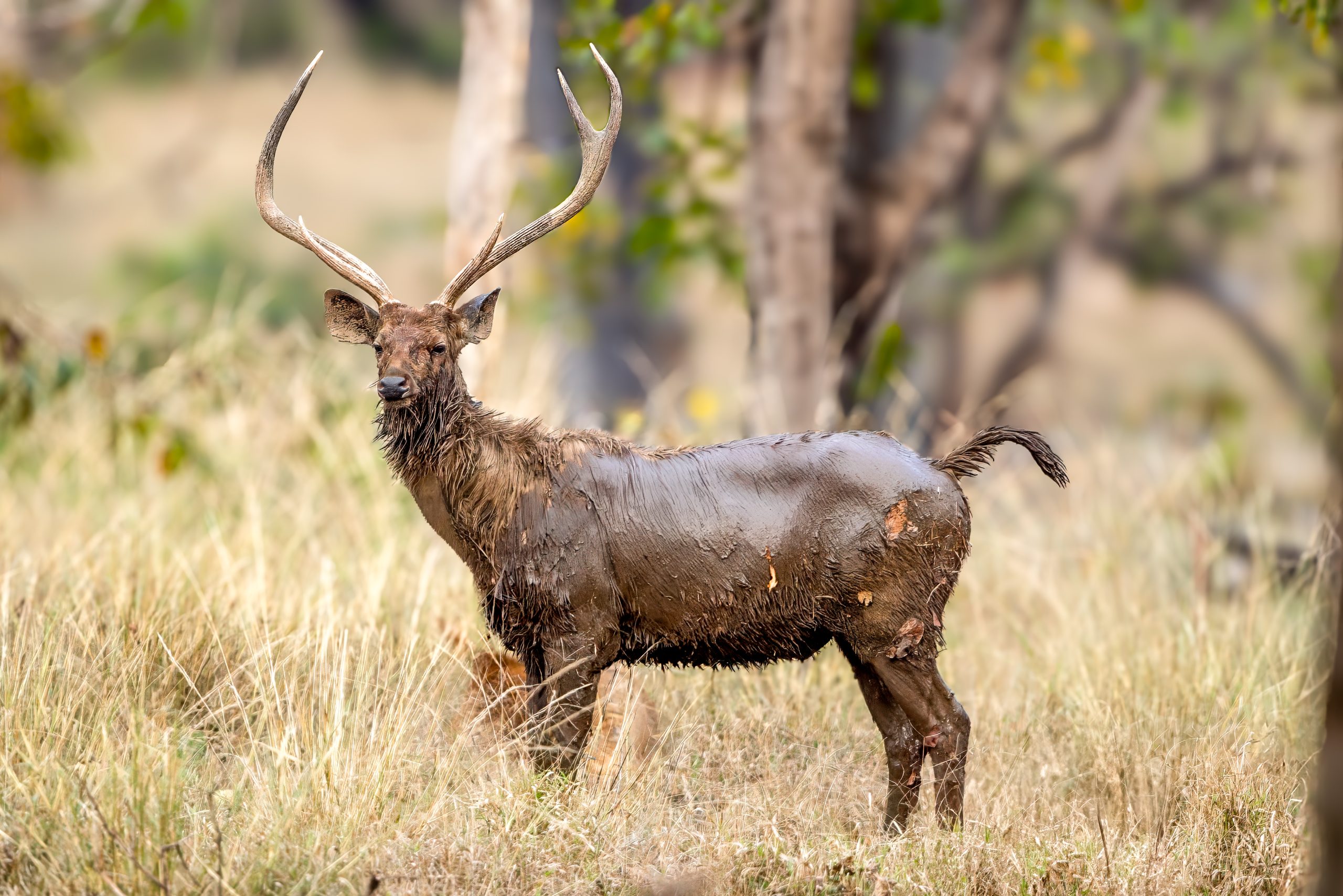
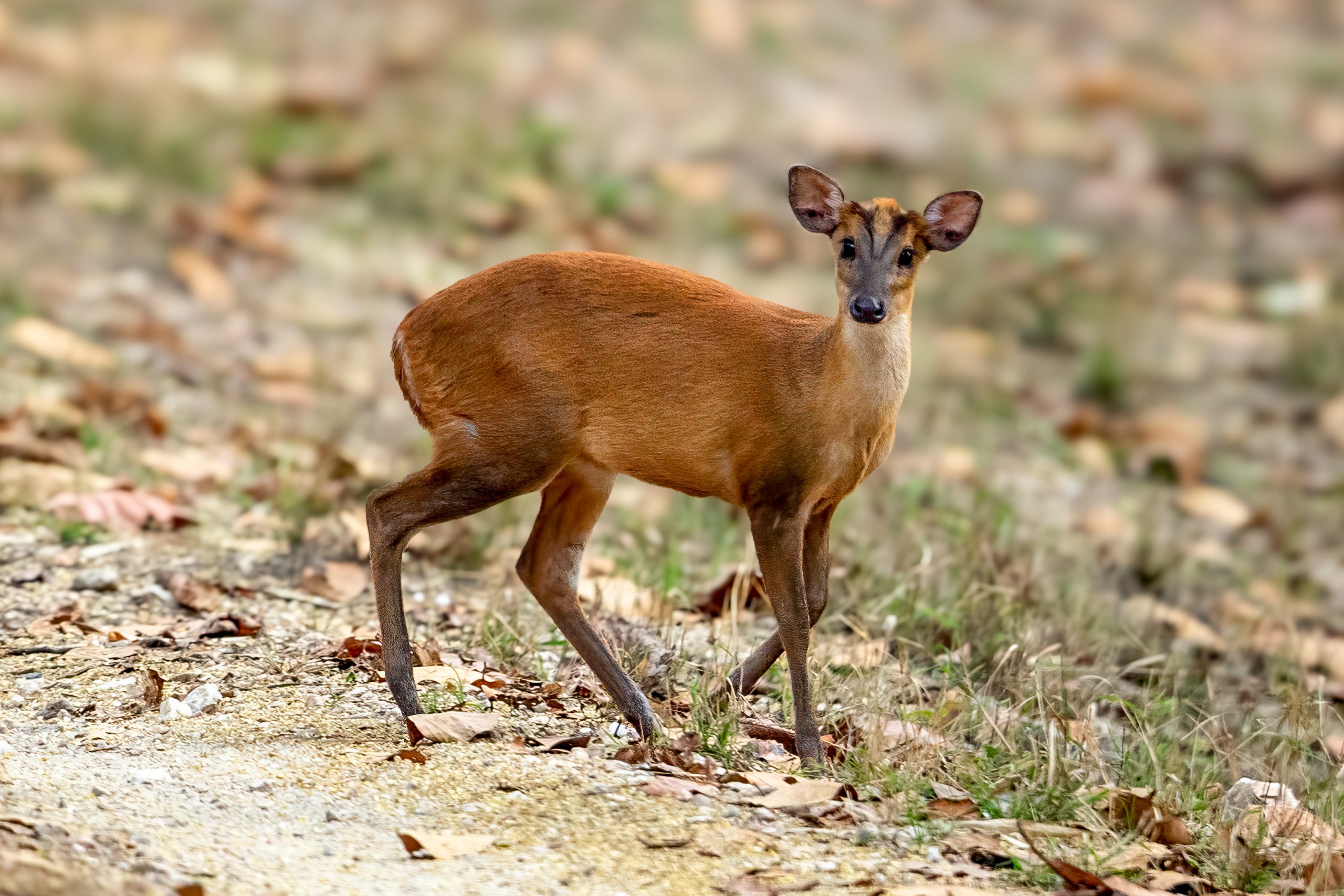
Sambar, like tigers, were active during both day and night. Hog deer were predominantly diurnal, while chital and northern red muntjac were mainly crepuscular, with activity concentrated around dawn and dusk. All four deer species showed seasonal differences in at least part of their activity patterns.
Most species except hog deer also reduced activity during the hottest hours, supporting the authors’ interpretation that seasonal temperature and weather shaped prey activity more strongly than tiger activity.
Several prey species shared much of the tiger’s activity window
The researchers quantified temporal overlap on a scale from 0 to 1. A value near 0 means the two activity curves scarcely coincide, while a value near 1 means the two species distribute their activity very similarly across the day.
During the cool dry season, overlap with tiger was 0.88 for sambar, 0.85 for chital and 0.84 for hog deer. In the hot dry season the corresponding values were 0.84, 0.78 and 0.85. Northern red muntjac showed moderate overlap in both dry seasons. During the wet season, sambar still had high overlap at 0.86, while the other three deer species showed moderate overlap.
These coefficients describe similarity in activity timing; they do not show that a tiger and a deer were physically together or that a particular detection led to predation.
High tiger density is one interpretation of the limited temporal separation
The authors interpret the extensive overlap as evidence that deer in this high-tiger-density system have limited scope to reduce predation risk simply by moving their activity to a different time of day. A tiger that remains active across much of the 24-hour cycle leaves relatively little time that is consistently free from predator activity.
The study was observational, however, and did not experimentally change tiger density. The idea that high tiger density helps maintain the broad overlap is therefore an ecological interpretation of the Bardia pattern rather than a directly tested causal effect.
Behaviour
Related news
Human Activity and Large Wildlife Overlapped Most in Chitwan’s Buffer Zone
Camera traps across Chitwan National Park and surrounding forests showed the greatest overlap of human activity with large…
Read story →
DNA Metabarcoding Found 15 Vertebrate Prey Species in Tadoba Dhole Scats
DNA metabarcoding of 169 dhole scats in Tadoba detected 15 vertebrate prey species. Indian hare occurred in 30.8%…
Read story →
Kawal’s Prey Base Could Support About 36–41 Tigers
Twelve years of prey monitoring in India’s Kawal Tiger Reserve found rising chital density and estimated that the…
Read story →SPECIES IN THIS STORY
Species in this story
Independent research and conservation news archive
Did you find this information useful?
Wildlife Vagabond is independently built and maintained. Voluntary support helps cover source verification, hosting and continued work on research and conservation news.
Support Wildlife VagabondThe news archive will remain freely available.