
Urban European Robins Maintained Higher Minimum Song Frequencies Through the Day

European robins (Erithacus rubecula) living in Edinburgh sang differently from birds in the surrounding countryside, according to a study published on 17 February 2026. The researchers recorded 59 urban robins and 54 rural robins over a ten-hour period and analysed 572 songs.
The clearest difference involved the lowest frequencies used in the song. Among rural robins in Midlothian, minimum song frequency declined as the day progressed. In Edinburgh, it stayed higher and showed no comparable daytime decline. The authors interpret the persistently elevated urban frequencies as consistent with adjustment to the predominantly low-frequency noise produced by human activity.
Urban songs were simpler and covered a narrower range
The differences extended beyond minimum frequency. Urban songs covered a frequency range about 182 Hz narrower than rural songs and contained about 1.32 fewer syllables, making them less complex by the measure used in the study. They also averaged about 0.16 seconds longer, although the authors describe the statistical support for the song-length difference as marginal. Maximum song frequency did not differ clearly between the two environments.
The rural daytime pattern may reflect another part of the soundscape. The researchers suggest that the higher frequencies heard early in the day could be linked to the dense biological sound of the dawn chorus, with robins using lower minimum frequencies later as other birds become quieter. They present this as a possible explanation rather than a directly tested mechanism.
Noise was not the only possible urban influence
The researchers did not directly measure ambient noise at each recording site, and urban and rural habitats also differ structurally. They therefore note that city structure and anthropogenic noise may both contribute to the observed song differences. A separate re-recording experiment also did not produce a significant minimum-frequency shift when rural songs were played against an urban-noise track.
Behaviour
Related news

Shorter Days Altered Migratory Restlessness in Juvenile Robins but Not Garden Warblers
In a Lund experiment, juvenile robins exposed to a southern-France photoperiod showed a weaker rise in nocturnal migratory…
Read story →
European Robin Retina Study Mapped Transducin Subunits and Found No Gtγ10 in Photoreceptors
A molecular study of retinal tissue from European robins captured near Oldenburg, Germany, mapped the transducin subunits present…
Read story →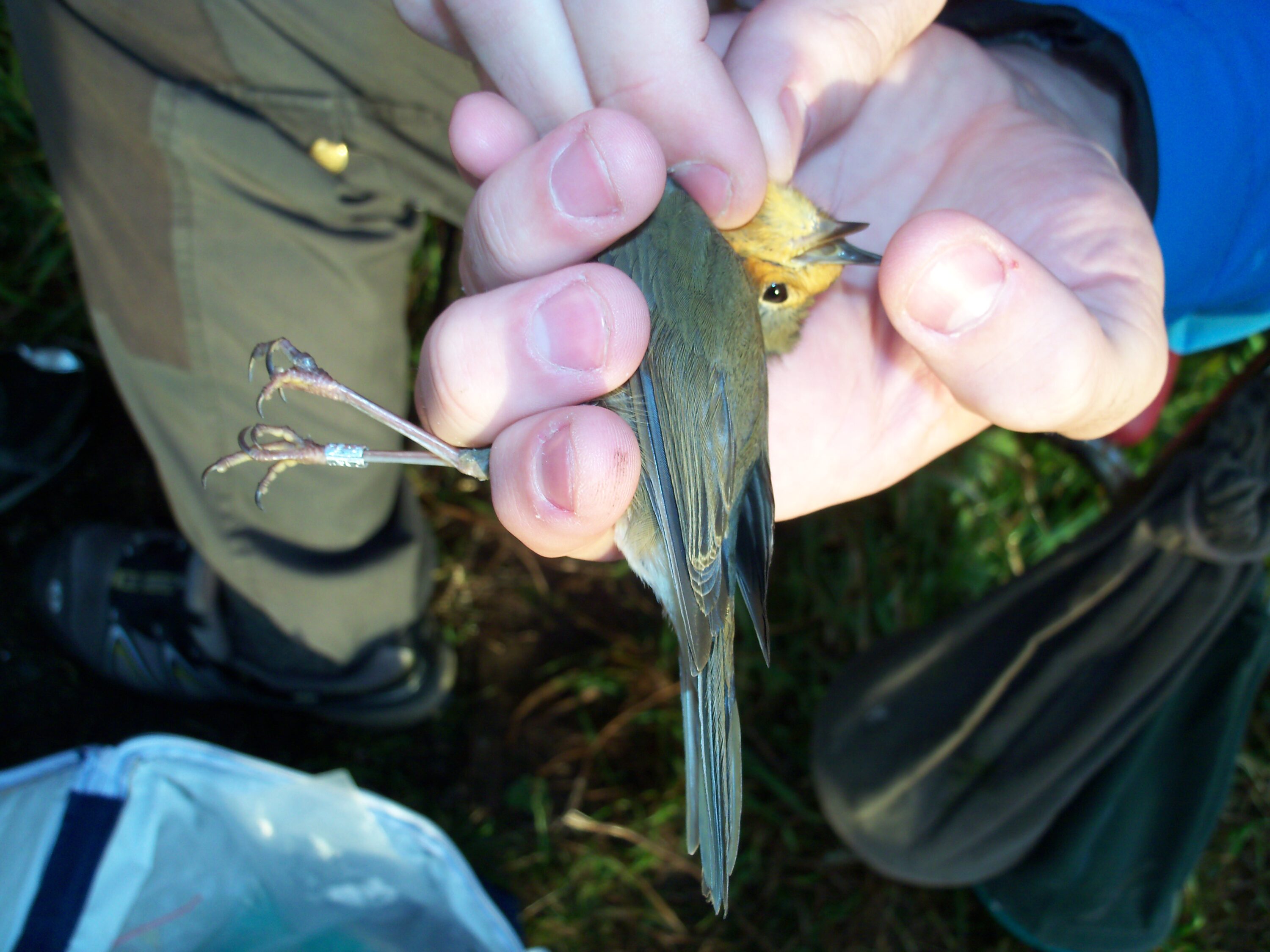
Early-Migrating Robins Carried More Ticks Than Late Migrants
Nearly half of 198 migrating European robins carried ticks, and early autumn migrants had significantly higher tick loads…
Read story →SPECIES IN THIS STORY
Species in this story

Independent research and conservation news archive
Did you find this information useful?
Wildlife Vagabond is independently built and maintained. Voluntary support helps cover source verification, hosting and continued work on research and conservation news.
Support Wildlife VagabondThe news archive will remain freely available.