
Only 4% of West Sumatra Was Modelled as Highly Suitable for Dholes
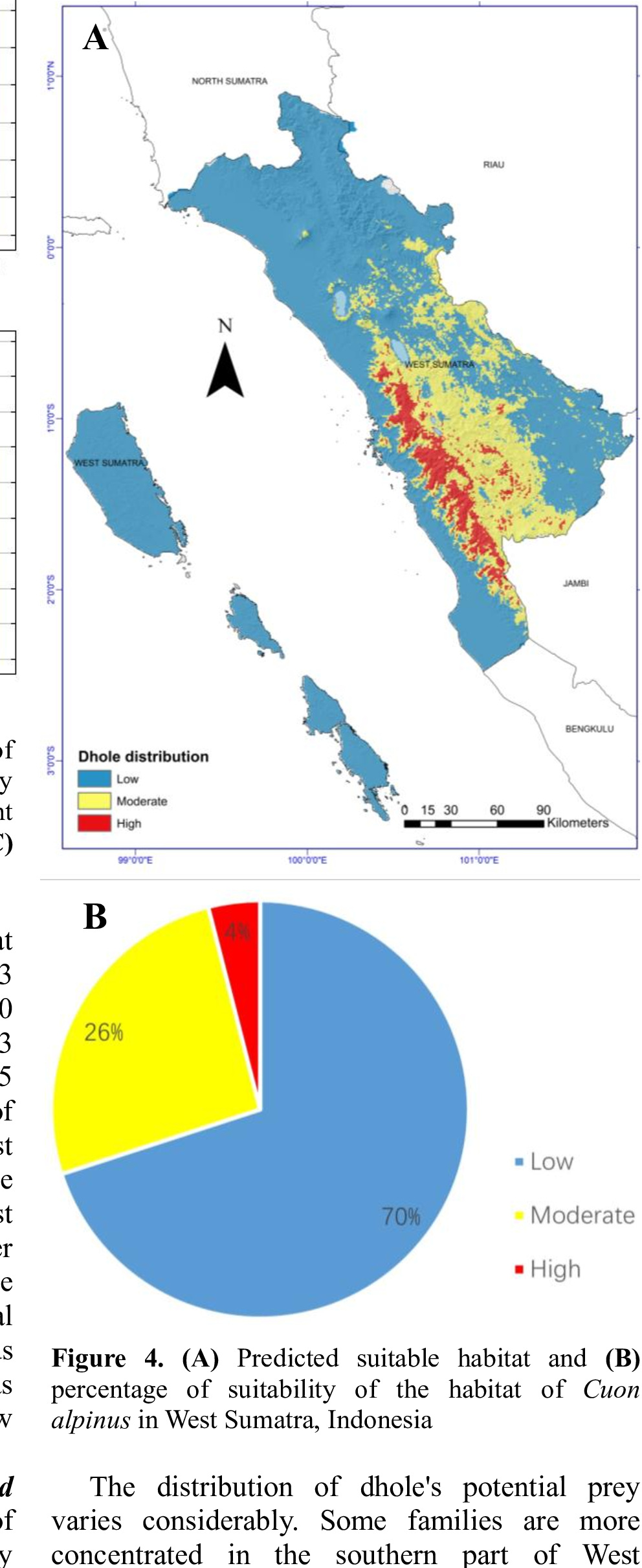
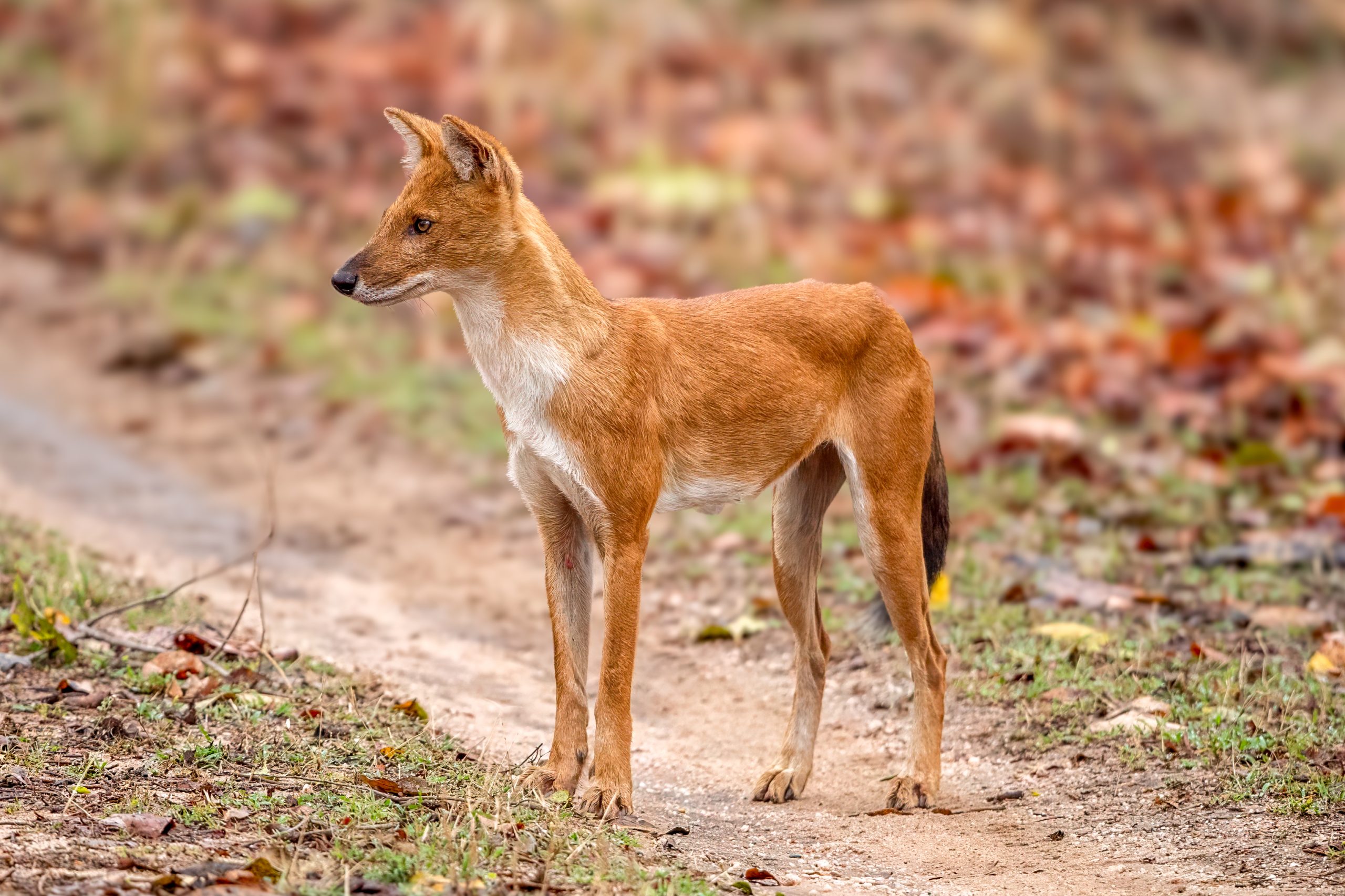
A habitat-modelling study published on 31 May 2026 examined West Sumatra, Indonesia, and estimated that 30% of the province—about 12,445 km²—offered suitable conditions for dholes (Cuon alpinus), but only 4%, or about 1,686 km², fell in the highest suitability class. The researchers used MaxEnt, a model that compares environmental conditions at known occurrence sites with conditions across the wider landscape. They combined dhole records from camera traps, GBIF and Camera Trap Asia with land cover, elevation, distances to roads and rivers, and bioclimatic variables. Higher suitability therefore means a stronger modelled match to conditions associated with known records; it does not by itself confirm that dholes are present.
Dholes were confirmed at nine locations. Land cover was among the strongest influences on the modelled distribution, and the predicted distribution of dholes and their prey was concentrated in primary and secondary forest. The model also indicated potentially suitable conditions in some human-modified land-cover classes, including plantations, cropland, shrubland and settlements. The authors note, however, that some residential areas had no confirmed dhole presence or human–wildlife conflict, illustrating that habitat suitability is not the same as actual occupancy. Much of the predicted distribution was concentrated within national parks, wildlife reserves and protected forest.
Prey-rich areas were scarce
The prey analysis modelled 12 potential prey families in total: 11 mammal families and one bird family, Phasianidae. Prey-family richness was measured as the number of families predicted to have suitable conditions in each grid cell. Areas with only one or two prey families made up the largest share of the mapped prey habitat, whereas areas with high prey richness were rare. Just 0.01% of the province, about 2.56 km², was modelled as suitable for all 12 prey families, while about 0.11% was predicted to be suitable for both dholes and 11 prey families. The largest dhole–prey overlap category involved only one prey family, while greater prey richness was concentrated particularly in the northern Bukit Barisan forest area.
The authors conclude that suitable dhole habitat in West Sumatra is strongly shaped by land cover and prey availability. They emphasise maintaining and restoring primary and secondary forest and retaining prey diversity, particularly around the Bukit Barisan forest landscape. Because the dhole model was based on only nine confirmed occurrence locations, they also state that the modelling results require careful interpretation.
Ecology
Related news
Dhole Gets Its First Chromosome-Level Genome Assembly
Researchers assembled a 2.42-billion-base genome for the dhole, anchoring 97.0% of its sequence to 39 chromosomes. The resource…
Read story →
DNA in Droppings Revealed Big Differences in Dhole Density
Researchers used DNA from droppings to monitor dholes in six forest sites in India’s Western Ghats. They estimated…
Read story →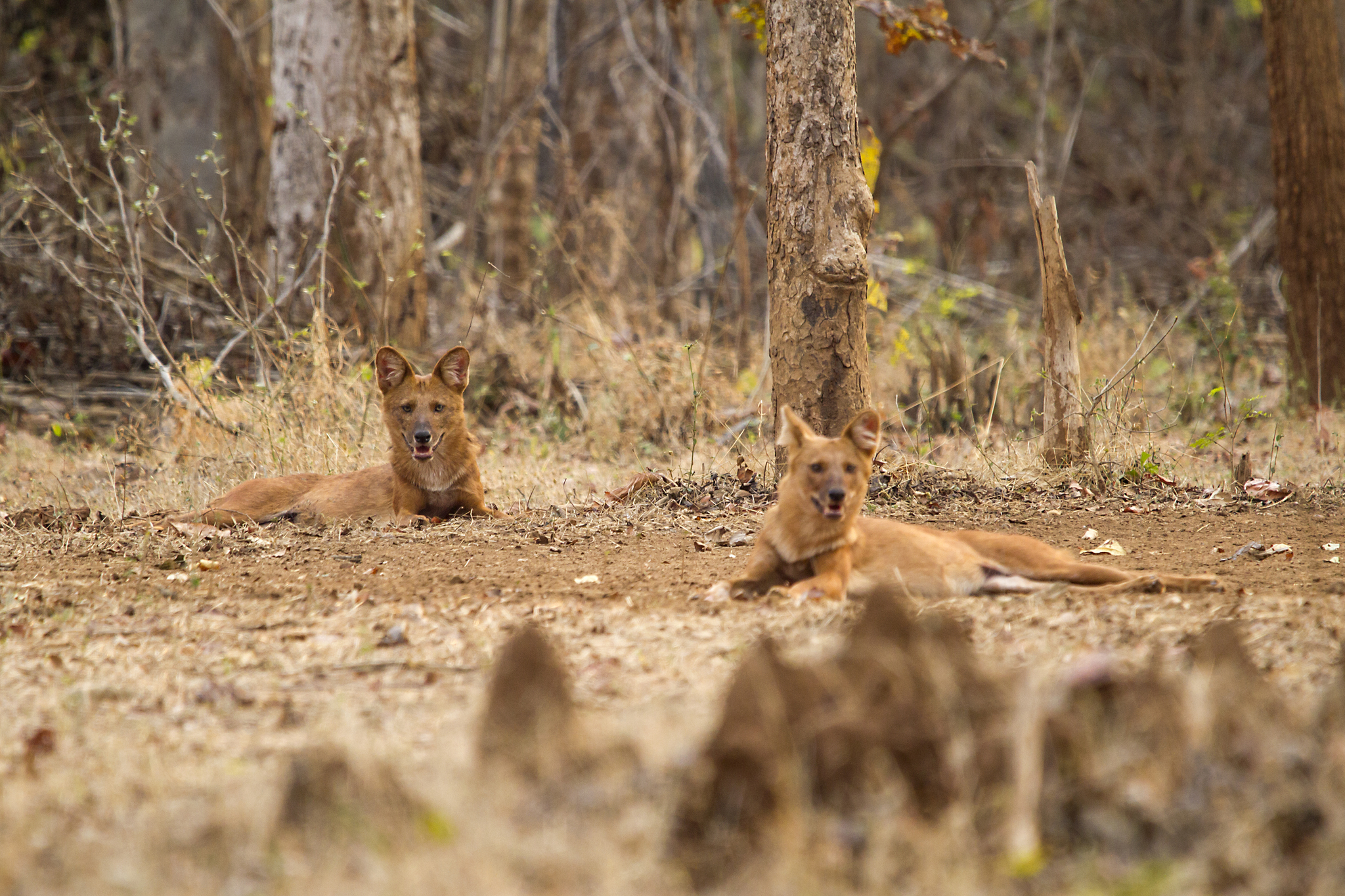
Models Estimated 47.6% Contraction in Suitable Dhole Habitat in China
Models suggest suitable dhole habitat in China contracted by 47.6% from the historical to current period and could…
Read story →SPECIES IN THIS STORY
Species in this story
Independent research and conservation news archive
Did you find this information useful?
Wildlife Vagabond is independently built and maintained. Voluntary support helps cover source verification, hosting and continued work on research and conservation news.
Support Wildlife VagabondThe news archive will remain freely available.