
Adding Wild Boar Behaviour Produced Secondary ASF Waves in a Landscape Transmission Model
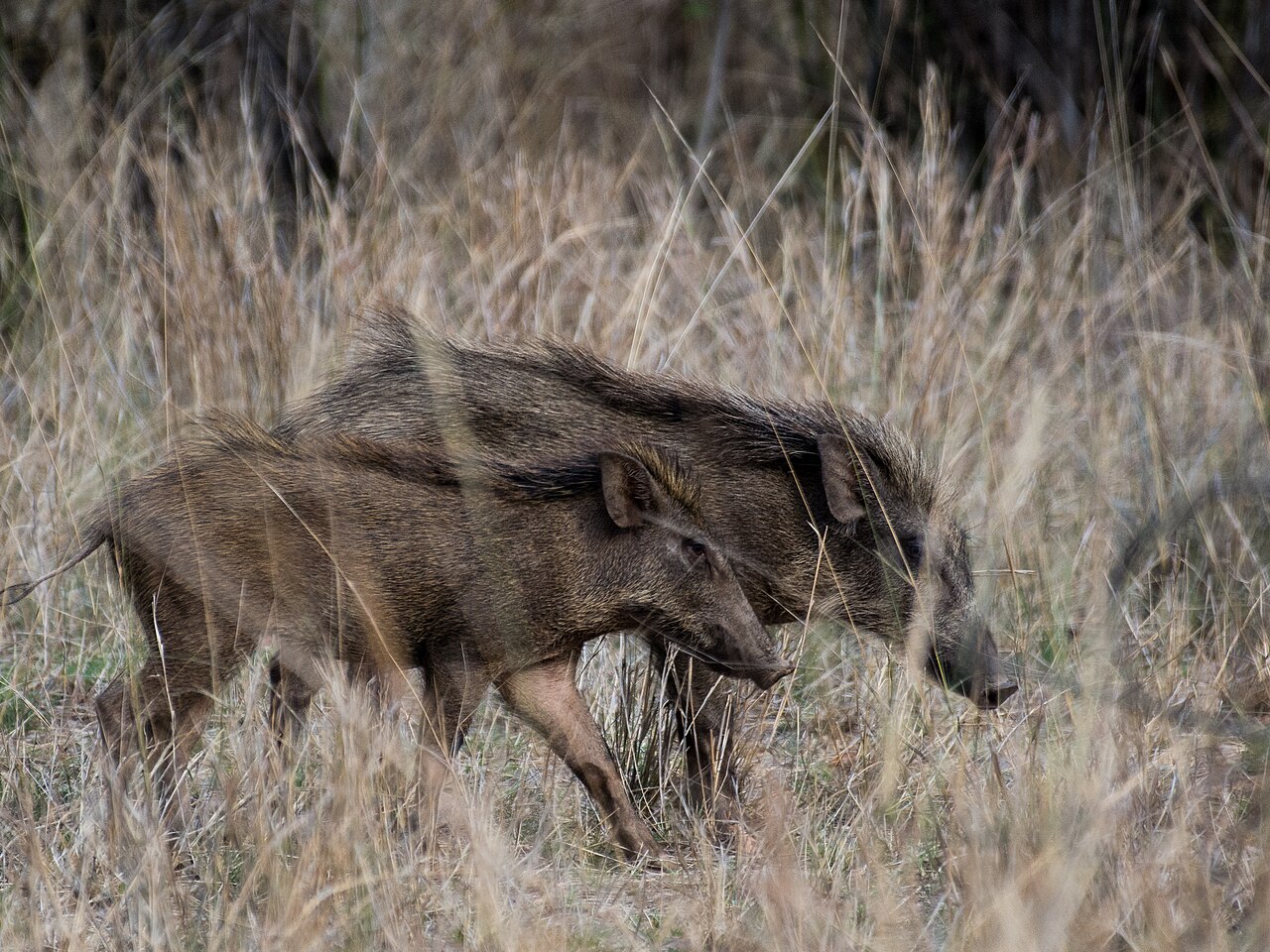
A South Korean landscape model of African swine fever (ASF) in wild boar (Sus scrofa) produced markedly different epidemic patterns when it explicitly tracked where individual animals and infections occurred. The study compared a model that included wild-boar behavioural processes with a version in which those processes were switched off.
Wild boar can help sustain African swine fever circulation through contacts among animals and through infected carcasses that remain in the environment. That makes movement, aggregation and carcass persistence biologically important when models are used to predict where and when transmission will intensify.
Wild-boar behaviour produced secondary infection waves
When foraging, home-range movement, relocation and aggregation were included, the model generated secondary infection waves and kept the effective reproduction number higher during the intermediate phase. This number describes how many new infections one infection produces under the conditions at that point in the epidemic. By contrast, the behaviour-off version produced one main epidemic peak rather than recurrent waves.
The model linked wild-boar bioenergetics and demography to a heterogeneous landscape, allowing individuals to acquire energy from resources, move within or relocate their home ranges and interact with other animals. Disease transmission also included infected carcasses and their persistence in the environment, an important route by which ASF can remain available for further transmission.
Behaviour also sharpened the spatial pattern of risk
Including behavioural processes improved the model’s ability to distinguish higher- from lower-risk locations. High-risk areas formed patch-like clusters that were consistent with the spatial distribution of observed ASF-positive carcasses used for comparison.
The authors conclude that landscape structure can shape disease spread through its effects on wild-boar aggregation, movement and contact. By combining these processes with carcass-mediated transmission, the model identified spatially concentrated risk areas that could be used to target surveillance, carcass removal and population-management efforts.
Disease, parasites & microbiology
Related news
Maps Show Where Wild Boar Could Thrive and Spread on Jeju Island
Researchers mapped potentially suitable wild-boar habitat across roughly 36% of Jeju Island and identified eight possible corridors linking…
Read story →
Roe Deer and Wild Boar Remained Key Wolf Prey as Diet Shifted Across North-western Italy
From 2021 to 2025, wolves in north-western Italy continued to feed mainly on wild prey. In the Po…
Read story →
Copper levels in wild boar differed across Slovak districts
An analysis of kidney, liver and muscle from 147 wild boar in four districts found that iron and…
Read story →SPECIES IN THIS STORY
Species in this story
Independent research and conservation news archive
Did you find this information useful?
Wildlife Vagabond is independently built and maintained. Voluntary support helps cover source verification, hosting and continued work on research and conservation news.
Support Wildlife VagabondThe news archive will remain freely available.