
Nearest Neighbour Yellowhammers Sing the Most Different Rhythms
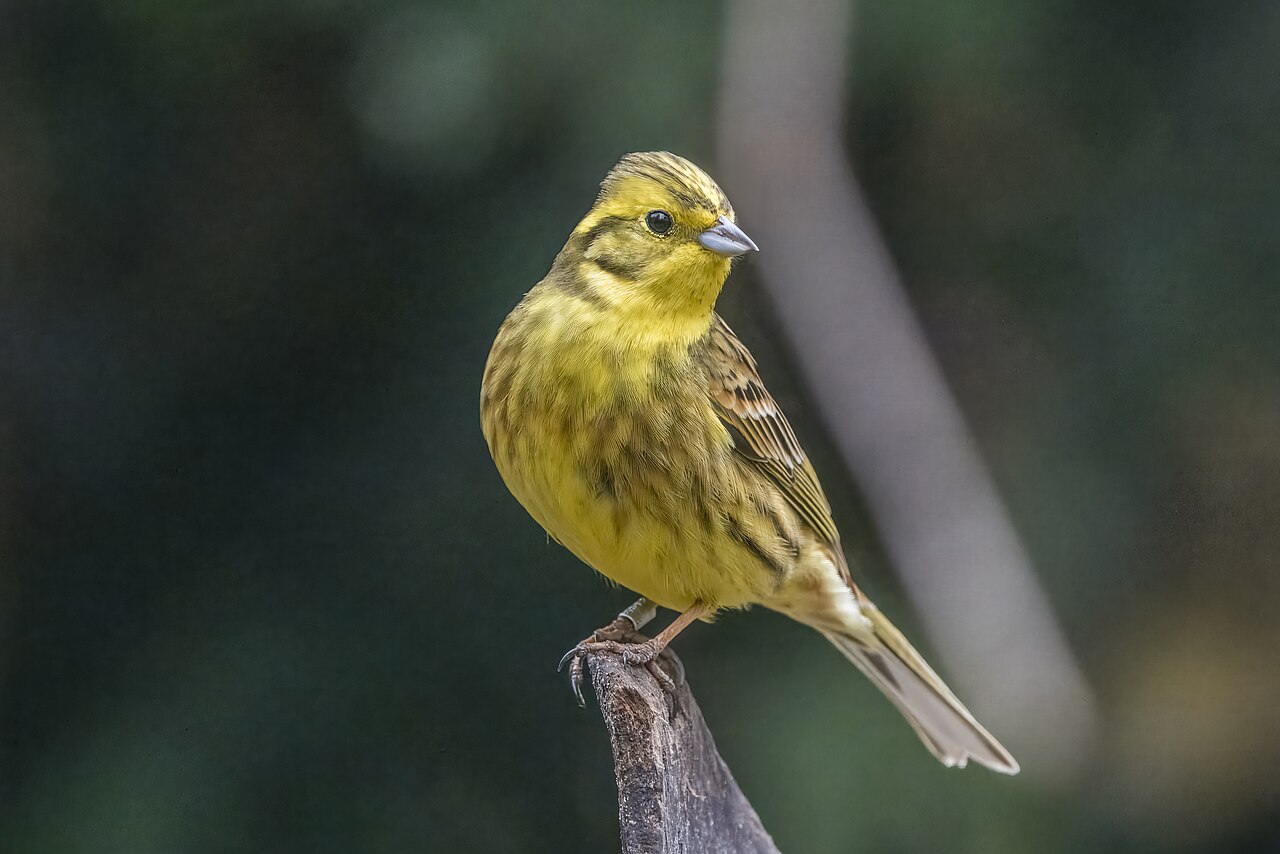
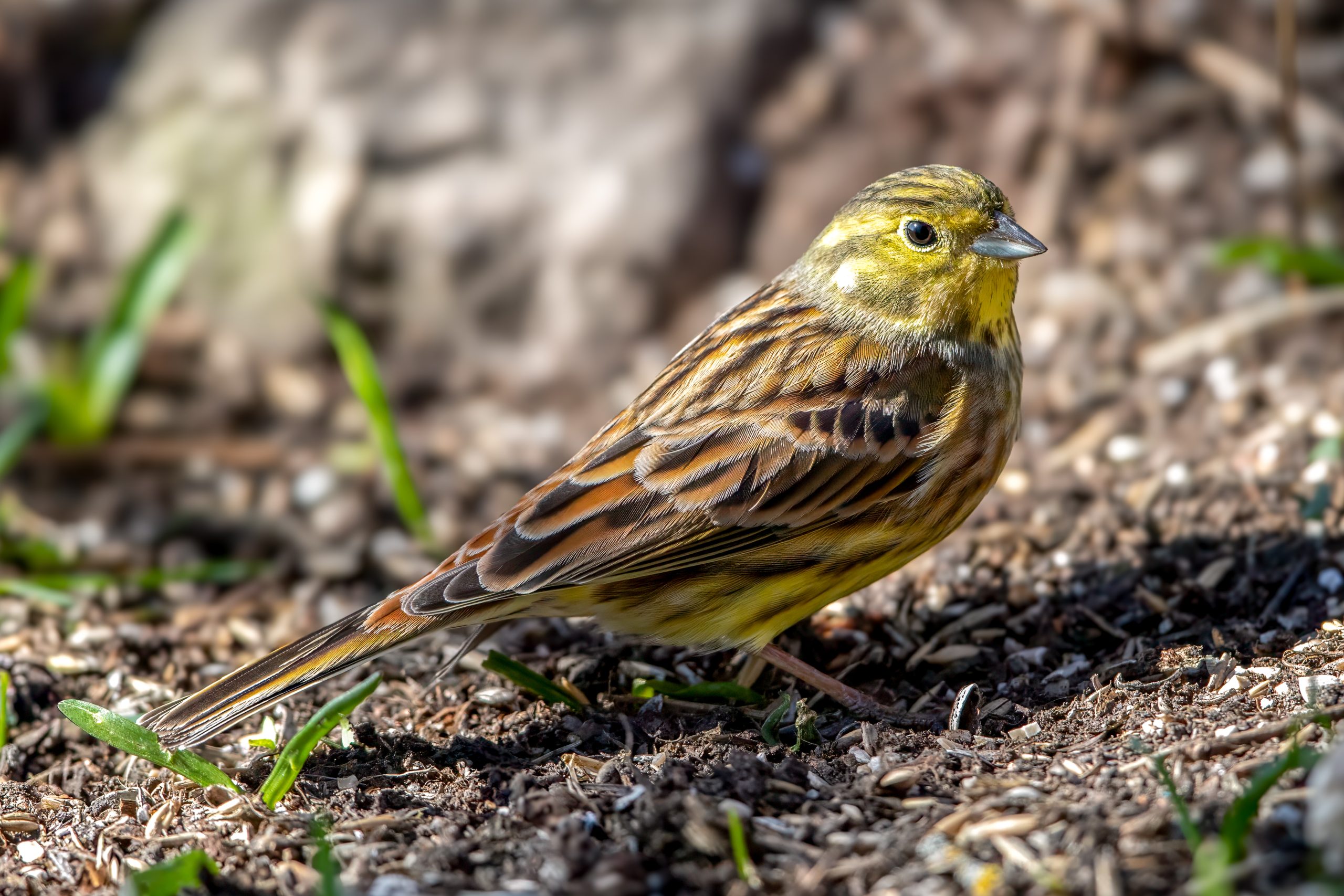
Male yellowhammers (Emberiza citrinella) have individually distinctive rhythms in their songs, and the strongest rhythmic differences occur between birds living closest to one another. Using rhythm alone, songs were assigned to the correct male in 44.0% of classifications across phrase types, compared with a 16.5% chance expectation, showing that rhythm carried substantial information about singer identity.
Researchers analysed recordings made from 2019 to 2021 at the foothills of the Brdy mountain range in central Bohemia, Czech Republic. The study area covered roughly two kilometres and consisted of meadows and fields broken up by belts of bushes and trees. Recordings from 38 known males were used in the analysis.
Individual rhythm across different song phrases
A yellowhammer song consists of an initial phrase followed by a dialect phrase. Males at the same locality share the same dialect, and some types of initial phrases are also shared among different birds. The researchers therefore asked whether timing within the song could provide another layer of individual identity.
They analysed 633 songs representing 52 phrase types and measured nine aspects of timing. The results showed that males maintained characteristic rhythmic patterns across different phrase types. Much of this individuality was carried by variation in the intervals between successive syllables and by the rate at which syllables were produced.
The researchers describe the songs as largely isochronous: notes tend to follow one another at approximately regular intervals. Even within this regular framework, however, individual males differed consistently in how the rhythm was produced.
Closest neighbours were rhythmically most distinct
The study also compared rhythmic similarity with the distance between singers. The strongest differences occurred among the closest neighbours, birds separated by up to about 50 metres. Rhythmic dissimilarity then declined across the first 600 metres, while no comparable distance pattern was found among birds farther apart.
The authors suggest that males may adjust their rhythms so that they stand out from nearby rivals. Because yellowhammer song is used in territorial behaviour, being acoustically distinct from neighbours could help singers remain individually recognizable within the part of the landscape where repeated interactions are most likely.
Behaviour
Related news
Type A Trichomonas Was More Than Twice as Prevalent in British Birds at Supplementary-fed Sites
Type A of the bird parasite Trichomonas gallinae was more than twice as prevalent in British birds at…
Read story →
Diversified Crop Patches Had More Bird Observations Than Conventional Fields in Germany
A three-year study in Brandenburg recorded 20.0 bird observations per hectare in a diversified patch-cropping field, compared with…
Read story →
Yellowhammer Counts Increased Fourfold on Farms Combining Habitat Schemes and Winter Feeding
Ten years of British farm counts found four times as many yellowhammers on participating farms that combined agri-environment…
Read story →SPECIES IN THIS STORY
Species in this story
Independent research and conservation news archive
Did you find this information useful?
Wildlife Vagabond is independently built and maintained. Voluntary support helps cover source verification, hosting and continued work on research and conservation news.
Support Wildlife VagabondThe news archive will remain freely available.