
Human Translocations Shaped Red Deer Mitochondrial Lineages Across Italy
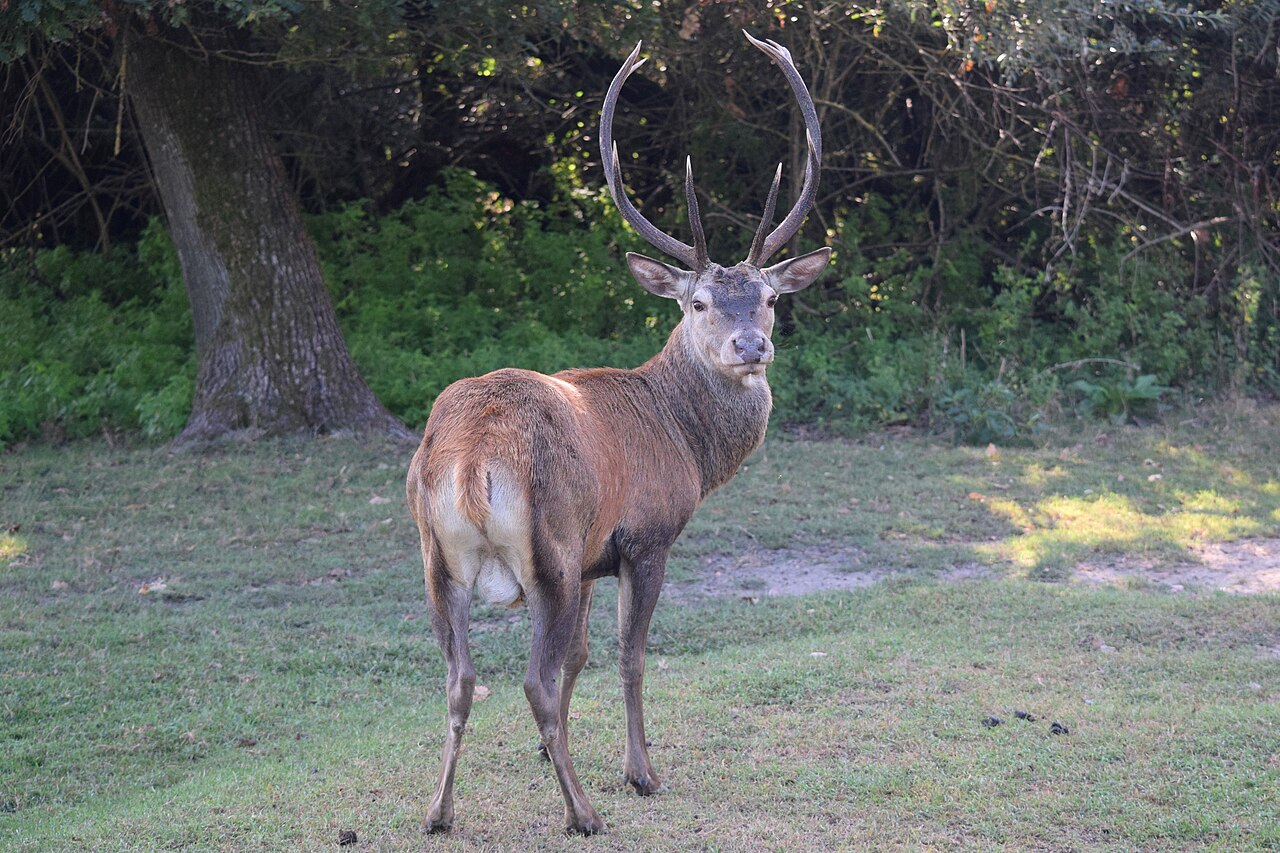
Italy’s first nationwide genetic survey of red deer (Cervus elaphus) found a mosaic of mitochondrial lineages shaped by both ancient glacial history and much more recent human movement of animals. The researchers analysed the mitochondrial control region, or D-loop, from 164 red deer sampled across Italy between 2020 and 2024 and identified 38 haplotypes belonging to three lineages: A, C and D.
Mitochondrial DNA is inherited through the maternal line. A haplotype here is a particular version of the mitochondrial sequence that was analysed. These haplotypes therefore trace maternal ancestry rather than the animal’s entire genome. The study then mapped where different maternal lineages occur today and compared that pattern with Italy’s history of local extinction, natural recolonisation, reintroduction, restocking and escape from captive populations.
Lineages A and C now occur together across much of northern and central Italy
Lineages A and C were widespread and frequently occurred in the same regions. Lineage A was common in parts of the central Apennines and southern Italy as well as the ACATER Central management area, while lineage C was especially represented in the eastern and western ACATER areas and had genetic links with deer sampled in Liguria and northern Italy.
The authors conclude that this present-day pattern cannot be explained by post-glacial recolonisation alone. In the Alps, A and C can meet through natural expansion from neighbouring countries as well as human releases. In the northern Apennines, documented escapes from farms holding red deer of British origin provide a specific historical mechanism that may help explain the high frequency and internal structure of lineage A.
This history is unusually important in Italy because, apart from Bosco della Mesola, the sampled deer from peninsular Italy and Marettimo Island came from populations introduced by people, while deer in the central-eastern and eastern Alps could also derive from natural expansion from neighbouring countries.
Thirty-eight haplotypes revealed substantial maternal diversity
The 164 mitochondrial sequences contained 38 haplotypes, with overall haplotype diversity of 0.861. Haplotype diversity expresses how likely two randomly sampled individuals are to carry different haplotypes, so this value indicates substantial maternal variation in the sample. Genetic analyses also showed clear structure among geographic groups and between the three sampled lineages. In practical terms, the Italian population does not contain one uniform mitochondrial background: distinct maternal histories remain detectable despite centuries of population loss and movement.
The study recovered A, C and D directly. A fourth lineage, B, is already known from Sardinian red deer but was not sequenced in this study. The authors therefore discuss four lineages in the wider Italian context even though the new nationwide sample yielded three.
Native lineage D survived in Bosco della Mesola
Lineage D has particular conservation importance because it is the only native mitochondrial lineage that survived continuously in peninsular Italy through the nineteenth and twentieth centuries. The study confirmed it in the relict population of Bosco della Mesola Nature Reserve in Emilia-Romagna, the only surviving native red deer population in peninsular Italy.
The same lineage also appeared unexpectedly in a small group sampled near Castiglione della Pescaia in southern Tuscany. The authors report that this group descends from deer that escaped from a private hunting enclosure in Valle di Buriano, where deer had been introduced about 125 years ago. The exact historical source of those animals is not known, but their mitochondrial haplotypes showed high affinity with the Mesola lineage.
Because the Tuscan group is currently subject to control culling, the authors argue that further genetic work is warranted to determine whether it represents a previously unrecognised reservoir of lineage D before its conservation significance is assessed.
Ancient refugia remain visible beneath a human-shaped pattern
The mitochondrial lineages themselves have much older origins. The study’s time-scaled analysis places the main European red deer lineages in the Late Pleistocene, broadly around the period of the Last Glacial Maximum. Italy was one of the southern European refugial regions from which deer later recolonised northern areas.
Yet the authors conclude that the current Italian distribution of these old maternal lineages has been shaped predominantly by human-mediated translocations superimposed on that glacial history. Reintroduction, restocking, farm escapes and natural recolonisation have brought historically distinct lineages into contact and produced the modern geographic mosaic.
Mitochondrial lineages are only one part of the genetic picture
The authors argue that phylogeographic information should be considered when planning future translocations and conservation, particularly to avoid unnecessary homogenisation of native genetic components. They highlight Bosco della Mesola as the clearest priority and call for further investigation of the southern Tuscan D-lineage group.
At the same time, the study treats the D-loop analysis as a first nationwide assessment rather than a complete description of red deer genomic structure. Mitochondrial DNA follows maternal ancestry and has limited phylogenetic resolution. The authors therefore call for nuclear and genome-wide data before the evolutionary and functional significance of lineages A, C and D can be evaluated more fully for management.
Genetics & genomics
Related news
Velvet Antler Had the Most Distinct Metabolite Profile in Red and Sika Deer
A Chinese study detected 2,361 metabolites across three antler tissues from red and sika deer. Velvet antler separated…
Read story →
Tarim Red Deer Microbiomes Showed Greater Capacity to Break Down Reed Fibre
Under the same reed-containing diet, captive Tarim red deer had more fibre-associated gut microbes, higher cellulase and hemicellulase…
Read story →
Wolf Kills Provided Plenty of Food for Red Foxes
Red foxes visited all 26 wolf-killed red deer monitored in Stelvio National Park. The amount of meat left…
Read story →SPECIES IN THIS STORY
Species in this story
Independent research and conservation news archive
Did you find this information useful?
Wildlife Vagabond is independently built and maintained. Voluntary support helps cover source verification, hosting and continued work on research and conservation news.
Support Wildlife VagabondThe news archive will remain freely available.